Eye Makeup for Your Eye Shape: Complete Guide to Flattering Looks
Master eye makeup for your eye shape with expert tips on eyeliner, eyeshadow, and mascara placement. Learn how to make your eyes look bigger and brighter.
Estimated reading time: 15 min
Key Takeaways
- Identifying your eye shape can help guide flattering eye makeup application, as it suggests techniques that may enhance your natural features.
- Each eye shape—hooded, almond, monolid, round, upturned, downturned, close-set, wide-set, deep-set—can benefit from different eyeshadow placement and eyeliner techniques that accentuate and balance its specific contours.
- Proper eyeshadow placement can create optical illusions that enhance your natural beauty while addressing asymmetries or perceived imperfections.
- Tailored eyeliner styles and wing directions can create balance and highlight your eye shape, potentially making your eyes appear larger, more awake, or more symmetrical depending on your preferences.
- Using AI tools like Makeup Check AI may help personalize your eye makeup routine with detailed reports and tutorials based on your unique features, supporting precision and confidence.
Table of Contents
- Section 1: How to Tell Your Eye Shape
- Section 2: Eyeshadow Placement by Eye Shape
- Section 3: Eyeliner for Your Eye Shape
- Section 4: Mascara and Lash Tips per Eye Shape
- Section 5: Eye Makeup Techniques for Hooded and Monolid Eyes
- Section 6: Enhancing Round, Almond, and Other Eye Shapes
- Conclusion
- FAQ
Section 1: How to Tell Your Eye Shape
Understanding Eye Shape Basics
Knowing your eye shape can be a helpful foundation for effective eye makeup. Eye shapes vary widely, influencing how shadows, liner, and lashes appear, and understanding the nuances of your eye shape can enable you to make choices that flatter your unique features. The main eye shapes include hooded, almond, monolid, round, upturned, downturned, close-set, wide-set, and deep-set eyes, each presenting distinct characteristics that makeup artists often consider when crafting eye looks.
Step-by-Step Identification Process
- Step 1: Look straight into a mirror with your face clean and hair pulled back. Natural daylight or bright lighting helps reveal subtle details.
- Step 2: Observe the visible crease above your eyelid. Is it prominent or hidden beneath a fold? This helps distinguish between hooded and monolid eyes.
- Step 3: Note the shape of your visible eyelid area—does it taper at the corners, appear rounded, or flat? This guides whether you have almond, round, or other shapes.
- Step 4: Measure the distance between your eyes by using an imaginary unit equal to the width of one eye. If the gap is less than one eye's width, they are close-set; if greater, wide-set.
- Step 5: Observe the angle of your lower lash line—does it curve upward (upturned) or downward (downturned)? This subtle tilt affects how eyeliner and shadow might be applied.
Common Eye Shape Characteristics
- Hooded eyes: The crease is hidden under a fold of skin, which can cause the lid to appear smaller and liner to smudge.
- Almond eyes: The eye tapers to points at both ends with a visible crease and balanced proportions, resembling the shape of an almond.
- Monolid eyes: No visible crease on the eyelid, common among East Asian eye shapes, often requiring creative shadow placement to add dimension.
- Round eyes: Large and appear more open with visible white around the iris, often giving a youthful or doe-eyed look.
- Upturned eyes: Outer corners lift upward, creating a natural cat-eye effect; makeup can balance or emphasize this lift.
- Downturned eyes: Outer corners tilt downward, sometimes giving a sad expression; makeup can help to lift and brighten.
- Close-set eyes: Distance between eyes is less than one eye’s width, and makeup often focuses on creating the illusion of space.
- Wide-set eyes: Distance between eyes is greater than one eye’s width; makeup can draw focus inward to create balance.
- Deep-set eyes: Eyes set deeper into the skull, creating natural shadows on the lids; makeup can aim to brighten and bring forward.
For detailed guidance, visit our How to Tell Your Eye Shape tutorial with AI analysis to explore your exact shape and ways to enhance it using personalized insights.
Section 2: Eyeshadow Placement by Eye Shape
General Principles of Eyeshadow Placement
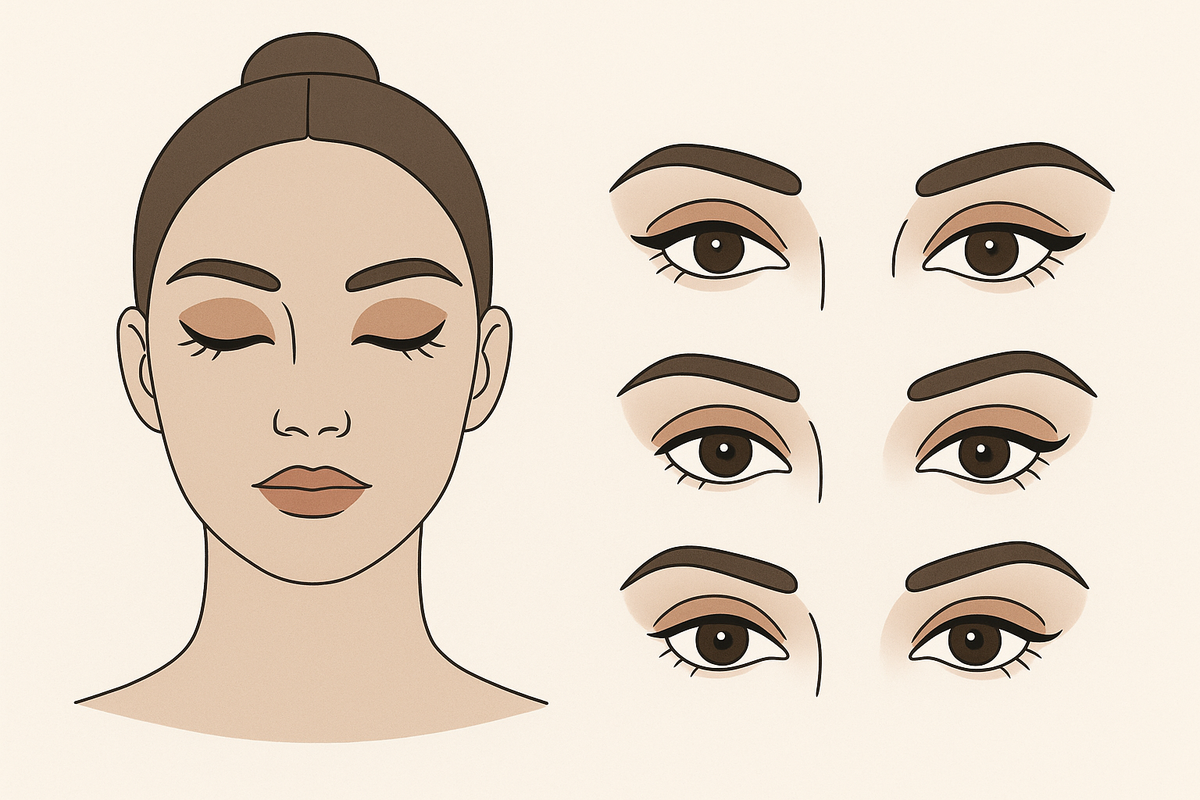
Eyeshadow placement can visually adjust eye shape, making eyes appear larger, lifted, or more balanced. The strategic use of light and dark shades creates depth, dimension, and symmetry that enhance your natural beauty. Mastering this technique involves understanding how to use shades to shape and sculpt the eyes effectively.
- Light colors highlight and bring forward areas such as the brow bone, inner corner, and center of the eyelid to open up the eyes.
- Dark colors contour and recede, typically applied in the crease, outer corner, and lower lash line to add definition and depth.
- Transition shades blend light and dark hues seamlessly, preventing harsh lines and creating a smooth gradient that flatters the eye shape.
Tailored Eyeshadow Techniques by Shape
- Hooded eyes: Applying darker shades slightly above the natural crease can create the illusion of depth and lift. Using a matte medium-to-dark shade here may prevent eyeshadow from disappearing into the fold. Keeping the lid itself light or shimmery can help open the eye. Avoiding heavy shimmer on the lid may help reduce emphasis on puffiness.
- Almond eyes: Emphasizing the natural shape by contouring the crease with medium shades and highlighting the center of the lid with shimmer or light colors can accentuate their balanced shape. For a smoky look, blending darker colors into the outer V and crease adds dimension.
- Monolid eyes: Using gradient shading from lash line upward, layering colors to add dimension and depth, can be effective. Shimmer shades on the center of the lid catch light and may make eyes appear larger. Avoiding harsh crease lines and blending shadows softly upward towards the brow bone is often recommended.
- Round eyes: Applying darker shades on the outer corners and blending outward and slightly upward can elongate the eye shape, creating a more almond-like appearance. Using a medium transition shade on the crease helps define shape without closing the eye.
- Upturned eyes: Balancing the natural lift with darker shades on the outer lower lash line can ground the look and prevent an overly lifted effect. Blending softly helps avoid harsh lines.
- Downturned eyes: Lifting the outer corners with winged eyeshadow shapes extending upward and outward can counteract droopiness. Using medium transition shades in the crease and deepening outer V adds dimension.
- Close-set eyes: Using light shades on inner corners and the first third of the eyelid can visually widen eye distance. Avoiding heavy dark shades near the inner corners may prevent the eyes from appearing closed.
- Wide-set eyes: Using medium to dark shades on the inner corners and along the inner third of the eyelid can bring eyes visually closer together. Tightlining the upper and lower inner lash lines may draw focus inward.
- Deep-set eyes: Avoiding overly dark shadows on the lids, which can deepen the natural shadows, is often advised. Instead, highlighting the brow bone and inner corners can brighten. Using matte transition shades in the crease adds definition without exaggerating depth.
Learn More with AI-Enhanced Tutorials
Explore Eyeshadow Placement by Eye Shape to master the art of color placement tailored to your unique eyes. AI-powered analysis can support precision for flawless looks by analyzing your eye shape and color to recommend palettes and techniques.
Section 3: Eyeliner for Your Eye Shape
Why Eyeliner Placement Matters
Eyeliner shapes the eye and influences its perceived size and tilt. The angle, thickness, and wing direction should complement your eye shape to enhance your natural contours. Correct eyeliner application can open up sleepy eyes, balance asymmetry, and create desired illusions such as elongation or lift.
Eyeliner Styles by Eye Shape
- Hooded eyes: Keeping liner thin on the lash line can help avoid it being hidden under the fold, which might make the eyes look smaller. A tightline technique (lining the waterline) adds subtle definition. Extending wings slightly upward and outward can lift and open the eyes, while avoiding thick or heavy liner.
- Almond eyes: Most styles work due to natural symmetry. Classic cat-eye wings emphasize their balanced shape, while a smudged or smokey liner along the upper lash line adds drama. Thickness can be adjusted based on desired intensity.
- Monolid eyes: Using tightlining and smudged liner along the lash line defines without closing the eye. A soft wing created with gel or pencil liner elongates the eye subtly. Avoiding harsh lines and blending is key.
- Round eyes: Lining the upper lash line with a winged flick extending outward elongates the eye shape. Avoid lining the entire lower lash line heavily, which can emphasize roundness.
- Upturned eyes: Balancing wing direction by angling the wing slightly downward or following the natural lift creates harmony. Avoid excessive upward flicks that can exaggerate lift.
- Downturned eyes: Wing liner upwards to counteract drooping outer corners, creating a lifted, more awake appearance. Avoid heavy liner on the lower lash line.
- Close-set eyes: Extending liner from the middle of the eye outward elongates and opens the look. Keeping inner corners clean or using light liner avoids crowding.
- Wide-set eyes: Applying liner closer to the inner corners can visually bring eyes closer, using tightlining or a thin line on the inner lash line.
- Deep-set eyes: Using dark liner on the upper lash line adds definition and avoiding heavy lower liner can prevent deepening shadows and making eyes appear more recessed.
Detailed Steps and Tips
For a comprehensive step-by-step guide on eyeliner techniques personalized to your eye shape, visit our Eyeliner for Your Eye Shape post. It includes pro tips such as using angled brushes for precision, layering waterproof formulas for longevity, and adapting liner styles for day versus evening looks.
Section 4: Mascara and Lash Tips per Eye Shape
Choosing the Right Mascara Application
Mascara volumizes and lengthens lashes, enhancing eye shape by framing and lifting the eyes. Different eye shapes may benefit from tailored application techniques to balance proportions and highlight natural beauty.
Application Tips by Eye Shape
- Hooded eyes: Focusing on curling lashes with a quality lash curler before mascara can prevent lashes from touching the hooded skin. Applying mascara primarily to the center and outer lashes may open the eye, avoiding clumps that weigh lashes down.
- Almond eyes: Applying mascara evenly across all lashes emphasizes symmetry and creates a balanced effect.
- Monolid eyes: Using waterproof mascara can help prevent smudging on the skin. Utilizing a lash curler designed for straight lashes, curling upwards before applying two to three coats of mascara, can build volume and length without clumping.
- Round eyes: Concentrating mascara on outer lashes elongates the eye shape, applying an extra coat or two at the outer corners and gently separating lashes with a lash comb.
- Upturned eyes: Applying extra mascara on lower lashes balances uplifted outer corners, curling lower lashes as needed to prevent a droopy appearance.
- Downturned eyes: Focusing mascara on upper outer lashes, curling them upward to create a lifted effect, and avoiding heavy lower lash application can help prevent emphasizing drooping.
- Close-set eyes: Avoiding heavy mascara on inner lashes prevents a crowded or overly intense effect near the nose. Instead, focusing on middle and outer lashes opens the eye area.
- Wide-set eyes: Applying more mascara toward inner lashes brings visual focus inward, balancing the wide spacing.
- Deep-set eyes: Using volumizing mascara on top lashes draws attention and keeping lower lashes natural or minimal avoids exaggerating depth.
False Lashes and Extensions
False lashes can dramatically enhance eye shape and add glamor or definition:
- For hooded and monolid eyes, choosing shorter lashes with a slight curl can open the eyes without overwhelming the lid space. Wispy lashes with graduated lengths often work well to mimic natural lash growth.
- Almond and round eyes can wear longer, wispy lashes or dramatic volume lashes for glamorous looks. Cat-eye lash styles that are longer at the outer corners complement these shapes.
- For downturned eyes, lashes that lift upward at the outer corners can counteract drooping and create a lifted, awake appearance.
Section 5: Eye Makeup Techniques for Hooded and Monolid Eyes
Challenges and Solutions for Hooded Eyes
Hooded eyes have a fold that partially or fully covers the crease, which can cause liner and shadow to smudge or disappear when eyes are open. This can make applying makeup tricky but with the right techniques, your eyes can appear larger and lifted.
- Using matte shades slightly above the natural crease can create an illusion of depth and lift. This “fake crease” technique opens the eye visually.
- Applying waterproof liner close to the lash line and keeping it thin can avoid transfer onto the upper lid. Tightlining enhances lash density without smudging.
- Highlighting inner corners and brow bone with light, shimmery shades opens the eyes and draws attention upward.
- Wing liners should angle upward and outward, extending slightly beyond the eye corner to create a lifting effect.
- Setting eye primer with translucent powder can help prevent shadow creasing and liner smudging throughout the day.
Monolid Eye Makeup Essentials
Monolids lack a visible crease, which calls for creative placement of color and liner to add depth and dimension.
- Layering eyeshadow from the lash line upward blending softly creates a gradient effect that adds dimension without a crease.
- Using shimmer on the center of the lid catches light and can make eyes appear larger and more awake.
- Tightlining the upper waterline with black or brown liner provides subtle definition that enhances lash thickness.
- Creating a soft wing using gel or pencil liner elongates the eye, blending edges softly to avoid harsh lines.
- Using matte shadows in medium to dark tones at the lash line area adds depth, gradually blending upward with lighter shades.
- Considering waterproof formulas and primers can help ensure longevity, as monolid skin can be oily and prone to makeup fading.
Learn from AI-Powered Tutorials
For detailed step-by-step tutorials tailored to these eye shapes, see our Hooded Eye Makeup and Monolid Eye Makeup guides enhanced by AI analysis that personalize every brush stroke. These guides include video demonstrations, product recommendations, and customized tips based on your unique eye morphology.
Section 6: Enhancing Round, Almond, and Other Eye Shapes
Round Eyes: Making Them Look Bigger and More Lifted
Round eyes are naturally large and open but can benefit from elongation techniques to add sophistication and balance.
- Using darker eyeshadow on outer corners and blending outward and slightly upward can lengthen the eye shape. For example, a deep brown or plum shade applied in a winged shape creates a subtle elongation.
- Wing eyeliner extending horizontally or slightly upward adds lift and drama, making eyes appear more almond-shaped.
- Highlighting inner corners and under the brow bone opens eyes further and brightens the overall look.
- Balancing heavy upper liner with softer lower lash line makeup helps avoid closing the eye.
Almond Eyes: Emphasizing Natural Symmetry
Almond eyes are versatile and suit many makeup styles, making them a favorite among makeup artists.
- Enhancing the crease with medium shades such as taupe or warm browns and highlighting the lid center adds depth and dimension.
- Classic winged liner complements the natural shape beautifully, with the wing following the upward slant of the eyes.
- Using mascara to evenly coat lashes creates balanced impact, and considering false lashes with a natural flare can be great for special occasions.
- Experimenting with bold colors or metallics is often successful, as almond eyes can carry off many looks.
Balancing Close-Set and Wide-Set Eyes
- Close-set eyes: Brightening inner corners with light eyeshadow and avoiding heavy liner or shadow on inner lash lines can prevent the eyes from looking crowded. Using highlighting shades on the nose bridge may increase perceived distance.
- Wide-set eyes: Using medium to dark shades on inner eyelids and tightlining inner lashes can bring eyes visually closer. Avoiding extending liner or shadow too far outward helps prevent exaggerating spacing.
- Strategically placed highlighter and contour around the eye socket can further modify perceived eye spacing.
Explore more advanced techniques with AI personalization in our Eye Makeup for Your Eye Shape Complete Guide and master your look with confidence, leveraging data-driven insights for flawless application.
Conclusion
Mastering eye makeup for your eye shape can unlock the power to enhance your natural beauty effortlessly. By accurately identifying your eye shape and applying tailored eyeshadow placement, eyeliner styles, and lash techniques, you can make your eyes pop in a flattering way. These expert strategies not only enhance your appearance but also may boost confidence by creating looks uniquely suited to you.
Leveraging AI beauty apps like Makeup Check AI offers personalized insights and tutorials that can save you time and help perfect your application through precise analysis of your facial features. Whether you have hooded, almond, monolid, round, or any other eye shape, embracing these expert strategies can elevate your makeup game and boost your confidence. Start your journey with AI-powered beauty today and transform your makeup routine into an art.
FAQ
Q: What eye shape do I have?
A: To determine your eye shape, observe your eyelid crease (whether it is visible or hidden), the shape of your visible eyelid (tapered, rounded, flat), the angle of your eye corners (upturned or downturned), and the distance between your eyes (close-set or wide-set). Common shapes include hooded, almond, monolid, round, upturned, downturned, close-set, wide-set, and deep-set. Use a detailed step-by-step guide like How to Tell Your Eye Shape for precise identification assisted by AI analysis.
Q: What eyeliner is best for my eye shape?
A: The most flattering eyeliner depends on your eye shape. For example, hooded eyes may benefit from thin liner and upward wings to prevent smudging and lift the eyes, almond eyes often look great with classic cat-eye wings that emphasize their symmetry, and downturned eyes can be enhanced with winged liner that lifts the outer corners to counteract drooping. For detailed, shape-specific tips, consult our Eyeliner for Your Eye Shape tutorial.
Q: How do you do makeup for hooded eyes?
A: For hooded eyes, applying darker eyeshadow slightly above the crease can create depth and a lifted illusion, using thin waterproof liner close to the lash line helps avoid smudging, and winging the liner slightly upward opens the eye. Highlighting inner corners and brow bones with light shades brightens the eyes. Explore the full technique in our Hooded Eye Makeup guide enhanced with AI personalization.
Q: How do you make round eyes look bigger or more lifted?
A: To elongate round eyes, applying darker eyeshadow on the outer corners and blending outward, using winged eyeliner extending outward or upward to add lift, and highlighting inner corners and brow bones can create an open effect. Avoid heavy lower lash line liner, which can emphasize roundness. Our How to Make Eyes Look Bigger with Makeup guide offers in-depth techniques and product recommendations.
Q: What eyeshadow placement works best for almond eyes?
A: Almond eyes suit eyeshadow that emphasizes the crease with medium shades, highlights the center of the lid, and blends softly toward the outer corners to enhance their natural symmetry and depth. This balanced approach enhances their versatility. Check out our Eyeshadow Placement by Eye Shape guide for more advanced tips and color palette suggestions.
Q: Should I use winged eyeliner if I have downturned eyes?
A: Yes, winged eyeliner is often recommended for downturned eyes. The wing can angle upward to counteract the drooping outer corners, visually lifting and balancing the eyes for a more awake and youthful appearance. See our detailed guide at Eyeliner for Your Eye Shape for step-by-step instructions and product tips.