How to Tell Your Eye Shape: Step-by-Step Guide to Flawless Eye Makeup
How to tell your eye shape with easy steps—then master eyeshadow and eyeliner for almond, hooded, monolid, and more. Unlock pro makeup results with this app.
Estimated reading time: 11 min
Key Takeaways
- Learn how to tell your eye shape with a simple at-home method.
- Identify almond, round, hooded, monolid, upturned, downturned, and more eye shapes.
- Discover makeup techniques tailored to your unique eye shape.
- Use the right eyeshadow placement and eyeliner for your eye shape.
- Try personalized makeup looks instantly with Makeup Check AI.
Knowing how to tell your eye shape is the foundation for creating makeup looks that truly flatter your features. Whether you want to master almond eye makeup, hooded eye makeup, or make your eyes look bigger with makeup, the first step is identifying your natural eye shape. In this guide, you'll learn a foolproof step-by-step method for figuring out your eye type at home, plus actionable tips for eyeshadow placement and eyeliner tailored to you. Let’s unlock your best look—starting with your eyes!
Step 1: Prepare—Remove Makeup & Check in Natural Light
Before you start analyzing your eye shape, it’s crucial to see your eyes clearly and naturally. Makeup, poor lighting, or shadows can easily distort your perception.
- Gently remove all eye makeup using a non-irritating remover. Pay special attention to mascara and eyeliner that may alter the outline of your eyes.
- Wash your face and pat dry. This helps your natural contours show.
- Stand in front of a window or use daylight bulbs for even, true-to-life lighting. Avoid harsh overhead lights or colored bulbs.
- Look straight ahead into a mirror at eye level. Relax your face and avoid squinting.
Tip: If possible, use a magnifying mirror for a closer look and take a selfie for reference.
Step 2: Check for a Visible Eyelid Crease
The eyelid crease is a key marker in identifying your eye shape and plays a major role in makeup application, such as in hooded eye makeup or monolid eye makeup.
- If you see a distinct fold above your lash line, you have a visible crease.
- If the skin from your brow bone completely or partially covers your crease when your eyes are open, you likely have hooded eyes.
- If you do not see a crease at all, your eyes are considered monolids.
Knowing your crease type helps with eyeshadow placement by eye shape and ensures you highlight your eyes, not hide them.
Step 3: Assess the Outer Corners—Upturned, Downturned, or Level
The direction your outer eye corners point can dramatically impact your overall eye look and the best eyeliner for your eye shape.
- Imagine or draw a horizontal line through the center of your eye.
- If the outer corner is above this line, your eyes are upturned.
- If the outer corner dips below the line, your eyes are downturned.
- If it sits on the line, your eyes are level or straight.
Upturned eyes pair beautifully with winged liner, while downturned eyes benefit from upward-flicked liner and lifted shadow techniques.
Step 4: Identify Eye Contours—Almond, Round, or Other
Now, analyze the overall shape of your eyes:
- Almond Eyes: The iris touches both the top and bottom eyelids, and the eyes slightly taper at the ends. No white is visible above or below the iris (except at the corners).
- Round Eyes: The iris does not touch both eyelids, and you can see white above or below the iris. The eyes appear more open and circular.
- Monolid Eyes: Little or no visible crease, with a smooth surface from lash line to brow.
- Hooded Eyes: A pronounced brow bone creates a fold that can obscure the crease, often making the lid appear smaller.
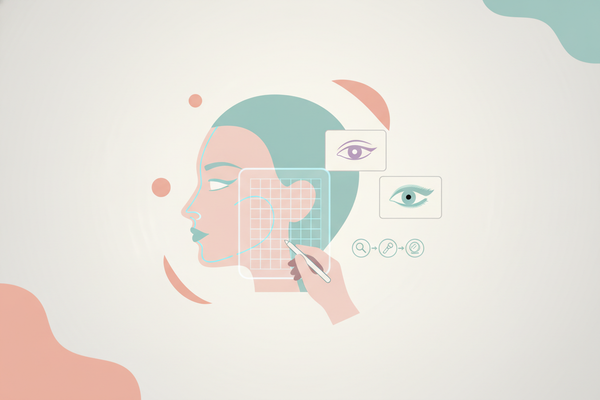
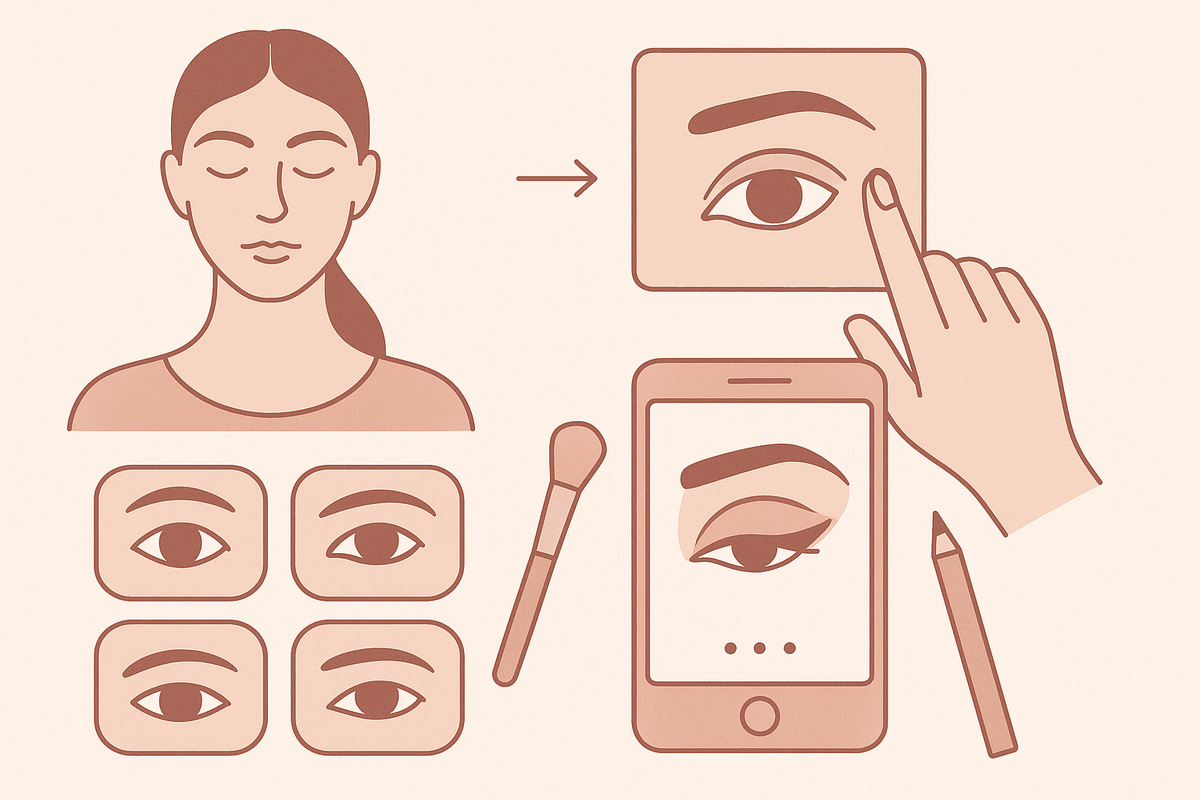
Still not sure? Use a quick eye shape chart or the AI-powered analyzer in Makeup Check AI for instant results.
Step 5: Measure Eye Spacing—Close-Set, Average, or Wide-Set
Spacing affects both the perceived shape of your eyes and how you should place your shadows and liner:
- Measure the distance between your eyes. If it’s less than the width of one eye, your eyes are close-set.
- If the distance equals one eye width, your eyes are average-set.
- If it’s wider than one eye, your eyes are wide-set.
Tip: For close-set eyes, focus lighter shades on the inner corners to create the illusion of space. For wide-set eyes, use deeper shades on the inner corners to bring the eyes closer together.
Step 6: Note Depth—Deep-Set or Prominent Eyes
Depth or projection relates to how much your eyes appear to recede or pop out from the brow bone:
- Deep-Set Eyes: The brow bone is more prominent, and the eyes sit further back in the socket. Shadows may naturally fall over the crease.
- Prominent Eyes: The eyes appear to project outward, with the lids and crease fully visible.
For deep-set eyes, use lighter shadows on the lid to bring them forward. For prominent eyes, matte, medium tones can help recede the lid for balance.
Step 7: Combine Clues—Quick Eye Shape Chart or Flowchart
With all the clues gathered, match your features to the most common eye shapes:
- Almond
- Round
- Monolid
- Hooded
- Upturned
- Downturned
- Close-set, wide-set, average-set
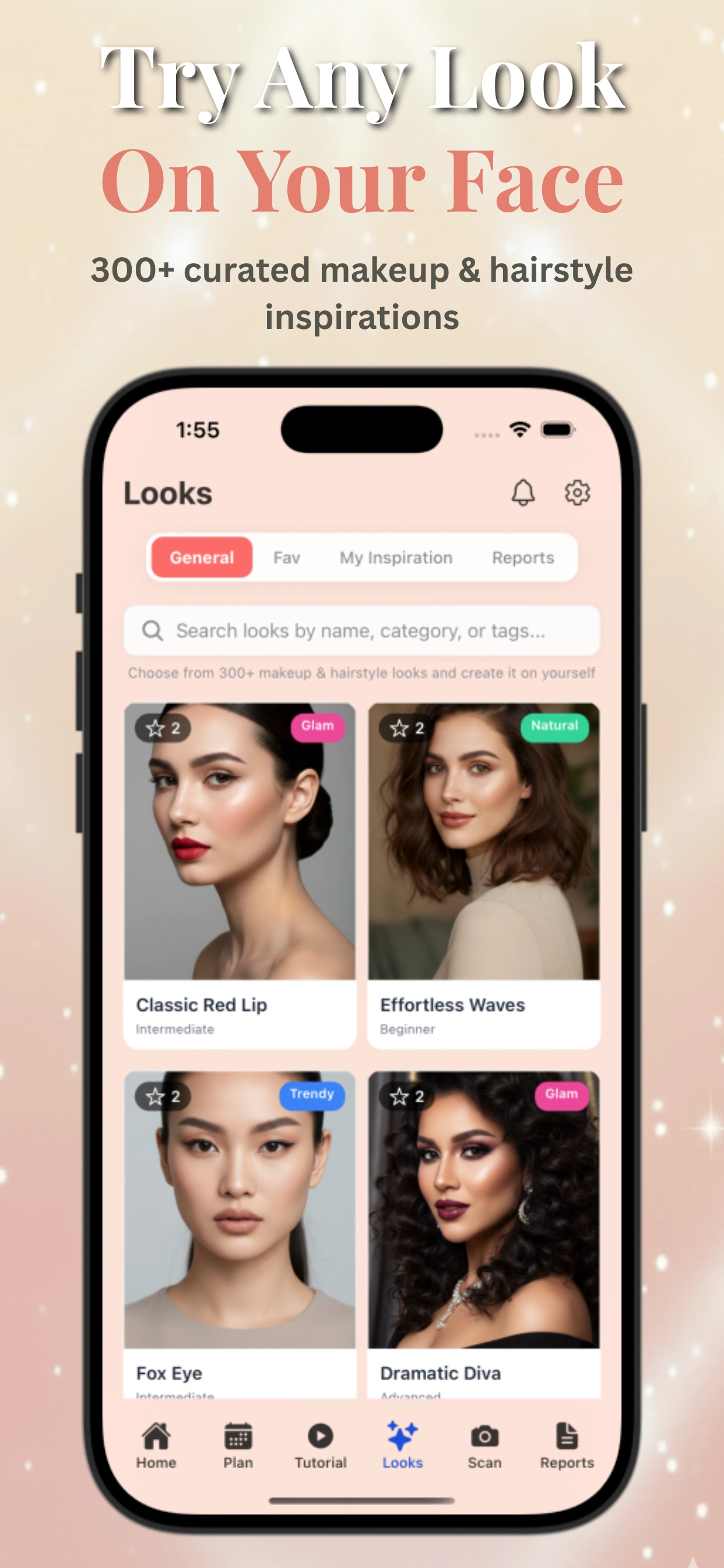
If you’re still unsure, try the eye shape analyzer feature in Makeup Check AI, which instantly scans your face, matches your features, and recommends personalized looks for your unique eye shape. You can also learn more about how AI is transforming personalized makeup in this article.
Step 8: Unlock Makeup Techniques for Your Eye Shape
Now that you’ve identified your eye shape, you can apply specific makeup tips for eyeshadow placement, eyeliner, and more:
- Almond Eyes: Most versatile—try winged liner and gradient shadow. Learn more in our almond eye makeup guide inside the app.
- Round Eyes: Elongate with liner along the upper lash line; focus eyeshadow on the outer corners to create almond-like definition.
- Hooded Eyes: Apply shadow above the natural crease to open up the lid. Avoid thick liner, which can disappear when eyes are open. See hooded eye makeup tutorials for step-by-step help.
- Monolid Eyes: Use gradient shadow from lash to brow, and tightline liner to define. Monolid eye makeup techniques maximize visible lid space.
- Upturned/Downturned Eyes: For upturned, balance with liner on the lower lash line; for downturned, lift the outer corners with upward-flicked shadow and liner.
Want to see these effects instantly? Try 300+ looks on your face virtually, or access 100+ video tutorials tailored to your shape with Makeup Check AI’s tools, as highlighted in this guide.
Tips & Common Mistakes
- Don’t rely on one feature alone—combine all clues for accuracy.
- Eye shape can change slightly with age, skin, or makeup, but the underlying structure remains.
- Using the wrong eyeshadow placement for your eye shape can make eyes look smaller or unbalanced.
- Test different techniques in front of the mirror to see what flatters you best.
- Take a clear photo for reference, or use an AI-based tool to double-check your results.
Conclusion
Learning how to tell your eye shape is the first step toward mastering makeup looks that enhance your natural beauty. With a few minutes and good light, you can discover whether you have almond, round, hooded, monolid, upturned, or downturned eyes—and unlock the best eyeshadow and eyeliner placements to make your eyes pop. If you want instant, AI-powered analysis and personalized makeup suggestions, explore Makeup Check AI for 24/7 beauty guidance, try-on tools, and tutorials tailored exactly to you. Ready to see your best eyes ever?
FAQ
- How do I tell if I have almond eyes or round eyes?
Almond eyes have an iris that touches both the top and bottom eyelids and no visible white above or below the iris. Round eyes show white above or below the iris and appear more open or circular. - How can I know if my eyes are hooded or monolid?
Hooded eyes have a crease covered by a fold of skin from the brow bone, while monolids have no visible crease at all. Check in natural light with no makeup for best results. - What does it mean if the outer corners of my eyes point up or down?
If your outer corners are higher than a horizontal line through your eye, they're upturned. If they're lower, they're downturned. This affects eyeliner and shadow placement. - How do I measure if my eyes are close-set or wide-set?
Measure the space between your eyes. If it's less than one eye width, they're close-set. If more, they're wide-set. Eyeshadow placement can help balance this. - Can eye shape change with age, makeup, or hooded lids?
Basic bone structure stays the same, but lids can become more hooded or deep-set with age. Makeup tricks can adjust the perceived shape. - What is the easiest way to identify my eye shape at home?
Use a mirror in natural light, follow the steps above, or try an instant scan with AI-powered apps like Makeup Check AI for fast, accurate results.