What Areas of the Face Determine Symmetry and Balance with AI Face Mapping Tutorial
Learn expert symmetry enhancing makeup techniques to correct common facial asymmetries and boost your confidence with balanced beauty.

Estimated reading time: 12 minutes
Key Takeaways
- Learn what areas of the face determine symmetry and balance and how the placement of light and dark colors in a makeup design can enhance these areas using AI-powered face mapping for personalized results.
- Use contouring, highlighting, and blending strategies tailored to your facial features to create a balanced, harmonious appearance.
- Master brow mapping, eyeshadow placement, and lip liner techniques to correct and even facial features with personalized AI recommendations.
- Apply color theory and choose the right makeup tools to maximize symmetry every time you apply makeup.
- Avoid common mistakes and get AI-driven tips for a natural, symmetrical look that complements your unique face.
Table of Contents
- Introduction to Facial Symmetry and Key Areas
- The Role of Makeup in Enhancing Symmetry
- Key Makeup Techniques
- Face Shape Customization
- Tools and Products
- Common Pitfalls
- Expert Tips and Tricks
- Conclusion
Introduction
What areas of the face determine symmetry and balance? Understanding these key zones is essential for applying makeup that enhances your natural features and creates facial harmony. The strategic placement of light and dark colors in your makeup design can visually balance your face—especially when guided by AI-powered face mapping tools like Makeup Check AI. Key facial areas such as the eyebrows, eyes, cheeks, lips, nose, and jawline play critical roles in overall facial balance. By mastering facial symmetry techniques like contouring, highlighting, and blending, you can correct asymmetries and achieve a more even, attractive appearance.
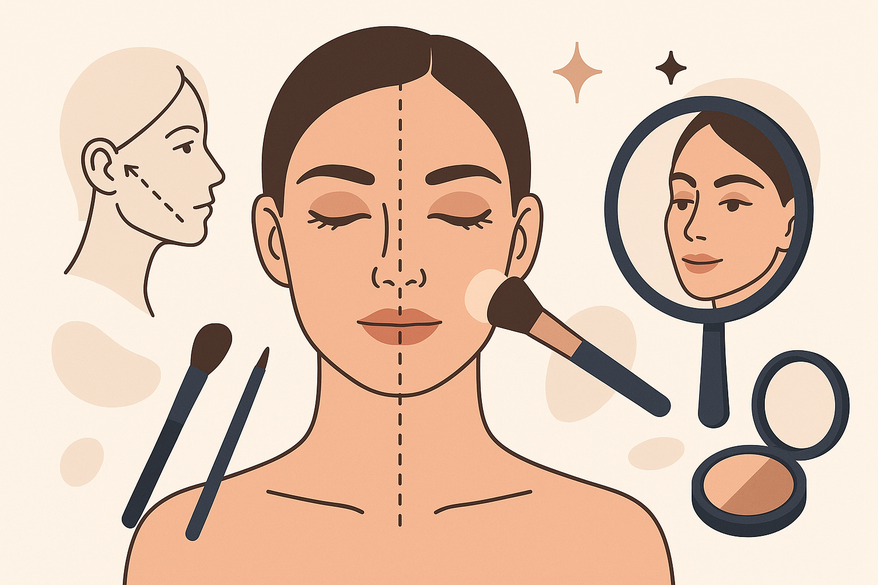
Facial symmetry refers to how closely the left and right sides of your face mirror each other across the vertical midline. Even subtle differences can impact how balanced and appealing your face looks. Studies show that faces with greater symmetry are often perceived as healthier and more youthful (facial feature guide).
This guide explains what areas of the face determine symmetry and balance and how AI face mapping can help you place makeup precisely to enhance these areas. You’ll learn practical techniques to correct uneven brows, lips, or cheeks, and get professional tips for a naturally harmonious look. Whether preparing for photos or boosting your confidence, these evidence-based tips provide a clear roadmap to facial balance. For truly personalized results, use AI-powered apps like Makeup Check AI to scan your face and receive tailored recommendations for symmetry enhancement based on your unique features. The app’s advanced facial mapping shows exactly where to apply light and dark shades, making symmetry simple and accessible. With just a quick scan, you get a visual map for precise placement, so you can confidently create balance every time you do your makeup.
1. Understanding Facial Symmetry and Key Areas
Facial symmetry measures how closely the left and right sides of your face mirror each other. Perfect symmetry is rare, but even subtle differences can affect overall harmony and attractiveness. Recognizing and addressing these imbalances is the first step in mastering facial symmetry techniques for beauty enhancement. AI apps like Makeup Check AI can help you instantly identify your unique asymmetries, giving you a customized plan for correction.
Key areas that determine facial symmetry and balance include:
- Eyebrows: Height, shape, and arch alignment influence upper-face symmetry.
- Eyes: Eyelid creases, size, and position affect eye symmetry.
- Cheeks: Volume and contour differences impact balance.
- Nose: Width and alignment affect central facial balance.
- Lips: Shape, fullness, and corner height contribute to smile symmetry.
- Jawline: Contour and width influence lower-face balance.
Common asymmetries include:
- Uneven eyebrow height or shape
- Differing eyelid creases or droopiness
- Lopsided lips or uneven fullness
- One cheek appearing fuller or higher
Factors contributing to imbalances:
- Genetics—natural bone structure and muscle placement
- Muscle use—habitual expressions developing one side more
- Aging—gravity and collagen loss affecting one side faster
By learning to spot your unique asymmetries and understanding what areas of the face determine symmetry and balance, you can apply the right facial symmetry techniques for beauty enhancement and achieve a polished, balanced look. For more on brow mapping, check brow symmetry techniques and this video tutorial.
2. The Role of Makeup in Enhancing Symmetry
Makeup is a powerful tool for facial symmetry techniques and beauty enhancement. The strategic placement of light and dark colors in your makeup design can create symmetry and visually balance your features, especially through contouring and highlighting. Applying these techniques can correct asymmetries and enhance your natural beauty. AI-powered apps like Makeup Check AI provide instant, personalized feedback on where to place each shade for your unique face, taking the guesswork out of symmetry. The app’s face scan identifies which areas need light or dark shades, so you can achieve balanced features with confidence.
Psychological benefits of symmetry:
- Increased self-esteem—balanced features boost confidence
- Enhanced attractiveness—symmetry linked to health and youth perceptions
- Positive first impressions—beneficial for photos and in-person views
Using makeup for symmetry not only refines your look but also supports your confidence and well-being. For more insights, visit the facial feature guide.
3. Key Symmetry Enhancing Makeup Techniques
A. Contouring for Symmetry
Contouring uses dark shades to create depth and recede fuller areas, while lighter shades bring features forward. The careful placement of light and dark colors in your makeup design can create symmetry and help both sides of your face look more balanced. For example, contouring one side of the jaw or cheek more can visually correct unevenness. AI-powered apps like Makeup Check AI generate personalized contour maps based on your facial scan, showing exactly where to shade for symmetry.
Step-by-step:
- Map Asymmetry: Identify the side with extra width—nose wing, cheek, or jawline. Use Makeup Check AI to pinpoint these areas visually.
- Apply Contour: Use an angled brush and a product one to two tones darker than your skin to shade fuller or less defined areas.
- Blend Smoothly: Use small circular motions, blending upward and outward for a natural shadow.
For more on precision contouring, see the AI contouring tutorial.
B. Highlighting for Symmetry
Highlighting uses light colors to bring features forward and visually correct asymmetry. This step balances your face and makes features appear more even. When placed correctly, light shades can lift or widen areas that need balance, such as the arch of one brow or the center of the lips. Makeup Check AI suggests highlight placement tailored to your face’s unique structure, making it easy to get even, luminous results.
Step-by-step:
- Identify Low Points: Bridge of nose, brow bone, center of chin. AI scanning highlights these zones for you.
- Dot Highlighter: Apply small dots of a highlighter one to two shades lighter than your skin tone on these areas.
- Blend with Sponge: Use a damp beauty sponge to pat and diffuse product at the center of each feature.
Highlighting counterbalances contour and draws attention evenly across both sides. For additional tips, revisit the facial feature guide.
C. Blending Tips
Seamless blending is essential for effective facial symmetry techniques and beauty enhancement. Avoid harsh lines to maintain visual harmony. The transition between light and dark colors should be smooth, ensuring your contour and highlight work together to create a unified, symmetrical effect. AI-powered recommendations can show which areas need extra blending for a flawless look.
Tools and technique:
- Use a damp beauty sponge or a synthetic blending brush.
- Employ bounce-and-pat motions for even diffusion.
- Lighten pressure at edges to avoid color rings.
Good blending unifies contour and highlight, creating a smooth, symmetrical result. Explore more at the facial feature guide.
D. Brow Mapping
Brow mapping is a classic symmetry technique. Using a brow pencil to create the same start, arch, and tail placement on both brows helps even out facial features. The right placement of light (highlight under the brow) and dark (brow pencil or powder) colors enhances the effect and brings symmetry to your upper face. Makeup Check AI analyzes your brow symmetry and suggests custom mapping points for each brow, so you can fill and shape with confidence.
Step-by-step:
- Mark Start: Align pencil vertically from nostril to brow.
- Mark Arch: Pivot pencil from nostril through outer iris.
- Mark Tail: Pivot pencil from nostril to outer corner of eye.
- Fill Sparse Areas: Use short, hair-like strokes with a brow pencil.
- Blend with Spoolie: Brush through each brow to soften color and check symmetry.
Discover more in the brow symmetry techniques and video tutorial.
E. Eyeshadow Placement
The placement of light and dark eyeshadow colors can visually correct uneven crease height and lid shape. Applying a lighter shade to the inner corner and brow bone, and a deeper shade to the outer corner, helps create the illusion of symmetrical eyes. Adjusting your application on each eye can make them appear more similar in size and shape. With AI-powered analysis, you get specific advice for your unique eye shape and symmetry needs, ensuring even the smallest asymmetries are addressed.
Techniques for balance:
- Lift Lower Lid: Place shadow slightly higher on the droopier eye.
- Neutral Base: Apply a skin-tone shadow to flatten a deeper crease.
- Eyeliner Tricks: Extend liner on the smaller eye to elongate. Tight-line to unify lash gaps on both sides.
Even subtle shifts in eyeshadow placement can equalize the appearance of your eyes. For advanced techniques, see asymmetric makeup tips.
F. Lip Liner Strategy
Lip liner is an easy facial symmetry technique for beauty enhancement. It helps correct lopsided lips and creates a more even smile by balancing the placement of liner and lipstick shades. Using a slightly lighter or darker liner on different sections can enhance symmetry. Makeup Check AI helps you map exactly where to adjust your lip liner for a perfectly balanced result, giving precise guidance for both upper and lower lips.
Step-by-step:
- Trace Natural Line: Outline both lips lightly.
- Overdraw Thinner Side: On the side with less fullness, slightly overdraw the lip line to create balance.
- Fill In: Use lipstick to blend liner and create a seamless look.
- Highlight Cupid’s Bow: Apply a small dot of highlighter to the cupid’s bow center to draw attention evenly.
These simple lip liner adjustments can make a big difference in facial symmetry and overall balance.
4. Face Shape Customization
Understanding your face shape helps tailor symmetry techniques more effectively. Makeup Check AI analyzes your face shape and suggests specific contour, highlight, and color placements that enhance balance for your unique structure. Whether you have oval, round, square, heart, or diamond-shaped face, customized makeup application can optimize symmetry and beauty.
5. Tools and Products
Using the right tools is essential for achieving perfect symmetry. Recommended tools include angled contour brushes, synthetic blending brushes, damp beauty sponges, precision brow pencils, and creamy lip liners. High-quality, blendable products in shades that complement your skin tone ensure seamless application and natural results.
6. Common Pitfalls
Avoid heavy-handed contouring or highlighting that creates unnatural shadows. Overdrawing brows or lips too much can look obvious rather than balanced. Neglecting blending leads to harsh lines that disrupt symmetry. Relying on guesswork rather than personalized analysis often results in uneven makeup. AI face mapping tools like Makeup Check AI can help you avoid these mistakes by providing precise, tailored guidance.
7. Expert Tips and Tricks
- Always start with a clean, moisturized face for even product application.
- Use natural light when applying makeup to better judge symmetry.
- Regularly update your AI face scan to track changes and adjust your makeup plan.
- Practice subtle adjustments rather than drastic changes to maintain natural beauty.
- Combine symmetry techniques with color-season analysis for a harmonious overall look.
Conclusion
Knowing what areas of the face determine symmetry and balance is the foundation of effective makeup application. Using AI face mapping from apps like Makeup Check AI, you can receive personalized, precise recommendations for contouring, highlighting, and color placement that enhance your natural features and create facial harmony. By mastering these techniques and avoiding common pitfalls, you can achieve a balanced, confident look that highlights your unique beauty every day.
FAQ
What areas of the face determine symmetry and balance?
Key areas include the eyebrows, eyes, cheeks, nose, lips, and jawline. These zones influence how balanced your face appears and are the focus of contouring and highlighting techniques.
How can AI face mapping help with facial symmetry?
AI face mapping analyzes your unique facial structure and asymmetries, providing personalized makeup placement guidance for contouring, highlighting, and color application to enhance symmetry.
Which makeup techniques improve facial symmetry?
Contouring to shade fuller areas, highlighting to bring forward features, precise brow mapping, eyeshadow placement, and lip liner adjustments are key techniques to create facial balance.
Can makeup completely fix facial asymmetry?
While makeup can visually balance many asymmetries and enhance harmony, it cannot alter bone structure. It is a powerful tool to create the appearance of symmetry and boost confidence.
What tools are best for applying makeup to enhance symmetry?
Use angled contour brushes, blending sponges, synthetic brushes, precise brow pencils, and creamy lip liners for smooth, controlled application that supports symmetry.