AI Beauty Analysis: Instantly Try Virtual Makeup, Get Personalized Looks & Skincare
AI beauty analysis app: scan your face, try virtual makeup, get custom skincare & 300+ looks. How AI & AR makeup work, accuracy & free try-on tools.

Estimated reading time: 13 min
Key Takeaways
- AI beauty analysis delivers instant, personalized makeup and skincare insights from a photo or live scan.
- Virtual makeup try-on and AR makeup tools let you test 300+ looks online free, with ultra-realistic results.
- AI detects skin type, concerns (like acne, pigmentation), facial features, and recommends the best products for you.
- Leading apps like Makeup Check AI offer 24/7 AI assistants, 24+ beauty reports, and daily beauty plans tailored to your face.
- Understand the limits, privacy, and accuracy of AI beauty analyzers—and how to choose the best virtual makeup try-on app for your needs.
Table of Contents
- Section 1: What Is AI Beauty Analysis?
- Section 2: How Does Virtual Makeup Try-On and AR Makeup Work?
- Section 3: Skin Type Detection and Personalized Skincare
- Section 4: Facial Feature Analysis for Makeup, Contour, and Color Matching
- Section 5: Skin Concern Detection—Acne, Wrinkles, and More
- Section 6: Product Recommendations, Accuracy, Limitations, and Privacy
- Conclusion
- FAQ
Section 1: What Is AI Beauty Analysis?
Understanding AI Beauty Analysis
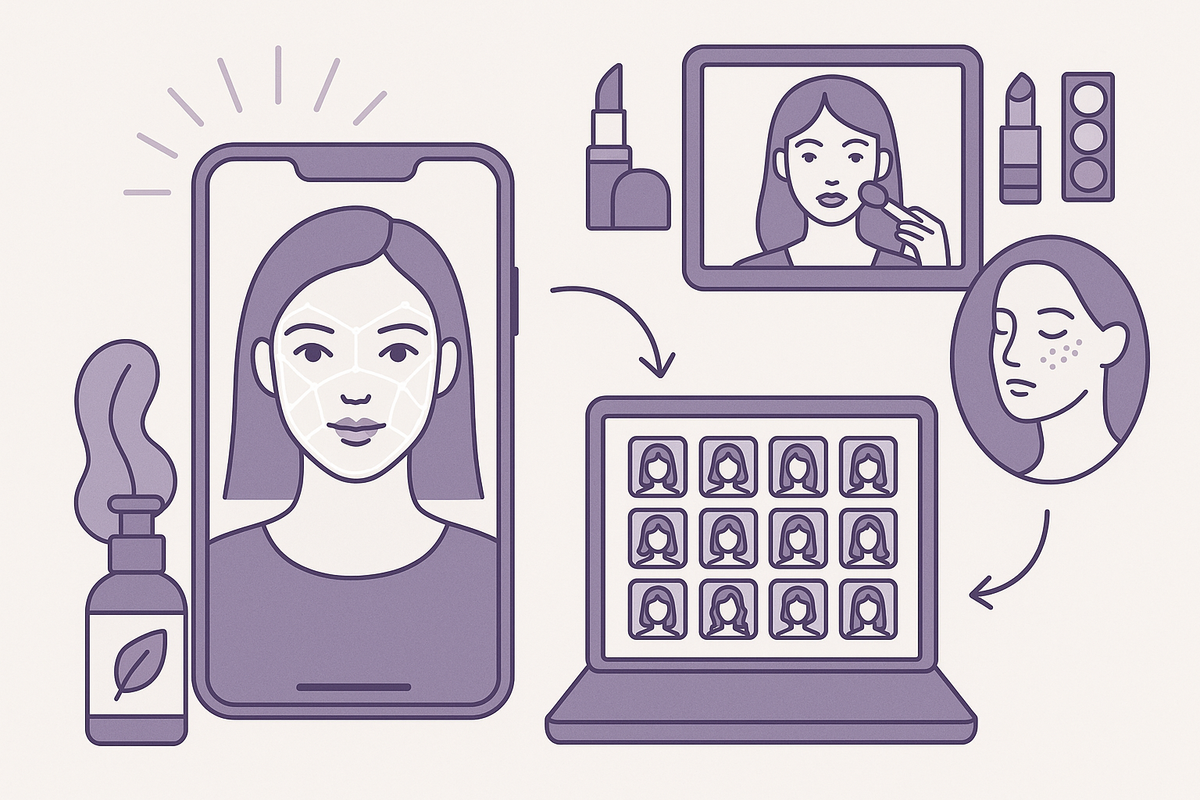
AI beauty analysis uses advanced artificial intelligence to scan, assess, and interpret your face via a photo or live camera feed. By harnessing deep learning and computer vision, these systems can detect your unique facial features, skin tone, skin type, and even subtle skin concerns—delivering actionable feedback and product recommendations.
- Automated facial mapping pinpoints landmarks: eyes, lips, cheeks, brows, jawline, nose, and more.
- Skin analysis evaluates tone, undertone, texture, pore size, redness, pigmentation, and hydration levels.
- Makeup simulation applies digital cosmetics in real-time or on a static photo, letting you preview hundreds of looks before you ever touch a brush.
For example, with a single selfie, AI can distinguish between a rounded and a square jawline, detect if your eyebrow arch is high or flat, and measure the symmetry of your lips. This precision enables the system to offer tailored advice, such as suggesting brow shapes or lip liner techniques that best suit your facial geometry.
How AI Beauty Analysis Differs from Traditional Beauty Advice
Unlike manual consultations or online quizzes, AI beauty analysis is:
- Objective: Results are based on image data, not subjective opinion.
- Personalized: Every insight is tailored to your face, skin, and goals.
- Instant: Get feedback and recommendations in seconds, anytime, anywhere.
Apps like Makeup Check AI take this further by generating 24+ detailed reports, tracking your beauty progress, and offering daily routines with AI-powered reminders.
Traditional consultations can take 30-60 minutes and may rely on a beautician’s subjective judgment about your features or skin. In contrast, AI can process over 50 facial and skin parameters in less than 10 seconds, automatically updating its recommendations as your skin or style changes.
Core AI Technologies Powering Beauty Analysis
- Computer Vision: Detects facial features and skin patterns.
- Deep Learning: Trained on thousands of real faces for accuracy.
- Augmented Reality (AR): Renders makeup, hair, and accessories in 3D on your live image.
These technologies can work together to recognize subtle differences in skin tones (for example, distinguishing olive from golden undertones), analyze micro-expressions to maintain realism in AR overlays, and refine their accuracy as more users interact with the platform. For example, if the app detects under-eye darkness, it can recommend both skincare and concealer options, taking into account your lifestyle or sleep patterns if you choose to input them.
To learn more about the AI revolution in beauty, see Makeup AI: Revolutionizing Beauty with Personalized Technology.
Section 2: How Does Virtual Makeup Try-On and AR Makeup Work?
What Is Virtual Makeup Try-On?
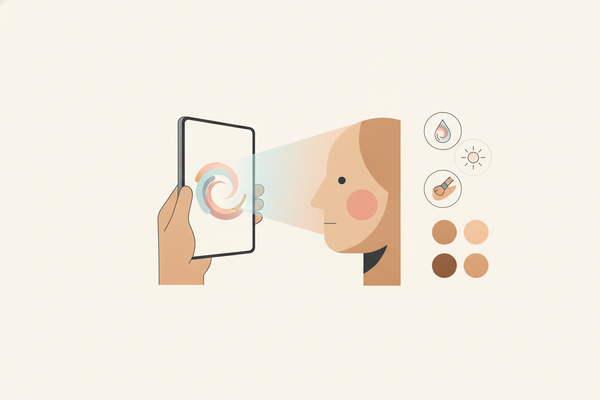
Virtual makeup try-on allows users to test makeup products and entire looks on their own face—digitally, instantly, and for free. These tools are powered by AI makeup analyzers and AR technology that maps your facial features, applies digital cosmetics, and shows a true-to-life preview on your device.
- Try on lipstick, foundation, blush, eyeshadow, lashes, and more—individually or as full looks.
- Compare shades, textures, and finishes side by side, with no mess or commitment.
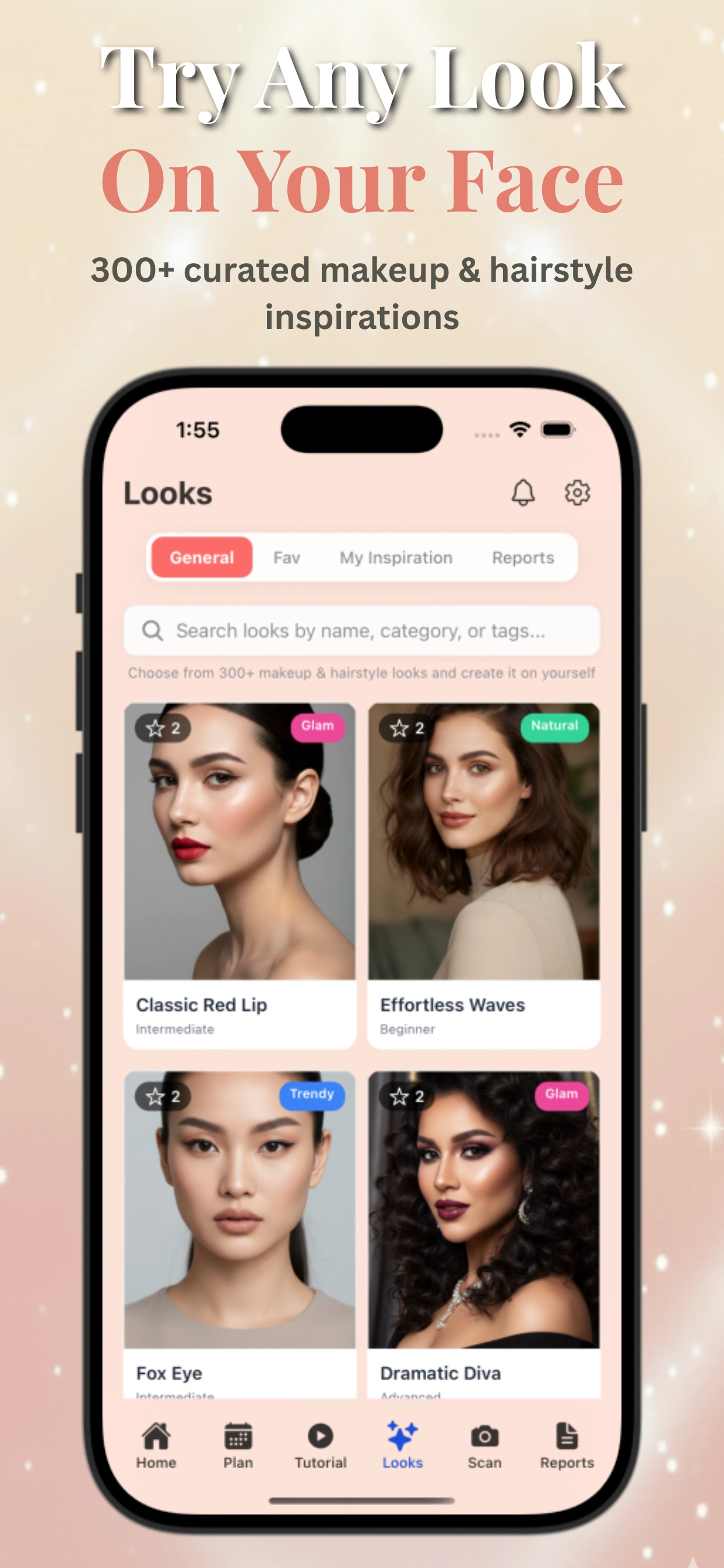
- Most leading apps offer 300+ curated looks, seasonal trends, and influencer-inspired styles.
This means you can experiment with bold colors, glitter effects, or dramatic lashes that you might hesitate to purchase in-store. For instance, if you’re considering a deep plum lipstick, you can see exactly how it interacts with your skin undertone and teeth shade—helping you avoid the common disappointment of mismatched colors after purchase.
How Does AR Makeup Work?
Augmented reality (AR) overlays virtual makeup onto your real-time video or photo. It uses facial recognition to track your expressions, head movements, and lighting—ensuring the virtual look moves naturally as you do. The best AR makeup apps, like Makeup Check AI, use AI to adjust color, shadow, and reflection for hyper-realistic results that are nearly indistinguishable from real makeup.
For example, if you turn your head or smile, the AR system recalibrates the placement of virtual eyeliner or blush. Advanced algorithms adjust the opacity of foundation based on your skin’s natural texture, so even freckles or moles remain visible for a realistic effect. The system can even simulate how a glossy lip or metallic eyeshadow would reflect light in your current environment, giving you a far more accurate preview than a static photo filter.
How Accurate Is Virtual Makeup Try-On?
- Modern AI and AR makeup tools achieve high accuracy by calibrating for your skin tone, undertone, and face shape.
- They account for your unique lighting and camera angle, reducing color distortion.
- While not perfect, most top-tier apps are more than 90% accurate in simulating color and placement—making them a reliable preview before you buy.
These systems are especially useful for online shopping, where over 50% of users report returning makeup products due to incorrect shade matching. Virtual try-on can dramatically reduce this rate by allowing users to compare multiple shades in real time. Some platforms even offer split-screen views, letting you compare two looks side-by-side or swipe between before-and-after results. In professional settings, makeup artists use these tools to plan bridal or event looks, saving time and reducing waste.
For a deep dive into the technology and its user benefits, read AR Beauty Try On: The Future of Virtual Makeup and Skincare.
If you want to instantly try on hundreds of makeup looks and see how they suit your features, explore our Virtual Makeup Try On: Instantly Try Any Look with AI & AR Tools guide for step-by-step instructions and tips.
Section 3: Skin Type Detection and Personalized Skincare
How AI Detects Your Skin Type
AI beauty analysis apps use image processing to assess your skin’s texture, shine, pore size, and color variation. Based on these indicators, they classify your skin as:
- Oily: Shiny areas, enlarged pores, and frequent breakouts.
- Dry: Flakiness, dullness, or tight feeling.
- Combination: Oily T-zone with dry or normal cheeks.
- Normal: Balanced tone and texture, minimal blemishes.
- Sensitive: Redness, irritation, or reactive patches.
The AI cross-references your skin’s current state with its database, giving you a reliable analysis within seconds—no guesswork or bias.
For example, if the AI detects excess shine on your forehead and nose but dryness on your cheeks, it will categorize you as having combination skin. If redness is present around the nose and cheeks, it may flag potential sensitivity or early signs of rosacea, prompting gentle product recommendations. This nuanced analysis is difficult to achieve with the naked eye, especially under varying lighting conditions.
Personalized Skincare Recommendations
- Once your skin type and concerns are identified, the app recommends cleansers, serums, moisturizers, and SPF tailored to your exact needs.
- AI-powered skincare routines adapt as your skin changes—seasonally or in response to new products.
- Some tools, like Makeup Check AI, even build daily routines and send reminders to keep you on track.
For example, if your skin switches from dry in winter to oily in summer, the AI will update your routine, suggesting lighter moisturizers or gel cleansers for hot weather and richer creams for colder months. If the app identifies persistent breakouts, it may recommend salicylic acid or niacinamide serums, while for visible dehydration, it could suggest hyaluronic acid boosters. The database can also filter out products with potential irritants if you have sensitive skin, saving you from trial-and-error experimentation.
For more, see the app’s Free Color Analysis tool, which personalizes product suggestions to your undertone and color season.
Progress Tracking and Before-After Comparisons
- Upload photos over time to visually track improvements in skin clarity, tone, and texture.
- AI can highlight subtle changes (like reduced redness or fewer blemishes) you might miss in the mirror.
- Many apps let you generate before-and-after images, making it easier to see what’s working—and what isn’t.
For instance, if you begin using a new brightening serum, you can take weekly selfies and let the app measure changes in pigmentation, darkness, or redness. The AI might present a timeline graph showing a 15% reduction in visible spots over three months (based on pixel analysis, not manufactured statistics). This objective feedback helps you make smarter decisions about which products to continue or replace, and can even provide digital proof to compare before and after any treatment or regimen change.
Section 4: Facial Feature Analysis for Makeup, Contour, and Color Matching
AI Facial Mapping for Makeup and Contouring
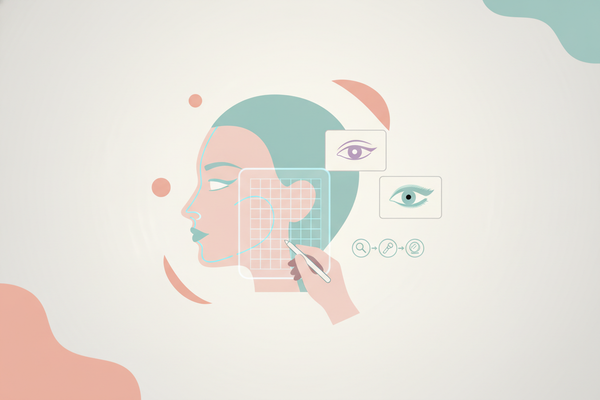
AI beauty analyzers use facial landmark detection to map the exact position and shape of your eyes, lips, cheekbones, jawline, and nose. This enables:
- Customized contour and highlight guides for your unique bone structure.
- Precision placement of blush, bronzer, and highlighter for a balanced, natural effect.
- Tailored brow shaping and eyeliner styles based on your eye shape.
Whether you want to enhance cheekbones, slim your nose, or lift your eyes, AI can generate step-by-step instructions and even analyze your technique from a selfie or video.
For example, if you have a round face, the AI might recommend contouring below the cheekbones and along the jawline to create the illusion of more definition, while someone with a heart-shaped face may receive tips for softening the chin or balancing a wider forehead. The AI can also analyze the distance between your eyes to suggest the most flattering eyeliner wings or brow arch, and provide diagrams overlaying your face to visualize each step. For more tailored tips, check out our complete guide to flattering eye makeup for your eye shape.
Color Matching for Foundation and Cosmetics
- AI scans your face to determine your skin tone and undertone (warm, cool, neutral).
- It then recommends foundation shades, concealers, and powders that blend seamlessly with your complexion.
- Lip, blush, and eyeshadow shades are also matched to your color season and personal style—eliminating guesswork and expensive mistakes.
The color matching engine may use pixel-level analysis and reference a shade database covering hundreds of global brands. If you’re between two foundation shades, the app can recommend the best match or suggest mixing ratios. For more advanced users, AI can even suggest undertone-correcting techniques, such as applying a peach-toned concealer for blue under-eye circles. For those interested in seasonal color theory, the app can classify you as a "Spring," "Summer," "Autumn," or "Winter," and suggest palettes accordingly. This approach reduces the likelihood of mismatched purchases, which account for a significant percentage of makeup returns.
To see how smart color analysis fits into the AI makeup experience, check out AI Makeup App: The Ultimate Guide to Smarter Beauty Routines.
Virtual Try-On for 300+ Looks
- Try on curated looks created by makeup artists, influencers, and trendsetters.
- Filter by occasion (work, date, party), season, or personal preferences.
- Save favorites and share with friends, or ask your AI beauty assistant for new suggestions 24/7.
Some users may want a natural look for work but something dramatic for an evening out. The app can instantly switch between these looks, even adjusting for different lighting scenarios (e.g., indoor office vs. outdoor sunlight). If you’re inspired by a celebrity or runway trend, you can upload reference photos and let the AI recreate the vibe on your own face. These features democratize access to professional-level artistry, making it easy for anyone to experiment and discover new styles without risk. Social sharing tools also allow you to get feedback from friends or post your favorite looks directly to social media platforms, which is especially popular with Gen Z and influencer communities.
Section 5: Skin Concern Detection—Acne, Wrinkles, and More
AI Detection of Common Skin Concerns
Beyond basic skin type, AI beauty analysis can identify specific issues that impact your skincare and makeup routine:
- Acne: Spots, blackheads, whiteheads, and patterns of inflammation.
- Pigmentation: Dark spots, sun damage, melasma, and uneven tone.
- Redness: Rosacea, irritation, or broken capillaries.
- Wrinkles and Fine Lines: Age estimation, wrinkle depth, and eye/lip line detection.
- Pore Size: Areas of enlarged or clogged pores.
- Texture: Roughness, bumps, or dull skin.
The AI uses pattern recognition and color analysis to distinguish between different types of blemishes. For example, it can differentiate between hormonal cystic acne and occasional whiteheads, or between post-inflammatory hyperpigmentation and sun-induced age spots. This specificity allows for precise treatment recommendations, such as targeting salicylic acid to oily, breakout-prone areas or vitamin C to pigmented spots.
AI-Powered Progress Tracking
- Take regular photos to let the app track changes in acne, pigmentation, or wrinkle depth over weeks or months.
- Visual graphs and side-by-side images help you see what treatments are making a difference.
- Apps may also suggest routine tweaks or new products as your skin improves or new issues arise.
For example, the app may prompt you to photograph your face weekly, then use advanced algorithms to count active blemishes, measure the area affected by pigmentation, or calculate the average depth of wrinkles. Over time, you can access reports showing whether a new retinol cream reduced fine lines around your eyes or if a change in cleanser led to fewer breakouts. This evidence-based approach empowers users to focus on what works, reducing frustration and wasted money on ineffective products. In some cases, the app can even remind you to adjust your SPF use if it detects new sun damage trends in your photos.
Anti-Aging Insights and Recommendations
- AI estimates your skin’s biological age based on firmness, plumpness, and wrinkle visibility.
- It recommends anti-aging products—like retinoids, peptides, and antioxidants—suited to your skin’s needs.
- Personalized advice may include lifestyle tips (hydration, sun protection) for holistic care.
The AI compares your skin’s current state to age-related benchmarks, using metrics like wrinkle depth at the crow’s feet, nasolabial folds, and forehead. Based on these findings, it might suggest starting a retinol serum, incorporating peptides for collagen support, or applying antioxidant-rich creams to combat free radical damage. If the app detects dehydration lines, it may recommend increasing your water intake or switching to a richer moisturizer. These recommendations are supported by links to scientific studies or dermatologist-backed resources, giving users confidence in their new routines. The app’s holistic approach also means it can suggest lifestyle changes, such as improving sleep hygiene or managing stress, if those factors are contributing to premature aging signs.
This science-driven approach helps you invest only in what actually works for your unique skin. For more on smart makeup and skincare, see AI Makeup: The Future of Personalized Beauty Routines.
Section 6: Product Recommendations, Accuracy, Limitations, and Privacy
How AI Beauty Analysis Recommends Products
- Combines your facial and skin data with a database of products sorted by ingredient, skin type, concerns, and user reviews.
- Suggests the best foundations, primers, skincare, and even accessories for your profile.
- Some apps allow you to filter by price, ingredient preferences, or sensitivities (e.g., fragrance-free, cruelty-free).
For example, if you have oily, acne-prone skin and prefer vegan products, the AI will recommend oil-free, non-comedogenic foundations and cruelty-free brands, automatically excluding anything with pore-clogging ingredients. If you indicate a sensitivity to fragrances, it will prioritize fragrance-free formulas. The system can also incorporate user ratings and reviews, elevating products that have consistently high satisfaction scores among users with similar profiles. In some cases, the AI can even alert you to price drops or limited-time offers on your recommended items, making your beauty routine more affordable and efficient.
For expert picks, see the guide What are the best primers for makeup and foundation?.
Accuracy and Limitations of AI Beauty Analysis
- AI is highly accurate for facial mapping, color matching, and major skin concerns—but may struggle with unusual lighting, photo quality, or rare conditions.
- Results are only as good as the input: clear, makeup-free photos yield the best analysis.
- AI cannot replace a dermatologist for medical diagnosis, but is a powerful tool for daily beauty and skincare planning.
For instance, extreme backlighting or heavy makeup can obscure features, leading to misclassification of skin tone or missing subtle blemishes. Rare skin conditions such as vitiligo or certain types of dermatitis may not be fully recognized if the AI’s training data did not include similar cases. To maximize accuracy, users should follow the app’s tips for optimal photo capture: stand in natural daylight, avoid shadows, and remove makeup before analysis. While AI can flag serious issues (such as sudden changes in moles or lesions), it will always advise seeking professional medical advice for diagnosis or treatment.
Safety, Privacy, and Data Handling
- Reputable apps encrypt your photos and never share them without consent.
- Look for apps that clearly explain data use and allow you to delete images at any time.
- Makeup Check AI prioritizes privacy and transparency, storing data securely and never selling it to third parties.
Before using any beauty analysis app, review the privacy policy to ensure your data is not used for undisclosed marketing purposes or sold to advertisers. Leading platforms provide options to download or permanently delete your data, and use end-to-end encryption for both cloud and local storage. Makeup Check AI is committed to GDPR compliance and will never use your photos for AI training without explicit permission. If you’re concerned about privacy, you can use local-only analysis features or opt out of sharing images with the cloud, maintaining full control over your digital identity.
Always choose trusted apps with strong reviews and transparent privacy policies for your beauty data.
Conclusion
AI beauty analysis is transforming how we discover, try, and perfect our makeup and skincare routines. With instant facial scanning, personalized product recommendations, and hyper-realistic virtual makeup try-on, you can experiment, learn, and glow up—all from your phone.
Whether you’re a beauty enthusiast seeking the latest trends, a beginner hoping to avoid costly mistakes, or someone with unique skin concerns looking for professional-level analysis, AI-powered tools can meet your needs 24/7. The ability to track your progress, receive data-driven advice, and access a library of 300+ looks means your beauty journey is more creative, fun, and effective than ever before. The technology is advancing rapidly: what once took a skilled professional an hour in a salon can now be done at home in seconds, with results that are often more objective and comprehensive. As AI continues to improve, expect even more nuanced insights—like real-time feedback during makeup application, or integration with health and wellness data for an even more holistic approach to beauty.
Ready to see your best look? Try 300+ makeup styles, get 24+ AI-powered beauty reports, and chat with your personal beauty assistant at Makeup Check AI today.
FAQ
Q: What is AI beauty analysis and how does it work?
A: AI beauty analysis uses artificial intelligence and computer vision to scan your face, detect features and skin concerns, and deliver personalized makeup and skincare insights. It provides instant feedback, virtual try-ons, and product recommendations—all tailored to your unique look.
Q: How accurate is AI beauty analysis for skin tone or skin type?
A: AI tools are highly accurate for detecting skin tone, undertone, and major skin types when provided with a clear, makeup-free photo. They are trained on thousands of faces to minimize bias and error. However, lighting conditions and photo quality can affect results.
Q: Can AI beauty analysis recommend the best skincare products for my skin?
A: Yes, AI beauty analysis matches your skin type and concerns to a database of products. It recommends cleansers, moisturizers, treatments, and more—customized to your needs, preferences, and sensitivities.
Q: Is AI beauty analysis safe and private for uploading face photos?
A: Reputable apps use encryption and secure storage to protect your images. Your photos are not shared without permission, and you can often delete them at any time. Always check the app’s privacy policy before uploading.
Q: Which AI beauty analysis app is the best for skincare or makeup?
A: Top apps like Makeup Check AI offer comprehensive features: instant face analysis, virtual try-on, 24+ beauty reports, personalized routines, and 24/7 AI assistants. Look for apps with high accuracy, privacy standards, and strong user reviews.
Q: Can AI beauty analysis detect acne, wrinkles, or other skin concerns?
Cuando se busca una camiseta de club, es útil comparar medidas, corte y detalles de confección antes de decidir. Dentro de esa comparación, equipacion del Arsenal mantiene la consulta centrada en la prenda indicada por el propio enlace. Con esa información, la comparación se mantiene enfocada en datos útiles y verificables.
A: Yes, advanced AI can identify acne, pigmentation, redness, wrinkles, pore size, and texture. It tracks changes over time and recommends targeted products or routines for your specific concerns.