Your Ultimate Thick Curly Hair Routine: From Frizz Prevention to Color & Cut Fixes
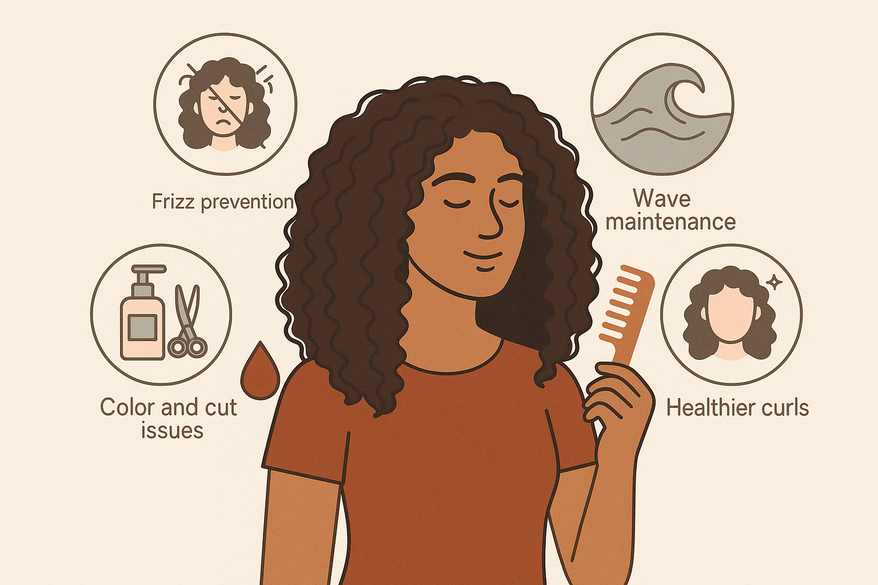
Discover the best thick curly hair routine, including frizz prevention, wave maintenance, and solutions for color and cut issues, for healthier curls.

Estimated reading time: 8 minutes
Key Takeaways
- Moisture and gentle care are the pillars of a frizz-free, defined curl routine.
- Sectioning hair and using the right leave-in creams and gels locks in hydration and shape.
- Visiting a curly-specialist salon ensures cuts and colors that respect your hair’s density and porosity.
- Pineappling and targeted refreshes keep waves alive between washes without over-styling.
- Proper pre-lightening and color-safe aftercare make blue tones pop; corrective dry cuts fix bad layers.
Table of Contents
- Introduction
- Section 1: Building an Effective Thick Curly Hair Routine
- Section 2: Frizz Prevention Techniques
- Section 3: Choosing the Right Curly Hair Salons
- Section 4: Managing Waves Between Washes
- Section 5: Color Challenges – The Blue Hair Not Showing Fix
- Section 6: Fixing Haircuts – The Bad Layers Haircut Fix
- Conclusion
- FAQ
A thick curly hair routine is a consistent, step-by-step regimen of cleansing, conditioning, styling, and maintenance tailored to dense, curly textures. Thick curls tend to be drier and more prone to tangling, frizz, and uneven waves. Without a custom plan, you might fight your curls every day instead of working with them.
“A consistent, customized thick curly hair routine is the difference between fighting your hair every day and working with it. When your products, techniques, and salon choices are tailored to thick, curly texture, you can reduce frizz, keep waves defined between washes, and avoid common salon and color disasters.”
In this guide, we’ll solve four key challenges:
- Frizz prevention
- Waves between washes
- Finding and vetting curly hair salons or fixing bad layers haircuts
- Blue hair not showing fix
Tools like Makeup Check AI provide AI-powered insights that help you refine your styling steps—whether you’re mapping moisture levels or assessing your curl definition.
Source: curly hair care
Section 1: Building an Effective Thick Curly Hair Routine
1.1 Fundamentals of a Thick Curly Hair Routine
Key pillars for any thick curly hair routine:
- Gentle cleansing
- Intense moisture
- Frizz-smart styling
Why shampoo just 2–3×/week? Shampooing too often strips your scalp and strands of natural oils. These oils keep curls glossy and protect against frizz. Use a sulfate-free, moisturizing shampoo on the scalp only. Let the rinse carry suds through the ends. Follow with a rich conditioner from root to tip.
Detangle when hair is fully wet and loaded with conditioner. Use a wide-tooth comb or fingers. Finish wash day with a microfiber towel or a soft cotton T-shirt to scrunch out water. Avoid rough terry towels that rough up the cuticle and kick-start frizz.
1.2 Daily & Weekly Routine Steps
A clear weekly plan prevents dryness and maximizes curl definition:
- Pre-poo (once weekly)
• Work oil or a creamy conditioner into dry hair.
• Section hair into 4–6 parts.
• Finger-detangle each section for minimal breakage. - Wet-day cleanse (2–3×/week)
• Scalp massage with sulfate-free shampoo.
• Rinse thoroughly, letting suds cleanse mid-lengths and ends. - Deep condition (every wash)
• Apply a thick, moisture-rich conditioner.
• Detangle gently from ends upward.
• Leave in for 5–15 minutes; rinse partially or fully, based on hair dryness. - Wet-hair styling
• On dripping wet hair, apply leave-in conditioner or curl cream in sections.
• Layer a medium-to-strong hold gel or custard for a humidity barrier.
• Use “praying hands” smoothing and scrunching to set curl clumps. - Dry
• Scrunch excess moisture with a microfiber towel or tee.
• Air-dry or diffuse on low heat/low speed without touching curls. - Refresh (non-wash days)
• Mist water or a water + leave-in mix.
• Scrunch in a little curl cream or gel on problem spots.
• Never brush or comb dry curls.
Sources: curly hair routine steps, curly hair care
Section 2: Frizz Prevention Techniques
2.1 Managing Humidity & Locking in Moisture
Curly hair “thirsts” in humid weather because the cuticle allows extra moisture in, causing strands to swell unpredictably. Combat this by:
- Using shampoos and conditioners with humectants (e.g., glycerin) to attract consistent hydration.
- Sealing ends with light oils or silicone-free serums after styling.
- Layering a cream then a gel to lock in moisture and create a humidity barrier.
- Deep-conditioning coarse hair weekly to maintain smooth cuticles.
2.2 Styling Products & Tools That Fight Frizz
Correct product order and tools keep curls crisp:
- Leave-in or curl cream first—for slip and weightless hydration.
- Medium-to-strong hold gel or custard second—to lock in the curl pattern.
- Scrunch products into soaking-wet hair; blot gently with microfiber—never rub.
- Diffuse on low heat/low speed or let air-dry untouched until 90% dry.
- Never comb or brush once hair begins to set; it roughs the cuticle and causes puff.
2.3 Practical, Thick-Hair-Specific Advice
Thick curls need sectioning for full product coverage:
- Divide hair into 4–6 sections for even distribution.
- Apply products with “praying hands” to flatten the hairpack against the cuticle.
- Scrunch upward to encourage defined clumps.
- Diffuse by hovering at the roots for volume, then at ends for shape.
Source: curly hair care
Section 3: Choosing the Right Curly Hair Salons
3.1 Why Curly-Specialist Salons Matter
Curly-specialist salons know how to:
- Account for curl shrinkage when cutting.
- Work with density and porosity to shape without drying.
- Use curl-safe products, treatments, and coloring methods.
This expertise means healthier ends, balanced volume, and predictable results—no more “triangle head” or choppy layers.
3.2 What to Look for in Curly Hair Salons
When you search for curly hair salons, vet them by:
- Reviewing portfolios of thick curly clients—before and after.
- Confirming they perform dry curl cuts to see natural shape.
- Ensuring knowledge of sulfate-free, deep-conditioning treatments and curl-safe dyes.
- Checking for curly-hair certifications or specialist training credentials.
3.3 Questions to Ask During Consultations
Ask these to test expertise:
- “Do you cut my thick curls wet or dry, and why?”
- “How do you layer to avoid a pyramid shape?”
- “Which products do you recommend for frizz control on thick curls?”
- “How do you approach coloring curly hair for lasting vibrancy?”
An expert will offer clear, confident answers tailored to your coil pattern and porosity.
Section 4: Managing Waves Between Washes
4.1 Keeping Waves Defined Between Washes
To preserve waves between washes:
- Pineapple hair at night—gather into a high, loose ponytail—to protect curl shape.
- Sleep on satin or silk pillowcases or wear a bonnet to reduce friction.
- Refresh in the morning with a light mist of water or a water + leave-in mix, then scrunch to revive.
4.2 Preserving Volume & Texture While Reducing Frizz
Keep texture alive and frizz low by:
- Using soft scrunchies or spiral hair ties to prevent dents.
- Adding a pea-sized light mousse or foam to limp spots; flip your head and scrunch for lift.
- Clipping roots for extra volume—pinch small sections at the crown and secure with duckbill clips until dry.
4.3 Refresh Techniques
Effective refresh steps:
- Spot-spray water on flat areas.
- Emulsify a pea-sized amount of curl cream or gel in palms; smooth and scrunch into problem sections only.
- Avoid touching hair until completely dry to keep frizz at bay.
Source: curly hair care
Section 5: Color Challenges – The Blue Hair Not Showing Fix
5.1 Why Blue Hair May Not Show on Thick Curly Hair
If your blue hair not showing fix remains elusive, consider:
- Dark natural base—blue needs a pale canvas (level 7–10) for vibrancy.
- Uneven porosity—thick curls can absorb dye inconsistently, leading to patchiness.
- Product buildup—heavy oils or silicones block color uptake.
- Harsh aftercare—sulfates, hot water, and frequent washing strip blue pigments.
5.2 Treatments, Products & Techniques for Vibrant Blue
To make blue pop:
- Clarify hair pre-color with a clarifying shampoo, then deep condition.
- Pre-lighten to the correct level under a curly-savvy colorist’s guidance.
- Use professional, curl-friendly vivid dyes and developers for even saturation.
- Adopt a color-safe aftercare: low-temperature showers, sulfate-free shampoos, and regular deep-conditioning masks.
Source: curly hair care
Section 6: Fixing Haircuts – The Bad Layers Haircut Fix
6.1 What Goes Wrong with Layers on Thick Curly Hair
Layers gone wrong often cause:
- A pyramid or triangle effect—too much bottom weight, flat top.
- Choppy curls—uneven lengths shrink differently.
- Loss of root volume when top layers are over-thinned.
6.2 Corrective Measures
To fix bad layers:
- Book a curly-specialist salon for a dry-cut reshaping.
- Request weight removal in strategic zones and long, blended interior layers.
- If length is lacking, follow a grow-out plan: small trims every 6–8 weeks to restore shape gradually.
6.3 Styling Tricks While You Wait for a Professional Fix
Short on time before your appointment?
- Use curl creams and gels to clump irregular curls.
- Change your part—side, zigzag, or deep—to shift volume and mask uneven lengths.
- Diffuse with your head tilted to break up harsh lines.
- Add headbands, scarves, or decorative clips to conceal choppy sections.
- Avoid heavy root products that flatten the crown and highlight mistakes.
Conclusion
A tailored thick curly hair routine transforms your curls from daily battles into your best feature. Build your regimen on gentle cleansing, deep moisture, and frizz prevention. Choose expert curly hair salons for cuts and color. Master waves between washes with careful refresh methods. Fix blue hair not showing with proper lightening and color-safe aftercare. Repair bad layers haircut fix by seeking curly-specialist dry cuts and using smart styling tricks.
Experiment with these steps, ask informed questions at the salon, and adapt techniques until your curls thrive. With consistency, expertise, and the right products, your thick curls will be more defined, frizz-free, and vibrant than ever.
Ready to elevate your routine? Start today and watch your curls transform!
FAQ
-
How often should I shampoo thick curly hair?
Shampoo 2–3 times per week with a sulfate-free, moisturizing formula to preserve natural oils and prevent frizz.
-
What’s the best way to refresh curls between washes?
Mist water or a water + leave-in mix on dry areas, then scrunch in a small amount of curl cream or gel only where needed.
-
How do I find a true curly-specialist salon?
Look for before-and-after portfolios, dry-cut services, and certifications in curly hair techniques and products.
-
Why isn’t my blue dye showing up on my curls?
Ensure you pre-lighten to a pale base (levels 7–10), clarify buildup, and use curl-friendly vivid dyes with a color-safe aftercare routine.
-
Can I fix a bad layered haircut at home?
Use styling tricks—changing your part, diffusing tilted, and using headbands—to mask uneven layers until you can see a curly-specialist for a dry reshape.