makeup for asymmetrical eyes: Step-by-Step Guide for Balanced, Flattering Eye Looks
makeup for asymmetrical eyes: Discover expert app-guided tips for eye shape, shadow, liner & lashes to instantly balance uneven or hooded eyes.
Estimated reading time: 14 min
Key Takeaways
- Learn how to identify and assess your unique eye shape and asymmetries.
- Discover targeted eyeshadow, eyeliner, and mascara techniques for balancing uneven, hooded, or droopy eyes.
- Get step-by-step strategies to make eyes look bigger, more lifted, and symmetrical using makeup.
- Find out how tools like Makeup Check AI can scan your face and personalize your eye makeup routine.
- Solve common challenges with false lashes, brow adjustments, and highlight placement for the most flattering results.
Table of Contents
- Section 1: How to Tell Your Eye Shape and Assess Asymmetry
- Section 2: Eyeshadow Placement by Eye Shape & Balancing Asymmetrical Eyes
- Section 3: Eyeliner for Your Eye Shape and Asymmetrical Eyes
- Section 4: Mascara and Lash Techniques for Uneven Eyes
- Section 5: Enhancing Symmetry with False Lashes, Brows, and Highlight
- Section 6: Step-by-Step Makeup Application for Asymmetrical Eyes
- Conclusion
- FAQ
Section 1: How to Tell Your Eye Shape and Assess Asymmetry
Why Eye Shape and Symmetry Matter
Understanding your eye shape is the foundation of effective makeup for asymmetrical eyes. Whether your eyes are hooded, almond, monolid, or round, both shape and symmetry impact how makeup sits and performs. Assessing which eye is smaller, more hooded, or sits higher allows you to tailor your techniques for a truly balanced look.
Identifying Your Eye Shape
- Almond Eyes: Oval shape, visible crease, and iris touches the top and bottom of the eyelid.
- Hooded Eyes: Extra skin droops over the crease, partially or fully hiding the lid.
- Monolid Eyes: No visible crease, smooth flat eyelid surface.
- Round Eyes: Whites of the eyes are visible above and below the iris.
- Downturned/Uplifted: Outer corner is lower (downturned) or higher (uplifted) than the inner corner.
For an in-depth look at each type and tailored makeup guidance, check out our in-depth guide on AI Makeup Tutorial: Your Guide to Smart Beauty Routines.
How to Assess Asymmetry
- Stand in natural light and look straight into a mirror.
- Check if one lid appears heavier, more hooded, or sits higher/lower.
- Notice the distance between each eye and brow and the width/height of each lid.
- Observe the lash line—does one eye have more visible lashes or a different angle?
- Tip: Take a selfie and flip it horizontally. Asymmetries are more obvious in photos.
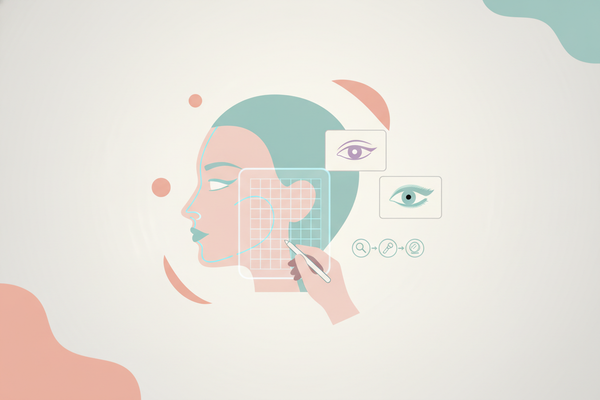
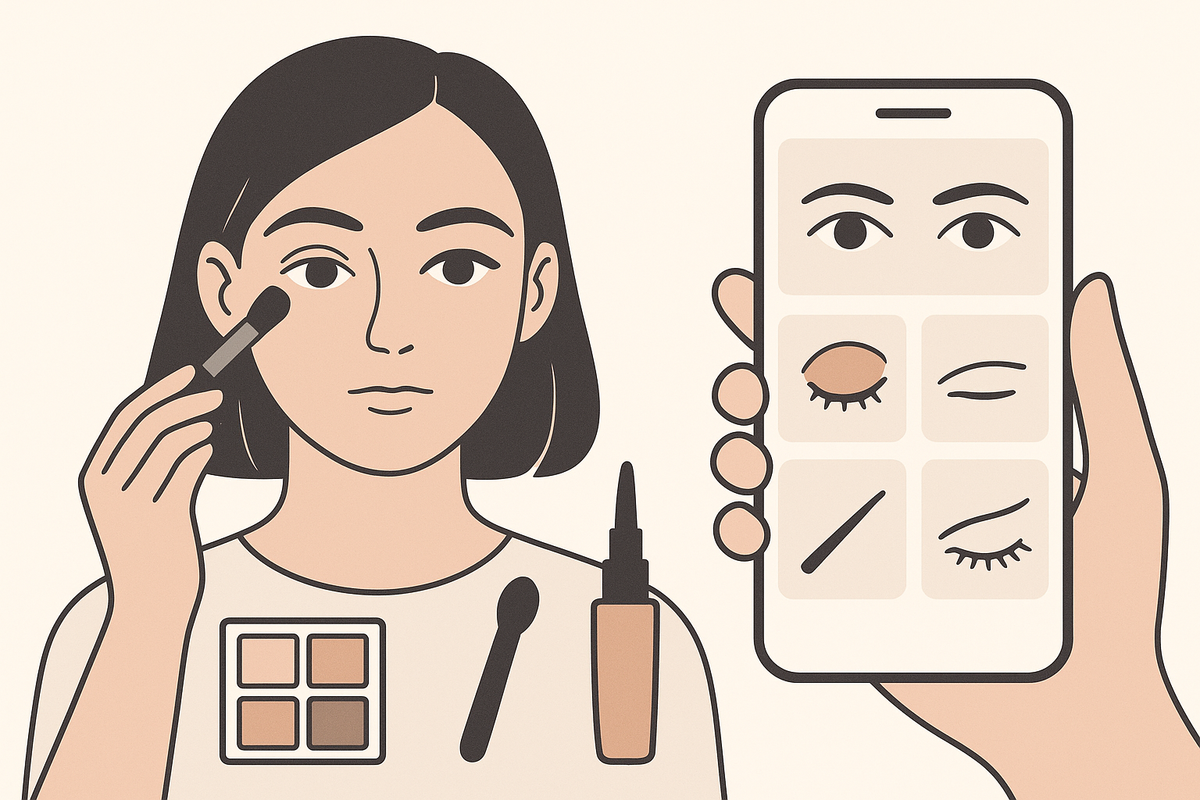
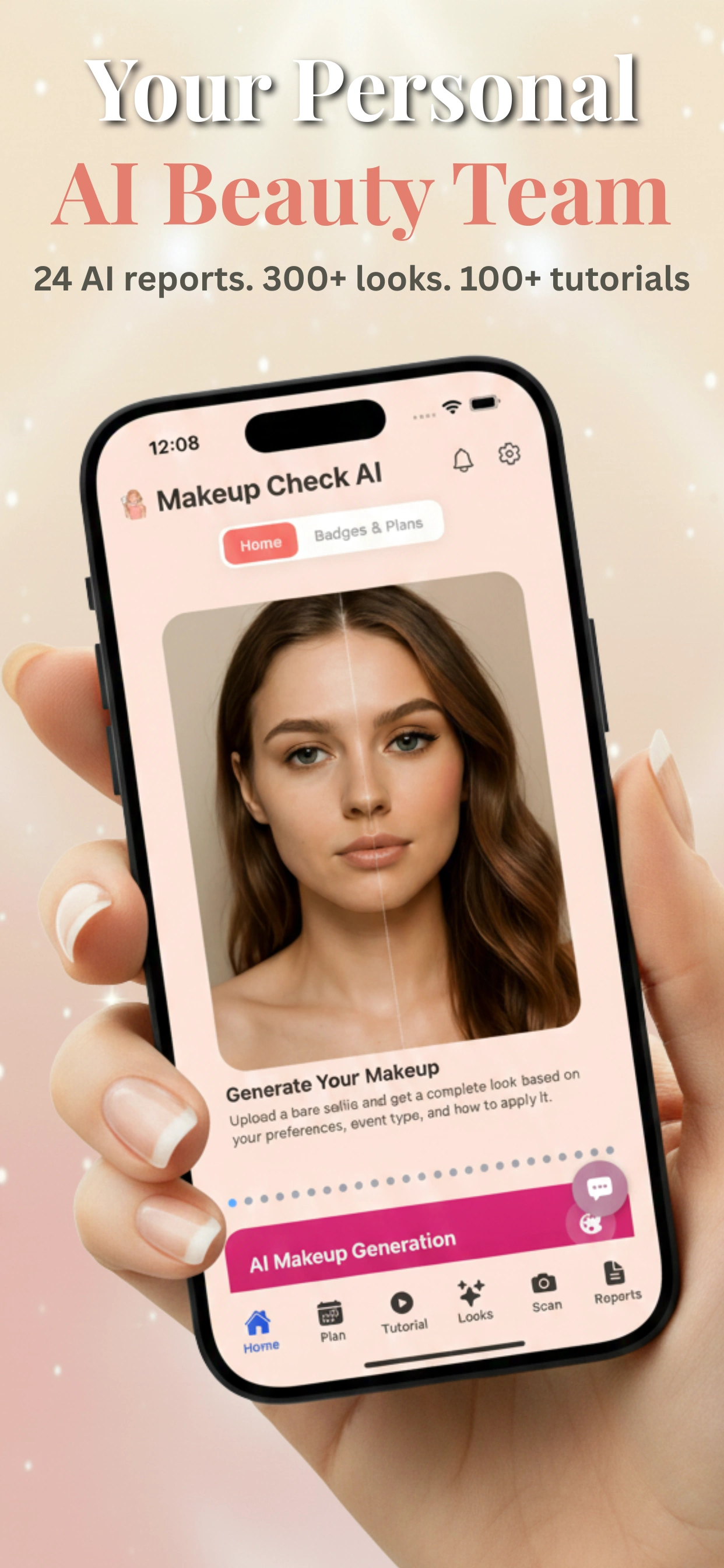
Apps like Makeup Check AI can analyze a selfie and generate a detailed eye symmetry and shape report, saving trial-and-error time for precise makeup planning.
Common Asymmetries
- One eye more hooded or droopy than the other
- A smaller or rounder eye compared to its pair
- Different crease heights or shapes
- One brow sitting higher, affecting perceived eye balance
Recognizing these subtle differences is the first step to customizing makeup for a symmetrical effect.
Section 2: Eyeshadow Placement by Eye Shape & Balancing Asymmetrical Eyes
Principles of Eyeshadow for Asymmetrical Eyes
Eyeshadow placement can visually correct and harmonize uneven eyes. The goal is to create the appearance of symmetry by adjusting intensity, placement, and shade for each eye. This approach works for all eye shapes, with special attention to how hooded, almond, and monolid eyes respond to color and contour.
Balancing a Smaller or More Hooded Eye
- Apply a lighter matte shade on the smaller or hooded lid to open the eye and catch light.
- Use a deeper matte in the crease of the larger or less hooded eye to subtly recede it.
- Fake a higher crease on the more hooded eye: blend a mid-tone matte slightly above the natural crease to mimic symmetry.
- Keep shimmer to a minimum on the more prominent or rounded eye—matte textures help control emphasis.
Eyeshadow by Eye Shape
- Hooded Eye Makeup: Blend transition shades above the natural crease. For asymmetry, raise the crease higher on the droopier eye.
- Almond Eye Makeup: Follow the natural shape, but adjust the outer V placement to match both eyes' angles.
- Monolid Eye Makeup: Gradually build color in horizontal layers, using a slightly thicker line on the smaller or less open eye.
For more on AI-powered makeup transformations, explore how technology can suggest optimal eyeshadow placement for your unique features.
Step-by-Step Example
- Prime both lids for even texture (see best primers for makeup and foundation).
- On the smaller/hooded eye: Place a light matte from lash line to brow bone, then blend a mid-tone slightly above the crease.
- On the larger eye: Use a deeper shade in the crease and outer corner, keeping shimmer minimal.
- Check symmetry with eyes open—adjust the shape as needed until both eyes appear balanced from a conversational distance.
Section 3: Eyeliner for Your Eye Shape and Asymmetrical Eyes
Why Eyeliner Placement Matters
Eyeliner is a powerful tool for correcting, balancing, and defining asymmetric eyes. The right technique can lift, enlarge, or subtly reshape each eye, making them appear more even.
Strategies for Uneven Eyes
- Thinner liner on the larger eye to avoid weighing it down.
- Thicker or more extended wing on the smaller or droopier eye to lift and elongate.
- Match the angle of the wing on both sides, but raise the tail slightly on the hooded/droopier eye for symmetry.
- Keep liner close to the lashes for the most natural effect; avoid heavy lining on the more prominent lid.
Winged Liner for Hooded & Uneven Eyes
- Draw your liner with eyes open and relaxed to ensure the flick sits at the same visible angle on both eyes.
- On a more hooded eye, start the wing at the point where the lid folds, then angle the wing up and out.
- For monolids, keep the line slightly thicker and extend the wing for a fanned effect.
Recommended Tools & Products
- Fine-tipped liquid pens or gel liners for precision.
- Waterproof formulas to avoid smudging on hooded lids.
- Practice with a guide sticker or tape if symmetry is difficult to achieve freehand.
For a deeper dive into personalized liner techniques by shape, review The Ultimate Guide to Smarter Beauty Routines.
Section 4: Mascara and Lash Techniques for Uneven Eyes
How Mascara Balances Eyes
Mascara and lash curling can make a dramatic difference in balancing asymmetrical eyes. By customizing lift and volume, you can open the smaller or droopier eye and subtly downplay the larger one.
Mascara Application Tips
- Curl the lashes of the smaller/hooded eye more intensely to lift the lid.
- Apply one extra coat of volumizing mascara to the less prominent eye for added openness.
- Wiggle the mascara wand at the base of the lashes and pull outward to maximize lift.
- On the larger eye, use a lengthening formula but limit coats to avoid overpowering the eye.
Lower Lash Strategies
- Apply a soft wash of mascara or shadow to the lower lashes of the smaller eye to balance vertical space.
- Avoid heavy lower lash emphasis on the larger or rounder eye, which can draw attention to asymmetry.
Choosing the Right Mascara
- Waterproof mascara prevents transfer on hooded or oily lids.
- Look for curved wands that fit your eye shape—smaller brushes give more control for targeted application.
For app-guided mascara tips and tracking your results, consider using Makeup Check AI to analyze your application and suggest tweaks for even better symmetry.
Section 5: Enhancing Symmetry with False Lashes, Brows, and Highlight
False Lashes for Eye Balancing
- Trim lashes or apply clusters only to the outer half of the smaller or droopier eye to add lift and length.
- For dramatic looks, stack two different lash styles: a fuller, longer set on the smaller eye; a more natural set on the larger eye.
- Try individual lash clusters for precise customization—add extra to the outer or center lash line as needed.
False lashes can be a game changer for evening out the appearance of asymmetrical eyes. For more about AR try-on and virtual lash tests, see AR Beauty Try On: The Future of Virtual Makeup and Skincare.
Brow Adjustments
- Balance brows to enhance overall symmetry: raise or extend the tail of the brow above the droopier eye.
- Fill sparse areas and subtly adjust the arch's height or angle for better eye framing.
- Set with clear gel to keep brows lifted and in place throughout the day.
Inner Corner Highlight and Lower Lash Line Shading
- Highlight the inner corner and center of the lid on the smaller eye to draw the eye forward.
- Add a subtle taupe or brown shadow to the lower lash line of the larger eye to visually minimize its height.
- Avoid heavy shimmer or bold highlight on the more prominent eye, which can accentuate asymmetry.
Section 6: Step-by-Step Makeup Application for Asymmetrical Eyes
Full Routine: Correcting Asymmetry with Makeup
This step-by-step guide pulls together all the techniques, allowing you to address uneven eyes with precision and artistry.
1. Prep and Prime
- Cleanse and moisturize the eye area for smooth makeup application.
- Apply a lightweight, long-wear eye primer to both lids, focusing on the more hooded eye to prevent creasing.
2. Brows First
- Fill in brows, raising the arch on the side with the droopier eye for instant lift.
- Keep strokes natural and use a spoolie to blend.
3. Eyeshadow Application
- On the smaller/hooded eye: Apply a light matte shade from lash line to brow, then create a "fake crease" above the natural fold with a mid-tone.
- On the larger eye: Use a deeper matte in the crease and outer corner, keeping shimmer minimal and blending well.
- Double-check with eyes open and adjust the shape so both eyes appear equal in height and width.
4. Eyeliner Tactics
- Draw a thinner line on the larger eye; on the smaller/droopier eye, use a slightly thicker line and more lifted wing.
- Keep both wings the same length and angle from a front-facing view.
- Use a dark brown or charcoal pencil on the waterline only if both eyes benefit from extra definition.
5. Mascara and Lashes
- Curl both sets of lashes, focusing extra attention on the smaller or hooded eye.
- Apply one or two extra coats of mascara to the less open eye; keep it minimal on the other.
- Attach false lash segments only to the outer corner of the smaller eye if needed for lift.
6. Finishing Touches
- Highlight the inner corner of both eyes, applying more on the smaller eye if needed for brightness.
- Softly shade the lower lash line of the larger eye to visually balance size and shape.
- Set your look with a setting spray for all-day wear.
Having trouble visualizing? Use Makeup Check AI’s AI-powered try-on for step-by-step personalized looks and video feedback. The app’s 300+ looks and tutorials make it easy to experiment and perfect your technique, no matter your skill level.
Conclusion
Mastering makeup for asymmetrical eyes is about embracing your unique features and using strategic adjustments for a beautifully balanced look. By identifying your eye shape, analyzing asymmetry, and applying tailored eyeshadow, eyeliner, mascara, and lash techniques, you can create symmetry that feels natural and flattering. Modern tools like Makeup Check AI make this process easier than ever—scanning your face, generating custom reports, and guiding you through every step with AI precision. Whether you have hooded, almond, or monolid eyes, or simply want to refine your technique, these strategies bring out your best, most confident self.
FAQ
Q: How do you do makeup for asymmetrical eyes?
A: Start by identifying which eye is smaller, droopier, or more hooded. Use lighter eyeshadow and extra mascara on the smaller eye, deepen the crease on the larger eye, and adjust eyeliner thickness and wing lift to create visual balance. Brow shaping and false lash placement also help enhance symmetry.
Q: What eyeliner shape works best for uneven eyes?
A: Use a thinner line on the larger eye and a slightly thicker or more lifted wing on the smaller or droopier eye. Draw both wings with your eyes open for consistent visible angles. Adjust the tail’s height to match the eye shapes and ensure both eyes look even when relaxed.
Q: Should you use different eyeshadow on each eye if one eye is smaller?
A: Yes, adjust shade placement for each eye. Apply a lighter matte on the smaller or more hooded eye to open it, and use a deeper matte in the crease of the larger eye to recede it. Raising the crease on the droopier eye helps both eyes appear more symmetrical.
Q: How do you make hooded and uneven eyes look more even with makeup?
A: For hooded and uneven eyes, use eyeshadow to create a higher crease and concentrate shimmer or highlight on the less prominent eye. Wing the liner upward on the droopier side, and use extra lash curl or false lashes only where needed to lift and open each eye accordingly.
Q: Can false lashes help balance asymmetrical eyes?
A: Absolutely. Apply longer or fuller lashes, or extra clusters, to the smaller or more hooded eye. This adds lift, length, and helps both eyes appear more even. You can also trim lashes to suit each eye’s unique shape.
Q: What is the best mascara technique for uneven eyes?
A: Curl the lashes on the smaller or droopier eye more and apply an extra coat or two of mascara for lift and volume. Use a lighter touch on the larger eye. This helps open and visually balance both eyes naturally.