Makeup for Downturned Eyes: Instantly Lift & Define with App Tools
Makeup for downturned eyes: identify your shape, master eyeshadow & eyeliner placement, and lift your look with AI-powered app tips and tutorials.
Estimated reading time: 15 min
Key Takeaways
- Learn how to identify downturned eyes and why shape-specific makeup matters.
- Master eyeshadow placement and eyeliner techniques to lift and define downturned eyes.
- Discover common mistakes to avoid and tips for combining techniques for hooded or almond shapes.
- Use AI-powered apps like Makeup Check AI for personalized, step-by-step tutorials and look generation.
- Explore makeup strategies for everyday and dramatic styles tailored to your unique eye shape.
Table of Contents
- Section 1: How to Tell Your Eye Shape
- Section 2: Understanding Downturned Eyes vs. Other Shapes
- Section 3: Eyeshadow Placement for Downturned Eyes
- Section 4: Eyeliner for Downturned Eyes — Lifted Wings & More
- Section 5: Mascara, Brows, and Finishing Touches
- Section 6: Common Mistakes & What to Avoid
- Section 7: Special Techniques for Mixed Eye Shapes
- Section 8: Everyday vs. Dramatic Looks for Downturned Eyes
- Conclusion
- FAQ
Section 1: How to Tell Your Eye Shape
Why Eye Shape Matters for Makeup
Knowing your eye shape is the foundation for choosing the most flattering makeup techniques. Eye shape determines where to place eyeshadow, how to angle eyeliner, and which looks make your eyes appear more lifted, open, or defined. Downturned eyes, almond eyes, hooded eyes, and monolids all benefit from customized approaches.
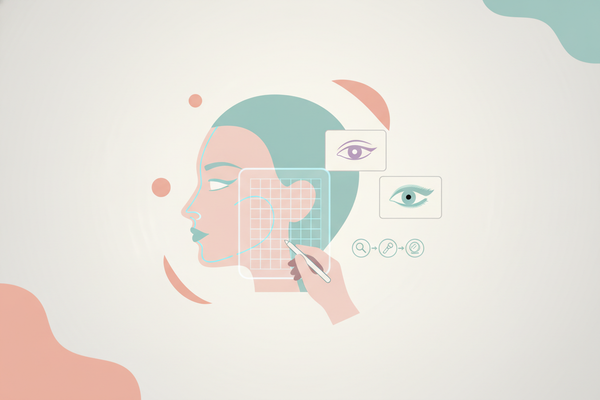
Step-by-Step: Identifying Downturned Eyes
- Look straight into a mirror with relaxed eyebrows.
- Imagine a straight line running through the center of your eye, from tear duct to outer corner.
- If the outer corners of your eyes dip below this line, you likely have downturned eyes.
Other signs of downturned eyes include a gentle downward slope at the outer third and a subtle, natural 'swoop' at rest.
Comparing Eye Shapes
- Downturned Eyes: Outer corners lower than inner corners; soft, elongated appearance.
- Hooded Eyes: Extra skin folds down from the brow bone, partially or fully covering the crease.
- Almond Eyes: Slightly pointed at the ends, visible lid space, balanced proportions.
- Monolid Eyes: No distinct crease, smooth eyelid surface.
Still unsure? AI-powered tools like Makeup Check AI can scan your face and instantly identify your eye shape, providing personalized makeup recommendations and tutorials tailored for you.
Section 2: Understanding Downturned Eyes vs. Other Shapes
Downturned vs. Hooded Eyes
It’s common to confuse downturned eyes with hooded eyes, but they are distinct. Downturned eyes slope down at the outer corners, while hooded eyes have a fold of skin that droops over the crease. Some people have both features, requiring a hybrid approach to makeup.
- Downturned eyes: Focus on lifting techniques at the outer corners.
- Hooded eyes: Emphasize techniques that open the lid and define the crease.
Almond, Round, and Monolid Eyes
Almond eyes have an upswept, balanced look, making them versatile for most makeup styles. Round eyes are more open and circular, while monolids lack a visible crease. Each shape requires different eyeshadow placement and liner strategies for optimal effect. For a deep dive, check out our AI Makeup App: The Ultimate Guide to Smarter Beauty Routines guide, which covers all major eye shapes in detail.
Why Shape-Specific Techniques Matter
Using the wrong techniques can unintentionally make downturned eyes look sad or droopy. The right placement and angles can instantly create a lifted, bright, and youthful appearance. Personalized guidance, especially from smart tools, is invaluable for mastering your unique features.
Section 3: Eyeshadow Placement for Downturned Eyes
The Lifting Eyeshadow Map
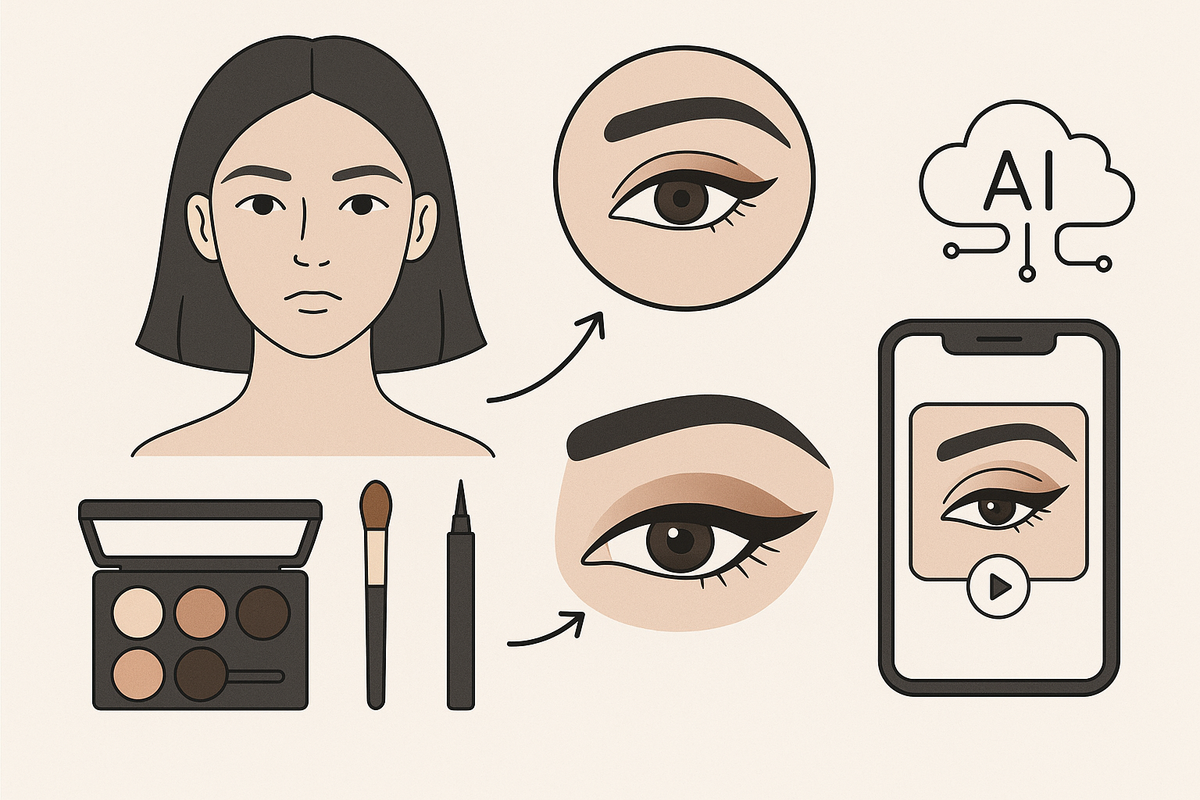
For downturned eyes, eyeshadow placement is all about creating the illusion of an upward sweep. Here’s the proven approach:
- Inner Lid: Use a light, shimmery or matte shade to brighten the inner third and halfway across the lid.
- Outer V: Apply a medium or dark matte shade in a sideways 'V' shape at the outer corner, concentrating color above the natural crease (not below the lash line).
- Upward Blend: Blend shadow diagonally up and out towards the tail of the brow, keeping pigment above the outer corner to visually lift the eye.
Step-by-Step Application
- Prime lids to ensure smooth blending and long-lasting color.
- Apply a transition shade slightly above the crease, focusing the blend upward and outward.
- Packing deeper tones only on the upper outer corner (never dragging them down past the lower lash line).
- Highlight the brow bone and inner corner for extra lift.
Visualizing with AI Tools
Not sure where to start? The Makeup Check AI app offers try-on features where you can see eyeshadow placement mapped to your own face, and access over 100 tutorials with video analysis to perfect your technique.
Section 4: Eyeliner for Downturned Eyes — Lifted Wings & More
Creating the Perfect Wing
Eyeliner is a game-changer for downturned eyes. The goal: lift the outer corners with a precise, upward flick.
- Start the wing at the very outer corner or slightly above your lower lash line (not below it).
- Angle the flick toward the end of your brow, not straight out or downward.
- Keep the line thin along the inner lash line, thickening as you move outward.
- Stop the wing just before the natural eye slope begins to turn down — this prevents dragging the eye lower.
Best Eyeliner Types and Formulas
- Gel or liquid liners offer sharp, controlled lines ideal for lifted wings.
- Pencil liners can be smudged for a softer, smoky effect but should stay above the lower outer corner.
- Waterproof formulas prevent transfer and smudging, especially important for downward-angled eyes.
Lower Lash Line and Waterline Tips
- Use a nude or white liner on the lower waterline to open and brighten the eyes.
- Avoid dark liner on the lower outer third, which can exaggerate droopiness.
- Concealer along the outer lower lash line can further enhance the lifted effect.
For a video walkthrough of eyeliner for your eye shape, see our AI Makeup Tutorial: Your Guide to Smart Beauty Routines.
Section 5: Mascara, Brows, and Finishing Touches
Mascara Techniques for Lift
- Focus mascara application on the outer half of your upper lashes.
- Wiggle the wand at the base and pull outward and slightly upward.
- Consider a second coat on the outermost lashes for extra lift.
- Curl lashes before applying mascara to enhance the open, lifted effect.
Look for mascaras labeled "lifting" or "curling" — these formulas hold shape and resist drooping through the day.
Brows: The Secret Lift
- Groom brows upward and outward, brushing towards the temples.
- Emphasize a higher, softly angled arch — avoid droopy or flat brow shapes.
- Fill any sparse areas with a brow pencil or powder to strengthen the lifted effect.
- Set brows with clear or tinted gel to hold shape all day.
Additional Brightening Tricks
- Highlight the inner corner of the eyes and the brow bone with a light, reflective shade.
- Use concealer at the outer edge of the eye to sharpen and "clean up" the lifted shadow or liner angle.
- Consider a touch of highlighter at the cheekbone, aligned with the outer eye, for extra radiance.
Section 6: Common Mistakes & What to Avoid
Placement Pitfalls
- Dragging shadow downward: Never blend dark eyeshadow below the outer corner — this accentuates droopiness.
- Heavy lower liner: Thick, dark liner on the lower lash line pulls the eye downward and makes eyes look smaller.
- Downward winged liner: Extending the wing too far down can create a sad or tired appearance.
Product & Application Errors
- Using shimmery shades on the outer lower lid, which draws attention to the drop.
- Skipping primer, causing makeup to slip and migrate throughout the day.
- Applying mascara only to the center lashes, which can make eyes appear droopier.
How to Fix Common Mistakes
- Keep all dark and intense pigments above the imaginary diagonal line from your nostril to the outer brow.
- Use a Q-tip with micellar water to correct and sharpen the upward angles of shadow and liner.
- If you overdo lower lash line makeup, blend out with a clean brush and add concealer for a crisp, lifted finish.
Section 7: Special Techniques for Mixed Eye Shapes
Downturned + Hooded Eyes
- Apply eyeshadow above the natural crease, focusing on a soft cut-crease to "fake" lid space.
- Keep winged liner thin at the inner third, thickening only as you reach the outer corner and angling sharply upward.
- Use matte shades on the hood to minimize puffiness, and shimmer only on the moveable lid or inner corner.
Downturned + Almond Eyes
- Emphasize the natural elongation of almond eyes but keep all lines and blends moving diagonally upward.
- Try a "kitten" wing: a short, sharp flick that doesn’t extend too far past the lash line.
- Balance intensity so the outer third is lifted but not weighed down by dark or heavy color.
Monolid and Other Mixed Types
- For downturned monolids, use a gradient of color that lifts from inner to outer corner, blending upward.
- Focus on lash and brow enhancement to open the eye area.
- Experiment with shadow mapping in a virtual try-on tool to find your perfect look.
For more on how AI technology is revolutionizing beauty customization, see Makeup AI: Revolutionizing Beauty with Personalized Technology.
Section 8: Everyday vs. Dramatic Looks for Downturned Eyes
Everyday Natural Look
- Light matte shadow on the lid, soft taupe or bronze in the outer V, blended upward.
- Barely-there liner: tightline the upper lash for subtle definition, add a micro-wing angled toward the brow.
- Single coat of mascara, concentrating on outer lashes.
- Groomed, softly arched brows with a hint of highlight just beneath.
Dramatic & Evening Styles
- Intensify the outer V with deep brown, plum, or charcoal; blend sharply upward and outward.
- Graphic or double-winged liner, keeping both lines moving up and out (never down).
- Layered mascara or false lashes focused on the outer third for extra lift.
- Pair with a bold brow and radiant highlighter at the high points of the face.
Experimenting Safely with Virtual Try-On
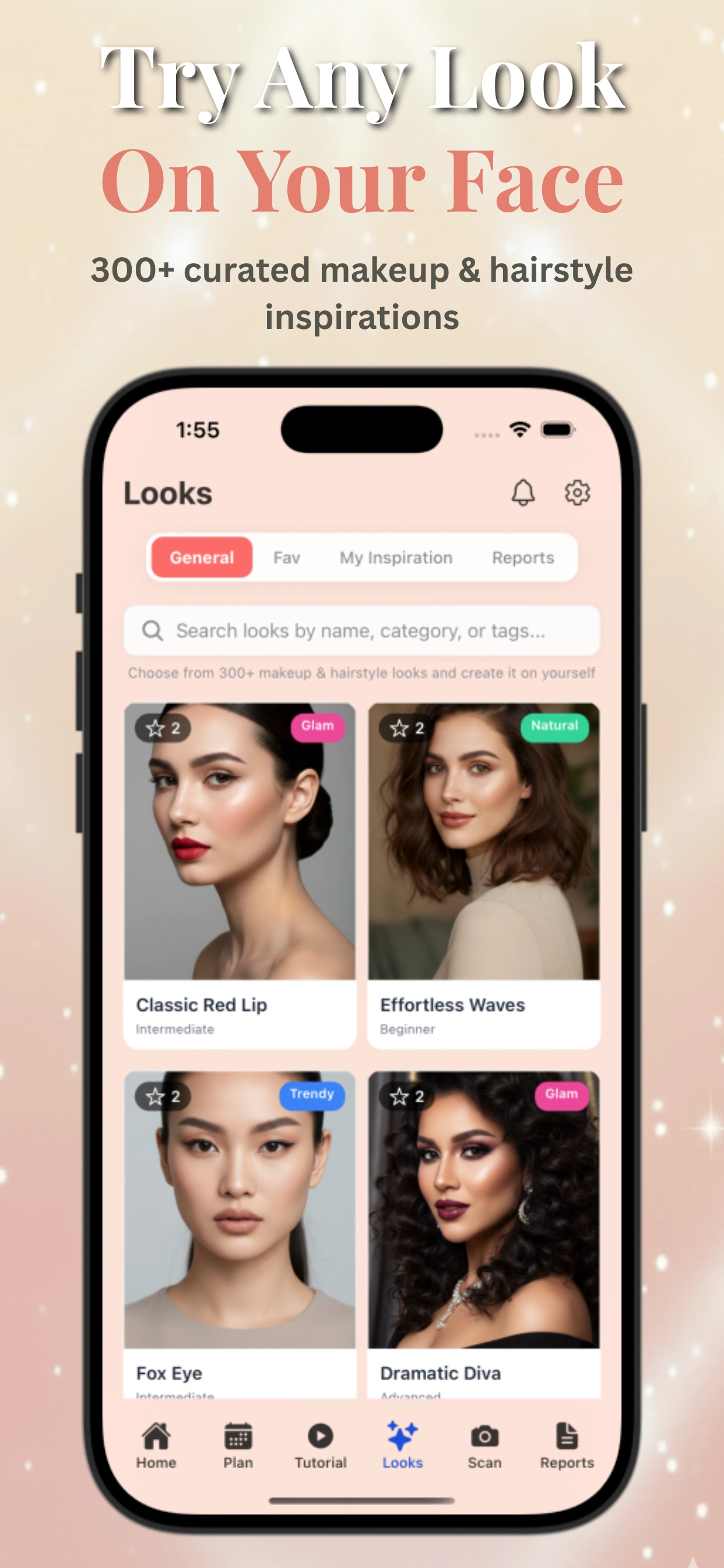
Not sure which style suits you best? Use the AI-powered virtual try-on feature in Makeup Check AI to test over 300 looks directly on your face before committing. This lets you explore both subtle and dramatic styles risk-free and learn new techniques through detailed tutorials and daily reminders customized for your eye shape.
Conclusion
Mastering makeup for downturned eyes is transformative — the right placement, angles, and product choices instantly create a brighter, more lifted look. Start by identifying your unique eye shape, then tailor your eyeshadow, liner, mascara, and brows for upward emphasis. Avoid common pitfalls, and remember: AI-powered apps like Makeup Check AI offer personalized, interactive tutorials, instant look generation, and 24/7 beauty coaching to help you perfect your technique for any occasion.
FAQ
Q: How do you do eyeliner on downturned eyes?
A: For downturned eyes, draw a thin line along the upper lash line, thickening as you reach the outer corner. Angle the wing upward towards the brow, starting the flick at or above the outer corner, never dragging it downward. This creates a lifted, open look.
Q: What eyeshadow shape is best for downturned eyes?
A: The "V" or "cat eye" shape works best. Focus darker shades at the outer corner, blending upward and out toward the tail of your brow. Keep all pigment above the outer corner to avoid dragging the eye down.
Q: Should you avoid winged eyeliner if you have downturned eyes?
A: No, winged eyeliner can be very flattering for downturned eyes if the wing angles upward. Avoid downward or flat wings, as these can emphasize droopiness.
Q: How do you make downturned eyes look more lifted?
A: Use upward-blended eyeshadow, upward-angled winged liner, mascara focused on outer lashes, and arched brows. Avoid dark lower liner and downward shadows. Highlight the inner corner and outer brow bone for extra lift.
Q: What mascara makes downturned eyes look better?
A: Lifting or curling mascaras work best. Focus extra coats on the outer lashes and always curl before applying. This draws the eye upward and opens the outer corners.
Q: Are downturned eyes the same as hooded eyes?
A: No, downturned eyes have outer corners lower than the inner corners, while hooded eyes have an extra fold of skin that covers the crease. Some people have both features and should combine lifting and crease-defining techniques for best results.