Your Ultimate Thick Curly Hair Routine
Master your thick curly hair routine with tips for frizz prevention, waves between washes, curly hair salon success, and fixing bad layers and color issues.

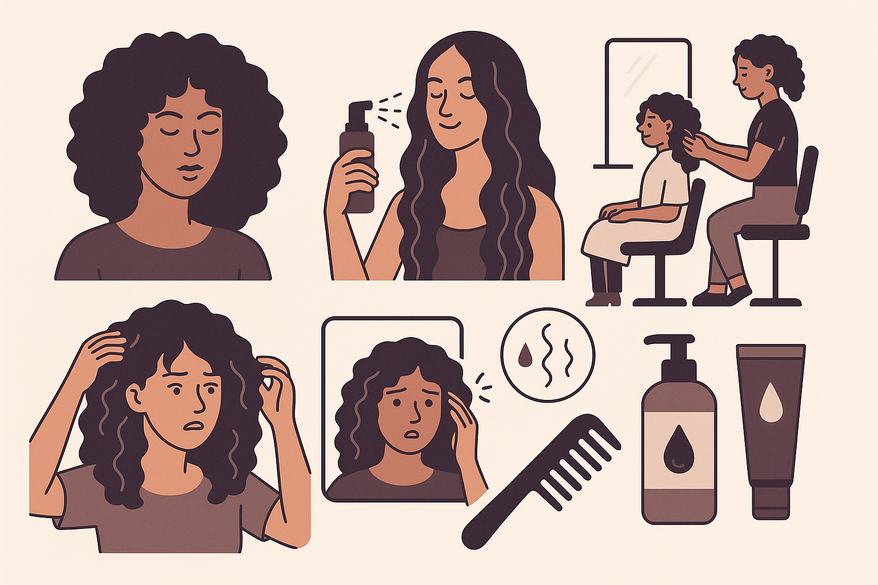
Estimated reading time: 8 minutes
Key Takeaways
- Implement a moisture-rich routine with sulfate-free cleansing and deep conditioning.
- Use the L.O.C. method for lasting hydration and definition.
- Adopt frizz-prevention techniques like satin night care and silicone sealing.
- Prepare for salon visits with clear photos and curl-specific cut requests.
- Refresh waves between washes and troubleshoot color or cut mishaps effectively.
Table of Contents
- II. Understanding Thick Curly Hair Routine
- III. Detailed Routine (Cleansing, Conditioning, LOC, Styling)
- IV. Frizz Prevention Strategies
- V. Making the Most of Curly Hair Salons
- VI. Maintaining Waves Between Washes
- VII. Fixing Common Color and Cut Issues
- VIII. Conclusion & Next Steps
A thick curly hair routine is a structured sequence of cleansing, conditioning, styling, and maintenance steps designed to hydrate, define, and manage dense, coily strands. Watch how it works:
Goals:
- Solve persistent frizz
- Preserve waves between washes
- Achieve salon success at curly hair salons
- Troubleshoot blue hair not showing fix
- Correct a bad layers haircut fix
II. Understanding Thick Curly Hair Routine
Thick curly hair combines high strand density with S-shape or Z-shape curl patterns, leading to rapid moisture loss, frequent tangles, and shrinkage up to 70%. Dense curls block sebum travel, so your routine must focus on moisture retention, cuticle smoothing, and gentle handling.
Sources: AAD hair types article, ScienceDirect porosity study
III. Detailed Thick Curly Hair Routine (Step-by-Step)
A. Cleansing for Thick Curly Hair Routine
Frequency
- Shampoo 1–2 times per week with sulfate-free formulas.
- Mid-week: co-wash or rinse with water only.
Product Criteria
- Look for labels reading “sulfate-free,” “moisturizing,” “curl.”
- Avoid SLS/SLES to prevent cuticle damage.
Technique
- Section hair into 3–4 parts to reduce tugging.
- Apply shampoo at roots; let suds run down lengths.
- Massage scalp gently with fingertips.
Research shows sulfate-free shampoos preserve natural oils and reduce cuticle lift, minimizing frizz. Source: IJCS Trich study
B. Conditioning with Slip & Deep Care
Slip Defined: “Slip” is the glide between coated strands, essential for detangling.
Daily Conditioning
- Apply rich, rinse-out conditioner mid-length to ends.
- Detangle when hair is soaking wet using a wide-tooth comb or fingers.
Weekly Deep Condition
- 15–30 minute masks alternating:
- Moisture mask (hyaluronic acid, glycerin)
- Protein mask (hydrolyzed keratin)
C. Leave-In & L.O.C. Method
Leave-In: On dripping hair, apply a lightweight leave-in or curl milk, focusing on ends and frizz-prone zones.
L.O.C.
- Liquid: water or leave-in for moisture.
- Oil: argan or jojoba on mid-lengths and ends.
- Cream: curl cream for definition and hold.
D. Styling Your Thick Curly Hair Routine
Product Types
- Curl cream for softness and definition.
- Gel or mousse for hold and frizz control.
- Lightweight serum for shine and humidity protection.
Application: Work in 4 sections on very wet hair using raking, praying-hands, then scrunch to clump curls.
Drying: Diffuse on low heat/low airflow or air-dry. Avoid touching until fully dry. Scrunch out the gel cast for soft, bouncy curls.
IV. Frizz Prevention Strategies
Frizz Prevention: Biology & Everyday Tips
What Causes Frizz?
- Lifted cuticle scales absorbing moisture from the air.
- Humidity above 60% can increase frizz by 40% in porous hair.
Source: Wiley study on humidity
Everyday Anti-Frizz Tips
- Use sulfate-free or low-poo cleansers; clarify monthly.
- Dry with a microfiber towel or cotton T-shirt; blot, don’t rub.
- Never brush dry curls; detangle only when wet with conditioner.
- Seal cuticle with silicones (dimethicone) or plant oils (shea butter).
- Night care: silk/satin pillowcase or bonnet; “pineapple” method.
- Trim split ends every 8–12 weeks.
Source: NaturallyCurly homecare
V. Making the Most of Curly Hair Salons
Curly Hair Salons: Choose & Consult
Choosing a Salon
- Stylists advertising curl-specific cuts (DevaCut, Ouidad, dry curl cutting).
- Before/after photos of clients with similar density and pattern.
- Reviews praising “understands thick curls” and “no shrinkage surprises.”
Consultation Prep
- Bring photos of your natural curl pattern and desired look.
- Mention shrinkage percentage and drying method (air-dry vs diffuser).
- For layers: request “soft, long blended layers,” not choppy cuts.
- For color: disclose box dyes or bleach history and desired vibrancy.
Source: NaturallyCurly homecare
VI. Maintaining Waves Between Washes
Waves Between Washes: Easy Refresh
Light Refresh (Day 2–3)
- Spray bottle: water + leave-in or a curl refresher.
- Mist roots lightly, scrunch with palms.
- Air-dry or diffuse on cool.
Stronger Refresh (Day 3–4)
- Section hair and dampen each part.
- Add a pea-size of curl cream or gel per section.
- Finger-coil lost curls; scrunch up to scalp.
Overnight Routines
- High pineapple with a silk scrunchie.
- 4–6 loose braids or twists.
- Silk/satin protection to reduce friction.
Source: Wiley study on humidity
VII. Fixing Common Color and Cut Issues
A. Blue Hair Not Showing Fix
Causes
- Dark base color; blue needs a lightened canvas.
- Low porosity and uneven lift.
- Insufficient processing time.
Corrective Steps
- Strand test for safe lift.
- Incremental bleaching sessions to minimize damage.
- Use color-depositing blue masks or conditioners.
- Wash with cool water + sulfate-free, color-safe shampoo.
- Add peekaboo or money-piece blue highlights on pre-lightened panels.
Source: ScienceDirect porosity study
B. Bad Layers Haircut Fix
At-Home Styling
- Use curl cream + gel to redefine clumps.
- Diffuse upside down for crown volume.
- Clip bulky sections with claw clips until regrowth.
In-Salon Correction
- Seek a curl specialist.
- Request soft layering that follows your curl clumps.
- Avoid thinning shears; ask to “reduce bottom bulk,” “add crown volume,” and “blend face-framing pieces.”
VIII. Conclusion & Next Steps
Key Pillars:
- Moisture through conditioning and L.O.C.
- Gentle cleansing and sulfate-free products.
- Styling for definition and hold.
- Frizz prevention with daily and overnight care.
- Clear salon communication and curl-by-curl cuts.
- Targeted fixes for blue hair and bad layers.
If you want AI-driven beauty insights to refine your styling techniques and color consistency, try Makeup Check AI.
Next Steps:
- Implement this routine on your next wash day.
- Test LOC, cream + gel, and styling tools to find your best combo.
- Book a consultation with a curl specialist for cut or color corrections.
Call to Action: Share your curl type, color history, or haircut woes in the comments. Let’s troubleshoot your thick curly hair routine together!
La elección de una camiseta deportiva suele depender del ajuste, el tejido y las preferencias personales de cada aficionado. Para ordenar la búsqueda, camiseta de Espana online puede revisarse junto con las medidas y el tipo de ajuste preferido. También conviene revisar las condiciones descritas para evitar confundir estilo, talla y comodidad.
FAQ
- How often should I wash thick curly hair? 1–2 times per week; co-wash mid-week.
- What is the L.O.C. method? A layering technique: Liquid, Oil, Cream for optimal moisture and definition.
- How do I prevent frizz? Use sulfate-free products, dry with a microfiber towel, seal cuticles, and protect hair at night.
- Can I fix a bad layers haircut at home? Use styling products, diffuser techniques, and temporary clips until your next salon visit.
- Why isn’t my blue hair showing? You may need incremental bleaching, a color-depositing mask, or peekaboo highlights on lightened panels.