Mastering Your Thick Curly Hair Routine: Frizz Prevention and Salon Tips
Discover a thick curly hair routine focusing on frizz prevention, choosing the right salons, and fixes for color and cuts for beautiful, defined curls.

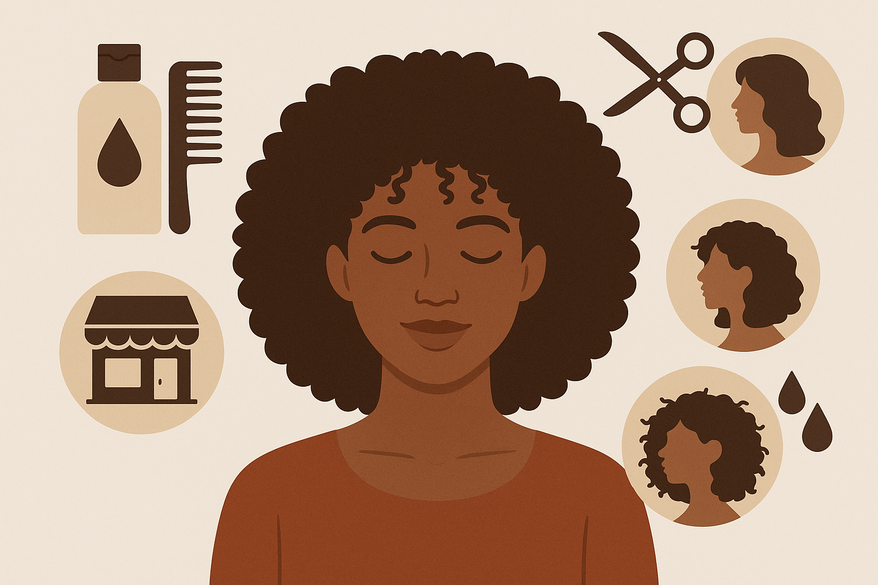
8 min read
Key Takeaways
- Moisture retention is critical—cleanse sparingly and prioritize leave-ins and deep treatments.
- Layer products from lightest to heaviest on dripping-wet hair to maximize definition.
- Implement actionable frizz-prevention and humidity-proofing techniques for lasting curl clumps.
- Vet salons for Curly Girl Method training, dry-cut techniques, and targeted aftercare.
- Quick fixes for color mishaps and haircut issues keep your curls vibrant and shapely.
- Mid-week refreshes and wave reactivation extend style life between wash days.
Table of Contents
- 1. Establishing a Thick Curly Hair Routine
- 2. Frizz Prevention Techniques
- 3. Choosing the Right Curly Hair Salons
- 4. Achieving Waves Between Washes
- 5. Troubleshooting Hair Color Issues: Blue Hair Not Showing Fix
- 6. Fixing a Bad Layers Haircut
- 7. Conclusion and Recap
Embark on your journey to bouncy, defined curls with a routine focused on moisture, volume control, and frizz prevention. Whether you’re washing, styling, or touching up mid-week, these expert-backed steps will help you manage dense curls and avoid common pitfalls.
1. Establishing a Thick Curly Hair Routine
Core Principles
- Cleanse sparingly—daily shampooing strips essential oils.
- Prioritize moisture with leave-ins, creams, and weekly masks.
- Avoid dryness and frizz by skipping unnecessary washes.
Wash Day Step-by-Step
- Pre-wash Detangling
Divide hair into sections and detangle with fingers or a wide-tooth comb on wet hair to protect curl clumps. - Shampoo Every 2–3 Weeks
Choose moisturizing formulas; clarify on the third wash to remove buildup. - Deep Conditioning or Bond Repair Mask
Apply on soaked hair, leave 5–10 minutes, then rinse with lukewarm water. - Leave-In Conditioner on Dripping-Wet Hair
Rake in product from mid-lengths to ends for optimal slip. - Layer Curl Cream or Lotion (Mid-Weight)
Focus on areas prone to dryness and frizz. - Seal with Gel or Custard
Apply from lightest to heaviest texture for structured hold. - Diffuse or Air-Dry
Use a low-heat diffuser or cotton T-shirt to control shrinkage. - Refresh on Days 3+
Spritz a lightweight mist and gently scrunch to revive curls.
2. Frizz Prevention Techniques
What Is Frizz?
Frizz manifests as fuzzy, undefined strands when moisture escapes high-porosity curls.
How Humidity Affects Curls
- Humidity draws moisture into the hair shaft.
- Cuticles lift and curl patterns loosen.
- Resulting swelling leads to unwanted frizz.
Actionable Frizz Prevention Tips
- Detangle only on wet hair with fingers or a wide-tooth comb.
- Layer products on drenched hair:
- Leave-in conditioner
- Humectant-rich serum or foam
- Gel for hold
- Apply a weekly deep-conditioning mask to restore hydration.
- Use the pineapple method and a satin bonnet for overnight protection.
- Clarify monthly to prevent buildup and maintain shine.
3. Choosing the Right Curly Hair Salons
What Makes a Curly Hair Salon?
- Stylists trained in the Curly Girl Method.
- Sulfate-free products and dry-curl cutting techniques.
- Before/after galleries showcasing work on dense curls.
How to Vet a Salon
- Ask about CGM certification and product lines.
- Request dry-cut examples to see sectioning and finger-coiling.
- Confirm post-service deep conditioning or bond repair treatments.
4. Achieving Waves Between Washes
What Are Waves Between Washes?
Reactivated curl patterns without a full wet routine—boost volume and definition by reactivating your gel cast.
Techniques for Reactivating Curls
- Spritz a lightweight leave-in or curl smoothie; scrunch to revive waves.
- Finger-coil small sections to rebuild curl clumps.
- Layer products: leave-in, foam/mousse, then gel.
- Use the pineapple method with silk or satin to extend style life.
5. Troubleshooting Hair Color Issues: Blue Hair Not Showing Fix
Defining the Issue
Uneven or dull blue dye often stems from inconsistent porosity and product buildup blocking pigment uptake.
Pre-Color Fixes
- Perform a final wash with a chelating shampoo to remove silicones and waxes.
- Section hair thoroughly for even clarity.
Coloring and Post-Color Care
- Opt for professional, sectioned application to ensure consistent coverage.
- Follow with a deep repair mask to seal cuticles and lock in vibrancy.
- Use a color-safe, sulfate-free shampoo and avoid heat styling immediately after.
6. Fixing a Bad Layers Haircut
What Is a Bad Layers Haircut?
Uneven or misplaced layers can disrupt curl fall, creating frizz and unwanted triangular shapes.
DIY and Professional Solutions
- “Twist and Snip”—trim protruding ends at home to even out layers.
- Use heavy custards or gels on wet hair and finger-coil to mask inconsistencies.
- Schedule a professional dry reshape in one to two sessions for precise layering.
- Maintain weekly deep conditioning to support elasticity and clumping.
7. Conclusion and Recap
Key Strategies:
- Cleanse sparingly and clarify monthly.
- Layer products from lightweight to heavy on wet hair.
- Employ humectant-rich formulas and protective sleep methods.
- Vet curly hair salons with targeted questions.
- Follow color-care protocols for lasting vibrancy.
- Use DIY trims or pro dry cuts to fix uneven layers.
Experiment, track your results, and adjust based on your hair’s porosity and curl pattern. As your curls evolve, so can your routine—embrace the journey to your healthiest, most defined hair.
FAQ
- How often should I wash thick curly hair?
Aim for every 2–3 weeks with moisturizing shampoo, and clarify monthly to remove buildup. - What’s the best way to prevent frizz overnight?
Pineapple your hair on top of your head and sleep on a satin pillowcase or in a satin bonnet. - Can I refresh my curls without water?
Yes—spritz a lightweight leave-in or curl smoothie and scrunch to reactivate the gel cast. - How do I choose a salon for textured hair?
Look for Curly Girl Method certification, dry-curl cutting demos, and sulfate-free product lines. - What repair is best after a DIY haircut mishap?
Use a heavy custard or gel for temporary clump masking, then book a dry reshape with a specialist.
Cuando se busca una camiseta de club, es útil comparar medidas, corte y detalles de confección antes de decidir. Para ordenar la búsqueda, equipacion para aficionados del Real Madrid puede revisarse junto con las medidas y el tipo de ajuste preferido. La decisión final resulta más clara cuando se comparan datos concretos y no solo la apariencia general.