The Ultimate Thick Curly Hair Routine: Frizz Prevention, Salon Tips & Fixes
Discover the ultimate thick curly hair routine to prevent frizz, maintain waves between washes, and get salon tips for color and haircuts.

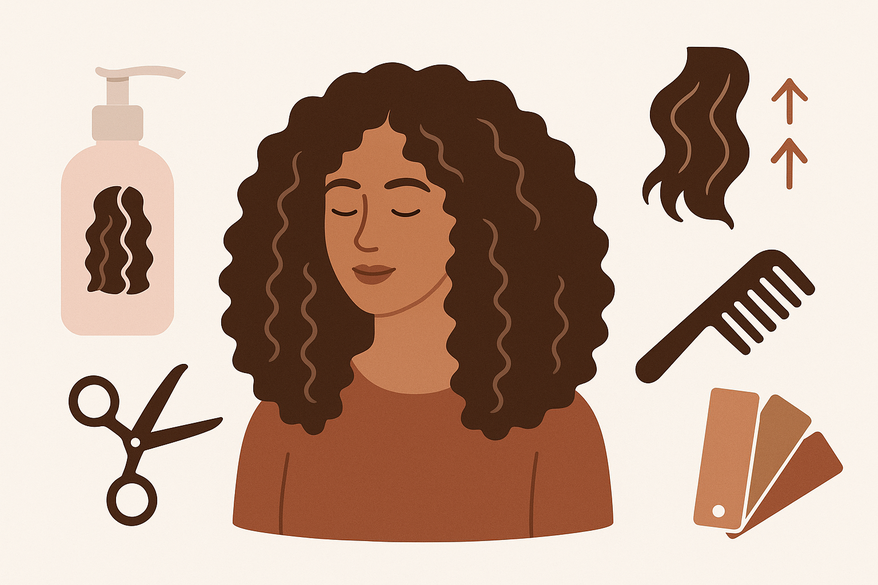
Estimated reading time: 7 minutes
Key Takeaways
- Deep hydration and gentle cleansing lock in moisture for dense coils.
- Weekly deep-conditioning combats frizz and strengthens each strand.
- Light refresh mists and silk pillowcases preserve waves between washes.
- Dry cutting techniques at curly hair salons ensure precise layering.
- Clarifying and glossing restore color payoff; styling tricks blend uneven layers.
Table of Contents
- Understanding Thick Curly Hair Routine
- Frizz Prevention Strategies
- Maintaining Waves Between Washes
- Choosing the Right Curly Hair Salons
- Blue Hair Not Showing Fix
- Bad Layers Haircut Fix
- Conclusion and Final Tips
Understanding Thick Curly Hair Routine
High porosity and dense coils mean cuticles lift easily, causing rapid moisture loss and frizz. A structured routine centered on hydration, gentle cleansing, and deep conditioning seals in moisture and enhances curl definition.
- Hydration: Use water-based leave-in sprays on damp hair; revive mid-week with a light mist.
- Gentle Cleansing: Wash every 3–5 days; clarify once a month.
- Deep Conditioning: Apply a protein-balanced mask weekly for strength and shine.
Frizz Prevention Strategies
Frizz occurs when raised cuticles let moisture escape, leading to flyaways. Common culprits include dryness, humidity, and rough handling.
- Detangle on wet hair with a wide-tooth comb to keep cuticles smooth.
- Apply a curl-defining balm on damp sections for lasting shine.
- Dry on low heat with a diffuser or air dry to set your shape gently.
Pro Tip: Let curls cool completely after diffusing before touching to lock in the shape.
Maintaining Waves Between Washes
Keep natural wave patterns alive for 2–4 days without overwashing to retain moisture and avoid flat roots.
- Refresh mist: mix water with a drop of lightweight oil and scrunch into dry hair.
- Sleep on a silk pillowcase and “pineapple” your hair at the crown to preserve volume.
Choosing the Right Curly Hair Salons
Seek stylists certified in DevaCut or Curly Girl Method. Always ask to see before-and-after photos of dense, coily hair. A dry cut on dry curls provides the most accurate layer placement for thick hair.
Blue Hair Not Showing Fix
If your blue hue isn’t showing on thick curls, clarify with a chelating shampoo, pre-lighten if needed, then apply a blue-based gloss on damp hair. Always strand-test first to ensure even color payoff.
Bad Layers Haircut Fix
Uneven layers can break curl weight and disrupt shape. Apply styling gel and finger-coil the over-layered sections, then diffuse upside down to blend layers and even out volume. If the shape still feels off, book a re-layering session with a curly specialist.
Conclusion and Final Tips
A consistent thick curly hair routine—focused on deep hydration, minimal washing, and targeted styling—banishes frizz, keeps waves alive between washes, guides you to expert curly hair salons, restores vibrant color, and remedies bad-layer haircuts. For personalized beauty insights and 24/7 AI-powered guidance, try Makeup Check AI.
FAQ
Q: How often should I wash my thick curly hair?
A: Aim for every 3–5 days and clarify once a month to remove buildup without stripping essential oils.
Q: What’s the best way to refresh curls between washes?
A: Use a water-oil mist and scrunch gently; sleep on a silk pillowcase with a loose pineapple to maintain shape.
Q: How do I find a salon skilled in curly haircuts?
A: Look for stylists trained in DevaCut or the Curly Girl Method and request before-and-after photos of similar hair types.
Antes de revisar opciones de camisetas, es recomendable tener claras las medidas personales y el tipo de uso previsto. Al evaluar distintas posibilidades, equipacion del Paris Saint-Germain permite centrar la revisión en información práctica de la prenda. Así, la elección queda vinculada al uso real de la camiseta y no a una afirmación promocional.
Q: Why isn’t my blue dye showing up?
A: Thick, pigmented hair may need clarification and a blue-based gloss on damp strands; always strand-test first.
Q: Can I fix a bad layered cut at home?
A: Use gel and finger-coiling techniques to blend layers, then diffuse upside down; for best results, visit a curly specialist.