Thick Curly Hair Routine: Your Complete Step-by-Step Guide
Master a thick curly hair routine for frizz prevention, salon selection, and refreshing waves between washes. Learn to manage and style your textured locks effectively.

Estimated reading time: 7 minutes
Key Takeaways
- Build a consistent, tailored routine of cleansing, conditioning, styling, and maintenance for dense, textured locks.
- Use sulfate-free cleansers and rich hydrators to maintain moisture, elasticity, and curl definition.
- Prevent frizz with proper water temperature, conditioner slip, gentle drying, and night-time protection.
- Refresh waves between washes by misting, scrunching, and applying small amounts of curl cream or mousse.
- Select curl-specialized salons with certified stylists and know how to fix common salon mishaps like bad layers or hidden color.
Table of Contents
- Section 1: Establishing the Perfect Thick Curly Hair Routine
- Section 2: Frizz Prevention Techniques
- Section 3: Managing Waves Between Washes
- Section 4: Navigating the World of Curly Hair Salons
- Section 5: Fixing Common Hair Salon Outcomes
- Conclusion
- FAQ
Section 1: Establishing the Perfect Thick Curly Hair Routine
Building a routine from day one gives you control over dense, textured locks. A thick curly hair routine is a consistent, tailored sequence of cleansing, conditioning, styling, and maintenance steps designed to manage high-density, textured hair.
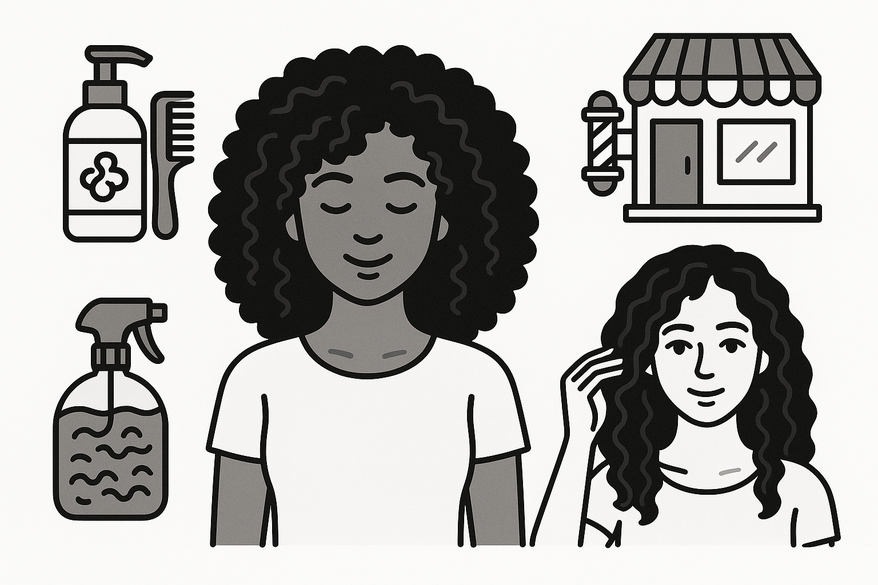
Thick, curly strands bring character, but also challenges:
- Frizz prevention: fighting humidity-induced puffiness
- Waves between washes: lost definition on non-wash days
- Curly hair salons: finding stylists who understand coils
- Blue hair not showing fix: vivid color on porous curls
- Bad layers haircut fix: uneven cuts that break clumps
For a deeper dive into setting up your wash day, check our previous post.
Core pillars of your routine
- Cleansing
- Frequency: 1–2 times per week; minimally every 2–3 weeks for scalp health.
- Use a sulfate-free, moisturizing shampoo.
- Clarify only when product buildup dulls curls.
- Hydration
- Weekly deep-conditioning masks rich in glycerin, shea butter, and natural oils.
- Daily use of a lightweight leave-in or hair milk to lock moisture.
- Styling
- Detangle wet hair with a wide-tooth comb or fingers.
- Apply moisture-locking techniques like plopping or low-heat diffusing.
- Use curl creams or gels to define and hold shape.
For step-by-step application and styling tutorials, see also thick curly hair routine.
Section 2: Frizz Prevention Techniques
What is frizz in thick curly hair?
Frizz occurs when the hair cuticle lifts, allowing moisture or friction to roughen the shaft. In curls, raised cuticles break up clumps and ruin definition.
Daily frizz-prevention steps
- Warm water cleanse: too hot dries hair.
- Conditioner with slip: argan oil and cetyl alcohol seal the cuticle.
- Microfiber or cotton T-shirt dry: scrunch, don’t rub.
- Night protection: satin pillowcase or silk bonnet; pineapple updo to reduce friction.
- Wet-only detangling: brush or finger-comb when hair is damp and has conditioner slip.
Section 3: Managing Waves Between Washes
Why waves loosen between washes
Gravity stretches the S-pattern. Pillowcase friction flattens curls at night. Product wears off, reducing hold.
Survey insight: 78% of curlies refresh waves daily with a water/leave-in mix.
- Light mist: water or water + leave-in spray to reactivate products.
- Scrunch upward to re-form waves.
- Targeted styling: small dollops of curl cream or lightweight mousse where definition is lost.
- Dry on low heat or air-dry.
Section 4: Navigating the World of Curly Hair Salons
Why specialize in curls matters
65% of general stylists lack formal curl training. Without curl-specific methods, cuts can be uneven and frustrating.
Salon selection checklist
- Portfolio of natural-curl photos on website or Instagram.
- Explicit mention of curl education or certification.
- Use of sulfate-free, curl-friendly products.
- Ample consultation time for routine review.
Section 5: Fixing Common Hair Salon Outcomes
A: Bad Layers Haircut Fix
What are “bad layers”? Uneven cut lines that cause triangle shapes, random shelves, and poor curl clumping.
“Book a curly-trained specialist to rebalance layers on dry, air-dried hair.”
B: Blue Hair Not Showing Fix
Why blue hair might not show
Base too dark: hair appears black, hiding blue tone. Insufficient lift: vibrant blue needs level 7–8 blonde. High porosity: uneven uptake and fast fade.
Conclusion
A thorough thick curly hair routine is your ticket to healthy, defined coils and waves. By following core steps—gentle cleansing, deep hydration, strategic styling—you will:
- Achieve consistent frizz prevention.
- Refresh waves between washes without damage.
- Find and communicate effectively with curly hair salons.
- Fix common salon mishaps like bad layers and color issues.
Whether you’re mapping your perfect wash day or experimenting with new styling techniques, integrating digital tools can elevate your routine. For instance, apps like Makeup Check AI offer AI-powered insights on product match and technique, helping you refine your curly hair regimen.
FAQ
How often should I wash my thick curly hair?
Wash 1–2 times per week to balance scalp health and moisture retention. Clarify only when buildup occurs.
What’s the best way to prevent frizz?
Use warm (not hot) water, conditioner with slip, and dry with a microfiber towel. Protect hair at night with satin or silk.
How can I refresh waves without heat?
Mist with water or leave-in mix, then scrunch upward. Apply a small amount of curl cream where needed and air-dry.
How do I choose a good curly hair salon?
Look for portfolio photos, curl-specific certification, and a consultation process that reviews your routine.
What if my haircut layers are uneven?
Book a curly-trained specialist for a dry hair trim, so they can rebalance layers based on your natural curl pattern.