Your Ultimate Thick Curly Hair Routine: Frizz Prevention & More
Explore the ultimate thick curly hair routine, focusing on frizz prevention, maintaining waves between washes, and expert salon tips for healthier curls.

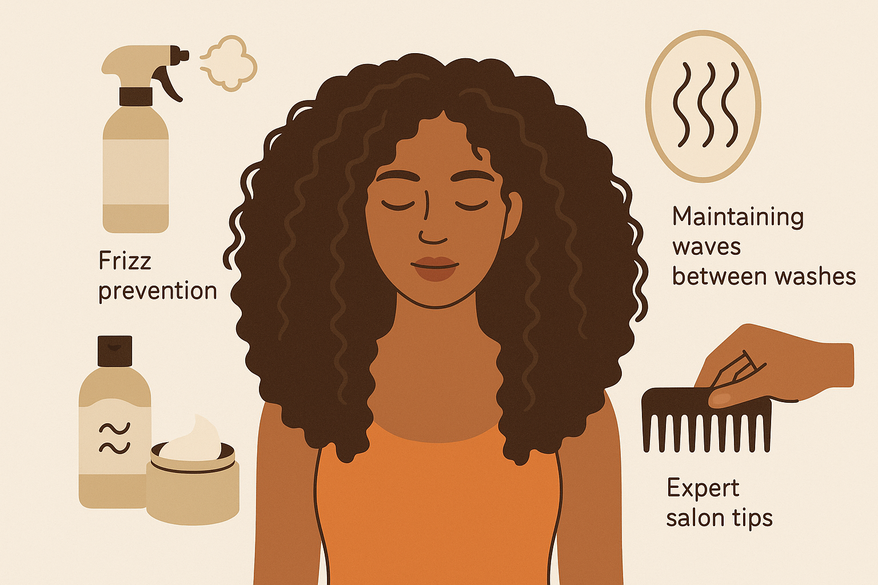
Estimated reading time: 8 minutes
Key Takeaways
- Four pillars of curl care: cleansing, conditioning, moisturizing, styling.
- Frizz control via minimal washing, microfiber drying, and strategic product layering.
- Choosing curl-savvy salons for personalized cuts and bond-building treatments.
- Simple refresh hacks to preserve waves for days without shampoo.
- Solutions for fading blue tones and correcting uneven layers.
- Consistent routine = stronger, defined, and bouncy curls.
Table of Contents
- 1. Understanding Thick Curly Hair Routine
- 2. Frizz Prevention Techniques
- 3. Choosing the Right Curly Hair Salons
- 4. Maintaining Waves Between Washes
- 5. Addressing Color Challenges: Blue Hair Not Showing Fix
- 6. Fixing Bad Layers Haircut Issues
- 7. Conclusion
1. Understanding Thick Curly Hair Routine
Defining the four pillars of a thick curly hair routine ensures every step builds on the previous one for maximum curl health:
- Cleansing
Use a sulfate-free, moisturizing shampoo every 2–3 weeks. Sulfate-free cleansers preserve natural oils and prevent over‐stripping. - Conditioning
Choose a rich conditioner with humectants (glycerin) and oils (argan, jojoba). Focus on mid-lengths to ends to hydrate porous curl strands. - Moisturizing
Apply a leave-in cream or milk to damp hair. Lock in moisture with ingredients like shea butter and panthenol. - Styling
Layer lightweight foams or oil-based serums first for volume. Follow with gels or jellies to form a cast and hold curl clumps. Scrunch the product upward and air-dry or diffuse on low heat.
Why this routine matters
Curly hair is naturally drier, more prone to breakage, and tangles easily. Without structured care, cuticles lift, strands weaken, and curls lose definition. A consistent routine that cleanses gently, coats each strand in moisture, and sets curls in place:
- Maintains elasticity and bounce
- Reduces split ends and breakage
- Protects against environmental stressors
2. Frizz Prevention Techniques
Understanding frizz
Frizz appears when dehydrated cuticles lift in humidity, from friction with cotton towels, or from over-cleansing that strips natural oils. Lifted cuticles scatter light, creating the fuzzy, undefined look we know as frizz.
Frizz prevention protocol
- Wash only every 2–3 weeks with a sulfate-free, ultra-moisturizing shampoo.
- Clarify monthly with a gentle chelating shampoo to remove mineral or product buildup. This step restores porosity and improves moisture absorption.
- On soaking-wet hair, apply a leave-in conditioner, lightweight serum, then a jelly or gel.
- Scrunch upward using a microfiber cloth to promote curl clumping and scrunch out the cast.
- Layer products strategically: foam or oil first for lift, gel or jelly second for hold.
Key benefits
- Smoothed cuticles that reflect light evenly
- Defined curls that resist humidity
- Soft cast that you can “scrunch out” for natural bounce
3. Choosing the Right Curly Hair Salons
Why professional curl care matters
Visiting a salon skilled in curly hair amplifies your at-home routine. Expert stylists tailor cuts and treatments to your specific curl pattern, hair density, and porosity, preventing damage and promoting healthy growth.
Salon selection criteria
- Curl specialists trained in the Curly Girl Method
- Dry cutting techniques that account for shrinkage
- Portfolio showcasing thick, curly hair before/after photos
- Knowledge of hair porosity and appropriate treatments
4. Maintaining Waves Between Washes
Defining “waves between washes”
Preserving curl shape for 2–5 days without shampoo supports scalp health, reduces moisture loss, and extends styling life.
Refresh routine steps
- Mist frizzy or flattened sections with water or a water–leave-in conditioner mix.
- Apply a small amount of curl cream or light gel where curls have fallen flat.
- Gently scrunch upward to reactivate the product cast.
- Avoid brushing dry hair; use fingers or a wide-tooth comb only on damp spots.
5. Addressing Color Challenges: Blue Hair Not Showing Fix
Why blue tones fade on curly hair
Porous curls absorb and release pigment quickly, especially when mineral buildup is present or hair is washed frequently. Blue dyes, in particular, can appear muted or dull.
Salon and at-home solutions
- Clarify buildup with a gentle chelating shampoo to reopen cuticles and remove residues.
- Reapply semi-permanent blue dye or gloss at a curl-savvy salon offering bond-building treatments.
- Switch to color-safe, sulfate-free cleansers and conditioners to protect vibrancy.
- Integrate weekly deep conditioning with protein and moisture balance to seal pigments.
6. Fixing Bad Layers Haircut Issues
Understanding bad layers in curly hair
Wet-bar cuts that ignore curl shrinkage often produce uneven lengths, floppy volume, or frizzy ends. Without proper layering, curls may separate incorrectly and lose their natural shape.
Management strategies
- Detangle on wet hair using conditioner and a wide-tooth comb.
- Apply a heavy-hold gel to clump curls and mask uneven lengths.
- Grow out strategically: schedule “dusting” trims every 8–10 weeks to even out lengths without losing overall mass.
- Use a diffuser upside-down to lift roots and boost volume at the crown.
- Clip roots at the scalp when diffusing to encourage root swell.
7. Conclusion
A solid thick curly hair routine combines gentle cleansing, deep conditioning, strategic product layering, and expert salon partnerships. By implementing frizz prevention, choosing curl-savvy salons, preserving waves between washes, tackling color fixes for blue hair, and correcting bad layers, you’ll achieve healthier, more defined curls. Integrate these step-by-step, research-backed tips into your daily care and watch your coils transform. Share your experiences, favorite products, and salon recommendations in the comments below—let’s build a community of curl confidence together.
For personalized guidance on styling techniques, tutorials, and customized beauty plans, explore Makeup Check AI, your complete AI beauty team.
FAQ
- How often should I wash my thick curly hair?
Wash every 2–3 weeks with a sulfate-free shampoo to preserve natural oils and prevent dryness. - What’s the best way to refresh curls between washes?
Use a water or leave-in mixture to mist flat areas, apply a small amount of curl cream or gel, then scrunch to reactivate the cast. - How can I maintain blue hair vibrancy on curly locks?
Clarify buildup monthly, use color-safe, sulfate-free products, and schedule gloss treatments or re-dye sessions at a curl-savvy salon.