Thick Curly Hair Routine: Ultimate Guide for Frizz Prevention
Discover the ultimate thick curly hair routine for frizz prevention, maintaining waves between washes, and finding expert curly hair salons.

Estimated reading time: 8 minutes
Key Takeaways
- Hydration & Definition: A multi-step regimen targets moisture retention and curl structure.
- Frizz Prevention: Seal cuticles, layer stylers by weight, and use gentle heat or air-dry methods.
- Expert Support: Curly hair salons offer dry cuts, bond-building treatments, and in-depth conditioning.
- Refresh Techniques: Light misting and scrunching revive waves between washes without water waste.
- Corrections & Fixes: Tone uneven blue hues and rebalance bad layers with targeted at-home and salon solutions.
Table of Contents
- Introduction
- Section 1: Establishing Your Thick Curly Hair Routine
- Section 2: Frizz Prevention Techniques
- Section 3: The Role of Curly Hair Salons
- Section 4: Maintaining Waves Between Washes
- Section 5: Tackling Color Concerns – Blue Hair Not Showing Fix
- Section 6: Fixing a Bad Layers Haircut
- Conclusion
- FAQ
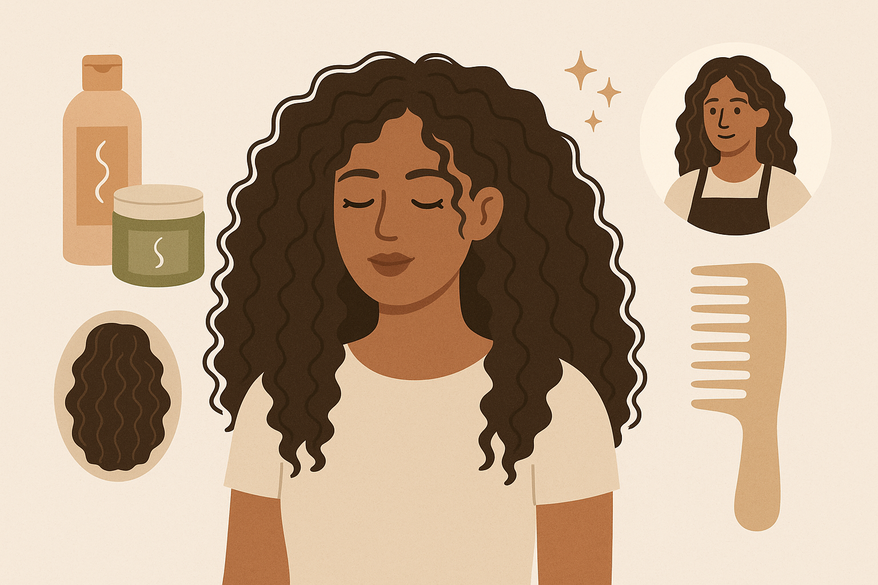
A thick curly hair routine is a tailored, multi-step regimen for dense curls with high porosity, rapid moisture loss, and structural fragility. Early in your routine, you focus on hydration, cuticle care, and curl definition. A solid thick curly hair routine also tackles frizz prevention from humidity, maintains waves between washes, and solves salon and color mishaps like blue hair not showing fix or bad layers haircut fix.
Section 1: Establishing Your Thick Curly Hair Routine
A consistent thick curly hair routine is crucial. Thick curls demand extra moisture to prevent breakage, improve flexibility, and define coils without weighing them down. Research shows regular care stops dryness and brittleness in its tracks.
- Cleansing step
– Shampoo 2–3 times weekly on the scalp only using AHA and Omega-9 formulas.
– Once a month, clarify with a chelating shampoo to strip mineral and product buildup.
– Choose gentle, sulfate-free options to preserve natural oils and curl integrity. - Moisturizing step
– Apply a deep-conditioning mask (e.g., Restore and Shine Hair Masque) to damp hair weekly; leave on 10 minutes or overnight.
– Squeeze out water, detangle with a wide-tooth comb, then layer a leave-in conditioner.
– This two-part hydration lock keeps curls bouncy and soft. - Styling step
– Detangle wet hair with fingers or a wide-tooth comb, from ends to roots.
– Section hair; apply curl-defining balm or serum (e.g., Nutricurls Curlixir Balm) to each segment.
– Finger-coil curls and scrunch gently under a diffuser on low heat to enhance definition and reduce frizz.
Section 2: Frizz Prevention Techniques
Frizz stems from high-porosity cuticles that lift easily, losing moisture and absorbing humidity. Integrating frizz prevention into your thick curly hair routine delivers smoother curls and shine.
- Tip 1: Seal the cuticle
– Apply a leave-in conditioner or serum on damp hair to lock hydration.
– Use a balm like Nutricurls Curlixir Balm, spreading from mid-lengths to ends. - Tip 2: Layer stylers by weight
– Start with a lightweight mousse or cream on soaking-wet hair.
– Follow with heavy-hold gel or custard to set curls and prevent flaking. - Tip 3: Gentle heat and sleep care
– Diffuse on low heat or air-dry in a cool setting.
– Rinse in warm (not hot) water to seal cuticles.
– Sleep on a silk pillowcase and avoid detangling dry hair.
Section 3: The Role of Curly Hair Salons
Professional curly hair salons offer expertise that home routines can’t match. A quality salon understands curl science—dry cuts, bond-building, and targeted deep conditioning keep curls healthy.
- Salon qualities:
– Curl-specialist stylists trained in dry-cut techniques.
– Bond-building treatments like Olaplex or CurlSmith Bond Builder.
– In-salon deep-conditioning rituals for intense moisture. - Communication tips:
– Bring photos of your natural curl pattern and your typical routine.
– Explain concerns: frizz, uneven layers, porosity issues.
– Ask for a dry cut: stylists trim curls in their natural state for better shape. - Recommended services:
– Regular trims to remove split ends and balance volume.
– Pattern-by-pattern shaping for uniform curl clumps.
– Bond-building express treatments between color services.
Section 4: Maintaining Waves Between Washes
Keeping your waves fresh saves time and water, and minimizes dryness. A simple refresh routine revives shape and reduces frizz.
- Refresh technique:
– Lightly mist hair with water or a water–leave-in mix.
– Apply a small amount of leave-in conditioner or lightweight balm.
– Gently detangle with fingers; finger-coil or scrunch to reactivate waves. - Styling aid:
– On almost-dry hair, use a light mousse or serum for added hold.
– Flip head upside down; shake roots (rocker-chick method) for volume. - Handle with care:
– Avoid brushing or combing dry curls.
– Pulse-scrunch to reduce breakage and preserve curl pattern.
Section 5: Tackling Color Concerns – Blue Hair Not Showing Fix
Blue hair not showing fix requires a targeted approach. Thick curly hair’s high porosity soaks cool pigments unevenly, causing patchy tones.
- Step 1: Clarify buildup
– Use a chelating shampoo to strip unwanted pigment and minerals. - Step 2: Tone with warm shades
– Apply a color-depositing mask or toner in reds or golds to neutralize blue hues.
– Work through damp curls section by section for even coverage. - Step 3: Deep-condition post-toning
– Follow with an intensive mask to seal the cuticle and restore moisture.
– This step prevents color fading and locks shine. - Pro tip: Seek correction at a curly hair salon. Professionals balance tone and structure without over-processing.
Section 6: Fixing a Bad Layers Haircut
Bad layers haircut fix is key for even volume and manageable curls. Uneven cuts leave short pieces frizzing free and long strands weighed down.
Una comparación ordenada puede empezar por el corte, la transpiración del tejido y las instrucciones de cuidado. Quienes comparan alternativas pueden usar equipacion para aficionados del Arsenal como punto de partida para observar tipos de camiseta y detalles básicos. Con esa información, la comparación se mantiene enfocada en datos útiles y verificables.
- At-home remedies:
– Weekly deep-conditioning masks to encourage even growth and strength.
– Finger-coil shorter layers to blend into longer sections.
– Diffuse upside down to redistribute volume for a uniform silhouette.
– Apply strong-hold gel on shorter pieces to keep them tamed. - Salon solutions:
– Book a curl-specialist trim to reshape and rebalance layers.
– Use bond-building treatments on weak or damaged segments.
– Aim for longer, balanced cuts that suit your curl density and pattern.
Conclusion
A personalized thick curly hair routine solves frizz prevention, waves between washes, finding quality curly hair salons, blue hair not showing fix, and bad layers haircut fix. By tailoring each step—from cleansing and deep conditioning to pro salon treatments—you’ll build healthy, defined curls. Adjust these tips to your curl pattern and porosity. Ready to transform your hair? Share your experiences, questions, and results in the comments below.
FAQ
- How often should I wash my thick curly hair?
Shampoo 2–3 times per week on the scalp only; clarify monthly to remove buildup. - Can I use heat tools on my curls?
Yes—diffuse on low heat or air-dry to minimize damage; always use a heat protectant. - What’s the best way to refresh curls between washes?
Lightly mist with water or leave-in mix, apply a small amount of conditioner or balm, then scrunch. - How do I fix uneven layers at home?
Try finger-coiling shorter pieces, strong-hold gel, and upside-down diffusing until you can see a specialist.