Ultimate Thick Curly Hair Routine: Frizz Prevention & More
Discover the ultimate thick curly hair routine with tips on frizz prevention, maintaining curls between washes, and fixing common styling issues.

Estimated reading time: 8 minutes
Key Takeaways
- Comprehensive routine for moisture, definition, and damage control.
- Effective frizz prevention with hydration and protective techniques.
- Refreshing waves without full washes using simple methods.
- Specialist salons and cuts designed for high-density curls.
- Targeted fixes for color fades and uneven layers.
Table of Contents
- Introduction & Key Challenges
- Understanding Thick Curly Hair
- Establishing a Thick Curly Hair Routine
- Frizz Prevention
- Maintaining Waves Between Washes
- Choosing the Right Curly Hair Salons
- Troubleshooting Color and Cut Challenges
- Conclusion
- FAQ
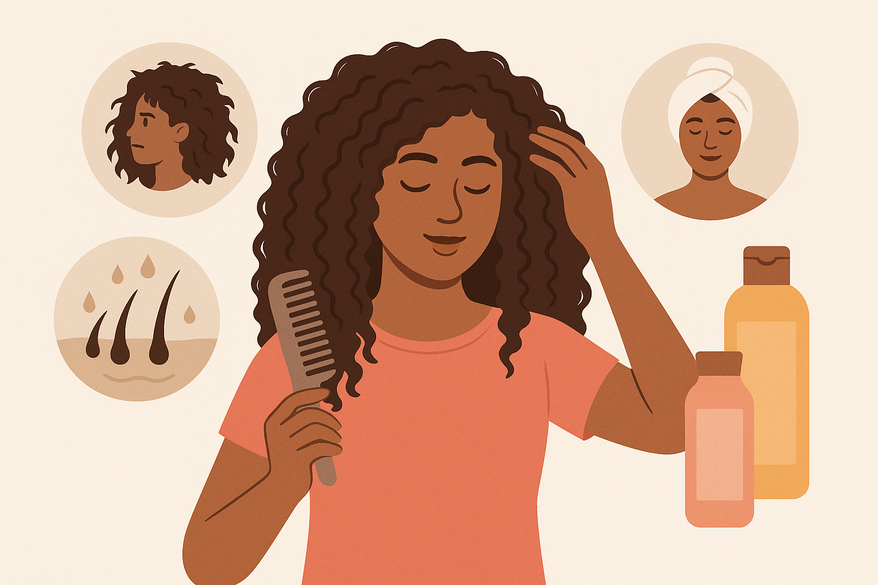
A thick curly hair routine is a customized daily and weekly care system designed for high-density, textured curls, addressing moisture balancing, curl definition, and damage control.
For a fully integrated beauty regimen that includes hair, makeup, and skincare insights, check out Makeup Check AI, your personal AI beauty team offering tutorials, try-ons, and tailored reports to complement any hair care plan.
In this post, you’ll find research-backed, actionable solutions for each challenge. Let’s dive into building your healthiest, most defined curls ever.
Key Challenges in a Thick Curly Hair Routine
- Frizz that ruins definition
- Losing bounce and waves between washes
- Finding stylists who truly understand textured coils
- Troubleshooting creative color fades and poor cuts
Section I: Understanding Thick Curly Hair
Thick curly hair features high density, wider strand diameter, and variable porosity. These traits lead to:
- Rapid moisture loss—coils dry out faster.
- More tangles—strands interlock easily.
- Elasticity challenges—brittle hair breaks under tension.
These characteristics make a dedicated routine essential to:
- Maintain curl elasticity with regular hydration boosts.
- Prevent breakage by reinforcing cuticle strength.
- Preserve natural oils and protect textured strands.
Section II: Establishing a Thick Curly Hair Routine
A solid regimen has five key steps. Apply them weekly to daily for best results.
1. Pre-poo Treatment
- Use a lightweight oil (argan or sweet almond) or conditioner.
- Coat hair 15–30 minutes before cleansing to shield cuticles.
2. Cleansing (Every 3–4 Days)
- Rotate between shampoo and co-wash to retain natural oils.
- Focus lather on the scalp; let suds rinse down the lengths.
3. Deep Conditioning (1–2×/Month)
- Choose a rich mask with shea butter, glycerin, or honey.
- Apply mid-shaft to ends; detangle with a wide-tooth comb.
- Leave on 20–30 minutes under a warm cap for enhanced penetration.
4. Leave-In Conditioner & Styling
- Distribute a lightweight, water-based leave-in on damp hair.
- Follow with curl-defining cream or gel using “prayer-hands” smoothing.
- Smooth product from roots to tips to seal the cuticle and prevent frizz.
5. Drying Technique
- Diffuse on low heat: cup curls with fingers to enhance shape.
- Or air-dry: tilt head side to side, scrunch ends upward.
- Finish with a cool-shot blast to lock cuticles and set the style.
Section III: Frizz Prevention
Frizz appears when the hair’s moisture barrier breaks down. Main triggers include:
- Humidity swings drawing water into cuticles.
- Mechanical friction from cotton pillowcases or towels.
- Temperature shock—hot water opens cuticles, cold air closes them too quickly.
Tactics for lasting frizz prevention:
- Weekly deep-conditioning masks to restore lipids and proteins.
- Swap to silk or satin pillowcases and bonnets to reduce friction.
- Finish with a cool water rinse to seal cuticles.
Section IV: Maintaining Waves Between Washes
Between-wash days can leave your waves deflated if you over-cleanse. Try these refresh methods instead:
- Finger Coiling: Wrap each curl around your finger to redefine the spiral.
- Scrunch & Spray: Mist with water or leave-in spray, then scrunch upward.
- Lightweight Foam Refresher: Use volumizing mousse or foam on days 2–4.
Section V: Choosing the Right Curly Hair Salons
Selecting a specialist salon ensures your thick curls get expert care. Look for:
- Certified stylists trained in DevaCut, RëzoCut, or Ouidad methods.
- Before/after galleries featuring high-density clients.
- Positive testimonials highlighting curl integrity post-cut.
Section VI: Troubleshooting Color and Cut Challenges
A. Blue Hair Not Showing Fix
- Clarify with a gentle clarifying shampoo.
- Pre-poo with an apple cider vinegar rinse (1:1) to open cuticles.
- Lighten to pale yellow, then apply semi-permanent blue with mild heat.
B. Bad Layers Haircut Fix
- Twist mid-length sections and pin up overnight to blend layers.
- Professionally request micro-bobbing under layers or point-cutting for graduation.
Conclusion
Recap key points:
- A comprehensive routine anchors healthy, elastic coils.
- Consistent frizz prevention restores a smooth moisture barrier.
- Waves between washes stay defined with light refresh techniques.
- Expert salons and precise cuts deliver salon-quality results.
- Color fades and haircut mishaps are solvable with targeted fixes.
Empower yourself by adopting these research-backed steps. Healthier, more defined curls—and fewer styling headaches—are within reach. Share your own thick curly hair routine tips below, or explore more beauty-tech innovations with Makeup Check AI.
FAQ
Q: How often should I deep condition my thick curly hair?
A: For best results, deep condition 1–2 times per month, focusing on moisturizing ingredients like shea butter and glycerin.
Q: Can I refresh curls without a full wash?
A: Absolutely—try finger coiling, scrunch & spray, or a lightweight foam refresher to redefine your waves on non-wash days.
Q: What’s the best way to prevent frizz overnight?
A: Sleep on a silk or satin pillowcase, or use a satin bonnet to reduce friction and maintain your curl pattern.
Q: How do I fix uneven layers on curly hair?
A: Twist mid-length sections and pin them up overnight or visit a stylist for micro-bobbing and point-cutting to even out the layers.