The Ultimate Thick Curly Hair Routine: From Frizz Prevention to Perfect Cuts
Discover the ultimate thick curly hair routine with frizz prevention techniques, salon tips, and color correction for vibrant, manageable curls.

Estimated reading time: 10 minutes
Key Takeaways
- Hydration is critical: infrequent shampooing and deep conditioning reduce dryness and frizz.
- Definition matters: techniques like finger coiling and gel sealing lock in curl shape.
- Salon expertise: choose stylists trained in curly-specific methods to avoid bad layers and uneven color.
- Refresh wisely: light mists and targeted touch-ups extend your style between washes.
Table of Contents
- Introduction
- Common Thick Curly Hair Challenges
- Section 1: Establishing the Thick Curly Hair Routine
- Section 2: Frizz Prevention
- Section 3: Choosing the Right Curly Hair Salons
- Section 4: Managing Waves Between Washes
- Section 5: Color Correction – Blue Hair Not Showing Fix
- Section 6: Fixing a Bad Layers Haircut
- Conclusion
Introduction
A thick curly hair routine is a targeted regimen for dense, coiled strands designed to deliver extra moisture and curl definition while preventing common issues such as frizz, flattened waves between washes, poor salon outcomes, and uneven color. Curly hair often faces dryness due to high porosity, leading to frizz from humidity or friction, waves losing shape between washes, botched layers, and color fading unevenly. By understanding these challenges and applying a structured routine, you’ll protect your curl pattern and promote healthy, resilient coils.
For personalized beauty insight, check out Makeup Check AI.
Common Thick Curly Hair Challenges
- Frizz from raised cuticles and dryness
- Waves flattening between washes
- Finding the right curly hair salons
- Blue hair not showing fix for faint color results
- Bad layers haircut fix for uneven shape
By following this thick curly hair routine, you’ll achieve defined, bouncy, and hydrated curls.
Section 1: Establishing the Thick Curly Hair Routine
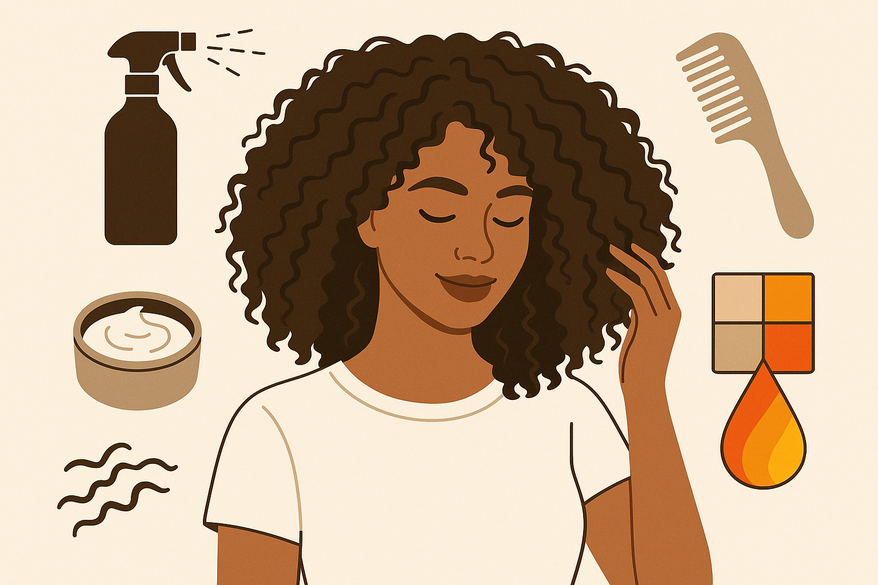
This section details the core steps of your thick curly hair routine. By infusing moisture and definition at each stage, you’ll minimize frizz and maximize curl formation.
Step 1: Infrequent Shampooing
- Why: Shampooing 1–2 times weekly preserves natural oils in high-porosity curls.
- How: Choose sulphate-free, low-lather cleansers to gently cleanse without stripping.
- Expert Tip: Look for mild surfactants like coco-glucoside for gentle wash days.
Step 2: Detangling Wet Hair
- Why: Wet detangling reduces breakage and maintains curl integrity.
- How: Stand in the shower under running water. Start at the ends, using fingers or a wide-tooth comb, then work up to roots.
- Pro Insight: Always detangle with conditioner in hair for slip and protection.
Step 3: Leave-In Conditioning & Creams
- Why: Thick curls need lightweight hydration before styling.
- How: Apply a leave-in mid-length to ends. Follow with a curl cream tailored for dense, coiled hair.
- Science Note: Sealing with deep conditioners weekly prevents frizz by locking in hydration.
Step 4: Finger Coiling for Definition
- Why: Uniform ringlets maximize curl definition.
- How: Take 1-inch sections, twirl around your finger, then release. Repeat across head.
- LSI Term: “coil formation” helps maintain consistent curl shape.
Step 5: Sealing with Gel or Balm
- Why: A gel or styling balm smooths cuticles and holds shape.
- How: On dripping-wet hair, apply a thin layer of curl gel or balm, smoothing from root to tip.
- Tip: Scrunch out flakes once completely dry for extra softness.
Maintenance Tip:
- Pineapple at night: Gather hair loosely on top of head.
- Silk or satin bonnet/pillowcase: Reduces friction and cuticle lifting.
For extra depth, see our detailed guide to your complete routine.
Section 2: Frizz Prevention
Defining frizz prevention is key to smooth, uniform curls. Frizz arises when raised cuticles absorb moisture unevenly, causing unruly strands.
- Clarifying Shampoo Monthly
Purpose: Removes product buildup that blocks hydration and curl clumping.
How: Use a gentle clarifier once every 4–6 weeks. - Deep Conditioning Masks
Why: Thick hair needs potent moisture boosts.
How: Apply a Restore and Shine mask weekly or overnight for 20–30 minutes. - Layering Products
Method: On soaking-wet hair, layer a lightweight leave-in, then a richer gel or balm for a moisture-and-hold system. - Gentle Drying
Technique: Diffuse on low heat with a diffuser attachment or air-dry while scrunching gently. - Silk or Satin Bedding
Benefit: Reduces overnight friction and cuticle disruption.
Consistency is the most powerful frizz prevention tool.
Section 3: Choosing the Right Curly Hair Salons
Selecting curly hair salons with trained stylists ensures cuts and color complement your dense, coiled texture.
- Salon Certifications: Look for DevaCut or Ouidad Method training.
- Tool Knowledge: Stylists should use diffusers and wide-tooth combs.
- Porosity Expertise: Formulate color for high-porosity curls to prevent uneven fade.
- Dry Cut Experience: Avoid thinning shears on voluminous hair.
Read reviews from clients with 3B–4C hair praising shape retention and healthy ends. For more salon-ready styling, check out the ultimate thick curly hair routine.
Section 4: Managing Waves Between Washes
Waves between washes occur as natural oils migrate down the shaft and product definition fades. Proper refresh methods preserve tone and bounce.
- Water or Leave-In Mist: Spritz mid-lengths to ends lightly, then scrunch.
- Curl Cream Touch-Up: Apply a small amount to dry or slightly damp sections, focusing on ends.
- Finger Coiling or “Rake & Shake”: Rake a pea-sized gel between fingers and shake sections to re-form waves.
Avoid over-wetting to maintain moisture balance.
Section 5: Color Correction – Blue Hair Not Showing Fix
Thick, porous curls can absorb color unevenly or retain buildup that blocks dye penetration, resulting in faint blue hues.
- Clarify First: Use a chelating or clarifying shampoo before coloring.
- Bond-Building Pre-Treatment: Apply a bond-builder (e.g., Olaplex No.3) to reinforce hair structure.
- Semi-Permanent Application: Dilute dye with conditioner for even tone and strand-test intensity.
- Post-Color Seal: Use a protein-rich conditioner to lock pigment and reduce excessive porosity.
If DIY fails, consult a certified curly hair salon for professional toners or glosses.
Section 6: Fixing a Bad Layers Haircut
A bad layers haircut fix addresses uneven shrinkage and bulk pockets from improper layering in thick curls.
- Temporary Styling Fixes: Use a heavy curl-defining cream to weigh down flyaways.
- Pineapple Ponytail: Loose high bun overnight for uniform reshape.
- Diffuse Upside-Down: Promote even volume and form.
- Long-Term Correction: Book a specialist dry cut on styled, dry hair, and schedule trims every 8–12 weeks.
Conclusion
A dedicated thick curly hair routine locks in moisture and delivers lasting definition. Key actions include:
• Frizz prevention: Clarify, mask, and seal with gels.
• Waves between washes: Refresh with mist, curl creams, and finger coiling.
• Expert stylists: Choose certified curly hair salons to avoid bad layers and ensure even color.
• Color correction: Clarify, bond-build, and seal pigment for vibrant results.
Implement this plan consistently for healthier, more manageable, and vibrant curls.
FAQ
How often should I shampoo my thick curly hair?
Answer: Shampoo 1–2 times per week with a sulfate-free cleanser to preserve natural oils and maintain hydration.
What’s the best way to refresh curls between washes?
Answer: Lightly spritz with water or leave-in mist, then scrunch with a small amount of curl cream or gel and finger coil sections as needed.
How can I prevent frizz in humid weather?
Answer: Use a clarifying shampoo monthly, apply deep conditioning masks weekly, layer products on wet hair, and sleep on silk or satin bedding.
Can I color-correct porous curls at home?
Answer: Yes, by clarifying first, using a bond-building treatment like Olaplex No.3, diluting semi-permanent dye with conditioner, and sealing with a protein-rich conditioner.
What should I look for in a curly hair salon?
Answer: Seek stylists certified in methods like DevaCut or Ouidad, experienced with diffusers and porosity, and who perform dry cuts on styled hair.