Master Your Thick Curly Hair Routine: Frizz Prevention & Salon Success
Discover the ultimate thick curly hair routine for frizz prevention and success with curly hair salons. Learn to maintain waves between washes and fix common issues.

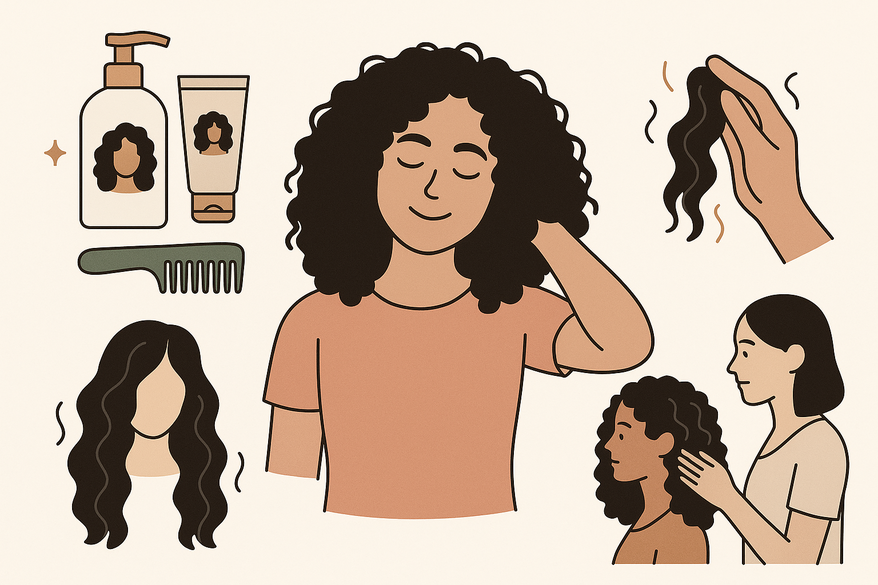
Estimated reading time: 8 minutes
Key Takeaways
- Create a tailored routine that balances cleansing, moisture, and hold for thick, curly hair.
- Follow the four pillars of curly care: Cleansing, Conditioning, Styling, and Maintenance.
- Implement targeted frizz prevention and wave-refresh techniques between washes.
- Choose a curl-savvy salon and prepare properly for cuts and color appointments.
- Fix common issues like blue hair not showing and uneven layers with specialist strategies.
Table of Contents
- Introduction
- Understanding Thick Curly Hair
- Essential Components of a Thick Curly Hair Routine
- Frizz Prevention Techniques
- Tips for Maintaining Waves Between Washes
- Choosing the Right Curly Hair Salons
- Handling Hair Color and Layering Challenges
- Conclusion
- FAQ
Introduction
Thick, curly hair can be a blessing and a challenge: frizz, uneven waves between washes, and salon or color mishaps often stand between you and perfect curls.
This guide will show you:
- How to understand your hair type
- Which steps to follow in your routine
- Frizz prevention techniques
- Ways to maintain waves between washes
- How to choose the right curly hair salons
- How to fix blue hair not showing and bad layers haircuts
A well-designed thick curly hair routine guide delivers consistent curls, less frizz, better waves between washes, and fewer “disaster” salon or color outcomes.
Understanding Thick Curly Hair
A strong routine starts with knowing what makes your hair unique. Thick, curly hair often features:
- Higher strand density & coarser strands: more volume and weight
- Curved follicles: blocked scalp oils lead to dryness and frizz
- Medium–high porosity: fast absorption but rapid moisture loss
- Breakage tendency: delicate when under-conditioned or handled roughly
Why generic routines fail:
- Heavy products flatten roots; light products leave a frizzy halo
- Harsh surfactants or rough drying stretch curls out of pattern
- Lack of slip and nutrition leads to snags and split ends
Building a custom routine balances cleansing, moisture, and hold to protect curl shape and hair health. For more depth, see the Curly Hair Care Guide and AAD Curly Hair Care.
Essential Components of a Thick Curly Hair Routine
Your routine rests on four pillars:
1. Cleansing (Goal: remove buildup without stripping)
- Clarify every 4–5 washes or once monthly to banish product, chlorine, minerals
- Use a moisturizing, sulfate-free shampoo or co-wash on other days
- Wash in sections to prevent tangles in very thick hair
- Optional pre-poo with oil or conditioner to protect cuticles and ease detangling
2. Conditioning (Goal: boost moisture, slip, and curl health)
- Rinse-out conditioner after every cleanse, focusing mid-lengths to ends
- Key ingredients: argan oil, glycerin, fatty alcohols (cetyl, stearyl)
- Weekly deep mask for 10–20 minutes; choose protein-balanced formulas
3. Styling (Goal: define curls, control frizz, set shape)
- On soaking-wet hair apply leave-in conditioner, then curl cream or gel
- Use raking, praying hands, or finger-coiling techniques
- Dry by plopping with a T-shirt or microfiber towel; diffuse on low heat or air-dry
- Finish by scrunching out any cast and sealing ends with light oil
4. Maintenance (Goal: protect style and hair health between washes)
- Sleep on satin or silk pillowcases or in a bonnet/scarf
- Pineapple or loose braid to preserve curl clumps and prevent tangles
- Detangle only on wet or damp hair with conditioner for slip
Frizz Prevention Techniques
Frizz happens when raised or damaged cuticles allow moisture to rush in or out. High humidity, mechanical damage, and product buildup all contribute.
Practical steps to control frizz:
- Maintain moisture: clarify monthly, follow every wash with conditioner or leave-in
- Apply products on soaking-wet hair; layer leave-in then gel to lock cuticle down
- Use “squish to condish” scrunching to boost curl clumps
- Finish with a cold water rinse to flatten cuticle
- Dry by blotting with a T-shirt or microfiber towel; avoid rubbing
- Night habits: sleep on satin/silk, avoid touching curls until fully dry
Key ingredients for frizz control include film-formers (polyquaterniums), humectants like glycerin (use sparingly in high humidity), and light oils (jojoba, argan) to seal moisture.
For more, see detailed frizz prevention techniques.
Tips for Maintaining Waves Between Washes
Struggling with limp or frizzy waves before the next wash? Try these:
- Refresh, don’t re-wash: mist with a 70/30 water-to-leave-in mix and scrunch gently
- Easy restyling: finger coil damp strands or scrunch with a dab of curl cream
- Protective night styles: loose braids, buns, or pineapple to reduce friction
- Avoid over-moisturizing: use minimal product on refresh days to prevent weight
Choosing the Right Curly Hair Salons
The right salon makes all the difference:
- Stylists with curly-cut portfolios and curl-by-curl cutting skills
- In-depth consultation on routine, styling habits, and past issues
- Use of curl-friendly, sulfate-free, low-build-up product lines
- Personalized home-care recommendations based on porosity and density
Prepare for your visit by arriving with hair in its natural, dry state, bringing photos, and listing challenges (frizz, waves, bad layers).
Handling Hair Color and Layering Challenges
Blue Hair Not Showing Fix
Why it happens: insufficient lightening, uneven porosity, or lack of bond-building treatments.
- Pre-lighten to pale blonde and pre-tone to neutralize warmth
- Use bond-building treatments and deep condition before and after
- Apply professional direct dyes; at home, choose sulfate-free, color-safe formulas
- Wash in cool water and use color-depositing conditioners
Bad Layers Haircut Fix
Common problems: choppy shelves, triangle shapes, thin ends.
- Grow hair slightly, then see a curl specialist
- Bring “before” photos and explain issues (“shelf here,” “flat top”)
- Use blending, internal texturizing, and face-framing layers
- Space major changes over sessions for hair health
For personalized insights and style visualization, try Makeup Check AI.
Conclusion
A tailored thick curly hair routine delivers:
- Smoother, frizz-free curls with effective prevention
- Defined waves between washes without re-washing
- Consistent results from skilled curly hair salons
- Vibrant, even color with blue hair fixes
- Balanced, natural-looking shape with layer corrections
Use this framework to test products, observe your hair’s response, and fine-tune each step.
Share in the comments:
- Your curl type and thickness
- Main challenge (frizz, waves, salon outcomes, color, layers)
- Your current routine
We’ll help you build a personalized thick curly hair routine with targeted fixes for frizz prevention, waves between washes, salon success, color vibrancy, and balanced layers.
FAQ
- Q: How can I best prevent frizz in thick curly hair?
A: Maintain moisture balance, apply products on soaking-wet hair, use cold rinses, and sleep on satin or silk. - Q: What’s the easiest way to refresh waves between washes?
A: Mist with a water-to-leave-in mix, scrunch gently, or finger coil damp strands for definition. - Q: How do I choose a curly-hair salon?
A: Look for stylists with curly-cut portfolios, consult in depth, and ensure they use curl-friendly products. - Q: Why isn’t my blue hair showing, and how can I fix it?
A: Ensure proper pre-lightening, use bond-builders, and select professional direct dyes with color-safe care. - Q: How do I correct a bad layers haircut?
A: Seek a specialist, bring reference photos, and use blending or texturizing techniques over multiple sessions.