Rosacea Makeup Tips: Expert Techniques for Redness Concealment
Discover expert rosacea makeup tips and redness concealing techniques to safely soothe and cover sensitive red skin without irritation.

Estimated reading time: 7 minutes
Key Takeaways
- Proper skincare prep supports a healthy skin barrier and can improve makeup adherence.
- Choose hypoallergenic, non-comedogenic, water-based products to help minimize irritation.
- Color-correcting primers and concealers can help neutralize redness before foundation.
- Light layers, gentle application tools, and regular patch-testing are recommended.
- AI-driven insights from Makeup Check AI can assist in refining product selection with up-to-date analysis.
Table of Contents
- Understanding Rosacea and Sensitive Red Skin
- Skincare Preparation for Makeup for Sensitive Red Skin
- Rosacea Makeup Tips (Primary Keyword Focus)
- Redness Concealing Techniques
- Makeup for Sensitive Red Skin (Product Recommendations)
- Expert Advice: Rosacea Makeup Tips & Makeup for Sensitive Red Skin
- Conclusion
- FAQ
1. Understanding Rosacea and Sensitive Red Skin
Rosacea is a chronic inflammatory skin condition characterized by persistent facial redness, visible blood vessels (telangiectasia), and sometimes papules or pustules. Common triggers that may exacerbate rosacea include:
- UV exposure, extreme temperatures (both hot and cold), and spicy or hot foods
- Stress, vigorous exercise, alcohol-based or fragranced skincare and makeup products
A compromised skin barrier can lead to increased transepidermal water loss, heightened sensitivity, and flare-ups when skin is rubbed or exposed to harsh ingredients. Prioritizing gentle pre-makeup skincare can help support skin comfort and minimize irritation risks.
2. Skincare Preparation for Makeup for Sensitive Red Skin
Cleanse Gently
Select non-foaming, sulfate-free cleansers enriched with hydrating agents like glycerin or mild surfactants such as coco-glucoside or decyl glucoside. Use lukewarm water, avoiding hot water which can worsen redness and irritation.
Moisturize to Support Barrier
Choose hypoallergenic, non-comedogenic moisturizers formulated for sensitive skin—see our updated Ultimate Non-Comedogenic Makeup Guide for Sensitive Skin. Ingredients to consider include ceramides (to help restore lipid barrier), hyaluronic acid (for hydration), niacinamide (to soothe inflammation), and squalane (for gentle moisturizing). Apply moisturizer on damp skin and allow 3–5 minutes for absorption before makeup.
Protect with Mineral Sunscreen
Use broad-spectrum mineral sunscreens with zinc oxide and/or titanium dioxide SPF 30 or higher daily. Tinted mineral formulas with green or beige undertones may help neutralize redness while providing UV protection. Reapply every two hours when outdoors or sweating.
3. Rosacea Makeup Tips (Primary Keyword Focus)
Product Selection Guidelines
Opt for products labeled “for sensitive skin”, “hypoallergenic,” and “non-comedogenic.” Water-based foundations, mineral powders, and silicone-free formulas are often preferred. Avoid alcohol, fragrance, essential oils, and harsh preservatives that may trigger irritation.
Patch-Testing Protocol
1. Apply a small amount of product to the inner forearm or jawline.
2. Wait 24–48 hours, monitoring for redness, itching, or stinging.
3. Proceed with facial use only if no adverse reactions occur.
Layer Reduction Strategy
Use multi-functional tinted moisturizers or BB/CC creams with SPF that combine primer, sunscreen, and light coverage to minimize product load and friction on sensitive skin.
Application Tools
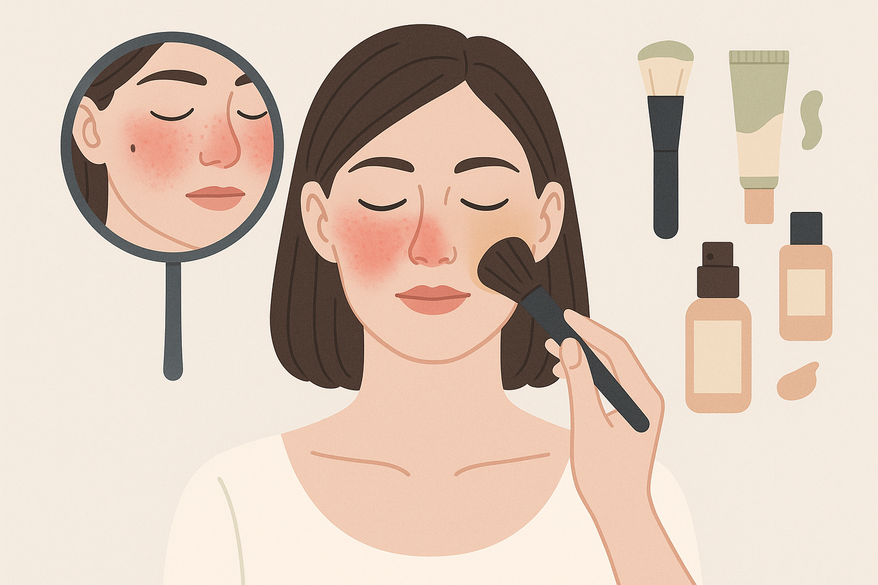
Utilize ultra-soft synthetic brushes, dampened makeup sponges, or clean fingertips. Apply makeup by gently tapping or stippling rather than dragging to avoid disrupting the skin barrier. Clean tools thoroughly after each use to prevent bacterial contamination.
4. Redness Concealing Techniques
Green-Tinted Primers
Apply 2–3 small dots of a green-tinted primer on areas of redness such as cheeks and nose. Blend outwards with gentle circular motions or light tapping to help neutralize red undertones.
Color-Correcting Concealers
Use green concealers for general redness. For deeper purple or red spots, particularly on medium to dark skin tones, yellow or peach-toned correctors may provide better neutralization. Apply with a small flat brush and gently blot to blend without rubbing.
Foundation Application
Choose oil-free, fragrance-free foundations that match your skin undertone. Apply in thin layers using a stippling brush or damp sponge to build coverage only where necessary. For persistent spots, gently pat a concealer one shade lighter than your foundation.
Setting Methods
Set makeup with a mineral-based translucent powder applied with a velour puff to avoid disturbing coverage. Finish with an alcohol-free, hydrating setting spray for a natural, dewy finish that helps maintain moisture balance.
5. Makeup for Sensitive Red Skin (Product Recommendations)
Foundations & Tinted Moisturizers
• Colorescience Mineral Pressed Powder SPF 35: zinc oxide-rich formula.
• La Roche-Posay Toleriane Teint Mineral Foundation: fragrance-free, mineral-based coverage.
• EltaMD UV Elements Tinted SPF 44: sheer mineral sunblock with hydrating properties.
• BareMinerals Original Loose Powder Foundation SPF 15: lightweight mineral powder with calming botanicals.
Concealers & Primers
• Clinique Redness Solutions™ Makeup Primer: green-tinted, calming base.
• Paula’s Choice CALM Redness Relief Concealer: hydrating, dermatologist-tested.
• IT Cosmetics Bye Bye Redness™ Correcting Cream: full coverage with skin-soothing ingredients.
Powders & Blushes
Use soft, neutral-tone blushes such as light coral, dusty rose, or soft peach to add natural warmth without emphasizing redness. Pair with mineral translucent powders that control shine without drying or cakiness.
Mascara & Eye Products
Select ophthalmologist-tested, fragrance-free mascaras like Clinique High Impact® or Almay One Coat Thickening. Use neutral, mineral-based eyeshadows free from common irritants.
6. Expert Advice: Rosacea Makeup Tips & Makeup for Sensitive Red Skin
- Dermatologist Tip: “If you experience burning or stinging, remove the product immediately and patch-test alternatives before reapplying.”
- Simplify Your Routine: Minimize the number of products used daily to reduce irritation risk; opt for multi-functional products.
- Makeup Artist Technique: Apply balms and creams with gentle tapping motions rather than sweeping to prevent micro-tears and barrier disruption.
- Monitor and Adjust: Maintain a log of new products and any skin reactions; reassess your routine every 4–6 weeks to optimize skin comfort and appearance.
Conclusion
In this updated guide, we’ve covered:
- The importance of understanding rosacea and supporting a healthy skin barrier
- A detailed, gentle skincare prep routine to optimize makeup application for sensitive red skin
- Key rosacea makeup tips including safe product selection and application methods
- Color-correcting and concealing strategies tailored for redness-prone skin
- Product recommendations trusted by dermatologists and makeup artists, enhanced by AI-powered analysis from Makeup Check AI
Call-to-Action
Share your go-to redness-concealing tips in the comments below and subscribe for the latest expert advice and AI-driven insights on makeup for sensitive red skin!
FAQ
- Q: How often should I patch-test new makeup?
A: Always wait 24–48 hours on a small area—ideally your jawline or inner arm—to monitor for irritation. - Q: Can I use green color-correcting concealer under any foundation?
A: Yes, provided your foundation is lightweight and oil-free; apply concealer gently and blot to blend without rubbing. - Q: Are tinted physical sunscreens effective for rosacea?
A: Mineral-based tints with zinc oxide or titanium dioxide can help reduce redness while protecting against UV triggers. - Q: How do I prevent foundation from clinging to dry patches?
A: Ensure thorough moisturization and primer application beforehand; finish with hydrating setting sprays to help maintain skin moisture.