Mastering Your Thick Curly Hair Routine: Frizz Prevention and More
Discover expert tips for a perfect thick curly hair routine, including frizz prevention, choosing curly hair salons, and fixing bad layers haircut issues.

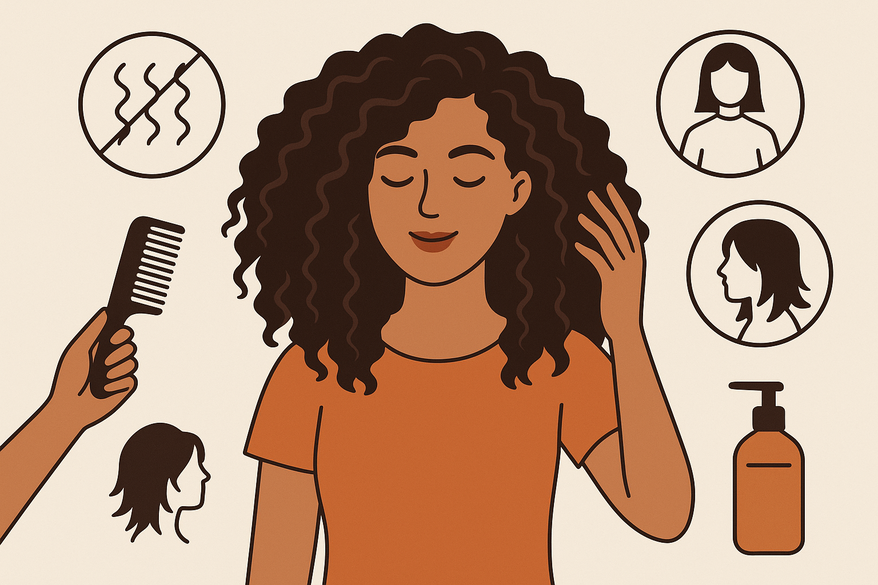
Estimated reading time: 6 minutes
Key Takeaways
- Moisture is essential to tame frizz and maintain healthy curls.
- Choose a curl-certified stylist for precise cuts and lasting color.
- Learn simple techniques to refresh waves between washes.
- Prep and maintain vibrant blue tones with the right products and routines.
- Use expert-approved methods to camouflage and correct bad layers without chop-chopping.
Table of Contents
- Understanding Thick Curly Hair Routines
- Detailed Frizz Prevention Strategies
- Choosing the Right Curly Hair Salons
- Maintaining Waves Between Washes
- Solving Color Issues – Blue Hair Not Showing Fix
- Correcting Haircuts – Bad Layers Haircut Fix
- Conclusion
Understanding Thick Curly Hair Routines
Defining Your Coils
Thick curly hair features dense spirals with high porosity, meaning moisture escapes easily and cuticles lift. This natural structure often leads to dryness, frizz, and breakage if not cared for properly.
Common Challenges
- Scalp buildup from infrequent washes or heavy silicones
- End tangles and knotting
- Friction damage from rough towels and cotton pillowcases
- Sensitivity to heat styling and sulfate or alcohol-based formulas
The Three Pillars of a Successful Routine
1. Products
- Sulfate-free, hydrating cleansers with argan oil or glycerin
- Conditioners rich in shea butter or fatty esters
- Detangle gently with a wide-tooth comb or your fingers while hair is wet
- Use protective styles like twists or buns to reduce friction
- Trim split ends every 6–8 weeks
- Deep-condition weekly with an intense mask
Dermatologists recommend washing high-porosity curls only every 2–3 weeks to preserve natural oils and prevent frizz. (Source: American Academy of Dermatology)
Detailed Frizz Prevention Strategies
Why Frizz Occurs
Frizz happens when raised cuticles absorb humidity. Overwashing strips protective oils, and rough drying or excessive heat causes lasting cuticle damage.
Actionable Tips
- Smart Cleansing and Conditioning
- Use a sulfate-free shampoo designed for curls.
- Distribute conditioner from roots to ends.
- Weekly masks with argan or coconut oil restore moisture.
- Daily Hydration
- Apply leave-in creams or lightweight oils on damp strands.
- Refresh non-wash days with a water and leave-in spray blend.
- Styling Hacks
- Detangle only when hair is conditioned to avoid breakage.
- Replace terry-cloth towels with a cotton T-shirt or microfiber wrap.
- Diffuse on low heat with silicone-free protectant or air-dry.
- Nighttime Care
- Sleep on silk or satin pillowcases.
- “Pineapple” hair in a loose top knot to preserve shape.
Choosing the Right Curly Hair Salons
Not every stylist understands curly textures. Seek professionals trained in the DevaCurl or Curly Girl Method, who perform dry cuts and detailed consultations to honor your hair’s porosity, density, and pattern.
For seamless integration of hair and skin care, try Makeup Check AI to personalize your beauty routine.
Maintaining Waves Between Washes
Refresh Ritual
- Mist hair with water and leave-in conditioner.
- Gently scrunch curls to reactivate definition.
- Apply a lightweight, alcohol-free gel or mousse on damp strands.
- Optionally plop or diffuse briefly on low heat.
Solving Color Issues – Blue Hair Not Showing Fix
Prep and Maintain
- Pre-lighten hair to a pale blonde (level 9–10) for true blue saturation.
- Use color-safe, sulfate-free shampoo and conditioner post-dye.
Correcting Haircuts – Bad Layers Haircut Fix
Camouflage Hacks
- Try half-up buns or headbands to mask uneven layers.
- Use chunky clips to blend jagged lengths.
Conclusion
Your journey to defined, healthy coils begins with consistent moisture, gentle techniques, the right salon team, and targeted fixes for color and cut mishaps. Track your progress, tweak your routine, and always consult certified professionals for personalized guidance.
FAQ
Q: How often should I wash thick curly hair?
A: Aim for every 2–3 weeks, using co-washing or conditioning in between to maintain hydration.
Q: Can I prevent frizz in high humidity?
A: Yes. Focus on moisture-locking products with humectants like glycerin, and avoid protein overload that can stiffen curls.
Q: What should I look for in a curly hair salon?
A: Seek stylists certified in curl-specific methods (DevaCurl, Curly Girl), offering dry cuts and thorough porosity assessments.
Q: How do I fix uneven layers without a drastic chop?
A: Use accessories for quick camouflage and book a curly-cut specialist for a precise trim that follows your natural curl shape.