Warm Cool or Neutral Undertone Test: Find Your Perfect Foundation Match
Discover how to find your warm, cool, or neutral undertone and match foundation perfectly with expert tests and tips from Makeup Check AI.


Estimated reading time: 12 min
Key Takeaways
- Learn how to identify your skin undertone—warm, cool, neutral, or olive—with simple, effective tests that you can perform at home using everyday items.
- Understand how undertones can impact foundation shade selection and makeup color choices, helping to achieve a natural, radiant look.
- Discover why foundation may oxidize orange and how to test foundation shade properly before purchase to avoid costly mistakes.
- Get practical tips to avoid common undertone testing mistakes like testing under indoor lighting or while having a tan, which can distort true undertones.
- Explore how AI beauty apps like Makeup Check AI can assist in personalizing your makeup and foundation choices through advanced skin tone analysis and virtual try-ons.
Table of Contents
- Section 1: Understanding Skin Undertones
- Section 2: Proven Warm Cool or Neutral Undertone Tests
- Section 3: How Undertones Influence Foundation Shade Matching
- Section 4: Why Does Foundation Oxidize Orange?
- Section 5: How to Test Foundation Shade Effectively
- Section 6: Choosing the Best Foundation for Your Skin Type and Undertone
Conclusion
FAQ
Section 1: Understanding Skin Undertones
What Are Undertones?
Undertones are the subtle hues beneath your skin’s surface that influence how colors look on you. Unlike your skin tone—which can vary from light to dark and change with sun exposure—undertones tend to remain relatively consistent throughout your life. Understanding undertones is helpful because they affect how makeup and clothing colors appear on your skin. Undertones generally fall into four main categories: warm, cool, neutral, and sometimes olive.
Warm Undertones
Warm undertones typically have a golden, yellow, or peachy hue beneath the skin’s surface. People with warm undertones often notice that gold jewelry complements their skin better than silver, creating a harmonious glow. When you look at your veins under natural light, they may appear more greenish, which can be due to the yellowish undertones mixing with the blue veins. Additionally, warm undertones often tan more easily and may burn less frequently in the sun. For example, someone with warm undertones might have a complexion described as "golden beige" or "honey." Foundation shades with yellow or golden bases usually suit these skin tones well.
Cool Undertones
Cool undertones are characterized by pink, red, or blue hues beneath the skin. Those with cool undertones often find that silver or platinum jewelry flatters their complexion more than gold. Veins usually appear blue or purple under natural daylight. People with cool undertones may notice their skin has a rosy or bluish cast, particularly in the cheeks or lips. Cool undertones may be more prone to sunburn than tanning. For example, fair skin with a slight pink flush or very pale skin with blue veins typically indicates cool undertones. Foundations with pink, red, or neutral bases designed for cool undertones often work well.
Neutral Undertones
Neutral undertones are a balanced mix of warm and cool tones, meaning they don’t lean strongly toward either side. Individuals with neutral undertones can often wear both gold and silver jewelry well, sometimes alternating depending on their outfit or occasion. Under natural light, their veins may appear blue-green, making it a bit trickier to classify. Neutral undertones are versatile, often allowing for a wider variety of makeup colors and foundation shades. Someone with neutral undertones might have a beige skin tone that neither looks overly yellow nor pink. Foundations labeled neutral usually blend warm and cool pigments for a more universal match.
Olive Undertones
Olive undertones are somewhat unique and can be challenging to identify. They have a subtle greenish or grayish cast that sometimes makes traditional warm/cool/neutral tests less clear. Olive skin can appear neutral but tends to have an underlying green or gray tint that affects how makeup colors look. Individuals with olive undertones may notice that some foundations labeled neutral or warm don’t quite match, and they may find better results with formulas specifically for olive skin or with slight green undertones. Jewelry tests may not be as clear-cut, making it important to combine multiple tests or use expert analysis. Olive undertones are common in Mediterranean, Middle Eastern, and some Latinx complexions.
Why Knowing Your Undertone Matters
Understanding your undertone can be helpful for selecting foundation shades that blend well with your natural skin color and avoid the "mask effect" or mismatched tones. It also guides you in choosing makeup colors—lipsticks, blushes, eyeshadows—that enhance your natural beauty rather than clash. For example, a warm undertone pairs well with coral or peach blushes, while cool undertones often look good with pink or berry shades. Jewelry choice also benefits from this knowledge, as the right metal tone can brighten your face and give you a more radiant complexion. In essence, knowing your undertone can support a harmonious, radiant look and help prevent costly makeup mistakes.
Section 2: Proven Warm Cool or Neutral Undertone Tests
The Vein Test
The vein test is one of the simplest and commonly used ways to get an idea of your undertone. To perform this test properly, follow these steps:
- Find a place with natural daylight, ideally near a window, to avoid the distortion caused by artificial lighting.
- Look at the veins on the inside of your wrist, without any makeup or sunscreen.
- Observe the color carefully:
- Green veins: May indicate warm undertones due to the yellowish tint mixing with blue veins.
- Blue or purple veins: Suggest cool undertones.
- Blue-green veins: Could point to neutral undertones, a balance between warm and cool.
Keep in mind that this test may be less clear if you have olive undertones, as their vein color can appear ambiguous. Also, factors like skin thickness and lighting can affect how veins look, so combining this test with others can improve accuracy.
The Jewelry Test
This test helps you see which jewelry metal complements your skin tone the best. Here's how to do it:
- Remove all makeup and jewelry.
- Stand in natural light and hold pieces of gold, silver, and platinum jewelry near your face one at a time.
- Notice which metal makes your skin look brighter, more radiant, and less dull.
- Gold jewelry: Often looks best on warm undertones, enhancing the golden or peachy hues.
- Silver or platinum: Typically flatter cool undertones by complementing the pink and blue hues.
- Both gold and silver: May suit neutral undertones, reflecting their balanced nature.
For example, if gold jewelry makes your skin glow and silver makes it look washed out, you might have warm undertones. Conversely, if silver looks better, your undertones are probably cool.
The White vs. Cream/Ivory Test
This test compares how pure white and off-white colors affect your complexion:
- Hold a piece of pure white cloth or paper next to your face in natural daylight.
- Then hold a cream or ivory-colored cloth or paper next to your face.
- Observe which color brightens your skin or complements it better.
- White: Often brightens and enhances cool undertones, making the skin look fresh and vibrant.
- Cream/Ivory: Usually complements warm undertones by adding warmth and softness to the complexion.
- Either looks equally good: May indicate neutral undertones, as both colors harmonize well.
For example, if your skin looks more radiant against cream than white, you might have warm undertones.
Additional Tips to Test Undertones Accurately
- Always perform tests in natural daylight, preferably near a window, to get true color representation.
- Test with a makeup-free face to avoid color distortion caused by existing makeup.
- Be cautious if you have a tan or sun-kissed skin, as tanning can temporarily alter your undertone perception.
- Olive undertones may require combining multiple tests or consulting expert analysis, as they can be ambiguous in standard tests.
- Consider using AI-powered apps like Makeup Check AI which use advanced algorithms to analyze your photo and provide undertone assessment.
Section 3: How Undertones Influence Foundation Shade Matching
Foundation Labels and Undertone Categories
When shopping for foundation, you’ll often see shade descriptions including undertone categories—warm (W), cool (C), and neutral (N). These labels help you identify which shades are designed to blend naturally with your skin.
- Warm foundations: Contain yellow, golden, or peach undertones that harmonize with warm skin tones, preventing the foundation from looking ashy or dull.
- Cool foundations: Include pink, red, or blue undertones that complement cool skin tones and help avoid an orange or sallow appearance.
- Neutral foundations: Combine warm and cool pigments to suit a broader range of skin tones, especially those with neutral undertones.
For example, a person with cool undertones may want to avoid warm foundations with heavy yellow bases to prevent an unnatural orange cast. Matching your undertone with your foundation’s undertone can help your makeup look seamless and natural, avoiding the "mask effect," where the foundation appears noticeably different from your neck or chest.
How Undertones Affect Color Season Analysis
Undertones also influence the color season analysis, which groups skin tones, hair, and eye colors into seasonal palettes—spring, summer, autumn, and winter—to guide complementary makeup and clothing colors.
- Cool undertones often align with winter and summer palettes, favoring jewel tones like sapphire, emerald, and cool pastels.
- Warm undertones tend to suit spring and autumn palettes, which include earthy colors such as coral, peach, warm browns, and golden yellows.
- Neutral undertones often have flexibility across palettes but may lean slightly warm or cool depending on hair and eye color.
For example, a cool undertone with dark hair and eyes might look stunning in deep blues and berry lipsticks, while a warm undertone with golden hair might shine in peach blushes and bronze eyeshadows.
To make this process easier, Makeup Check AI offers AI-powered color analysis that identifies your undertone and recommends personalized palettes tailored to your unique appearance. This can help reduce guesswork in seasonal color theory.
Neutral Undertones: The Flexible Middle Ground
People with neutral undertones often enjoy a versatile range of foundation shades and makeup colors, but subtle nuances matter. Neutral undertones can sometimes lean slightly warm or cool, so trying multiple shades is beneficial.
For instance, a neutral undertone person might find that foundations labeled neutral work well, but occasionally a slightly warm or cool shade may better enhance their skin's glow. Similarly, they can experiment with both gold and silver jewelry or a broad spectrum of lipstick colors—from soft pinks to warm corals.
Finding the perfect match often involves testing different products and shades, ideally with the help of AI-powered tools that analyze your skin tone in various lighting conditions.
Section 4: Why Does Foundation Oxidize Orange?
What Is Foundation Oxidation?
Foundation oxidation refers to the phenomenon where a foundation changes color after application, often becoming darker or developing an orange tint. This chemical reaction can occur when the foundation’s ingredients mix with the natural oils, sweat, and pH of your skin, as well as exposure to air and environmental factors.
Oxidation can be frustrating because it alters the initial shade match, making your makeup look unnatural or uneven as the day progresses. Understanding why oxidation happens can help you select products and application methods to minimize this effect.
Common Causes of Oxidation
- Skin chemistry: Everyone’s skin produces different amounts and types of oils. High oil production can interact with foundation pigments, causing color changes. Additionally, variations in skin pH can affect how pigments react after application.
- Foundation ingredients: Some foundations contain higher levels of iron oxides, which are pigments prone to oxidation. Oil-based or silicone-based formulas may also oxidize differently.
- Environmental exposure: Sunlight, pollution, humidity, and heat can accelerate oxidation by interacting with foundation ingredients and your skin.
For example, if you have oily skin and live in a humid climate, your foundation might oxidize faster compared to someone with dry skin in a cooler environment.
How to Minimize Foundation Oxidation
- Choose foundations formulated for your skin type and undertone: For oily skin, oil-free or mattifying foundations tend to oxidize less.
- Use a proper primer: Applying a primer creates a barrier between your skin’s oils and the foundation, reducing chemical reactions.
- Test foundation for at least 5-10 minutes after application: This allows you to observe if the shade darkens or shifts color before committing.
- Set foundation with powder: Setting your foundation with a translucent powder can help absorb excess oils and slow oxidation.
- Consider using AI tools like Makeup Check AI: These apps can simulate how foundation shades appear over time on your skin, helping you choose formulas less likely to oxidize.
- Stay hydrated and maintain a good skincare routine: Well-balanced skin tends to produce more stable oil levels, which may reduce oxidation risks.
Section 5: How to Test Foundation Shade Effectively
Steps for Accurate Shade Testing
Finding the perfect foundation shade requires careful testing to avoid mismatches and wasted purchases. Follow these detailed steps:
- Test on your jawline or neck: These areas provide the best match to your face and neck tone, ensuring a seamless blend. Avoid testing on your hand or wrist, as these areas often differ in color.
- Apply a thin layer: Use a small amount of foundation and blend it well into the skin to observe how it interacts with your natural skin tone.
- Check in natural daylight: Step outside or stand near a window to see the true color. Artificial lighting inside stores often distorts colors, leading to inaccurate choices.
- Wear the foundation for a few hours: Observe any oxidation, color shift, or changes in texture that may occur throughout the day.
- Compare multiple shades: When possible, test two or three shades side by side to see which blends best and complements your undertone.
- Remove foundation properly: After testing, cleanse your skin gently to avoid irritation or clogged pores.
Using Foundation Shade Finder Tools
Digital tools and apps like Makeup Check AI’s foundation shade finder leverage AI technology to analyze your skin tone and undertone from photos taken in natural light. These tools recommend foundation shades from a wide range of brands and formulas tailored to your unique coloring.
Benefits of AI shade finder tools include:
- Saving time by narrowing down options before visiting stores or buying online.
- Reducing product waste by avoiding unsuitable foundations.
- Providing personalized recommendations based on your skin’s current condition and undertone.
- Offering virtual try-ons so you can see how different shades look on your face in real time.
Patch Testing for Allergies and Texture
Besides color, it’s important to test for skin reaction and texture compatibility:
- Apply a small amount of the foundation on a discreet skin patch, such as behind the ear or on the inner forearm.
- Wait 24-48 hours to check for any irritation, redness, or allergic reaction.
- Assess texture compatibility: Notice if the foundation feels comfortable, non-greasy, and breathable on your skin.
This step is especially important for sensitive skin types or when trying new brands and formulations.
Section 6: Choosing the Best Foundation for Your Skin Type and Undertone
Match Foundation to Skin Type
Your skin type plays a significant role in deciding the best foundation formula to use. Here’s a breakdown:
- Oily skin: Look for matte, oil-free, or powder foundations that control shine and reduce excess oil throughout the day. Ingredients like salicylic acid can help control breakouts.
- Dry skin: Opt for hydrating, dewy, or cream foundations with moisturizing ingredients like hyaluronic acid or glycerin to prevent flakiness and create a glowing complexion.
- Combination skin: Select hybrid formulas that balance moisture and oil control, such as lightweight liquid foundations with satin finishes.
- Sensitive skin: Choose hypoallergenic, fragrance-free, and mineral foundations that minimize irritation and are often non-comedogenic.
For example, someone with dry skin and warm undertones might benefit from a cream foundation with golden undertones that hydrates while enhancing warmth.
Foundation Shades and Undertones: Practical Tips
- Always buy foundation that matches your undertone—warm, cool, or neutral—for a natural, seamless look.
- If you have olive undertones, consider foundations labeled "olive" or neutral with a greenish tint to counteract the grayish cast.
- When in doubt, test multiple shades and leverage AI beauty apps for personalized advice and virtual try-ons to minimize guesswork.
- Consider seasonal palette guidance to harmonize your foundation and makeup choices with complementary colors.
- Remember to update your foundation shade seasonally, as skin tone and undertone may slightly shift due to sun exposure or skin condition changes.
Enhance Your Routine With AI Beauty Technology
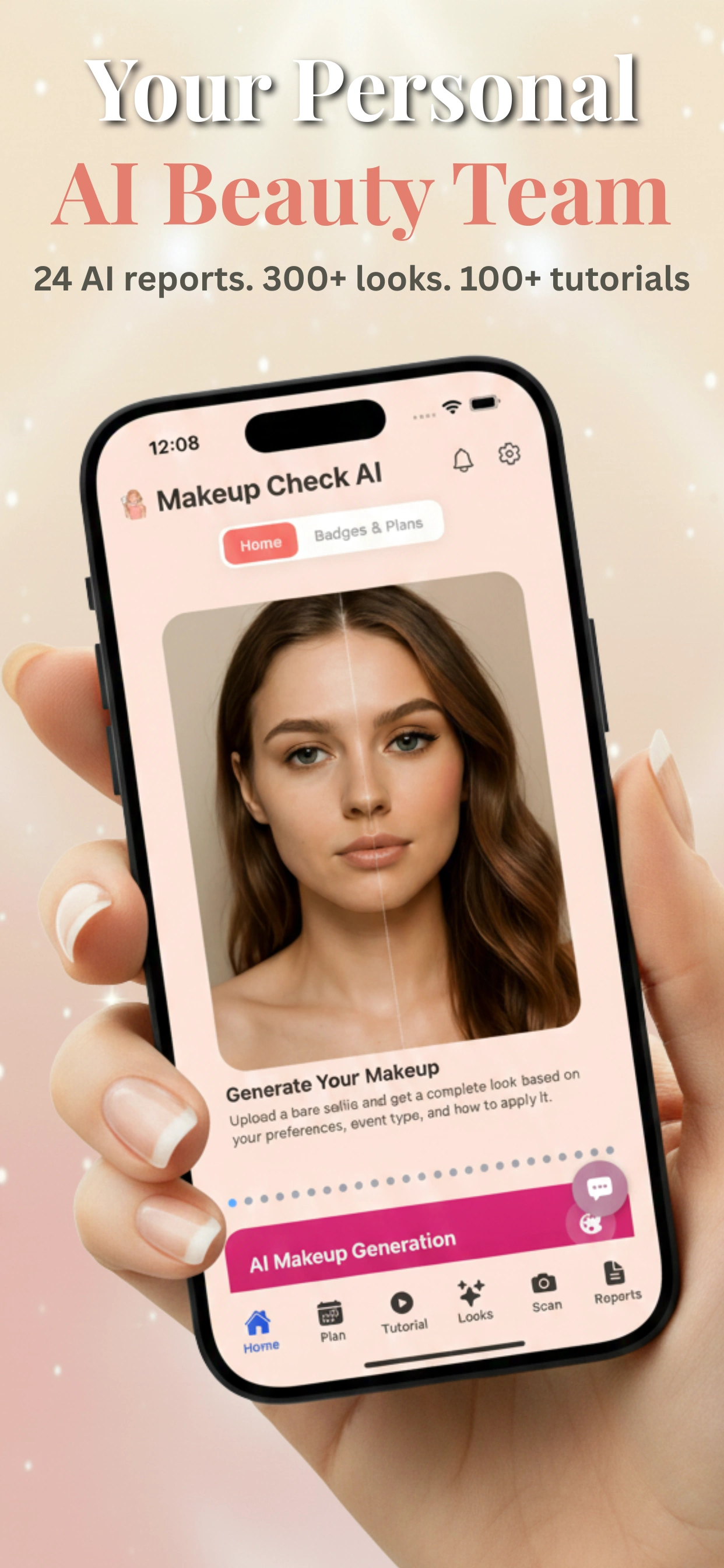
Apps like Makeup Check AI offer AI-powered reports including foundation shade matching, personalized makeup looks, and tutorials tailored to your undertone and skin type.
Key features include:
- Detailed AI reports analyzing your skin tone, undertones, and complexion nuances.
- Personalized product recommendations based on your unique profile.
- Virtual try-ons that let you experiment with different foundation shades and makeup looks without physical application.
- Time and cost savings by reducing product trial and error.
- Eco-friendly approach by minimizing product waste.
Using AI technology can help you make informed decisions and enhance your beauty routine with confidence.
Conclusion
Mastering the warm cool or neutral undertone test can be a helpful step for foundation matching and makeup results. By using straightforward tests like the vein test, jewelry test, and white vs. cream paper method under natural light, you can better understand your undertone and build your makeup routine around it.
This knowledge supports better foundation shade choices, helps prevent issues like oxidation that can alter your foundation's appearance, and guides you toward makeup colors that highlight your natural beauty and complement your skin.
Remember to always test foundation shades carefully, considering both your skin type and undertone, and use technology to your advantage. Tools like Makeup Check AI offer AI-driven shade finders, personalized plans, and virtual try-ons that can save time, money, and frustration.
Embrace the science of undertones and enjoy effortless, radiant makeup every day.
FAQ
Q: How do I know if I have a warm, cool, or neutral undertone?
A: Use the vein test by looking at your wrist veins in natural light. Green veins may indicate warm undertones, blue or purple veins suggest cool undertones, and blue-green veins could point to neutral undertones. The jewelry test and white vs. cream fabric test can also help confirm your undertone.
Q: What does it mean if my veins look blue-green instead of blue or green?
A: Blue-green veins often indicate a neutral undertone, meaning your skin balances warm and cool tones. Neutral undertones can often wear both silver and gold jewelry well and have flexibility with makeup colors.
Q: Is silver or gold better for neutral undertones?
A: Both silver and gold jewelry typically suit neutral undertones, so you can choose based on your personal preference and outfit. Neutral undertones are versatile with metal colors and can often mix metals successfully.
Q: How can I tell the difference between neutral and olive undertones?
A: Olive undertones have a subtle green or grayish cast and may appear neutral in some tests. Combining multiple tests such as vein color, jewelry preference, and fabric color draping, along with using AI color analysis tools, can help distinguish olive undertones from neutral ones.
Q: Which foundation shade should I buy if my undertone is neutral?
A: Look for foundations labeled neutral or with balanced undertones. You may also try shades with either slightly warm or cool tones to see which complements you best. Using a foundation shade finder app can provide personalized recommendations based on your skin tone and preferences.
Q: Does sun reaction help determine my undertone?
A: How your skin reacts to sun exposure can offer clues. Warm undertones often tan more easily without burning, cool undertones may burn or turn pink before tanning, and neutral undertones tan moderately. However, sun exposure can temporarily alter skin tone, so rely on undertone tests done without tanning for the most accurate results.