The Ultimate Thick Curly Hair Routine for Frizz Prevention and Defined Waves
Discover the best thick curly hair routine for frizz prevention, maintaining waves between washes, and expert salon tips. Achieve hydrated, defined curls effortlessly.

Estimated reading time: 7 minutes
Key Takeaways
- Moisture is key: Gentle cleansing, conditioning, and sealing locks in hydration.
- Frizz prevention: Diagnose dryness or friction triggers and use targeted strategies.
- Between-wash care: Refresh curls with light mists, scrunching, and minimal product.
- Professional support: Seek a curly hair specialist for cuts, color, and treatments.
- Troubleshooting: Fix muted blue tones or uneven layers with expert guidance and at-home tweaks.
Table of Contents
- Defining Your Thick Curly Hair Routine
- Frizz Prevention Strategies
- Maintaining Waves Between Washes
- Choosing the Right Curly Hair Salons
- Troubleshooting Color and Cut Issues
- Conclusion
Introduction
A thick curly hair routine is a repeatable wash-day and between-wash plan designed to keep dense curls hydrated, defined, and protected from frizz and breakage. Thick curls resist daily washing, and without proper care, coils can lose definition and strength.
In this guide, you’ll learn how to:
- Prevent frizz with targeted strategies
- Maintain waves between washes
- Select the best curly hair salons
- Fix color problems like muted blue hues
- Correct a bad layers haircut
Section 1: Defining Your Thick Curly Hair Routine
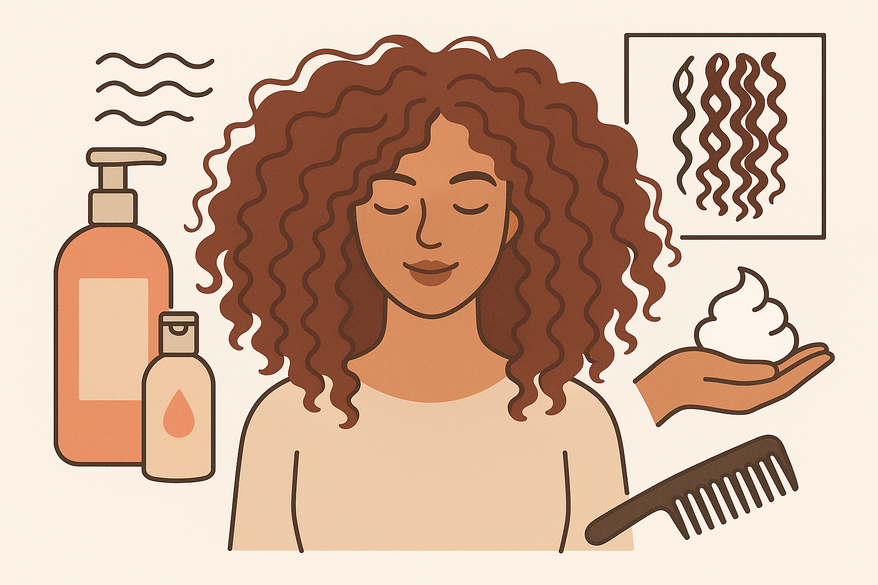
Each step works together to nourish, define, and protect strong curls. Follow these core steps:
- Gentle Cleansing
- Frequency: 1–3 times/week, as needed.
- Why: Over-washing dries strands and increases frizz.
- How: Use a sulfate-free shampoo or co-wash with a curl-specific cleanser.
- Conditioning
- Rinse-Out: Apply mid-length to ends, detangle, rinse 80% out.
- Leave-In: Seal wet hair with a light formula for slip and hydration.
- Styling Products
- Curl Cream or Mousse to define waves or add volume.
- Gel or custard for hold and reduced frizz.
- Apply on soaking-wet hair, section by section.
- Detangling
- Only when wet, using fingers or a wide-tooth comb.
- Work from ends to roots in sections.
- Drying Methods
- Use a microfiber towel or cotton T-shirt to squeeze out water.
- Air dry for natural definition or diffuse on low heat/speed.
- Protective Habits
- Night care: pineapple, loose braids, or satin bonnet.
- Silk or satin pillowcases to reduce friction.
Optional Add-Ons: Light hair oil sealing, weekly deep-conditioning mask, clarifying shampoo every 3–5 washes.
Section 2: Frizz Prevention Strategies
Frizz stems from dryness, friction, humidity, and pattern disruption.
“Always detangle when wet to protect curl integrity.” – AAD
- Apply stylers on soaking-wet hair to set pattern.
- Use a microfiber towel or cotton T-shirt to reduce friction.
- Hands off until fully dry to let curls form undisturbed.
- Sleep on silk or satin to protect curls overnight.
- Clarify regularly to remove product buildup.
Home Remedies for Midweek Frizz:
- Refresh mist: water + leave-in or diluted gel in a spray bottle.
- Targeted smoothing: scrunch from tips to roots to encourage definition.
Section 3: Maintaining Waves Between Washes
Thick waves can flatten or frizz out; refresh with:
- Light water mist + leave-in or curl cream.
- Reactivate gel cast: spray lightly and scrunch.
- Dry shampoo at roots to absorb oil.
- Re-diffuse on low heat or air-dry untouched.
- Adjust product amounts: less at roots for more lift.
For tech-savvy stylers, AI Makeup App offers AI-powered insights—from personalized styling guidance to step-by-step tutorials—to refine your routine and stay ahead of trends.
Wash spacing: Space wash days 2–3 days apart to preserve natural oils.
Section 4: Choosing the Right Curly Hair Salons
A curly hair salon understands pattern, density, and shrinkage.
- Curl expertise: Dry-cut and curl-by-curl techniques.
- Shrinkage awareness: Cuts that account for natural length loss.
- Texture knowledge: Porosity, wave vs. coil, and thickness.
Consultation questions:
- How often do you cut thick, curly hair?
- Do you dry-cut or use curl-by-curl methods?
- How do you address bulk, triangle shape, or halo frizz?
- Which at-home products do you recommend?
- Do you offer deep conditioning or bond-building treatments?
Benefits: Deep conditioning, bond-building services, and precision trims.
Section 5: Troubleshooting Color and Cut Issues
5A: Fixing Muted Blue Hair
Why blue looks muted: Dark or warm base, low porosity, and direct-dye chemistry.
- Lighten to pale yellow before blue.
- Tone with blue/green or violet toner.
- Use high-pigment, salon-grade gloss.
- Consult a professional to avoid overprocessing.
5B: Correcting a Bad Layers Haircut
Identifying issues: Puffy shelf, uneven clumps, imbalanced volume.
- Book a dry-cut with a curl specialist.
- Show your hair’s wash-and-go pattern during the consultation.
- Explain shape concerns: holes, heavy ends, uneven layers.
- Interim styling: use clumping gel, scrunch upward, avoid heat tools.
Conclusion
Master your thick curly hair routine with moisture-rich cleansing, curl-friendly styling, and protective habits. Prevent frizz, refresh waves between washes, and choose a specialist for cuts and color. When mishaps occur, apply targeted fixes or seek expert help. Embrace the journey to healthy, vibrant curls every day.
FAQ
How often should I wash thick curly hair?
Wash your scalp and roots only when they feel oily or limp, typically 1–3 times per week, to preserve natural oils and reduce frizz.
What’s the best way to refresh curls midweek?
Use a light water mist with a bit of leave-in or diluted gel, then scrunch to reactivate the gel cast and redefine curls.
How do I choose a curly hair salon?
Look for stylists trained in curl-by-curl cutting, shrinkage awareness, and texture-specific treatments. Ask about their experience and recommended at-home products.
Can I fix frizzy curls overnight?
Pineapple your hair in a high ponytail or use a satin bonnet, sleep on a silk pillowcase, and apply a small amount of oil or smoothing serum before bed.