Select Foundation Shade for Yellow Undertones: Complete Step-by-Step Guide
Learn how to select foundation shade for yellow undertones with expert tips on undertone tests, oxidation, and shade matching for flawless skin.

Estimated reading time: 14 min
Key Takeaways
- Identify your yellow undertones using warm, cool, or neutral undertone tests, including practical methods like the vein, jewelry, and white paper tests.
- Learn how to select foundation shades labeled for yellow undertones such as W, Y, NC, and descriptive golden hues, with awareness of brand-specific label variations.
- Master foundation testing techniques on jawline and neck in natural light, including multi-step application and wear testing to confirm color match and oxidation behavior.
- Understand why foundation may oxidize, the chemical and environmental factors involved, and strategies to minimize orange tones on yellow skin.
- Discover foundation formulas and brands suited for various depths of warm yellow skin tones, with detailed shade suggestions and personalized AI tools for matching.
Table of Contents
- Section 1: Understanding Yellow Undertones and How to Find Them
- Section 2: Foundation Shade Labels for Yellow Undertones Explained
- Section 3: How to Test Foundation Shade on Jawline and Neck
- Section 4: Why Does Foundation Oxidize Orange and How to Avoid It
- Section 5: Matching Foundation by Skin Depth for Yellow Undertones
- Section 6: Best Foundation Formulas and Brands for Yellow Undertones
- Section 7: Concealers and Setting Products for Yellow Undertone Skin
- Conclusion
- FAQ
Section 1: Understanding Yellow Undertones and How to Find Them
What Are Yellow Undertones?
Yellow undertones refer to a warm skin undertone characterized by an underlying golden, buttery, or sometimes olive-like warmth beneath the surface of the skin. This subtle hue can impart a radiant glow, especially noticeable in natural sunlight, giving skin a luminous, healthy appearance. Unlike cool undertones that lean towards pink, red, or blue hues, yellow undertones imbue the skin with a softness and warmth that is both flattering and versatile.
These undertones are present across a wide range of skin depths, from fair ivory complexions with a golden shimmer to deep rich bronze skin with warm highlights. People with yellow undertones often notice their skin appears more vibrant when wearing earth tones, gold jewelry, and warm colors like orange, yellow, and warm reds. However, yellow undertones can sometimes be confused with olive or neutral undertones, so careful identification is important for makeup matching.
How to Find Your Undertone: Warm, Cool, or Neutral Test
Determining your undertone can help in selecting foundation and makeup products that harmonize with your natural complexion. Here are some practical methods you can use at home to identify if you have yellow (warm), cool, or neutral undertones:
- Vein Test: Examine the veins on the underside of your wrist in natural daylight. If your veins appear predominantly greenish, this may indicate warm undertones, often associated with yellow hues. Blue or purple veins suggest cool undertones, while a mixture of blue-green veins may point to a neutral undertone. It’s best to check veins in natural light as artificial lighting can alter the perceived color.
- Jewelry Test: Consider which metal jewelry complements your skin best. Gold jewelry tends to complement warm, yellow undertones by enhancing the skin’s natural glow, whereas silver tends to flatter cooler undertones. If both gold and silver look good on you, you might have neutral undertones.
- White Paper Test: Hold a pure white sheet of paper next to your face in natural light without makeup. Observe the reflection on your skin: if your skin appears more yellow, golden, or peachy, you likely have warm undertones. If it looks pinkish or rosy, you probably have cool undertones. A neutral undertone will appear balanced without obvious pink or yellow hues.
- Sun Reaction: Consider how your skin reacts to sun exposure. Those with warm yellow undertones often tan more easily and may burn less quickly, developing a golden glow. In contrast, cool undertones usually burn faster and have difficulty tanning. This natural response can provide clues to your undertone.
Distinguishing Yellow Undertones from Olive Undertones
Understanding the difference between yellow and olive undertones is important because it influences foundation selection and overall makeup harmony.
- Color Characteristics: While yellow undertones lean toward warm golden or buttery hues, olive undertones carry a more muted, greenish, or grayish cast. Olive undertones can appear cooler or neutral but with a distinct green or gray tint that is not present in typical yellow undertones.
- Foundation Base: Foundations for olive undertones often contain subtle neutral or greenish bases to counteract the natural greenish tint. In contrast, yellow undertones are enhanced by golden, honey, or warm bases that brighten the complexion.
- Visual Appearance: Olive undertones may sometimes look more ashy or muted compared to the vibrant warmth of yellow undertones. Wearing the wrong foundation can exacerbate this, making the skin appear sallow or lifeless.
- Use of Color-Season Analysis and AI Tools: For further precision, tools like Makeup Check AI Free Color Analysis use digital scanning and algorithms to detect subtle undertone differences, guiding you to foundation choices that suit your skin. These tools analyze multiple aspects such as skin color, undertone, and depth to differentiate between yellow and olive undertones.
Section 2: Foundation Shade Labels for Yellow Undertones Explained
Common Shade Label Indicators for Yellow Undertones
When shopping for foundation, labels can be confusing but often provide key information about undertones. Familiarizing yourself with common shade indicators can help identify foundations meant for yellow undertones:
- W (Warm): This label denotes a warm undertone, often associated with yellow or golden hues. Many brands use “W” to signify foundations that complement yellow undertones.
- Y (Yellow): Some brands explicitly label shades with “Y” to indicate yellow undertones, simplifying selection.
- NC (Neutral Cool or Neutral Warm): Unique to some brands like MAC, “NC” shades are designed for warm yellow undertones, despite the “cool” in the name. This can be confusing but is important to know—for example, MAC NC20 has yellow undertones.
- Descriptive Terms: Words like "Golden," "Honey," "Sand," or "Warm Beige" often indicate yellow or warm undertones. These descriptive names help identify shades that will harmonize with your skin’s natural warmth.
Examples of Shade Names Across Popular Brands
Different brands use various labeling systems, but here are some examples of foundation shades commonly suitable for yellow undertones:
- MAC Cosmetics: NC15, NC20, NC25 — these shades are designed with warm yellow undertones and cover a range of light to medium skin depths.
- Estée Lauder Double Wear: 2W1 Dawn and 3W1 Tawny are popular warm yellow undertone shades offering long-lasting coverage and a natural finish.
- L'Oréal True Match: W3 Natural Beige and W4 Sand Beige cater to warm/yellow undertones with medium coverage formulas.
- Maybelline Fit Me: Shade 220 Natural Beige is known for its warm yellow undertone compatibility and lightweight finish.
Why Avoid Pink-Based Foundations on Yellow Undertones
Pink or cool-toned foundations may clash with yellow undertones, sometimes resulting in a dull, ashy, or gray appearance. This happens because the cooler pink pigments don’t blend naturally with the skin’s warm base, creating an unnatural contrast. Instead of enhancing your complexion, pink foundations can make your skin look tired or sallow.
For example, if you have yellow undertones and wear a foundation with a pink base, you might notice your face appearing washed out or even having a subtle orange cast caused by the mismatch and oxidation over time. To maintain a harmonious and radiant complexion, selecting foundations labeled warm, golden, or yellow can help the foundation blend more seamlessly with your skin, brightening your natural glow rather than masking it.
Section 3: How to Test Foundation Shade on Jawline and Neck
Why Test on Jawline and Neck?
The jawline and neck are reliable areas for testing foundation shades because they provide a representation of your overall skin tone and undertone. Unlike the cheeks or forehead, which may be affected by redness, acne, or sun exposure, the jawline and neck typically show your natural skin color without these influences. Matching foundation here helps ensure a seamless transition from face to neck, preventing the "mask" effect where your face appears a different color from your neck.
Additionally, makeup applied on the jawline and neck avoids obvious color mismatches in photos and natural light, which can be especially noticeable outdoors or under strong lighting.
Step-by-Step Foundation Testing Method
- Step 1: Select 2-3 foundation shades that appear close to your skin tone and undertone based on swatches, labels, or AI recommendations.
- Step 2: Using a clean finger or brush, apply a small stripe of each shade along your jawline, extending onto your neck. Ensure each stripe is separate and clearly visible for comparison.
- Step 3: Evaluate the swatches in natural daylight. Avoid indoor or fluorescent lighting, which can distort colors and lead to poor shade selection.
- Step 4: Observe which shade "disappears" into your skin without leaving a visible edge, line, or color shift. This is the best match.
- Step 5: Wear the selected shade for several hours, preferably under different lighting conditions and during your regular activities, to check for oxidation, fading, or changes in color.
- Step 6: Reevaluate after wear time. If the foundation darkens or shifts orange, consider trying another formula or shade.
Tools and Apps to Help Shade Testing
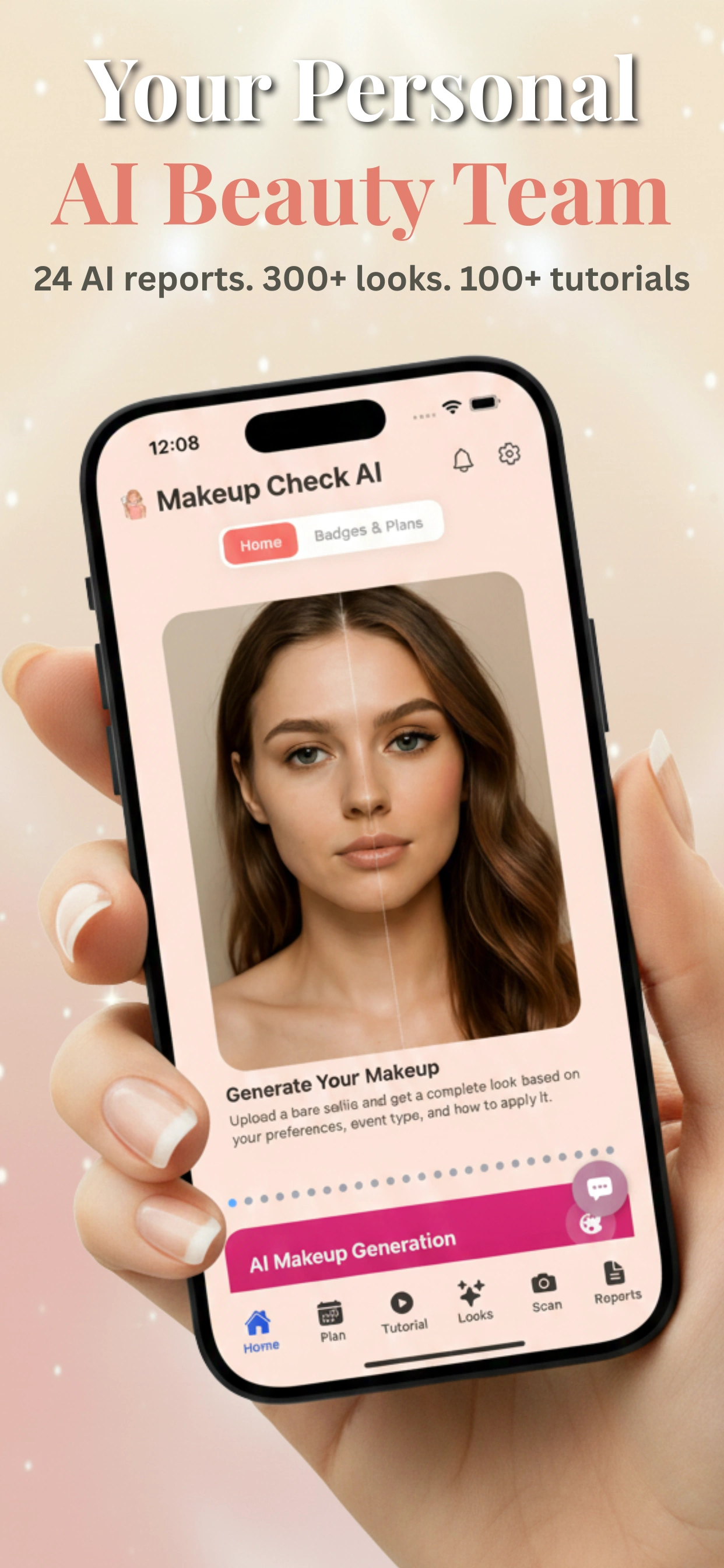
Technological tools can simplify foundation shade testing. AI-powered apps like Makeup Check AI use facial recognition and color analysis algorithms to scan your face and assess your undertone and skin depth. These tools then generate foundation shade recommendations tailored to your unique complexion.
Many apps also provide virtual try-on features, allowing you to preview how different foundation shades will look on your skin in real time, without physically applying multiple products. This can save time, reduce waste, and help avoid expensive returns.
For example, Makeup Check AI’s technology analyzes your skin’s color profile with precision and cross-references it with popular foundation shades, making the shade selection process more efficient than traditional trial and error.
Section 4: Why Does Foundation Oxidize Orange and How to Avoid It
What Is Foundation Oxidation?
Foundation oxidation is a chemical process that can occur after foundation application, where the product reacts with oils, sweat, and oxygen on the skin’s surface, sometimes causing the color to darken or shift, which may result in an orange or reddish tint. This phenomenon can alter the initial color match, sometimes making the foundation appear uneven, patchy, or unnatural over time.
Oxidation may not be noticeable immediately after application but can become apparent after a few hours of wear.
Factors That Can Cause Oxidation
- Skin’s Natural Oiliness and pH Balance: Oil production varies by individual and can influence oxidation. Oily skin types may experience more oxidation due to interactions between oils and foundation ingredients.
- Foundation Ingredients: Iron oxides, which provide pigment, and certain preservatives can react with skin oils or environmental factors, potentially triggering color changes. Foundations with higher iron oxide content may be more prone to oxidation.
- Environmental Factors: Exposure to pollution, humidity, and heat can increase oxidation rates by accelerating chemical reactions on the skin surface.
- Application Techniques: Applying too much foundation or failing to prep and set skin properly can increase oxidation visibility.
How to Minimize Foundation Oxidation on Yellow Undertones
- Choose Foundations Formulated for Oily or Combination Skin: These often contain mattifying agents and formulations designed to resist oxidation, helping maintain color integrity throughout the day.
- Test Foundation Wear Over Several Hours: Before purchasing or committing to a shade, wear it for several hours to observe any color changes.
- Use a Mattifying Primer: Applying a primer designed to control oil production creates a barrier between your skin’s oils and the foundation, which may reduce oxidation.
- Set Foundation with Translucent Powder: Using a finely milled translucent powder can help absorb excess oils and lock in the foundation’s color, potentially preventing it from darkening or shifting.
- Incorporate Setting Sprays: Some setting sprays provide an additional protective layer and control shine, which may further minimize oxidation.
- Consult AI Tools for Oxidation Analysis: Platforms like Makeup Check AI analyze your skin type and recommend foundation formulas with oxidation resistance, tailored to your undertone and skin chemistry.
- Adjust Application Amount: Applying thin, even layers rather than thick coats may reduce the likelihood of oxidation becoming visible.
Section 5: Matching Foundation by Skin Depth for Yellow Undertones
Understanding Skin Depth Categories
Yellow undertones are found across a spectrum of skin depths from fair to deep. Proper foundation matching requires understanding both undertone and depth, as undertone alone does not determine the overall shade. Below is a breakdown of common skin depth categories for yellow undertones:
- Fair Warm Yellow: Light ivory to pale beige shades with subtle golden hints. These skin tones may burn easily but have warm hues beneath the surface. Foundations here should have light golden bases without being too dark or orange.
- Light Warm Yellow: Beige shades with stronger golden or honey tones. Skin in this category tans more easily and has a noticeable warmth that needs to be complemented with slightly deeper golden foundations.
- Medium Warm Yellow: Tan or caramel tones with warm golden undertones. These complexions have a natural bronze or honey glow and require foundations with richer golden bases to maintain vibrancy.
- Deep Warm Yellow: Rich golden brown to deep bronze hues. These skin depths display a strong warm undertone and need foundations that are both deep in color and warm in base to avoid dullness.
Shade Suggestions by Skin Depth
- Fair Yellow: Consider MAC NC15, Estée Lauder 1W1 Bone, or L’Oréal W1 Porcelain. These shades offer light coverage with warm golden undertones suitable for fair complexions.
- Light Yellow: MAC NC20, Maybelline Fit Me 220 Natural Beige, and Fenty Beauty 210 are examples for light skin with yellow undertones.
- Medium Yellow: Options include MAC NC25, NARS Punjab, or Estée Lauder 3W1 Tawny, which provide medium coverage with warm golden bases.
- Deep Yellow: MAC NC40, Fenty Beauty 350, and Bobbi Brown Golden Deep suit deeper skin tones with yellow undertones, delivering rich pigmentation and warmth.
Importance of Personalized Matching
Since skin depth and undertones vary widely, using personalized foundation shade finders and AI beauty applications can improve accuracy. Tools like Makeup Check AI’s color match feature analyze your unique skin tone by capturing multiple color metrics, including undertone, depth, and skin texture. This can minimize guesswork and the risk of purchasing unsuitable shades.
Personalized matching also considers factors like seasonal skin changes (e.g., tanning in summer), skin condition, and lighting environment to recommend foundations that maintain a natural appearance consistently.
Section 6: Best Foundation Formulas and Brands for Yellow Undertones
Recommended Foundation Formulas
The choice of foundation formula is important alongside shade selection for yellow undertones. The right formula enhances skin’s natural warmth and provides lasting comfort:
- Liquid Foundations: Versatile, offering buildable coverage from sheer to full. Liquids blend easily and suit many skin types, especially those wanting a radiant finish that enhances yellow undertones.
- Satin or Natural Finish: Foundations with a satin or natural finish impart a subtle glow that complements yellow undertones without looking oily. These finishes reflect light gently, enhancing the skin’s golden hues.
- Matte Foundations: Ideal for oily or combination skin, matte formulas control shine and tend to resist oxidation. When choosing matte foundations, ensure they offer warm undertone options to avoid dullness.
- Mineral Powders: Suitable for sensitive skin, mineral powders provide a natural finish with a slight yellow cast that brightens warm undertones. They often contain skin-soothing ingredients.
Top Foundation Brands with Yellow Undertone Ranges
These brands are known for their inclusive shade ranges and quality formulations catering to yellow undertones:
- MAC Cosmetics: Their NC range is extensive and tailored to yellow undertones across many depths.
- Estée Lauder Double Wear: Popular for its longwear formula and warm shade options that flatter yellow undertones.
- Fenty Beauty: Known for its broad shade spectrum, offering many warm yellow undertone shades with varying depths and finishes.
- Maybelline Fit Me: Provides budget-friendly options with warm yellow undertones, popular among younger users and beginners.
- NARS: Offers richly pigmented foundations with warm shades suitable for yellow undertones, ideal for medium to full coverage.
How AI Enhances Foundation Selection
AI-powered apps like Makeup Check AI assist foundation shopping by using machine learning algorithms that analyze your complexion in detail. This includes undertone detection, skin depth measurement, and skin type analysis to recommend formulas and shades suited to your unique skin.
Additionally, virtual try-on features allow you to see how each foundation shade looks on your face under different lighting conditions without needing physical samples. This can reduce waste, save money, and help ensure you purchase the best product for your skin.
Section 7: Concealers and Setting Products for Yellow Undertone Skin
Choosing Concealers That Complement Yellow Undertones
Like foundation, concealers should complement your undertones to avoid an unnatural or ashy appearance. Consider the following:
- Choose concealers with a warm or golden base to brighten under-eye areas and conceal blemishes naturally without clashing with your yellow undertones.
- Select shades slightly lighter than your foundation for highlighting purposes. This brightens areas like under-eyes without creating a stark or patchy contrast.
- Opt for hydrating or creamy concealer formulas. These textures blend smoothly on yellow undertone skin and help prevent dry patches or cakey buildup.
- Consider multi-use concealers that can double as color correctors; for example, peach or warm apricot concealers can neutralize blue or purple under-eye circles effectively on yellow skin.
Setting Powders and Sprays for Warm Yellow Skin
Setting products lock in your makeup, ensuring longevity and a fresh appearance throughout the day. For yellow undertone skin, select products that preserve the skin’s warmth:
- Translucent Powders with a Yellow Tint: These powders help maintain your skin’s natural warmth while preventing dullness that can occur with stark white or cool-toned powders.
- Light-Reflecting Powders or Sprays: Products that add a subtle glow enhance the golden undertones, creating a radiant, healthy look rather than a flat matte finish.
- Matte Setting Sprays: Especially for oily skin types, choosing mattifying sprays that don’t neutralize warmth can control shine without compromising the yellow undertone’s vibrancy.
- Layering Technique: Apply powders and sprays sparingly and build gradually to avoid heaviness or cakiness, which can obscure skin’s natural warmth.
Additional Tips
- Always test concealers and powders in natural light to assess true color match.
- Use minimal product layering to maintain a fresh, natural finish.
- Leverage AI-assisted tutorials like those in Makeup Check AI’s tutorial guide for personalized application techniques designed specifically for yellow undertone skin.
Conclusion
Selecting the right foundation shade for yellow undertones involves understanding your undertone and skin depth, mastering proper testing techniques, and choosing formulas that enhance your skin’s natural warmth. Avoiding pink-based foundations can help prevent ashy or unnatural appearances, and being mindful of oxidation can help keep your complexion radiant throughout the day.
Utilizing technology such as Makeup Check AI can streamline the foundation matching process by providing personalized AI-powered recommendations, virtual try-ons, and detailed tutorials. This approach can save time and money while helping you achieve a natural, radiant complexion that complements your unique yellow undertones.
FAQ
Q: How do I know if I have yellow undertones or olive undertones?
A: Yellow undertones have a warm, golden hue, while olive undertones carry a subtle greenish or grayish cast. To distinguish them, check your vein color (greenish for yellow undertones; muted or olive for olive undertones), consider your jewelry preference (gold typically suits yellow undertones; muted metals or mixed metals often flatter olive), and use AI color analysis tools that can help detect undertones.
Q: What foundation shade should I use for yellow undertones?
A: Look for foundations labeled with warm (W), yellow (Y), or NC (neutral cool/warm) shades such as MAC NC20, Estée Lauder 3W1 Tawny, or L’Oréal W4 Sand Beige, ensuring they match your skin depth from fair to deep.
Q: Which foundation labels mean warm or yellow undertones?
A: Labels like W (warm), Y (yellow), NC (neutral cool/warm), and descriptive names such as golden, honey, or sand typically indicate yellow or warm undertones.
Q: Why does pink foundation look ashy on yellow skin?
A: Pink foundations may clash with the natural yellow warmth in your skin, causing an ashy or gray cast that dulls your complexion and makes it appear unnatural.
Q: How do I test foundation so it matches my jawline and neck?
A: Apply foundation shades on your jawline extending to the neck in natural daylight. Observe which shade blends seamlessly without visible edges or color shifts, and wear it for several hours to check for oxidation or color changes.
Q: What are the best foundation brands for very yellow fair skin?
A: Brands like MAC (NC15), Estée Lauder (1W1 Bone), Fenty Beauty (lighter warm shades), and L’Oréal True Match (W1 Porcelain) offer foundation options suitable for very fair skin with yellow undertones.