Makeup Progress Tracking Tips AI: Elevate Your Skills
Discover how AI enhances makeup progress tracking with data-driven feedback, smart tools, and future trends to refine your style. Start your journey today!

Estimated reading time: 8 minutes
Key Takeaways
- AI provides objective, fast, and personalized feedback to help track makeup skill improvement over time.
- Systematic progress tracking—using photos and logs—can help visualize growth and inform product choices.
- Consistent photo setup, detailed session logging, and AI analysis can support accurate monitoring.
- Top AI apps may offer blend-quality scoring, product recommendations, dashboards, and trend forecasting.
- Future trends could include AR integration, advanced personalization, and social platform convergence for seamless sharing.
Table of Contents
- Section 1: Understanding Makeup Progress Tracking
- Section 2: The Role of AI in Makeup Progress Tracking
- Section 3: Essential Tips for Successful Tracking
- Section 4: Best Practices and AI Tools
- Section 5: Future Trends in AI and Tracking
- Conclusion
- FAQ
Section 1: Understanding Makeup Progress Tracking
Definition: Makeup progress tracking is the process of documenting your makeup looks through photos and notes to evaluate technique, consistency, and improvement over time. This method can help transform vague memories of past looks into clearer data on how your application evolves.
Why progress tracking matters:
- Visualizes skill development over weeks or months
- Helps you identify products and methods that may work best
- Can keep you motivated when you see changes
Source: progress tracking applications
Traditional methods vs. AI-driven approaches:
- Traditional: Photo diaries, handwritten logs, side-by-side collage comparisons (can be time-consuming and subjective)
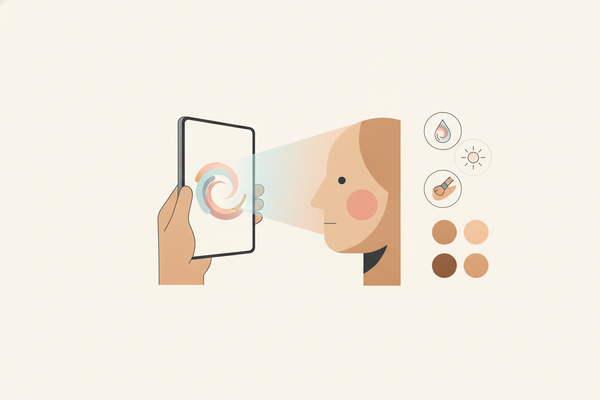
- AI-driven: Automated image analysis, digital filters to normalize lighting and angles, pattern recognition to provide more objective feedback
See How to Track Project Progress for an overview of progress tracking evolution.
Section 2: The Role of AI in Makeup Progress Tracking
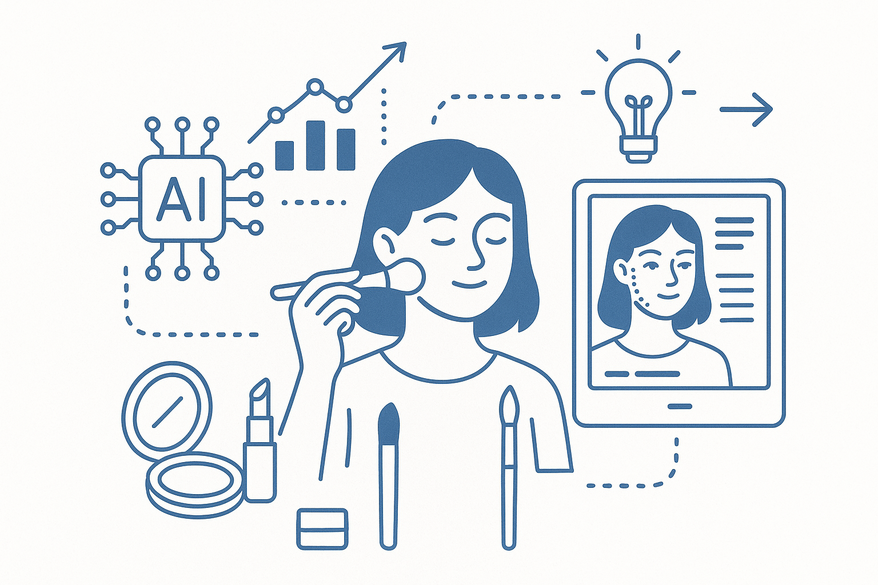
AI uses technologies to analyze makeup photos and provide insights:
- Image analysis (computer vision): Can assess aspects like color harmony, blending smoothness, edge definition, and finish, potentially highlighting uneven contours or shadow patches.
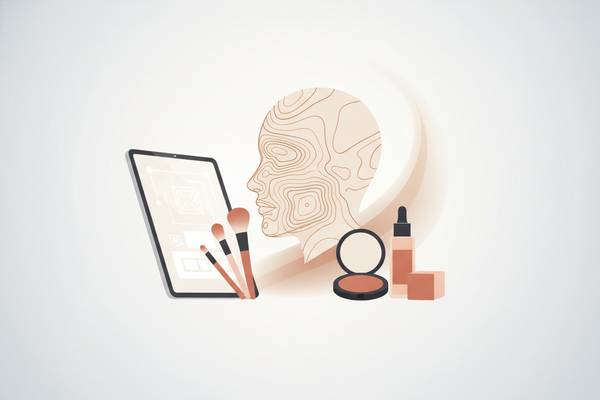
- Facial recognition (landmark mapping): Detects key points—eyes, brows, nose, lips, cheekbones—to help align photos for fairer comparisons.
- Trend prediction (machine learning): May forecast popular palettes, textures, and styles by analyzing large image datasets, suggesting updates based on industry and personal evolution.
Example: A beauty vlogger used an AI app to track her eyeshadow blending over four weeks. The tool reported improvement in edge smoothness, measured by reduced pixel jaggedness around her crease lines. She adjusted her brush technique based on that feedback and shared before/after images on her blog.
Key benefits of AI monitoring:
- Objectivity: Helps reduce personal bias in progress reviews
- Speed: Provides timely feedback for technique adjustments
- Personalization: Offers tips tailored to your face shape and style history
Tools like AI makeup app routine demonstrate these capabilities.
Section 3: Essential Tips for Successful Makeup Progress Tracking
- Consistent photography setup
- Use a neutral background (plain wall or white sheet)
- Standardize lighting (natural daylight or a ring light at 5500K)
- Fix the camera angle and distance for every shot
- Detailed session logging
- Record date and time of each session
- Note products: brand, shade, finish (matte, shimmer, dewy)
- Include brushes/tools and key techniques (stippling, buffing, layering)
- Leverage AI tools for upload and analysis
- Choose an app that auto-tags lips, eyes, cheeks
- Ensure it compares new images to past records with consistent baseline settings
- Look for improvement scores and blend quality metrics, if available
- Act on automated feedback
- Set SMART goals (Specific, Measurable, Achievable, Relevant, Time-bound)
- Example: “Improve lip line symmetry by 10% in two weeks”
- Review AI recommendations regularly and adjust techniques accordingly
- Balance AI with personal style
- Use AI suggestions to refine skills
- Trust your creativity for final look decisions
- Blend data-driven insights with artistic flair
Pitfalls to avoid:
- Over-reliance on metrics—skin reactions, lighting inconsistencies, or camera glare can affect results
- Privacy risks—only upload to apps with clear security policies and encrypted data handling
- Neglecting personal feedback—AI is a tool, not a replacement for your taste and creativity
Section 4: Best Practices and AI Tools
Here’s a roundup of AI tools and best practices as of 2026:
- App A
- Features: automated blend-quality scoring, side-by-side timeline view, AI-powered brush stroke analysis
- Pricing: free tier with basic analysis; premium at $5.49/month with enhanced reports and personalized coaching
- User rating: 4.6/5 (reported by users)
- App B
- Features: personalized product recommendations, trend forecasting using global style data, skin undertone detection
- Pricing: $11.99/month with a 14-day free trial
- User rating: 4.8/5 (reported by users)
- App C
- Features: AR try-on with real-time progress scoring, community sharing, end-to-end progress dashboard with AI coach
- Pricing: $3.49/month or $29.99/year with offline mode
- User rating: 4.7/5 (reported by users)
Explore AI tools in the best makeup analysis review to inform your choice.
Key features to look for:
- Smart photo tagging that auto-detects lips, eyes, cheeks, and makeup layers
- Progress dashboards with charts, goal trackers, and timelines integrating photos and product usage
- Calendar reminders for regular uploads and check-ins with AI-generated motivation prompts
- Community galleries for inspiration, peer benchmarks, and expert feedback options
Privacy & security guidelines:
- Select apps with transparent data policies and end-to-end encryption
- Check for image deletion options, local storage modes, and GDPR, CCPA, or equivalent compliance
- Use two-factor authentication where available to protect your account
Several AI-driven platforms streamline tracking; one example is Makeup Check AI, which automates analysis, goal setting, and personalized progress reports.
Section 5: Future Trends in AI and Makeup Progress Tracking
- AR integration: Real-time virtual try-ons with instant progress scoring before application, enhanced with 3D facial mapping for realistic previews.
- Advanced personalization: AI that considers skin type, undertone, facial expressions, and environmental conditions (lighting, humidity) for tailored feedback and product suggestions.
- Social platform convergence: Sharing AI-analyzed progress to Instagram Reels, TikTok, and emerging platforms with integrated hashtag and challenge features for community engagement.
- Speculative innovation: Neural networks simulating long-term progression—predicting how looks might evolve over months or years, including aging effects and style shifts.
Conclusion
In summary, AI-powered makeup progress tracking in 2026 offers tools to monitor your technique, receive objective feedback, and stay motivated. We started by defining systematic makeup tracking and highlighting its importance. Then we explored how AI technologies—image analysis, facial recognition, trend prediction—can turn snapshots into actionable data. You now have step-by-step tracking tips, a survey of AI tools and best practices, and a glimpse into future innovations that may transform beauty routines.
Ready to start? Download an AI-powered makeup app today, follow these tips, and watch your skills develop. Share your journey in the comments—tell us how AI-powered tracking helped you refine your craft and achieve your best looks yet.
FAQ
- What is AI-driven makeup progress tracking? AI-driven tracking uses computer vision and machine learning to analyze and monitor makeup application over time.
- How accurate are AI beauty analysis tools? Accuracy varies by tool and conditions; some tools can identify color balance, blending issues, and symmetry with high precision when photos are taken under standardized conditions.
- Is my privacy safe when using these apps? Choose apps with clear data policies, image deletion options, local storage modes, and look for GDPR, CCPA, or equivalent compliance to help protect your data.
- Can AI replace a professional makeup artist? AI is a helpful tool for feedback and trend prediction but should complement—not replace—human creativity and expertise.