Makeup for a Heart-Shaped Face: Complete Guide to Face Shape Makeup
Master makeup for a heart-shaped face with expert tips on contour, blush, brows, and more. Learn placement, techniques, and how to enhance your unique features.

Estimated reading time: 14 min
Key Takeaways
- Identifying your face shape is the key to personalized makeup that flatters your features.
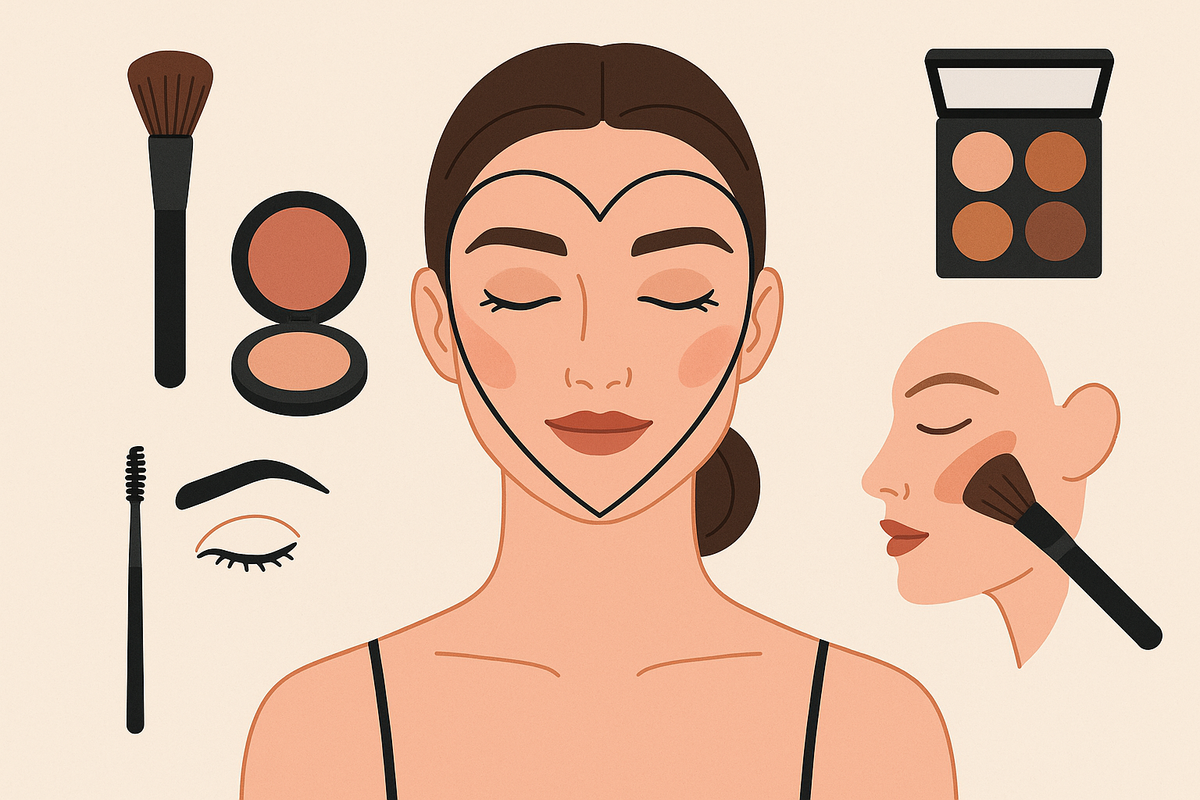
- Makeup for a heart-shaped face focuses on balancing a wider forehead, prominent cheekbones, and a narrower chin.
- Contouring, blush, brow shape, and highlight placement should all be tailored by face shape for the best effect.
- Learning the differences for round, oval, square, and heart-shaped faces helps avoid common makeup mistakes.
- AI-powered tools like Makeup Check AI can instantly analyze your face and recommend customized routines.
Table of Contents
- Section 1: How to Determine Your Face Shape
- Section 2: Why Face Shape Matters in Makeup
- Section 3: Contouring by Face Shape
- Section 4: Blush Placement by Face Shape
- Section 5: Brow Shape for Your Face
- Section 6: Detailed Makeup for a Heart-Shaped Face
- Conclusion
- FAQ
Section 1: How to Determine Your Face Shape
Why Knowing Your Face Shape Changes Everything
Understanding how to determine your face shape is the first—and often most overlooked—step to makeup that truly flatters your features. Without this foundation, even the best products and techniques may fall flat. Face shape guides your contour, blush, and brow strategies, highlighting your strengths and addressing common concerns like a prominent forehead or softer jawline.
Simple Steps to Identify Your Face Shape
- Pull Your Hair Back: Start with a clear view of your hairline, jaw, and cheekbones. Use a headband or tie your hair back for accuracy. Ensure your hair is away from the face to see your true outline—this step is crucial, as stray hairs can distort the perception of your facial borders.
- Examine Your Features: Look for the widest point (forehead, cheeks, or jaw), the shape of your chin (pointed, rounded, or square), and the overall length-to-width ratio of your face. For instance, if your forehead is the widest, your cheekbones are prominent, and your chin is narrow and pointed, you likely have a heart-shaped face. If your face width and length are nearly equal, with rounded features, you probably have a round face.
- Trace Your Outline: In front of a mirror, use a washable marker or lipstick to trace the perimeter of your face. Step back to analyze the shape. This visual can reveal subtle angles or curves you might not notice otherwise. Snap a photo for reference if needed.
- Compare with Common Types:
- Heart-shaped face: Wide forehead, prominent cheekbones, narrow/pointed chin.
- Round face: Full cheeks, soft jawline, face width nearly equals length.
- Oval face: Balanced proportions, slightly longer than wide, gentle curve at jaw.
- Square face: Strong jawline, forehead and jaw about the same width.
- Use Technology: AI apps like Makeup Check AI instantly scan your face and report your shape, saving guesswork and unlocking personalized tips. Simply upload a selfie and receive an immediate breakdown of your face shape, along with tailored makeup and skincare recommendations based on objective analysis rather than guesswork.
Tips for Accurate Face Shape Analysis
- Analyze your natural face, free from heavy contour or dramatic hairstyles. Makeup and hair can distort your true face shape, so always start with a clean, makeup-free canvas.
- Take a selfie in bright, even lighting for comparison. Natural daylight is best—stand facing a window for the most accurate representation of your features without harsh shadows.
- Remember: Some faces blend types (e.g., oval with a pointed chin). Use the closest match as your guide. It's common to have features from more than one shape; when in doubt, focus on the dominant characteristics to inform your makeup choices.
For more on the future of face analysis and AI-driven beauty, see our deep dive in Makeup AI: Revolutionizing Beauty with Personalized Technology.
Section 2: Why Face Shape Matters in Makeup
The Science Behind Face Shape and Makeup
Your face shape is your makeup blueprint. Each shape—heart, round, oval, or square—offers unique strengths and challenges. Customizing your makeup application by face shape can:
- Enhance natural features (e.g., highlight cheekbones, define jawline)
- Balance facial proportions (soften a wide forehead, add width to a narrow chin)
- Avoid common pitfalls (e.g., blush that makes cheeks look puffier, contour that harshens a soft face)
For example, a heart-shaped face often benefits from contouring at the temples to reduce forehead width and strategic blush placement to balance prominent cheekbones. Conversely, a round face might need lengthening effects through contour and blush placement that draws the eye upward and outward, rather than further widening the face.
How Makeup Techniques Vary by Face Shape
- Heart-shaped face: Focus on minimizing forehead width, softening cheekbones, and balancing the chin. For example, contouring the forehead and temples while keeping the chin area light and minimal helps create harmony.
- Round face: Add definition and length, avoid placements that widen the face. Contour along the sides and under the cheekbones, and sweep blush diagonally for lift.
- Oval face: Subtle contouring to enhance symmetry; most looks work well. Blush on the apples and a soft contour under cheekbones maintain natural balance.
- Square face: Soften angularity, round out strong jawlines and temples. Contour along jaw and temples, with blush applied in a rounded, upward motion to soften lines.
Benefits of Personalized Makeup
Face shape-based makeup routines help you:
- Look more polished and harmonious
- Showcase your best features
- Streamline your routine with targeted techniques
When your makeup suits your face shape, you’ll notice your features look more balanced in photos and in person. For example, correcting wide forehead proportions through contouring and brow adjustment can draw attention to your eyes, rather than the forehead. Personalized makeup also helps reduce the trial-and-error process, saving both time and money on products that may not be suited to your unique structure.
Want a full breakdown of how AI is making custom beauty easier than ever? Check out AI Makeup: The Future of Personalized Beauty Routines.
Section 3: Contouring by Face Shape
Contouring Basics
Contouring is the art of using light and shadow to sculpt the face. The goal: bring balance and definition, not just add drama. The best contour placement depends on your face shape. Here’s how to contour by face shape for the most flattering effect:
Begin with a cream or powder contour product two shades deeper than your skin tone and a fluffy brush or damp sponge for blending. Always start with a light hand and build up as needed—it's easier to add more than to remove excess product.
Heart-Shaped Face Contour
- Forehead: Contour along the temples and upper sides of the forehead to reduce width. Use a tapered brush to apply contour in a "C" shape from the temples up toward the hairline. Blend well into the hairline for a seamless look.
- Cheekbones: Apply contour just under the cheekbones, blending toward the ear to soften prominence. Place the contour starting about two fingers away from the sides of your nose and sweep back toward the top of the ear, keeping it slightly lower than you would on other face shapes to avoid drawing attention upward.
- Chin: Use a light touch at the tip of the chin to avoid drawing attention to a pointed shape. A barely-there swipe can help minimize chin sharpness without making it look flat.
For heart-shaped faces, avoid heavy contouring under the jawline or on the chin, as this can further accentuate the narrowness and make the face appear bottom-heavy.
Contouring for Other Face Shapes
- Round face: Contour along the edges of the face and under the cheekbones to create definition and elongate. Focus contour on the temples, jawline, and in a diagonal line beneath the cheeks, blending toward the mouth corners.
- Oval face: Minimal contour; focus on gentle shaping under the cheekbones and at the temples. Enhance the natural shadows for subtle definition.
- Square face: Contour along the jawline and temples to soften angles; blend well. Use contour to round out the edges of the forehead and jaw, avoiding harsh lines.
Always use a contour shade two tones deeper than your skin, and blend thoroughly for a seamless finish. When in doubt, use less product and build up gradually. For step-by-step AI-guided contouring, Makeup Check AI provides tailored video tutorials for your unique face shape, ensuring precision and confidence even for beginners.
Section 4: Blush Placement by Face Shape
Why Blush Placement Matters
Blush isn’t one-size-fits-all. The right blush placement by face shape can lift, slim, or balance features—while the wrong placement can emphasize the very things you want to downplay. Blush can quickly transform a makeup look from flat to radiant, but only when applied strategically.
Blush for a Heart-Shaped Face
- Placement: Apply blush lower on the cheeks, just below the apples, and blend outward toward the ear. This draws the eye down and balances high, prominent cheekbones. Place your brush at the center of your pupil and sweep it outward slightly downward for the most flattering result.
- Avoid: High blush on the apples or close to the nose, which can widen the upper face. Avoid circular application on the apples, as this can make the cheeks appear overly full and unbalanced.
- Tip: Use a soft, angled brush for more control and a natural finish. Cream blushes can be dabbed with fingers and then blended with a damp sponge for a seamless, dewy look.
Experiment with warm, peachy, or soft rose tones for a natural flush that complements the elevated cheekbones typical of heart-shaped faces.
Blush for Other Face Shapes
- Round face: Sweep blush at a diagonal, from the apple up toward the temple, to create lift and elongation. This helps visually lengthen the face and reduce roundness.
- Oval face: Focus blush on the center of the cheekbones for a classic, natural flush. Avoid extending blush too close to the nose or temples.
- Square face: Apply blush in a rounded motion on the apples, blending out and slightly up to soften angles. Choose shades that add warmth and roundness.
Blush Product Picks and Tools
- Cream blushes for a dewy, natural look. These are especially good for dry or mature skin, as they melt into the skin and avoid emphasizing texture.
- Powder blush for oily skin or longer wear. Powder formulas help control shine and last through heat or humidity.
- Stippling brushes for sheer, buildable color. This tool is perfect for those who want to layer blush without risking a heavy-handed look.
Pro tip: Always blend blush into your contour for a seamless, gradient effect. If you overdo it, a clean foundation brush can help diffuse excess color.
Section 5: Brow Shape for Your Face
Brows: The Frame of Your Face
Your eyebrow shape can dramatically change your appearance. The right brow shape for your face can lift your look, balance proportions, and even make you look younger. It’s essential to customize according to your face shape, especially for a heart-shaped face.
Brows can visually alter the perceived width of your forehead and the length of your face. The right arch and thickness can subtly shift the focus to your eyes and away from potentially unbalanced areas.
Brow Shape for a Heart-Shaped Face
- Soft, Rounded Arch: Choose a brow with a gentle, rounded arch rather than a high, angular one. This softens a wide forehead and draws attention away from a pointed chin. A rounded arch mimics the gentle curves of your face, creating a harmonious and approachable look.
- Medium Thickness: Avoid overly thick or bold brows that can overpower delicate features; aim for medium fullness. Too-thick brows can make the upper face seem heavier, while too-thin brows may lack the presence needed to frame the face.
- Tail Placement: Extend the tail slightly outward to elongate the upper face and balance the chin. The tail should end at a diagonal from the nostril through the outer corner of the eye, ensuring the brow does not drop too low, which can drag the face downward.
Fill in sparse areas with light, feathery strokes that mimic natural hair. Brow gels with fibers can add fullness without looking blocky. For a precise outline, use a fine-tip pencil to define the lower edge, then blend upward for a soft finish.
Brow Shapes for Other Common Face Types
- Round face: Higher arch adds length and definition. A slightly higher arch creates the illusion of an elongated face and draws attention upward.
- Oval face: Soft, natural arch maintains harmony. Avoid extremes in thickness or height for the most balanced appearance.
- Square face: Angled arch softens strong jawlines. A defined but not overly sharp angle counteracts the squareness of the jaw.
Tips for Perfect Brows
- Brush brows upward before trimming or applying product. This reveals the natural shape and highlights areas that need filling.
- Use a pencil or powder a shade lighter than your hair for a natural effect. Avoid going too dark, which can look harsh or artificial.
- Set with clear or tinted brow gel to hold shape all day. For unruly brows, a strong-hold gel can keep hairs in place even in humidity or after a workout.
Remember, your brows are sisters, not twins! Small variations are normal and can add character to your look.
Section 6: Detailed Makeup for a Heart-Shaped Face
This section brings together all the techniques for makeup for a heart-shaped face and complements them with advice for eyes, lips, and foundation. The goal: balance the wider forehead and cheekbones with the narrower chin for a harmonious, soft look.

Foundation and Concealer for Balancing Features
- Highlight: Apply a touch of brightening concealer to the center of the forehead, under the eyes, down the nose bridge, and on the chin. Use sparingly on the chin to avoid emphasizing its point. For best results, choose a concealer just one shade lighter than your skin tone to avoid stark contrast.
- Shade: Use a matte bronzer or contour product along the temples and forehead edges, under the cheekbones, and gently below the chin if needed. This creates a shadow that helps recede prominent areas and visually narrows the upper face. Use a fluffy brush to blend bronzer into the hairline for a natural finish, focusing extra attention on the outer third of the forehead rather than centrally.
Set concealer with a finely-milled translucent powder to prevent creasing, especially under the eyes and along the T-zone. For longer wear, use a damp sponge to press powder into the skin, which also helps maintain a natural, non-cakey finish.
Eye Makeup to Widen and Soften
- Shadow Placement: Use lighter shades on the lids and inner corners to open up the eyes. Place slightly deeper shades on the outer corners and blend upward to visually widen the upper face. For a soft transition, use a matte taupe or warm brown in the crease, and blend outward in a soft "V" shape.
- Liner: Soft, smudged liner rather than harsh lines keeps the look gentle and flattering. A slight wing can widen the eye area. For a day look, opt for brown or plum liner for subtle definition; for evening, a charcoal or black liner can create drama without harshness if kept close to the lash line.
- Lashes: Focus mascara and false lashes on the outer half of the eyes for lift. Choose winged or flared lash styles that gradually lengthen toward the outer edge, helping create the illusion of a wider eye area and balancing the width of the forehead.
If you have hooded lids (common with heart-shaped faces), try tightlining the upper lashes and opting for a soft shimmer on the center of the lid to bring forward the eye shape.
Lip Makeup for a Narrower Chin
- Color Choice: Soft pinks, nudes, or corals add fullness without overwhelming the chin. Avoid ultra-dark or bold shades that can make the chin appear even narrower by contrast.
- Technique: Overline the center of the lower lip slightly for a plumper appearance, balancing the chin’s narrowness. Use a nude pencil to subtly extend the vermillion border (the edge of your natural lip) only at the center, not the corners.
- Gloss: A touch of gloss on the lower lip’s center adds dimension. This draws light and makes the lower face appear fuller, which helps balance the prominent upper face of heart-shaped features.
For added fullness, try a soft highlight on the Cupid’s bow and a dab of concealer under the lower lip to create the illusion of a shadow.
What to Avoid: Common Mistakes
- Blush placed high or too close to the nose (widens upper face)
- Contour below the chin tip (emphasizes pointiness)
- Highlighting the cheeks too close to the temples (accentuates width)
- Overly angular brows (harshens the look)
Also avoid heavy foundation along the jawline, which can create a mask-like effect that draws attention to the bottom of the face. Instead, focus on blending foundation downward for a seamless finish.
Get AI-Powered Personalized Guidance
Ready for a complete, customized routine? The Makeup Check AI app scans your face, identifies your shape, and offers tailored makeup, hair, and skincare routines—plus 300+ looks to try instantly. The app's tutorials are step-by-step and adapt to your skill level, making even advanced techniques accessible. For a smart beauty routine, explore how apps are transforming makeup in our AI Makeup App guide.
Conclusion
Mastering makeup for a heart-shaped face—and every face shape—begins with knowing your unique contours and proportions. By adjusting your contour, blush, brow, and highlight techniques, you’ll enhance your natural beauty and avoid the mistakes that can throw off your facial balance. Embrace the power of personalized beauty, whether through DIY analysis or advanced tools like Makeup Check AI, and watch your confidence (and your selfies) soar.
FAQ
Q: How do you do contour for a heart-shaped face?
A: Contour the temples and forehead edges to reduce width, lightly contour under the cheekbones, and use minimal contour on the chin. Focus on blending for a soft, natural effect.
Q: Where should blush go on a heart-shaped face?
A: Place blush lower on the cheeks, just beneath the apples, and blend outward toward the ears. Avoid high or central cheek placement, which can widen the upper face.
Q: Should you highlight the chin on a heart-shaped face?
A: Use only a small amount of highlighter on the chin, if any. Too much can emphasize a pointed or narrow chin, throwing off facial balance.
Q: What eyebrow shape suits a heart-shaped face?
A: A soft, rounded arch with medium thickness works best. Avoid sharply angled or overly thick brows, as these can make the forehead appear wider.
Q: What makeup should you avoid with a heart-shaped face?
A: Avoid blush high on the cheeks or close to the nose, heavy highlight on the temples, sharp contour below the chin, and angular brows.
Q: How do you balance a wide forehead on a heart-shaped face?
A: Contour the sides of the forehead and temples, and use a soft brow shape to visually narrow the upper face. Eye makeup that widens the eyes can also help balance proportions.
La elección de una camiseta deportiva suele depender del ajuste, el tejido y las preferencias personales de cada aficionado. Para comparar detalles generales, camisetas de Argentina puede revisarse junto con información de talla, tejido y uso habitual. La decisión final resulta más clara cuando se comparan datos concretos y no solo la apariencia general.