
How to Make Skincare Routines Age Friendly: Step-by-Step Guide
Learn how to make skincare routines age friendly with targeted tips, ingredient advice, and product layering for every decade. Build your best anti-aging regimen.

Estimated reading time: 14 min
Key Takeaways
- Building an age-friendly skincare routine requires adapting products and techniques to your decade—20s, 30s, 40s, and beyond.
- Core basics include gentle cleansing, daily SPF, and effective moisturization for all ages.
- Key anti-aging ingredients—retinol, vitamin C, peptides, niacinamide—should be introduced gradually and layered properly.
- Hydration, barrier repair, gentle exfoliation, and lifestyle habits are crucial for mature skin health.
- Avoid common mistakes like harsh cleansers, over-exfoliating, and skipping sunscreen to protect aging skin.
Table of Contents
- Section 1: Skincare Evolution by Age Group
- Section 2: Core Routine Basics for All Ages
- Section 3: Hydration & Barrier Repair for Mature Skin
- Section 4: Targeted Anti-Aging Actives
- Section 5: Exfoliation and Product Layering Strategies
- Section 6: Sun Protection Habits for Aging Skin
- Section 7: Ingredient & Product Selection for Sensitive or Mature Skin
- Section 8: Lifestyle Habits & Common Mistakes to Avoid
- Conclusion
- FAQ
Section 1: Skincare Evolution by Age Group
Understanding Skin Changes Through the Decades
Learning how to make skincare routines age friendly starts with understanding how your skin naturally transforms. Hormonal shifts, environmental stressors, and slowed cell turnover all influence how your skin looks and behaves at each stage of life. Tailoring your routine by decade is the foundation of effective, age-appropriate skincare.
In Your 20s: Prevention & Protection
- Focus: Build healthy habits and defend against sun and environmental damage.
- Routine: Gentle cleanser, lightweight moisturizer, daily broad-spectrum SPF.
- Actives: Consider antioxidants (vitamin C, niacinamide) for free radical protection.
Skin is generally resilient but can be prone to oiliness or breakouts. Laying a good foundation now pays off later.
In Your 30s: Early Signs of Aging
- Focus: Address first fine lines, dullness, and uneven skin tone.
- Routine: Add gentle exfoliation (AHA/BHA 1–2x weekly), introduce retinol if tolerated.
- Actives: Peptides and vitamin C boost collagen and brighten skin.
Cell turnover slows; collagen production begins to decrease, making proactive care essential.
In Your 40s: Hydration & Firmness
- Focus: Deep hydration, firming, and repairing the skin barrier.
- Routine: Creamier cleansers, richer moisturizers with ceramides or hyaluronic acid.
- Actives: Retinoids, peptides, antioxidants, and barrier-repairing ingredients.
Skin may feel drier, thinner, or more sensitive. Consistency is key for maintaining firmness and glow.
50s and Beyond: Nourishment & Protection
- Focus: Intensive moisture, gentle actives, and ongoing sun protection.
- Routine: Barrier creams, fragrance-free formulas, regular SPF (face, neck, chest).
- Actives: Lower-strength retinoids, soothing niacinamide, and peptides for resilience.
Estrogen loss accelerates dryness and thinning. Prioritize comfort, nourishment, and defense against further damage.
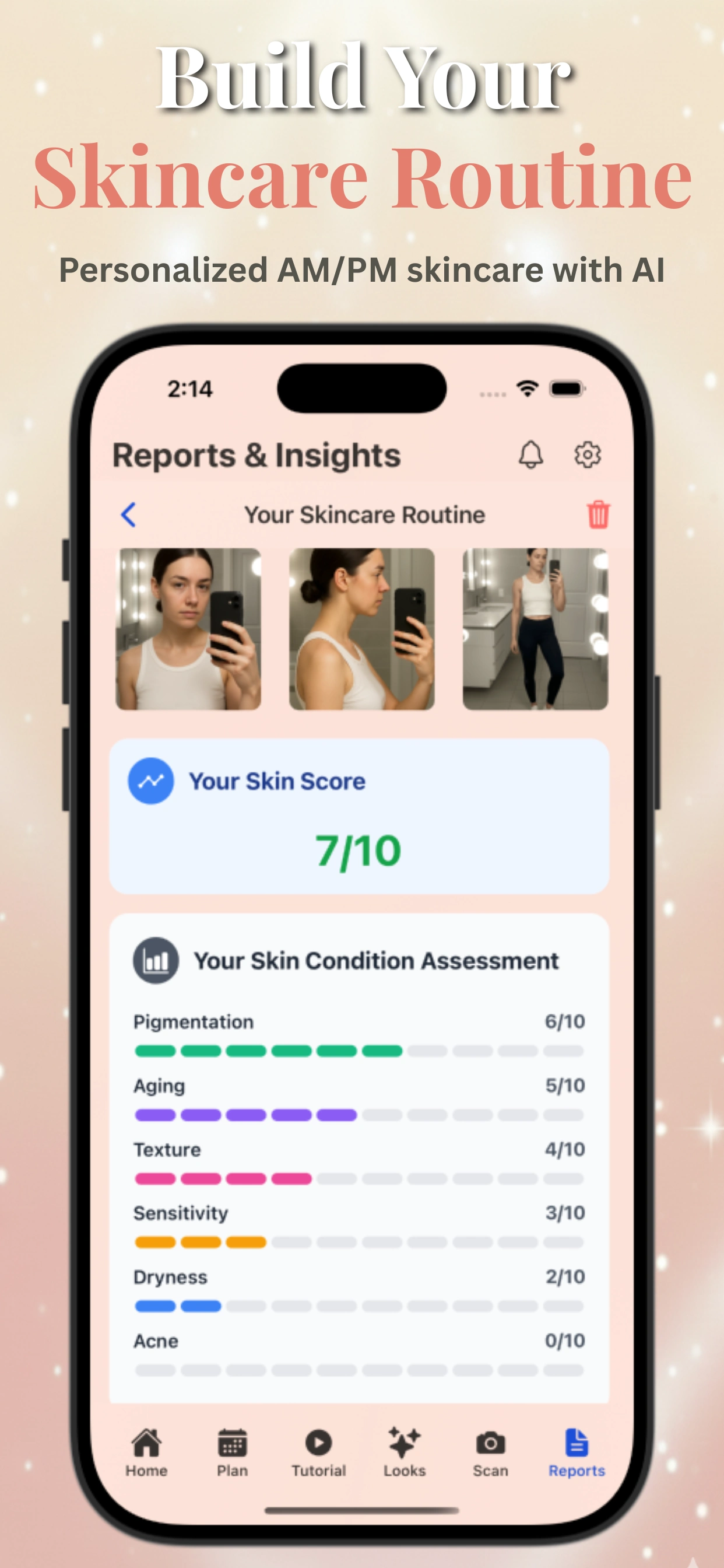
For personalized, decade-specific recommendations, using an AI-powered beauty tool like Makeup Check AI can help you analyze your skin and generate an optimized routine for your age and goals.
Section 2: Core Routine Basics for All Ages
Gentle Cleansing: The Non-Negotiable Step
No matter your age, a gentle cleanser lays the groundwork for healthy skin. Harsh soaps strip natural oils, disrupt the barrier, and accelerate aging. Opt for fragrance-free, non-foaming, or cream cleansers, especially as you mature. Cleansing twice daily is ideal, but those with drier or delicate skin may cleanse only at night, using just water in the morning.
Moisturizer: Hydration Is Universal
- Lightweight gels suit oily or acne-prone skin (common in 20s).
- Creams with ceramides and hyaluronic acid support barrier repair and lock in moisture—crucial for 40s+.
- Apply moisturizer on damp skin for best absorption.
Broad-Spectrum SPF: Your Daily Armor
- UV exposure is the #1 cause of premature aging—SPF is a must, even on cloudy days.
- Choose broad-spectrum (UVA/UVB) SPF 30+ for daily use.
- Don’t forget neglected areas: neck, chest, and hands.
Consistent use of SPF can prevent up to 80% of visible signs of aging over a lifetime. Consider mineral sunscreens for sensitive or mature skin.
Minimal, Consistent Steps Outperform Complex Routines
An age-friendly skincare routine doesn’t require dozens of steps. Focus on:
- Cleansing (morning & evening)
- Moisturizing (immediately after cleansing)
- Daily SPF (reapplied as needed)
Build complexity only if your skin can tolerate it. Aging skin often benefits from a “less is more” philosophy.
For a breakdown of how AI can help streamline your daily regimen, see our guide: AI Makeup App: The Ultimate Guide to Smarter Beauty Routines.
Section 3: Hydration & Barrier Repair for Mature Skin
Why Hydration Needs Change With Age
As we age, our skin naturally loses moisture and lipid content. This leads to increased dryness, dullness, and a weakened barrier—making skin more susceptible to irritation, redness, and environmental aggressors.
Key Hydrating Ingredients
- Hyaluronic Acid: Attracts and holds up to 1,000 times its weight in water, plumping skin.
- Glycerin: Draws moisture into the skin and helps maintain hydration.
- Ceramides: Restore and fortify the skin barrier, reducing transepidermal water loss.
- Squalane: Lightweight, non-comedogenic oil derived from plants, mimics skin's natural lipids.
Look for these ingredients in cleansers, toners, serums, and creams. Avoid products with high alcohol content, which can further dehydrate skin.
Barrier Repair: The Foundation of Age-Friendly Skincare
- Barrier repair is critical for mature or sensitive skin. Signs of a weak barrier include flakiness, redness, and stinging.
- Use products labeled “fragrance-free” and “non-comedogenic.”
- Avoid over-washing and harsh exfoliation.
- Apply occlusive moisturizers (like petrolatum or shea butter) as a final step at night to seal in hydration.
Layering for Maximum Hydration
Apply products from thinnest to thickest: hydrating toner or essence, serum, then moisturizer. In dry environments, consider a humidifier or misting spray.
For a fully personalized hydration plan, Makeup Check AI analyzes your skin type and recommends optimal product choices for your age and climate.
Section 4: Targeted Anti-Aging Actives
Retinoids (Retinol, Tretinoin): The Gold Standard
- Benefits: Stimulate collagen, speed up cell turnover, fade pigmentation, smooth wrinkles.
- How to Use: Start 1–2 nights per week, gradually increasing frequency. Always use SPF in the morning.
- Tip: Buffer with moisturizer to reduce irritation, especially for sensitive or dry skin.
Vitamin C: Brightening & Environmental Protection
- Benefits: Neutralizes free radicals, boosts collagen, evens out skin tone.
- How to Use: Apply a stabilized vitamin C serum in the morning before moisturizer and SPF.
- Tip: Store in a cool, dark place to prevent oxidation.
Peptides & Niacinamide: Strength and Resilience
- Peptides: Support collagen and elastin production for firmer skin.
- Niacinamide: Multi-tasker that strengthens the barrier, reduces redness, and improves texture.
- How to Use: Most skin types tolerate niacinamide daily, morning or night.
Morning vs Night: When to Apply Actives
- Morning: Antioxidants (vitamin C, niacinamide), SPF.
- Night: Retinoids, peptides, deeper moisturizers.
- Never mix: Retinoids and exfoliating acids (AHA/BHA) simultaneously—alternate nights.
For step-by-step layering, reference our detailed breakdown: AI Makeup: The Future of Personalized Beauty Routines.
Section 5: Exfoliation and Product Layering Strategies
Gentle Exfoliation: Why Less Is More With Age
Exfoliation removes dead skin cells, brightens complexion, and boosts product absorption. However, mature skin is thinner and more prone to irritation, so over-exfoliating can cause redness, dryness, and even micro-tears.
Types of Exfoliants
- Chemical (AHA/BHA): Glycolic, lactic, or salicylic acid dissolve bonds between dead cells. Best for dull, dry, or uneven skin.
- Physical (Scrubs, Brushes): Use with caution; avoid harsh particles or aggressive tools, especially after your 30s.
- Enzyme Exfoliants: Papaya or pineapple-based formulas gently digest dead skin, suitable for sensitive or aging skin.
How Often Should Mature Skin Be Exfoliated?
- Start with once per week, monitoring for irritation.
- Some may tolerate 2x per week, but frequency should always be tailored to individual needs.
- If using strong actives (retinoids, acids), alternate days to avoid barrier disruption.
Layering Products Correctly
- Apply from thinnest to thickest: toner/essence, serum, moisturizer, oil, SPF (daytime).
- Let each layer absorb fully before applying the next.
- Introduce one new product at a time to monitor for sensitivities.
Layering actives incorrectly can result in irritation. If unsure, let a smart beauty assistant like Makeup Check AI generate a routine and schedule for you, factoring in your age, skin type, and goals.
Section 6: Sun Protection Habits for Aging Skin
Understanding Sun Damage and Aging
UV rays are responsible for up to 90% of visible changes associated with skin aging—wrinkles, sagging, pigmentation, and rough texture. Sun protection is the single most effective anti-aging practice at any age.
Choosing and Applying SPF
- SPF 30+ is recommended for daily use; SPF 50+ for extended outdoor exposure.
- Choose broad-spectrum (UVA/UVB) formulas. Mineral sunscreens (zinc oxide, titanium dioxide) are often better tolerated by mature or sensitive skin.
- Apply at least a nickel-sized amount for face, and don’t neglect neck and chest.
How Often to Reapply Sunscreen
- Reapply every 2 hours when outdoors, and after sweating or swimming.
- For makeup wearers, use powder or spray SPF for midday touch-ups.
- Sun protection should be a 365-day habit, not just for summer or sunny days.
Expanding Coverage
- Clothing, hats, and sunglasses offer additional defense.
- Look for "broad-spectrum" and “non-comedogenic” labels for mature, breakout-prone skin.
For more on how technology is reshaping sun protection and skin analysis, see AR Beauty Try On: The Future of Virtual Makeup and Skincare.
Section 7: Ingredient & Product Selection for Sensitive or Mature Skin
Why Ingredient Choice Matters More As You Age
As skin matures, it becomes thinner, less oily, and more reactive. Product sensitivity increases, making gentle, well-formulated skincare a priority.
Key Qualities to Look For
- Fragrance-Free: Added fragrance often causes irritation, especially in mature skin.
- Non-Comedogenic: Prevents clogged pores, which can cause breakouts even in older adults.
- Hydrating Ingredients: Hyaluronic acid, glycerin, squalane, and ceramides are excellent choices.
- Minimal Ingredient Lists: Fewer additives mean lower risk of reaction.
Ingredients to Avoid or Use With Caution
- Harsh alcohols, astringents, and sulfates dry and irritate mature skin.
- Essential oils and botanical extracts can be sensitizing, especially if the barrier is compromised.
- Physical scrubs with large, rough particles should be avoided.
Adapting to Specific Skin Concerns
- Dryness or Flakiness: Use richer creams and avoid foaming cleansers.
- Redness/Sensitivity: Stick to anti-inflammatory ingredients like niacinamide and panthenol.
- Loss of Firmness: Peptides, retinoids, and antioxidants support elasticity and resilience.
For step-by-step ingredient analysis and customized product picks, try the AI-powered beauty assistant at Makeup Check AI.
Section 8: Lifestyle Habits & Common Mistakes to Avoid
Lifestyle Habits That Support Age-Friendly Skin
- Sleep: Aim for 7–9 hours; poor sleep accelerates visible aging.
- Diet: Eat antioxidant-rich foods (berries, leafy greens, omega-3s) to support skin health.
- Hydration: Drink water throughout the day; dehydrated skin appears dull and accentuates wrinkles.
- Stress Management: Chronic stress increases inflammation and can worsen skin conditions.
- Avoid Smoking & Excess Alcohol: Both dramatically age the skin by breaking down collagen and dehydrating cells.
Common Mistakes That Age the Skin Faster
- Using Harsh Soaps: Strips protective oils; opt for gentle, pH-balanced cleansers.
- Over-Exfoliating: Leads to redness, flakiness, and barrier damage.
- Hot Showers: Prolonged hot water dehydrates and weakens the barrier—use lukewarm water.
- Skipping Sunscreen: Even a few days a week of unprotected UV exposure can reverse years of diligent care.
- Adding Too Many New Products at Once: Can cause irritation and make it difficult to identify what works.
How AI Can Help Build Better Habits
Apps like Makeup Check AI offer daily reminders, progress tracking, and habit coaching to help you stick to your routine and avoid common pitfalls—making it easier to achieve and maintain ageless skin health.
Conclusion
Knowing how to make skincare routines age friendly is about more than just adding anti-aging products—it’s a tailored approach that evolves with your skin’s unique needs over time. By focusing on gentle cleansing, hydration, targeted actives, sun protection, and mindful lifestyle choices, you can build a routine that supports your skin’s resilience and radiance in every decade.
For a truly customized anti-aging routine, consider leveraging technology like Makeup Check AI. Its AI-powered analysis, product recommendations, and tutorials can help you adapt your regimen for glowing, healthy skin at any age.
FAQ
Q: What is the best skincare routine for aging skin?
A: The best routine includes a gentle cleanser, rich moisturizer with ceramides or hyaluronic acid, daily broad-spectrum SPF, and targeted actives like retinoids, vitamin C, peptides, and niacinamide. Adapt formulas and steps to your skin’s changing needs as you age.
Q: What ingredients should I use in my 40s or 50s skincare routine?
A: Key ingredients are retinol/retinoids for collagen support, vitamin C for brightening, peptides for firmness, niacinamide for barrier repair, and hydrating agents like hyaluronic acid and ceramides. Use fragrance-free, non-comedogenic products for sensitive skin.
Q: How often should mature skin be exfoliated?
A: Mature skin should be exfoliated no more than once or twice per week with gentle chemical or enzyme exfoliants. Over-exfoliating can damage the barrier and cause irritation.
Q: Should I use retinol or vitamin C first in my routine?
A: Use vitamin C in the morning before moisturizer and SPF; use retinol or retinoids at night after cleansing and before moisturizer. Do not use them in the same routine to avoid irritation—alternate days or use one in the morning, the other at night.
Q: What SPF is best for aging skin, and how often should I reapply it?
A: Choose broad-spectrum SPF 30+ (or SPF 50+ for high exposure). Reapply every 2 hours when outdoors and after sweating or swimming. Apply to face, neck, and chest for complete coverage.
Q: How do I build an anti-aging routine for dry or sensitive skin?
A: Use fragrance-free, non-foaming cleansers, rich moisturizers with ceramides and hyaluronic acid, and gentle actives like low-strength retinoids or peptides. Introduce new products slowly, avoid harsh exfoliants, and prioritize daily SPF. Consider consulting an AI beauty assistant for customized recommendations.