How to Find Your Undertone: The Complete Guide to Warm, Cool & Neutral
Learn how to find your undertone with vein, jewelry, and clothing tests. Discover the difference between warm, cool, and neutral undertones for perfect makeup.
Estimated reading time: 14 min
Key Takeaways
- Skin undertone is different from skin tone and determines which makeup, hair, and clothing colors suit you best.
- Common undertone tests include the vein, jewelry, white paper, sun exposure, and clothing color tests.
- Combining multiple tests gives the most accurate identification of your undertone: warm, cool, or neutral.
- Understanding your undertone helps you pick foundation, lipstick, and wardrobe colors that enhance your natural beauty.
- Tools like Makeup Check AI can analyze your undertone and recommend personalized looks.
Table of Contents
- Section 1: Understanding Skin Undertones and Why They Matter
- Section 2: The Vein Test – A Classic Undertone Test
- Section 3: The White Paper Test and Lighting Essentials
- Section 4: Sun Exposure, Jewelry, and Clothing Color Tests
- Section 5: Foundation Matching and Brand Undertone Codes
- Section 6: Eye Color, Hair Color, and Common Mistakes
- Section 7: Combining Tests for a Confident Undertone Result
- Conclusion
- FAQ
Section 1: Understanding Skin Undertones and Why They Matter
What Is an Undertone?
Your skin undertone is the subtle hue beneath the surface of your skin. Unlike your skin tone, which can change with sun exposure or skin conditions, your undertone remains constant throughout your life. It’s crucial to understand this difference when learning how to find your undertone because it affects how makeup, hair, and clothing colors look on you.
- Skin tone: The surface color of your skin (fair, medium, deep, etc.)
- Undertone: The underlying shade (cool, warm, or neutral) that never changes
Types of Skin Undertones
- Cool undertone: Hints of blue, pink, or red under the skin
- Warm undertone: Yellow, golden, or peachy hues below the skin’s surface
- Neutral undertone: A balanced mix, with no obvious pink or golden tones
Why Your Undertone Matters
Knowing your undertone helps you select:
- Foundation and concealer shades that blend seamlessly
- Makeup products (lipstick, blush, eyeshadow) that flatter your complexion
- Clothing and hair colors that enhance your glow
Brands use undertone codes (like C, W, N) for their products, making it easier to shop if you know whether you’re warm or cool toned. Modern beauty apps such as Makeup Check AI offer instant color-season analysis and personalized recommendations based on your undertone.
Section 2: The Vein Test – A Classic Undertone Test
How to Do the Vein Test
The vein test is one of the most popular methods for how to find your undertone. Here’s how to do it correctly:
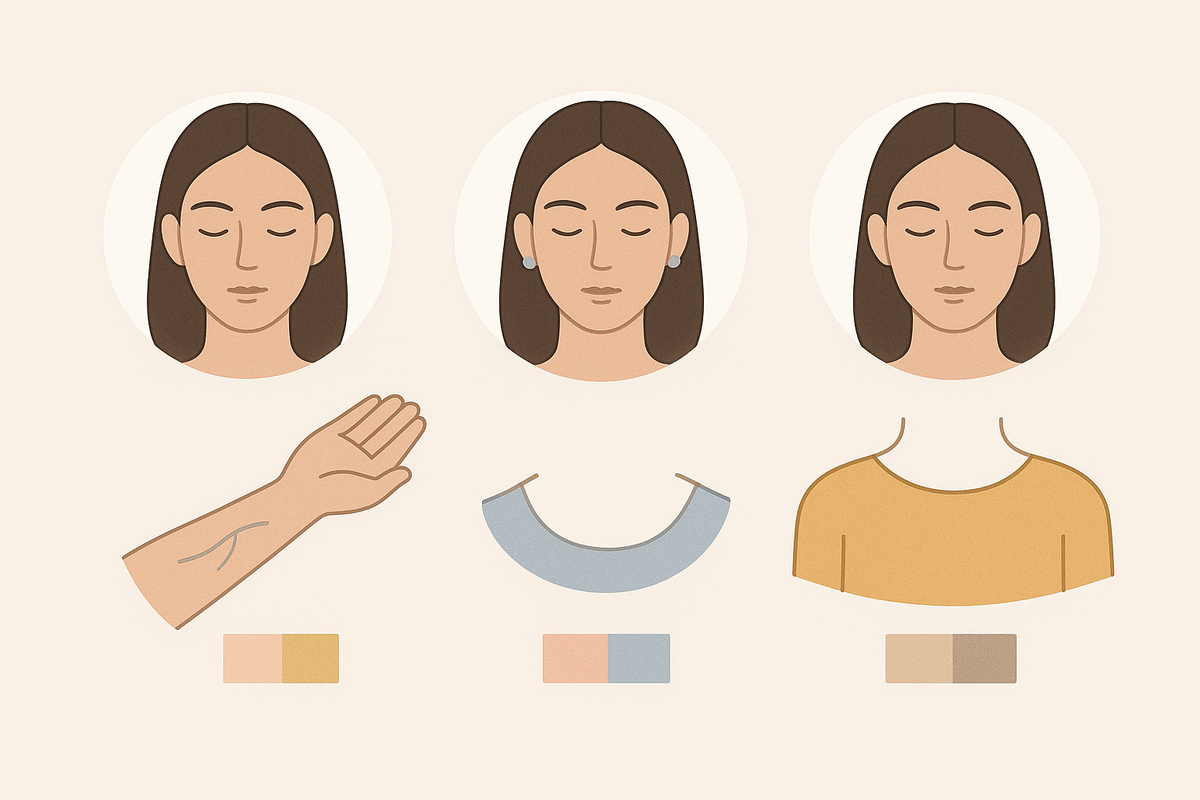
- Go to a window or a space with natural daylight (avoid artificial lighting).
- Flip your wrist over and look at the veins on the inside.
- Observe the vein color and compare to these guidelines:
- Blue or purple veins: Likely a cool undertone
- Green veins: Likely a warm undertone (your yellowish skin tone blends with blue veins, making them appear green)
- Both blue and green, or hard to tell: Possibly a neutral undertone
Vein Test Accuracy and Caveats
While the vein test is easy and widely used, it’s not perfect. People with deeper skin tones may find it harder to see vein color clearly. Lighting, skin thickness, and even recent exercise can affect visibility. For best results:
- Use natural daylight
- Ensure skin is free of makeup or self-tanner
- Don’t rely solely on this test; combine with others for confirmation
What If Veins Are Both Colors?
If you see both blue and green veins, or can’t decide, you might have a neutral undertone. This means you have a balance of pink/blue and yellow/gold hues under your skin.
Section 3: The White Paper Test and Lighting Essentials
How to Perform the White Paper Test
This undertone test gives a direct comparison between your skin and a true white surface:
- Wash your face and remove all makeup or skincare products.
- Hold a sheet of plain white printer paper next to your face, preferably in natural daylight.
- Look in the mirror and observe the contrast:
- If your skin looks rosy, pink, or bluish: cool undertone
- If your skin looks yellow, golden, or peachy: warm undertone
- If your skin looks grayish or you can’t distinguish: neutral undertone
The Importance of Lighting
Natural light is critical for all undertone tests. Artificial lighting can add yellow or blue casts that distort your skin’s true undertone. Always try to:
- Stand near a window during daytime
- Avoid overhead or colored lights
- Wait until your skin is at a normal temperature (not flushed or cold)
Common Mistakes with the White Paper Test
- Testing with makeup, which can mask your underlying hue
- Using cream or off-white paper, which won’t give a true comparison
- Relying on indoor, colored, or dim lighting
For more on how AI is transforming color analysis and makeup matching, visit our post Makeup AI: Revolutionizing Beauty with Personalized Technology.
Section 4: Sun Exposure, Jewelry, and Clothing Color Tests
Sun Exposure Test: Tanning vs. Burning
How your skin responds to sun exposure can be a clue to your undertone:
- Burns easily, rarely tans: More likely to have a cool undertone
- Tans easily, rarely burns: More likely to have a warm undertone
- Burns then tans, or mixed reaction: May indicate a neutral undertone
This isn’t foolproof, as genetics and melanin content also play roles, but it’s a useful data point when combined with other tests.
Jewelry Test: Gold vs. Silver
Notice which jewelry complements your skin:
- Silver jewelry: Flatters cool undertones
- Gold jewelry: Flatters warm undertones
- Both look good: You may have a neutral undertone
Try wearing both metals in daylight and see which one makes your skin look brighter or more even.
Clothing Color Test
Your undertone determines which clothing colors make you look vibrant versus washed out:
- Warm undertones: Look best in earthy tones (orange, yellow, gold, olive, brown, coral)
- Cool undertones: Shine in jewel tones (blue, emerald, purple, pink, cool reds)
- Neutral undertones: Can wear both warm and cool colors, often look great in soft or muted shades
If a shirt makes your skin glow and your eyes pop, it’s likely in harmony with your undertone. For a scientific, AI-powered approach to wardrobe and accessory analysis, check out the Free Color Analysis tool from Makeup Check AI.
Section 5: Foundation Matching and Brand Undertone Codes
Understanding Foundation Labels (C, W, N)
Most major beauty brands label their foundations and concealers for undertone:
- C for Cool
- W for Warm
- N for Neutral
For example, MAC’s NC/NW, Maybelline’s W/C/N, or Fenty Beauty’s undertone codes. Knowing how to find your undertone streamlines shade selection, making it easier to avoid mismatched foundations.
How to Test Foundation for Undertone
- Test on your jawline or cheek, not your wrist or hand, to match both face and neck.
- Always check in natural daylight for true color accuracy.
- The right undertone will seem to “disappear” into your skin, not look ashy (too cool) or orange/yellow (too warm).
Avoiding Common Foundation Mistakes
- Wrist and hand skin often has a different undertone than your face.
- Test on clean, makeup-free skin for best results.
- Don’t rely on store lighting—always double-check near a window or with daylight bulbs.
For more on AI-powered beauty routines, explore our guide on AI Makeup Apps and how they can streamline your color matching process.
Section 6: Eye Color, Hair Color, and Common Mistakes
Eye and Hair Color as Secondary Clues
While not definitive, your natural eye and hair color can offer hints about your undertone:
- Cool undertone: Blue, gray, or green eyes; blonde, brown, or black hair with ashy or platinum tones
- Warm undertone: Brown, hazel, or amber eyes; hair with golden, red, or honey tones
- Neutral undertone: Mixed features, often with a mix of cool and warm characteristics
Remember, artificial hair color or colored contact lenses can disguise your natural undertone clues. Always use these features as supporting evidence, not the main test.
Common Undertone Identification Mistakes
- Testing on tanned or sunburned skin: Sun exposure can temporarily change your skin’s appearance but not your undertone.
- Checking skin with makeup or self-tanner: These products mask your true undertone.
- Using artificial or poor lighting: Indoor lighting can skew your perception of color.
- Over-relying on a single test: Combining tests gives a more accurate answer.
What If You’re Still Unsure?
If you’ve tried several undertone tests and still can’t decide, you might have a neutral undertone or a subtle mix. AI-powered tools like Makeup Check AI can analyze your features and provide objective recommendations for makeup, hair, and clothing tailored to your unique undertone.
Section 7: Combining Tests for a Confident Undertone Result
Why Combine Multiple Tests?
No single undertone test is 100% accurate for everyone. Genetics, lighting, and skin conditions can all influence your results. To confidently answer "am I warm or cool toned?" it’s best to cross-check results from several methods.
Step-by-Step Undertone Testing Process
- Start with the vein test for a quick clue.
- Confirm with the white paper test in natural light.
- Try on both gold and silver jewelry and observe which flatters you more.
- Review your sun exposure response: Do you tan or burn?
- Compare which clothing colors make you glow.
- Check foundation/concealer undertone codes that blend well on your jawline.
- Use eye and hair color as supporting clues.
Interpreting Mixed Results
- If most answers point to cool: You’re likely cool toned.
- If most answers point to warm: You’re likely warm toned.
- If results are split: You may have a neutral undertone, or your undertone is subtle.
For an objective, tech-powered solution, AI apps like Makeup Check AI offer digital undertone analysis, personalized makeup looks, and color-season reports based on your unique facial features and skin tone.
Conclusion
Learning how to find your undertone is the key to unlocking your most flattering makeup, wardrobe, and hair color choices. Whether you have a cool, warm, or neutral undertone, combining multiple tests—vein, white paper, jewelry, sun exposure, clothing, and foundation—will give you the most accurate answer. Avoid common mistakes like testing in artificial light or with makeup on, and remember: your undertone never changes, even if your skin tone does.
Ready for a personalized, AI-powered analysis? Explore Makeup Check AI for instant undertone detection, color-season reports, and hundreds of custom looks to try. For more on the future of smart beauty routines, see our post AI Makeup: The Future of Personalized Beauty Routines.
FAQ
Q: What is the difference between skin tone and undertone?
A: Skin tone refers to the surface color of your skin (light, medium, deep), which can change with sun exposure or skin conditions. Undertone is the underlying hue (cool, warm, or neutral) that stays the same throughout your life and determines which colors suit you best.
Q: How can I tell if I have cool, warm, or neutral undertones?
A: Use a combination of tests: check the color of your wrist veins, compare your skin next to white paper in natural light, see whether gold or silver jewelry flatters you more, and notice how your skin reacts to sun. If you get mixed results, you may have a neutral undertone.
Q: Do veins really show your undertone, and how accurate is the vein test?
A: The vein test is a useful starting point—blue or purple veins suggest cool undertones, green veins suggest warm. However, it’s not always accurate for everyone, especially those with deeper skin tones or visible veins. Combine with other tests for best results.
Q: What colors should I wear if I have warm undertones?
A: Warm undertones look best in earthy and golden hues—think orange, yellow, olive, brown, coral, and warm reds. Gold jewelry also tends to flatter warm-toned skin.
Q: Should I test foundation on my wrist or jawline to match my undertone?
A: Always test foundation on your jawline or cheek, never your wrist. The skin on your face and neck is a better match for your facial undertone, and daylight gives the most accurate result.
Q: Can I determine my undertone without looking at my veins?
A: Yes! Try the white paper test, jewelry test, sun exposure test, and see which clothing colors suit you. Combining several methods gives a more confident answer than relying on veins alone.
Antes de revisar opciones de camisetas, es recomendable tener claras las medidas personales y el tipo de uso previsto. Dentro de esa comparación, equipacion del Manchester City mantiene la consulta centrada en la prenda indicada por el propio enlace. Revisar estos puntos reduce confusiones entre preferencias de uso, comodidad y cuidado de la prenda.