Color Correcting Concealer: The Ultimate Guide to Flawless Skin
Discover how to use color correcting concealer, including green, peach, and more. Learn expert tips, application order, and the best shades for every skin tone.

Estimated reading time: 13 min
Key Takeaways
- Color correcting concealer uses color theory to neutralize discoloration for a flawless base.
- Different colors target specific concerns: green for redness, peach/orange for dark circles, yellow for dullness, lavender for sallowness.
- Application order and blending techniques are crucial for natural-looking results.
- The best formula and shade depend on your skin tone, concern, and desired finish.
- Innovative, skincare-infused, and clean beauty correctors are rising in popularity for multi-tasking benefits.
Table of Contents
- Section 1: Understanding Color Theory for Concealing
- Section 2: Color-to-Concern Mapping: What Shade Neutralizes What?
- Section 3: Color Correcting Concealer vs. Traditional Concealer
- Section 4: Application Order & Blending Techniques
- Section 5: Choosing the Best Formula & Shade for Your Skin
- Section 6: Top Color Correcting Concealers & Innovations
- Section 7: Clean Beauty & DIY Color Correctors
- Conclusion
- FAQ
Section 1: Understanding Color Theory for Concealing
The Basics of Color Theory
The secret behind color correcting concealer lies in the color wheel. This foundational tool in both art and beauty helps us understand which shades cancel each other out. The concept is simple: colors directly opposite each other on the wheel neutralize one another. For example, green sits across from red, so green concealer calms redness. This science is the backbone for how to color correct any skin concern.
How Color Correction Works in Makeup
Unlike traditional concealers that try to cover discoloration with skin-toned pigments, color correcting concealers use tinted formulas to neutralize unwanted undertones. By strategically placing the right hue on your skin, you can make dark circles, redness, and sallowness virtually disappear under your foundation.
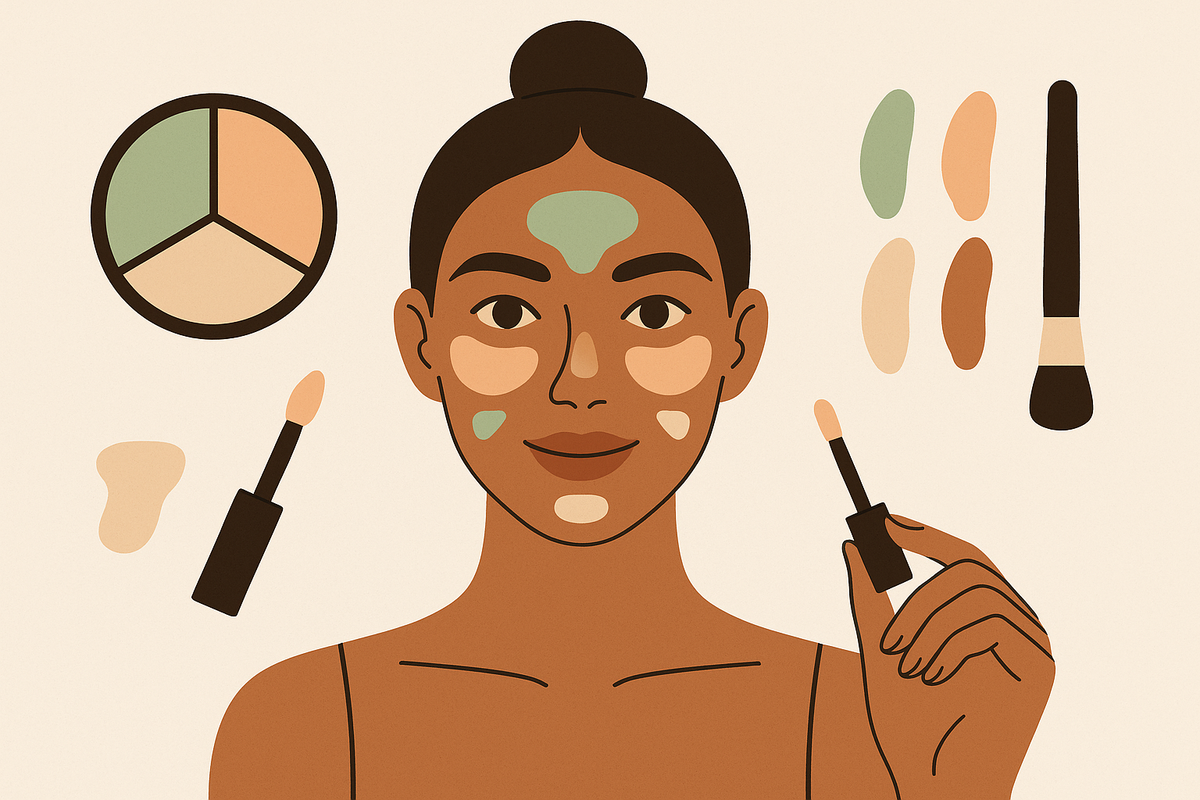
- Green neutralizes red (acne, rosacea, broken capillaries)
- Peach/Orange counteracts blue/purple (dark circles for light/medium/deep skin)
- Yellow brightens dullness and purple/maroon bruises
- Purple/Lavender cancels yellow tones or sallowness
When to Use Color Correction
Color correcting is most effective for targeted issues like persistent redness, stubborn under-eye circles, or yellow undertones that regular concealer can't fully mask. It's a game-changer for anyone seeking a truly flawless, even complexion. To maximize results, accurate shade selection and correct application are essential—a process made easier with personalized guidance from apps like Makeup Check AI, which can scan your skin and recommend the ideal color corrector shades for your unique needs.
Section 2: Color-to-Concern Mapping: What Shade Neutralizes What?
Green Concealer for Redness and Acne
Green concealer is the MVP for anyone struggling with redness, rosacea, or acne flare-ups. By dabbing a thin layer of green corrector over red areas, you immediately neutralize the hue, making it much easier to achieve a seamless finish with your foundation. For sensitive or acne-prone skin, choose a non-comedogenic, hydrating formula that won't irritate or clog pores.
- Best for: Red pimples, broken capillaries, flushed cheeks, post-inflammatory marks
- Shade tip: Pale mint for fair skin, true green for medium/deep skin
Peach and Orange Corrector for Dark Circles
One of the most common questions is: "What color concealer do I use for dark circles?" The answer depends on your skin tone:
- Fair to light skin: Use a peach corrector to balance blue/purple under-eye shadows.
- Medium skin: Opt for a deeper peach or soft orange.
- Deep skin: Go for a rich orange or red-orange corrector for maximum effectiveness.
Peach and orange correctors are also excellent for hyperpigmentation, especially around the mouth or on dark spots.
Yellow, Lavender, and Pink for Brightening
If your skin looks sallow, tired, or lackluster, yellow or lavender concealers can revive your complexion:
- Yellow: Brightens dullness, neutralizes purple veins or bruises
- Lavender: Cancels out yellow undertones and sallowness (great for olive or Asian skin tones)
- Pink: Adds vibrancy to very fair or cool skin, ideal for brightening the under-eye area
Choosing the Right Shade for Your Skin Tone
The effectiveness of color correcting concealer depends on customizing the shade to your skin tone and concern. Apps like Makeup Check AI's Free Color Analysis can help you identify your undertones and select the exact hue for optimal results. Remember, the goal is to neutralize, not to create a visible streak of color—so blend lightly and build up only as needed.
Section 3: Color Correcting Concealer vs. Traditional Concealer
Color Corrector vs. Concealer: What’s the Difference?
Traditional concealers are designed to match your skin tone, camouflaging imperfections by layering pigment over them. Color correcting concealers, by contrast, use the science of complementary colors to neutralize discoloration before you conceal. When you pair the two, you get a smooth, bright, and even base—especially for stubborn concerns like dark circles or redness that seem to peek through regular concealer.
- Color Corrector: Tinted (green, peach, lavender, etc.), applied directly to the problem area, neutralizes discoloration.
- Traditional Concealer: Skin-toned, applied over color corrector or directly to skin for additional coverage and blending.
When to Use Each Product
Not every makeup routine requires color correcting concealer—but if you notice that your regular concealer can’t fully cover darkness or redness, color correction can make a dramatic difference. For minor imperfections and quick looks, concealer alone is often enough. For special events, photography, or persistent discoloration, the extra step is worth it.
Layering for Maximum Effect
The most effective routines use both: start with a thin layer of the appropriate color corrector, blend, then apply your regular concealer or foundation. This approach ensures that the discoloration is neutralized at the color level, so your skin looks flawless without heavy, cakey layers. Need help deciding which is right for you? The latest AI-powered beauty apps are making it easier than ever to build a custom routine—learn more in our deep-dive on how Makeup AI is revolutionizing beauty.
Section 4: Application Order & Blending Techniques
Step-by-Step: How to Color Correct
- Prep: Start with a clean, moisturized face. If desired, apply a smoothing primer to help color corrector glide on evenly.
- Apply Corrector: Dot or swipe the corrector on target areas—green on redness, peach/orange under the eyes, etc. Use a small brush, clean fingertip, or sponge.
- Blend: Gently tap (not rub) the product into your skin until the color diffuses and the discoloration appears neutralized (not masked in color).
- Foundation: Apply your foundation as usual, using patting motions to avoid disturbing your color correction.
- Concealer: Only if needed, layer a skin-toned concealer over any remaining discoloration for extra coverage.
- Set: Lightly set with powder to prevent creasing.
Blending Tools & Techniques
- Fingertips: Warmth helps cream formulas melt into the skin; perfect for under the eyes.
- Concealer brush: Precise for pinpoint correction, like acne marks or around the nose.
- Makeup sponge: Ideal for seamless blending and diffusing edges.
Always use a light hand and build gradually. Over-applying color corrector can leave a visible cast, especially with green and lavender shades.
Tips for Different Concerns
- Dark Circles: Focus peach corrector only on the darkest area, usually the inner corner, and feather out.
- Redness: Spot-treat with green corrector, don’t blanket the entire face.
- Sallowness: Blend lavender corrector sparingly on dull areas, such as the sides of the face or chin.
For more on smart application routines, check out our guide to AI-powered makeup tutorials that analyze and improve your technique in real time.
Section 5: Choosing the Best Formula & Shade for Your Skin
Formula Types: Liquid, Cream, Stick, and Palettes
- Liquid: Lightweight, easy to blend, ideal for under the eyes and large areas.
- Cream: Offers more coverage, perfect for spot-treating blemishes or hyperpigmentation, suits normal to dry skin.
- Stick: Convenient for travel or on-the-go touchups, delivers targeted correction, but may feel heavy on oily skin.
- Palettes: Multi-color kits let you customize shades for various concerns and skin tones.
Best Color Corrector for Each Skin Concern
- Under-eye darkness: Lightweight liquid peach or orange corrector
- Redness/acne: Creamy or gel-based green corrector for easy blending
- Dullness/sallowness: Sheer lavender or yellow liquids for brightening
Shade Recommendations by Skin Tone
- Fair: Pale mint green, soft peach, light lavender, pastel yellow
- Medium: True green, deeper peach, classic yellow, violet
- Deep: Forest green, burnt orange, golden yellow, vivid purple
For personalized shade matching based on your undertones, use AI tools like Makeup Check AI or their Free Color Analysis feature. These solutions can recommend the exact hues and formulas that work with your complexion, ensuring you never end up with ashy or gray-looking results.
Section 6: Top Color Correcting Concealers & Innovations
Most Recommended Color Correctors by Makeup Artists
- LA Girl Pro Conceal HD: Wide shade range (green, orange, yellow, lavender); creamy, blendable, and affordable.
- NYX Color Correcting Palette: Compact, includes all major shades for custom mixing.
- Charlotte Tilbury Magic Vanish: Luxurious peach corrector for under-eyes, infused with brightening ingredients.
- Urban Decay Naked Skin Color Correcting Fluid: Lightweight liquid formula, ideal for buildable coverage and layering.
- NARS Radiant Creamy Color Corrector: Rich pigmentation, great for stubborn dark circles and spots.
Skincare-First and Multi-Use Correctors
Modern color correcting concealers often include skin-loving ingredients for a hybrid makeup-skincare experience:
- Peptides and hyaluronic acid for hydration and plumping
- Antioxidants (vitamin C, E) to brighten and protect
- Blurring silicones for a smooth, filter-like finish
- SPF-infused formulas for daily protection
These innovations mean you can correct and care for your skin simultaneously, streamlining your routine and supporting long-term skin health.
Transitional and Multi-Tasking Products
- Palette formulas for mixing and matching correction for various concerns
- Sticks and pens for on-the-go touchups
- Hybrid corrector-concealer formulas for minimal makeup days
To see how AI-driven beauty is pushing these trends further, read our overview of AI makeup and the future of personalized routines.
Section 7: Clean Beauty & DIY Color Correctors
Non-Toxic and Cruelty-Free Color Correctors
As consumers demand safer, more ethical beauty, brands are responding with clean, vegan, and cruelty-free color correcting options. Look for formulas free from parabens, phthalates, synthetic fragrances, and harsh dyes. Popular picks include:
- ILIA True Skin Serum Concealer (peachy shades for under-eyes, clean and vegan)
- Tower 28 Beauty BeachPlease Luminous Tinted Balm (multi-use, non-toxic, cruelty-free)
- Kosas Revealer Concealer (infused with botanicals and peptides)
DIY Color Correcting Options
If you love a natural approach or want to avoid synthetic pigments, you can DIY your color corrector:
- Mix a matte green eyeshadow with your moisturizer for spot-treating redness.
- Blend a peach blush with concealer for a custom under-eye corrector.
- Use mineral pigments or clean cream blushes for lavender/yellow tones.
Always patch-test DIY mixtures for skin compatibility.
Sustainable and Eco-Friendly Packaging
Look for brands with recyclable, refillable, or biodegradable packaging. Many clean beauty lines now offer sustainable solutions to reduce waste while keeping your routine effective and ethical. Apps like Makeup Check AI can help you filter for these criteria when building your custom beauty plan.
Conclusion
Color correcting concealer is a powerful tool for anyone who wants to achieve a flawless, even complexion. By applying color theory to your beauty routine—using green concealer to neutralize redness, peach corrector for dark circles, and other targeted shades—you can address stubborn skin concerns that traditional concealer alone can’t fully cover. The right formula and application technique make all the difference, and with today’s innovations—including hybrid skincare-makeup products and clean, cruelty-free options—there’s a perfect solution for every skin type and lifestyle. For personalized recommendations and AI-powered tutorials, try Makeup Check AI and discover the next level of smart beauty.
FAQ
Q: What color concealer do I use for dark circles?
A: For light skin, use a peach corrector; for medium skin, a deeper peach or soft orange; and for deep skin, an orange or red-orange corrector. These shades neutralize blue and purple tones typical of under-eye darkness.
Q: How do I apply color correcting concealer before foundation?
A: After skincare, dab or swipe the corrector on targeted areas, blend gently, then apply foundation as usual, using patting motions to avoid disturbing the corrector. Add skin-toned concealer on top if needed.
Q: Is color correcting concealer different from regular concealer?
A: Yes. Color correctors are tinted (green, peach, lavender, etc.) and neutralize discoloration using color theory, while regular concealers are skin-toned and cover imperfections by matching your complexion.
Q: What green concealer is best for redness and acne?
A: Look for a lightweight, non-comedogenic formula such as LA Girl Pro Conceal HD or Urban Decay Naked Skin Color Correcting Fluid. Choose a shade intensity that matches your skin tone for the most natural results.
Q: Do I need color corrector if I wear full coverage foundation?
A: Not always. Full coverage foundation can mask many imperfections, but for stubborn redness or dark circles, color corrector ensures the discoloration doesn’t peek through, especially under intense lighting or photography.
Q: Which color corrector shade works best for deeper skin tones?
A: Deep skin tones benefit most from rich orange or red-orange correctors for dark circles and a true green or forest green for redness. Avoid pale shades, which can leave an ashy cast.
Antes de escoger una camiseta de selección, puede ser práctico comprobar medidas, cuidados de lavado y comodidad. Para comparar detalles generales, camiseta deportiva de Argentina puede revisarse junto con información de talla, tejido y uso habitual. El resultado es una comparación más ordenada entre comodidad, medidas y mantenimiento.