How to Determine Your Face Shape: Step-by-Step Guide & Makeup Tips
Learn how to determine your face shape at home and master contour, blush, and brow makeup for every face shape. Get expert tips and common mistakes to avoid.

Estimated reading time: 9 min
Key Takeaways
- Accurately determine your face shape using measurements or visual methods.
- Face shape affects makeup placement, contouring, and brow shaping.
- Oval, round, square, heart, diamond, oblong, and triangle are the main face shapes.
- Proper preparation and tools are key for correct results.
- AI beauty apps like Makeup Check AI help you analyze your face shape instantly.
Knowing how to determine your face shape is the first step to mastering personalized makeup techniques. Your face shape influences the most flattering ways to apply contour, blush, and even choose your ideal brow shape. In this comprehensive guide, you'll learn how to measure and analyze your face for accurate identification—plus, get actionable makeup tips for every shape. Ready to reveal your beauty blueprint? Let's begin!
Step 1: Prepare for Measuring Your Face Shape
Before you start measuring, set yourself up for accuracy. Preparation makes a big difference in getting reliable results.
- Pull hair back: Tie or pin your hair away from your face so you can clearly see your hairline, jawline, and forehead.
- Remove glasses and jewelry: Anything that covers your face can distort measurements.
- Use a well-lit mirror: Natural daylight is best, but a bright bathroom mirror works too.
- Optional—take a selfie: A straight-on, well-lit photo can help you compare measurements and see proportions more clearly.
- Gather tools: You’ll need a flexible tape measure or a piece of string and a ruler, plus a notepad to record your numbers.
Step 2: Take Key Face Measurements
There are four essential measurements to determine your face shape:
- Forehead Width: Measure across the widest part of your forehead, typically halfway between your eyebrows and hairline.
- Cheekbone Width: Place your tape at the outer corner of one eye and measure across the bridge of your nose to the same spot on the opposite side.
- Jawline Width: Start at the point below your ear where your jaw begins. Measure along the edge to the tip of your chin, then multiply by two.
- Face Length: Measure from the center of your hairline straight down to the tip of your chin.
Write down each measurement. If you’re using string, mark the length on the string, then measure it against a ruler.
Step 3: Compare Proportions to Find Your Face Shape
With your numbers in hand, compare them to see which features are the widest and what proportions stand out. Here’s how to interpret your results:
- Oval: Face length is about 1.5 times the width. Forehead slightly wider than jaw. Jaw is softly rounded.
- Round: Face width and length are about equal. Cheekbones are the widest point. Jaw and forehead are rounded.
- Square: All measurements are fairly equal. Jawline is strong and angular.
- Heart-shaped: Forehead is widest, chin is pointed. Jawline tapers.
- Diamond: Cheekbones are widest, forehead and jawline are narrow. Chin is pointed.
- Oblong (Rectangular): Face is longer than it is wide. Forehead, cheekbones, and jaw are similar in width. Jawline is rounded.
- Triangle (Pear): Jawline is widest, forehead is narrowest. Chin is broad or square.
Not sure which description fits? Try the visual method and compare your selfie to face shape charts. Or, upload your photo to Makeup Check AI for instant, AI-powered analysis.

Step 4: Use the Visual Method as a Double-Check
If measuring feels tricky, the visual method offers a helpful check:
- Look straight into the mirror or at your selfie.
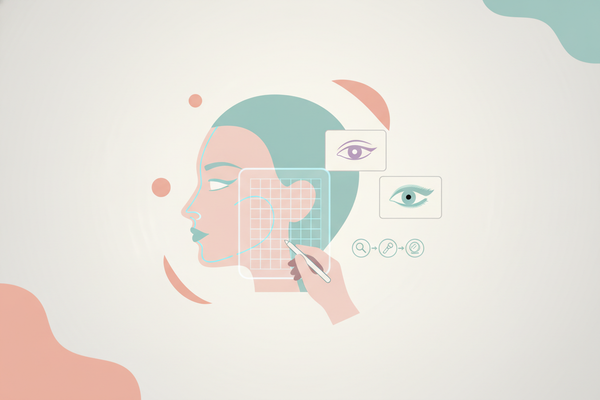
- Trace the outline of your face with a washable makeup pencil or your finger.
- Note what part seems widest: forehead, cheekbones, or jaw.
- Observe your jawline—rounded or sharp? Chin—pointed or square?
Compare your outline to standard face shape diagrams, or browse the AI Makeup App: The Ultimate Guide to Smarter Beauty Routines for more visuals and tips.
Step 5: Identify Makeup Strategies by Face Shape
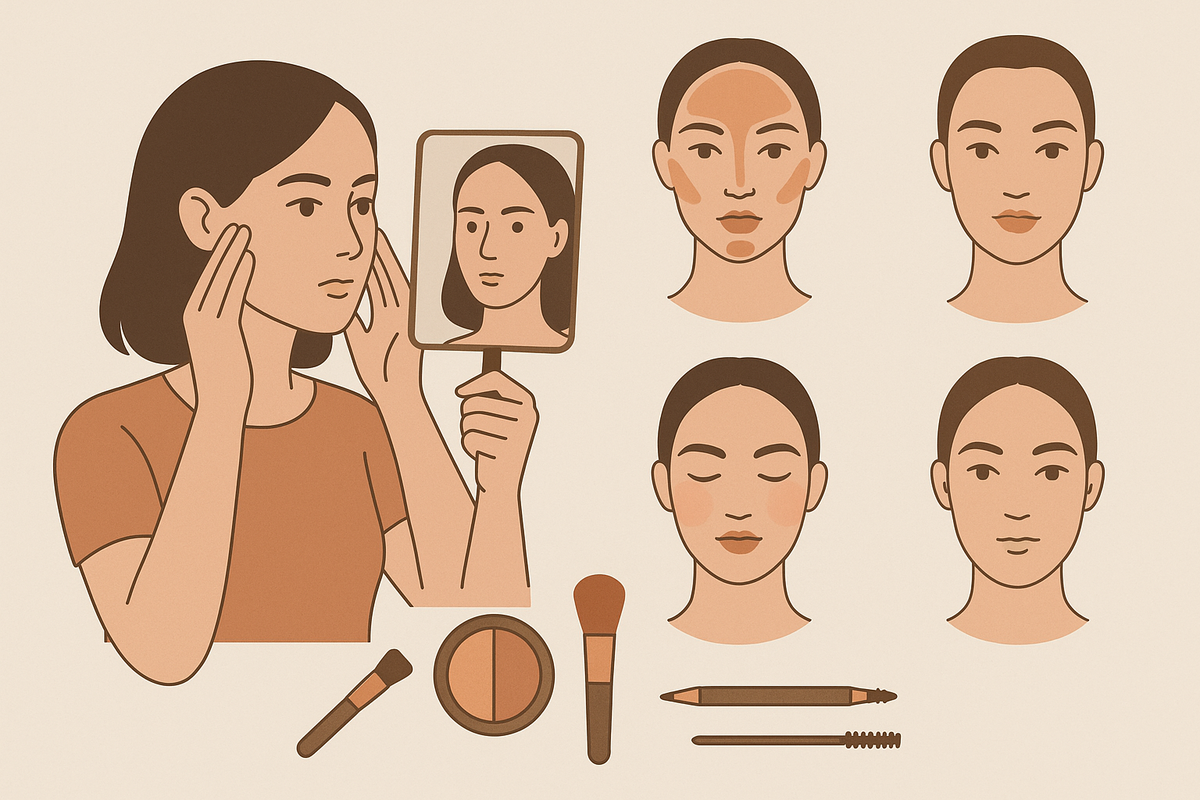
Once you know your face shape, you can tailor your makeup for a look that enhances your natural features. Here’s a quick guide to contour, blush, and brow strategies for each shape:
- Makeup for a round face:
Contour along the sides of the forehead and under cheekbones to add definition. Apply blush slightly higher to lift the face. Go for brows with a soft, high arch. - Makeup for an oval face:
Most makeup placements work. Light contouring under cheekbones and subtle blush on apples of the cheeks look great. Keep brows soft and natural. - Makeup for a square face:
Contour along the jaw and temples to soften angles. Place blush on the apples, blending toward the temples. Brows with a gentle curve balance the strong jaw. - Makeup for a heart-shaped face:
Contour the sides of the forehead and temples. Blush just below the apples, blending outward. Brows should be rounded but not too high. - Diamond face:
Highlight forehead and chin, contour under cheekbones. Blush on the top of the cheekbones. Rounded or curved brows soften the angles. - Oblong face:
Contour hairline and chin to shorten the face. Blush on the apples, swept outward. Flat, straight brows help balance length. - Triangle face:
Contour jawline, highlight forehead. Blush above the apples. Brows with a slight arch add balance.
For detailed tutorials on each face shape, check out the AI Makeup Tutorial: Your Guide to Smart Beauty Routines.
Step 6: Common Mistakes to Avoid
Even small errors can lead to misidentification. Watch out for these pitfalls:
- Not pulling hair back fully, hiding the true hairline or jaw.
- Measuring at an angle instead of straight across features.
- Guessing instead of using a tape measure or string for precision.
- Comparing your face to only one celebrity or photo.
- Forgetting that weight changes may temporarily alter face shape.
For a foolproof option, consider using an AI tool like Makeup Check AI for an unbiased analysis and personalized beauty plan.
Conclusion
Learning how to determine your face shape unlocks the door to smarter, more flattering makeup choices. With the right preparation, measurements, and a little practice, you’ll be able to recognize your shape and apply the ideal contour, blush, and brow techniques for your unique features. For those who want expert guidance, Makeup Check AI offers instant analysis and step-by-step tutorials for every face type. Ready to upgrade your beauty routine? Start with your face shape—and let the transformation begin!
FAQ
- How do I determine my face shape at home?
Use a flexible tape measure or string to measure your forehead, cheekbones, jawline, and face length. Compare the proportions to standard face shape descriptions, or use an AI face shape detector for instant results. - What are the different face shapes?
The main face shapes are oval, round, square, heart, diamond, oblong (rectangular), and triangle (pear). - How do I measure my forehead, cheekbones, and jawline correctly?
Forehead: measure the widest part between hairline and brows. Cheekbones: across the upper cheeks, outer eye to outer eye. Jawline: from jaw corner under ear to chin, then double it. - Is my face oval, round, square, or heart-shaped?
Compare your measurements and facial features to the shape descriptions provided above. Focus on which area is widest and the shape of your jaw and chin. - Can I figure out my face shape from a selfie or mirror?
Yes! Use a clear, straight-on selfie or look in the mirror to trace your face outline and compare to charts. Apps like Makeup Check AI can analyze your selfie instantly. - What is the most accurate way to find my face shape?
Combining precise measurements with a visual check gives the best result. For the highest accuracy, use an AI-powered tool designed for face shape detection.