How to Contour Eyes with Makeup: Step-by-Step for Every Eye Shape
Learn how to contour eyes with makeup for your eye shape. Discover placement tips, blending secrets, and product picks. Get personalized tutorials with Makeup Check AI.

Estimated reading time: 10 min
Key Takeaways
- Contouring eyes with makeup enhances depth, lifts your look, and can make eyes appear larger or more defined.
- Identify your eye shape first—hooded, almond, monolid, round, or downturned—for the best results.
- Shade placement and blending techniques change based on your unique eye shape.
- Choose contour, transition, and highlight shades thoughtfully for a seamless, natural finish.
- Makeup Check AI helps you analyze your eye shape and provides tailored step-by-step tutorials for every look.
Learning how to contour eyes with makeup is the secret to instantly bigger, brighter, and more lifted eyes. Whether you're working with hooded, almond, monolid, round, or downturned eyes, mastering eyeshadow placement and blending techniques can take your look to the next level. This guide will walk you through the essential steps, including how to tell your eye shape, product picks, and the best contour and highlight placements for any eye type. Ready to transform your eye makeup? Let’s dive in!
Step 1: How to Tell Your Eye Shape
Knowing your eye shape is the first—and most crucial—step in contouring your eyes with makeup. Different shapes require unique approaches for eyeshadow placement, blending, and liner. Here’s how to identify yours:
- Hooded Eyes: The crease is hidden by a fold of skin when your eyes are open.
- Monolid Eyes: There is no defined crease; the eyelid appears flat.
- Almond Eyes: The iris touches both the top and bottom of your eyelids, and the shape tapers at the inner and outer corners—like an almond.
- Round Eyes: The whites of your eyes are visible above or below the iris when looking straight ahead; the shape is more circular.
- Downturned Eyes: The outer corners are lower than the inner corners.
Tip: Use a mirror at eye level and look straight ahead. Compare your eyes to the descriptions above or try Makeup Check AI’s instant face scan for a precise analysis and custom recommendations.
Step 2: Prep Your Eye Area for Contouring
Prepping ensures your eye contour stays put and looks flawless all day. Here are the essential steps:
- Cleanse your lids to remove oil or residue.
- Apply an eyeshadow primer to prevent creasing and make colors pop.
- Use concealer to even out discoloration and create a smooth canvas.
- Set with a light dusting of translucent powder if you have oily lids.
This base will make blending easier and keep your eye contour in place.
Step 3: Choose the Right Contour and Highlight Shades
Choosing the right shades is key to natural-looking eye contouring:
- Contour Shade: 1-3 shades deeper than your skin tone; matte finish works best.
- Transition Shade: Slightly lighter than your contour; helps blend edges.
- Highlight Shade: Pale shimmer or satin for the brow bone and inner corner.
For a personalized palette, use the color-season analysis in Makeup Check AI to find shades that complement your undertones.
Step 4: Basic Eye Contour Placement Explained
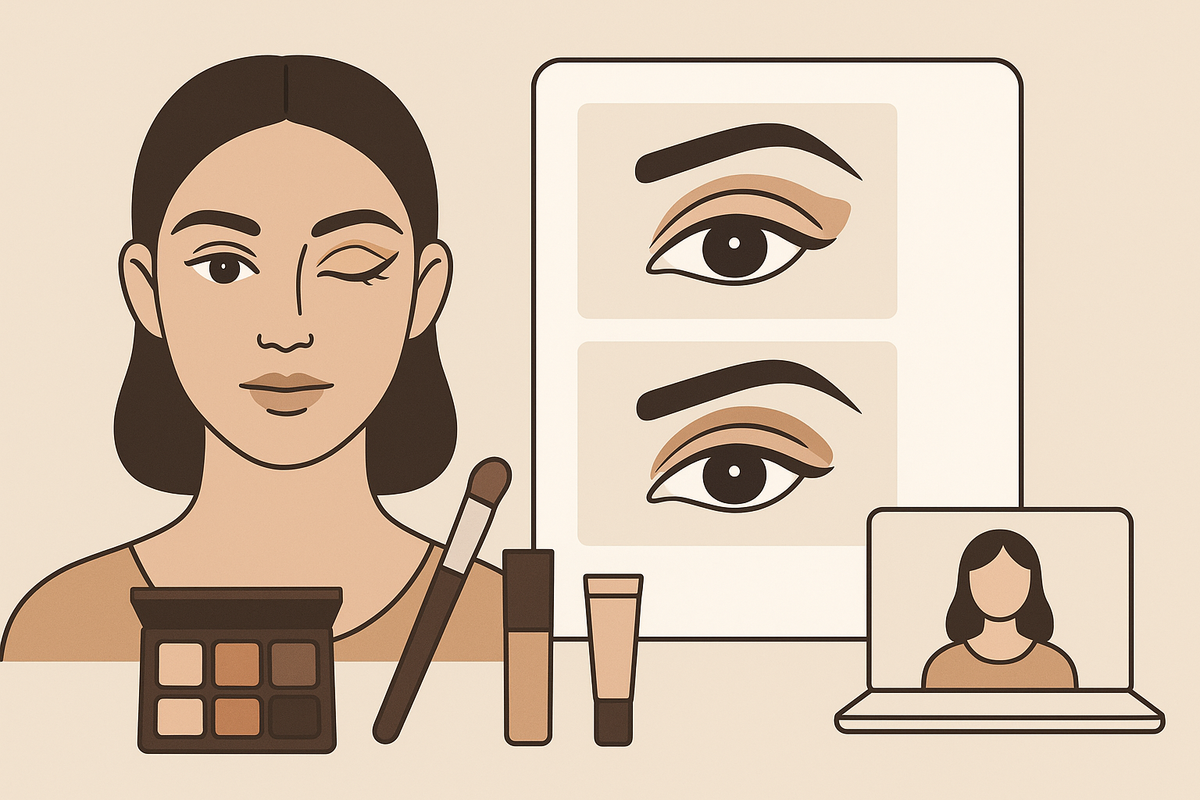
The goal of eye contouring is to add dimension and shape by using dark and light shades strategically. Here’s the basic map:
- Crease: Deepen with contour or transition shade for depth.
- Outer Corner: Place the darkest shade here to lift or elongate the eye.
- Lid: Use a medium or shimmer shade to make eyes pop.
- Lower Lash Line: Smudge a bit of contour shade for balance and definition.
- Brow Bone & Inner Corner: Highlight to open up the eyes.
Placement will vary slightly by eye shape, so keep reading for tailored tips.
Step 5: Eye Contouring Techniques by Eye Shape
Customizing eyeshadow placement for your eye shape is the trick to next-level results. Here’s how:
- Hooded Eyes: Place contour shade just above your natural crease (on the hood) so it remains visible when eyes are open. Keep lid shades light and avoid heavy liner on the top lid. For more, see our detailed hooded eye makeup tips in the app.
- Monolid Eyes: Create your own crease by blending a transition shade above your lash line, then layer deeper tones upward. Emphasize the outer third for lifted effect. Explore eyeshadow placement by eye shape for more on monolids.
- Almond Eyes: Follow the natural shape—deepen the outer V, sweep contour into the crease, and highlight the center lid and brow bone. Almond eyes suit most eyeshadow looks!
- Round Eyes: Focus contour on the outer third and blend outwards for elongation. Tightline with dark liner to add definition without widening.
- Downturned Eyes: Keep contour and liner lifted at the outer corners—think upward flicks and avoid dragging color downward.
Not sure which technique suits you? Makeup Check AI generates instant, step-by-step video tutorials for your exact eye shape and desired look.

Step 6: How to Blend Eye Contour for a Seamless Finish
Blending is what transforms eye contour from harsh to flawless. Here’s how to do it right:
- Use a clean, fluffy blending brush to soften any harsh lines between shades.
- Apply color in small amounts and build intensity gradually.
- Buff edges in a windshield-wiper motion for a diffused effect.
- Check your work in natural light—turn your head to see the blend from every angle.
Tip: If you’ve over-applied, use a bit of translucent powder or a clean brush to soften the look.
Step 7: Combine Contour with Eyeliner and Mascara for Definition
Once your contour is in place, finish the look with liner and mascara—tailored to your eye shape:
- Cat-eye or elongated effect: Use a gel or liquid liner to draw a flick that follows the upward angle of your contour placement.
- Tightlining: Line the upper waterline to make lashes look fuller without closing off your eyes.
- Mascara: Focus on the outer lashes for lift, or use lengthening formulas to open up the eyes.
For more on matching eyeliner to your eye shape, check out our in-depth guides in the Makeup Check AI app.
Tips & Common Mistakes
- Don’t use too much product. Build color in layers to avoid harshness.
- Avoid placing contour too low. This can make eyes look droopy—always blend upward and outward.
- Choose matte shades for contour. Shimmer can emphasize puffiness or texture in the crease area.
- Don’t skip primer. Unprimed lids can cause patchy blending and fading.
- Blend, blend, blend. Seamless transitions are key to a professional finish.
Common mistakes are easy to fix with real-time feedback—try uploading your look to Makeup Check AI for instant technique analysis and improvement tips.
Conclusion
Learning how to contour eyes with makeup transforms your look and gives you new creative freedom, no matter your eye shape. Start by identifying your shape, prep with primer and concealer, choose flattering shades, and master placement and blending. With guidance from AI-powered beauty apps like Makeup Check AI, you can discover hundreds of personalized looks and tutorials tailored to you. Ready to experiment? Scan your face, get instant feedback, and try a new eye contour today!
FAQ
- How do you contour eyes with makeup step by step?
Start by identifying your eye shape, then prep with primer and concealer. Apply a transition shade above/into the crease, a deeper contour shade to the outer corner and crease, and a highlight on the brow bone and inner corner. Blend thoroughly and finish with liner and mascara suited to your eye shape. - What shade should I use to contour my eyes?
Choose a matte shade 1-3 shades deeper than your skin tone for the contour. For a natural look, select shades that complement your undertone; Makeup Check AI can help with personalized color analysis. - How do you contour hooded eyes?
Apply the contour shade just above your natural crease (on the hood) so it’s visible when your eyes are open. Blend upwards and keep lid shades light. Avoid heavy liner on the upper lid to prevent closing off the eye. - Where do you put contour on eyes to make them look bigger?
Focus contour on the outer third of the eye, slightly above the crease, and blend outward and upward. Highlight the brow bone and inner corner to open up the eyes. - How do you blend eye contour so it looks natural?
Use a clean blending brush, apply color in light layers, and use circular and windshield-wiper motions to diffuse edges. Always check your blend in natural light. - Can you contour eyes with eyeshadow instead of contour powder?
Yes! Matte eyeshadows work perfectly for eye contouring. Choose shades that are slightly deeper than your skin tone for contour and lighter for highlight.