Eye Makeup for Different Face Shapes: Your Complete Guide to Flattering Every Feature
Master eye makeup for different face shapes with expert tips on brows, contour, blush, and eyeliner. Learn how to determine your face shape and enhance your look.

Estimated reading time: 16 min
Key Takeaways
- Understanding your face shape is essential for customized, flattering eye makeup.
- Different face shapes require specific contour, blush, and brow techniques to enhance features.
- Proper eyeliner, eyeshadow, and mascara placement can lift, widen, or balance your eyes.
- Personalized AI tools like Makeup Check AI make it easy to analyze and perfect your makeup techniques.
- Adapting your makeup routine to your unique face shape leads to the most harmonious, beautiful results.
Table of Contents
- Section 1: How to Determine Your Face Shape
- Section 2: The Foundations of Makeup by Face Shape
- Section 3: Eye Makeup Techniques for Each Face Shape
- Section 4: Eyeliner, Eyeshadow, and Mascara Placement Tips
- Section 5: Brow Shaping for Your Face Shape
- Section 6: Contour, Blush, and Finishing Touches by Face Shape
- Conclusion
- FAQ
Section 1: How to Determine Your Face Shape
Why Face Shape Matters in Eye Makeup
Face shape is the silent framework that determines how makeup sits, how features are balanced, and what techniques will elevate your natural beauty. Whether you’re learning eye makeup for different face shapes or searching for the best brow shape, knowing your unique contours is the first step to a truly personalized beauty routine.
Common Face Shapes Explained
- Round: Face width and length are about equal, with soft, curved edges and little to no angles.
- Oval: Classic balanced proportions, with the face slightly longer than wide and a gently rounded jaw.
- Square: Forehead, cheekbones, and jawline are almost the same width; jaw is strong and angular.
- Heart: Wider forehead tapering to a narrow, often pointed chin; cheeks may be prominent.
- Oblong (Rectangular): Face is significantly longer than wide, with a straight cheek line and often a longer chin.
- Diamond: Narrow forehead and jawline with broad, high cheekbones; angular overall.
How to Measure and Identify Your Face Shape
- Pull hair back and observe your face in a mirror, or use a selfie with a neutral expression.
- Measure (or visually compare) the width of your forehead, cheekbones, and jawline, as well as the length from forehead to chin.
- Note where your face is widest and narrowest, and whether your jawline is rounded or angular.
- Still unsure? AI apps like Makeup Check AI can scan and analyze your face shape instantly, providing a precise foundation for your makeup strategy.
Face Shape and Feature Emphasis
Once you know your face shape, you can use tailored makeup strategies to accentuate your best features, balance proportions, and create visual harmony—starting with the eyes.
Section 2: The Foundations of Makeup by Face Shape
Why Customization Is Key
No two faces are exactly alike, so copying generic makeup tutorials rarely delivers the best results. Customizing your routine—including eye makeup, brows, contour, and blush—based on your face shape ensures you enhance your unique structure, not mask it.
Overview: How Face Shape Influences Eye Makeup
- Round faces benefit from makeup that elongates and slightly lifts features.
- Square faces are softened with curved lines and blended edges.
- Heart-shaped faces look balanced when the width at the forehead is minimized with strategic shading and focus on the eyes or lips.
- Oval faces can wear most styles, but balance is key to avoid exaggerating length.
- Oblong faces are flattered by makeup that creates width and reduces a lengthy appearance.
- Diamond faces benefit from techniques that soften angles and highlight the eyes and cheekbones.
Integrating Contour, Blush, and Brows
While eye makeup draws attention, the harmony of your entire face comes from integrating contour by face shape, blush placement by face shape, and the ideal brow shape for your face. Each plays a strategic role in guiding the viewer’s eye, setting the stage for show-stopping eye looks tailored to you.
For a deeper dive into personalized beauty routines, see our guide AI Makeup: The Future of Personalized Beauty Routines.
Section 3: Eye Makeup Techniques for Each Face Shape
Makeup for a Round Face
- Focus on elongating the eyes: Use winged eyeliner that flicks outward and upward beyond the outer corner.
- Apply eyeshadow in an elongated, slightly upward angle to lift the outer corners.
- Highlight inner corners and brow bone to open up the eyes.
- For brows, opt for a high arch to add vertical lift.
Makeup for an Oval Face
- Most eye makeup styles work; balance is crucial.
- Try soft, blended eyeshadows and classic cat-eye liner to enhance symmetry.
- Brows should follow the natural arch for a harmonious look.
Makeup for a Square Face
- Soften strong angles with rounded, blended eyeshadow shapes.
- Avoid harsh, straight lines with eyeliner; opt for a subtle wing or smudged effect.
- Brow shape should be slightly curved to counteract angularity.
Makeup for a Heart-Shaped Face
- Balance a wider forehead by drawing attention to the eyes or lips.
- Eyeshadow should focus on the outer third, blending upward and outward.
- Brows are best with a soft, rounded arch to soften the forehead.
Makeup for an Oblong Face
- Add width with horizontal eye makeup techniques (smoky eyes, wide-set lashes).
- Keep eyeliner and eyeshadow close to the lash line and extend slightly outward, not upward.
- Brows should be fuller with a soft arch to create the illusion of width.
Makeup for a Diamond Face
- Highlight the eyes and upper cheeks to soften sharp angles.
- Winged liner can lift the eye, but keep it subtle and upward.
- Brow shape should be curved, not angular, to balance cheekbones.
Section 4: Eyeliner, Eyeshadow, and Mascara Placement Tips
Eyeliner Placement by Face Shape
- Round face: Elongate with a classic wing, starting thin at the inner corner and thickening toward the outer corner, flicking upward.
- Square face: Go for soft, blended liner or a short, curved wing to avoid harshness.
- Heart face: Focus liner on the outer third and use a slight upward flick; avoid heavy lower lash lines.
- Oblong face: Horizontal, slightly extended liner without a dramatic wing to add width.
- Diamond face: Lift eyes with a gentle, upward wing to balance cheeks.
Winged Liner Variations for Lift or Width
- For lifting: Start the wing where the upper lash line ends and flick upward at a 45-degree angle.
- For widening: Make the wing more horizontal, extending outward rather than up.
Eyeshadow Placement for Visual Impact
- To create width: Focus darker shades on the outer third and blend outward.
- To add lift: Blend shadow at an upward angle from the outer corner.
- To shorten a long face: Keep shadow lower, avoiding high arches and upward blends.
Mascara and Lash Placement
- Apply extra coats to outer lashes for a more open, lifted look—especially on round or heart faces.
- False lashes should be focused on the outer corners for elongation and lift.
- For oblong faces, choose fuller, even lashes across the eye to add width.
For more on smart makeup techniques, explore AI Makeup Tutorial: Your Guide to Smart Beauty Routines.
Section 5: Brow Shaping for Your Face Shape
Brow Shape for a Round Face
- High, sharp arches lengthen and lift the face.
- Avoid flat brows, as they can make the face appear wider.
Brow Shape for a Square Face
- Soft, curved arches counteract a strong jawline.
- Keep brows natural and not overly angular.
Brow Shape for an Oval Face
- Soft, natural arches work best—avoid extremes.
- Follow your brow’s natural curve for harmonious balance.
Brow Shape for a Heart-Shaped Face
- Rounded or gently curved brows soften a pointed chin and wide forehead.
- Medium thickness keeps the look balanced.
Brow Shape for an Oblong Face
- Flat, horizontal brows add width and minimize length.
- Avoid high arches that elongate the face further.
Brow Shape for a Diamond Face
- Curved, slightly arched brows soften angular cheekbones.
- Medium to full thickness helps balance proportions.
Not sure how to style your brows for your face? Personalized AI analysis from Makeup Check AI offers step-by-step guidance for your unique proportions.
Section 6: Contour, Blush, and Finishing Touches by Face Shape
How to Contour by Face Shape
- Round: Contour along the temples, jawline, and under cheekbones to create subtle angles.
- Square: Focus on softening the jaw and temple; blend well to avoid harsh lines.
- Heart: Shade the sides of the forehead and temples, with a touch under the chin to balance width.
- Oblong: Contour along the top and bottom of the face to shorten its appearance.
- Oval: Light contour under cheekbones suffices for added definition.
- Diamond: Soften the angles along the cheekbones and narrow the forehead and jaw slightly.
Blush Placement by Face Shape
- Round: Sweep blush slightly above the apples, towards the temples, to lift and elongate.
- Square: Apply in a circular motion on the apples and blend outward for softness.
- Heart: Place blush on the outer apples and sweep toward the ears, avoiding the temples.
- Oblong: Apply blush on the apples and blend horizontally to add width.
- Oval: Classic blush on the apples, blending slightly upward, works well.
- Diamond: Focus blush on the top of the cheekbones, blending outward.
Final Touches: Harmony and Highlight
- Use highlighter strategically—on the brow bone, inner eye corners, and upper cheekbones—to catch the light and enhance your bone structure.
- Set your look with a mist to meld products and soften edges for a natural, radiant finish.
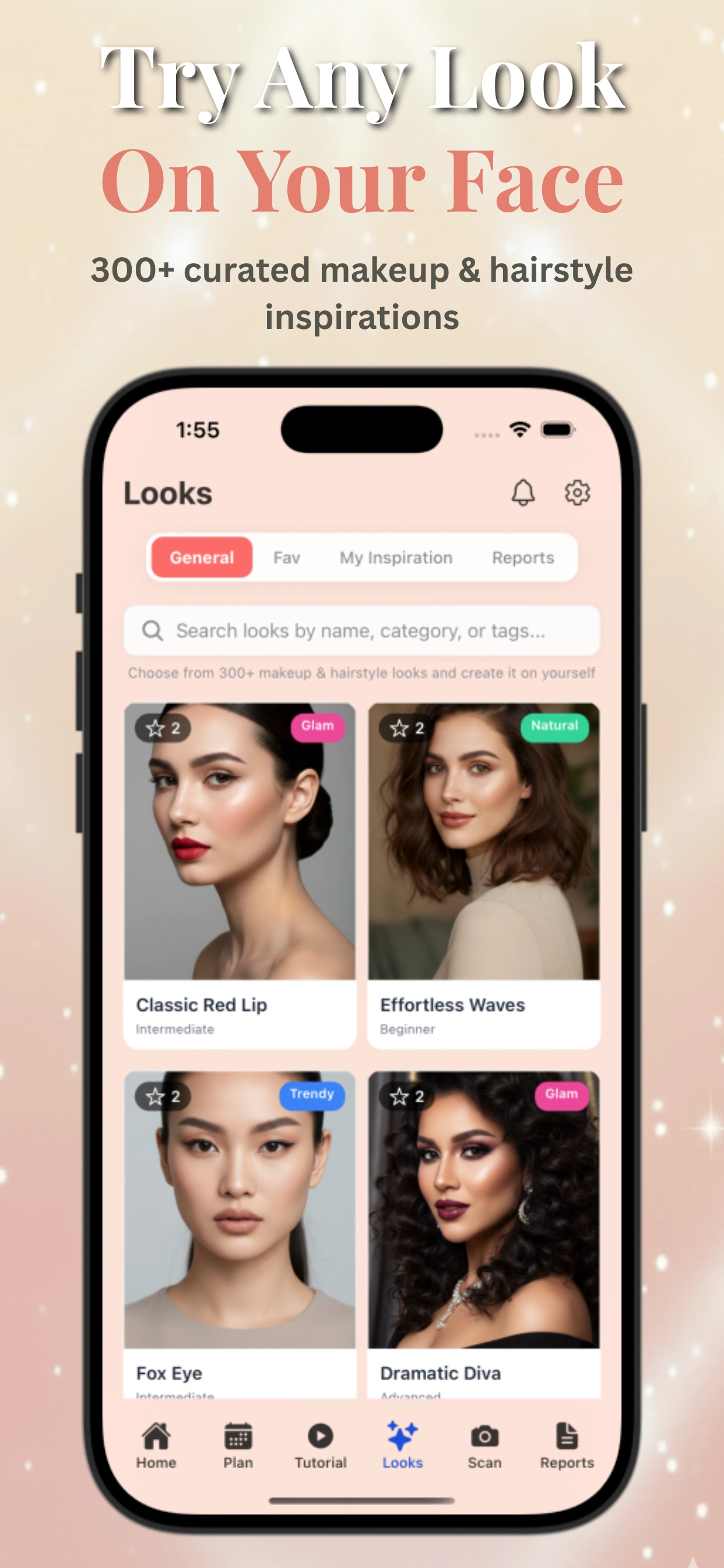
Ready to experiment? Try on over 300 looks instantly and get personalized face-shape analysis with Makeup Check AI, your virtual beauty assistant.
Conclusion
Mastering eye makeup for different face shapes unlocks the secret to makeup that not only looks stunning, but feels uniquely you. From determining your face shape to understanding the interplay of brows, contour, and blush, adapting your routine transforms every detail—from subtle daytime looks to dramatic evening glam. AI-powered tools like Makeup Check AI remove the guesswork, offering instant, ultra-personalized guidance so you can confidently flatter your features every day. For more on the technology powering these routines, explore our article: Makeup AI: Revolutionizing Beauty with Personalized Technology.
FAQ
Q: What eye makeup is best for a round face?
A: Focus on elongating techniques like winged eyeliner, upward-blended eyeshadow, and high-arched brows to create the illusion of length and lift. Place blush slightly above the apples and contour to add subtle angles.
Q: How do you do eyeliner for a square face?
A: Use soft, smudged eyeliner and subtle, curved wings. Avoid harsh, straight lines; instead, aim for rounded, blended shapes in both liner and eyeshadow to soften angular features.
Q: What eyeshadow makes an oblong face look shorter?
A: Apply eyeshadow horizontally across the lid and avoid extending shadow upward. Focus darker shades on the outer corners and keep the overall look low and wide to add width and visually shorten the face.
Q: Which brow shape suits a heart-shaped face?
A: Soft, rounded, or gently curved brows balance a heart-shaped face by drawing attention away from a wider forehead and softening a pointed chin. Medium thickness works best for harmony.
Q: How can makeup make eyes look wider or more lifted for a face shape?
A: Use winged liner angled upward for lift or extended outward for width. Place mascara and false lashes on the outer corners, and blend eyeshadow slightly past the natural eye shape to visually widen or lift the eyes depending on your face structure.
Q: What mascara or lash placement flatters different face shapes?
A: For round and heart faces, focus mascara and lashes on the outer corners to elongate and lift. For oblong faces, use fuller lashes across the lid to add width. For square and diamond faces, natural, medium-length lashes soften angles and maintain balance.
La elección de una camiseta deportiva suele depender del ajuste, el tejido y las preferencias personales de cada aficionado. Quienes comparan alternativas pueden usar camiseta de futbol del Arsenal como punto de partida para observar tipos de camiseta y detalles básicos. Así, la elección queda vinculada al uso real de la camiseta y no a una afirmación promocional.