
Common Makeup Questions FAQ: Expert Insights and AI Makeup Generator
Discover expert answers to common makeup questions FAQ and explore AI makeup generator insights for flawless results. Learn about shade matching, application order, and more.

Estimated reading time: 7 minutes
Key Takeaways
- Mastering basics of shade matching, application order, and skincare prep builds confidence and prevents errors.
- AI Makeup Generator offers virtual shade matching, customized tutorials, and product recommendations—all updated for 2026 standards.
- Combining expert advice and AI yields smarter choices, faster application, and flawless results.
Table of Contents
- Exploring Common Makeup Questions
- Expert Answers to Common Makeup Questions FAQ
- Integrating Technology – The AI Makeup Generator
- Bridging Both Worlds – Expert Advice & AI Makeup Generator
- Conclusion & Call to Action
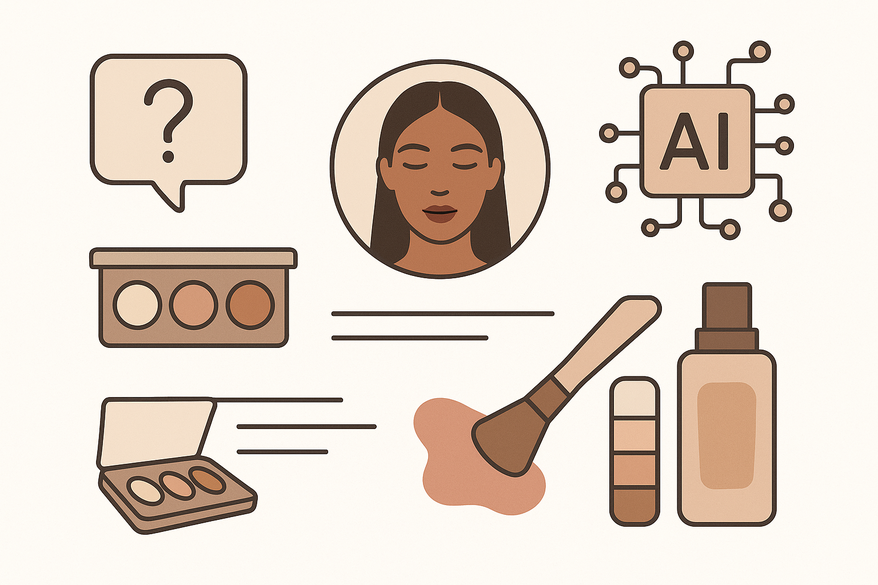
Common makeup questions FAQ are the most asked queries that help every beauty enthusiast choose the right products and techniques. In this post, we define “common makeup questions FAQ” and show how mastering basics—shade matching, product order, skincare prep—builds confidence and prevents mistakes. We also introduce the AI makeup generator, a tech tool now standard in 2026 that works alongside expert tips. By combining expert advice and innovative AI, you’ll make smarter choices and enjoy faster, flawless results.
For on-demand, AI-driven assistance, Makeup Check AI provides instant virtual shade matching and guided tutorials alongside expert tips, now with 2026’s advanced skin analysis and product database.
Section 1: Exploring Common Makeup Questions
Users constantly seek answers to avoid errors and improve their look. Below are the top six FAQs in 2026:
1. Foundation Matching
- Define undertones:
- Warm (yellow, peachy)
- Cool (pink, blue)
- Neutral (balanced mix)
- Method: Test two or more shades along jawline or neck, check in natural daylight or with a daylight-mimicking smart mirror, choose the blend that disappears without a line.
- Why it matters: A correct match prevents a “mask effect” and frames your face naturally. Many brands in 2026 offer AI-driven shade finders integrated into their websites and apps.
Explore digital shade analyzers in detail at digital shade analyzers.
2. Order of Application
- Recommended sequence:
- Cleanse
- Moisturize (with SPF if daytime)
- Primer (now often with skincare actives in 2026)
- Foundation
- Concealer
- Setting powder or spray
- Rationale: Applying foundation before concealer avoids patchiness and maintains a smooth finish. Newer hybrid primers in 2026 can blur pores and improve foundation longevity.
3. Skincare Prep
- Moisturizer: Hydrates, balances skin barrier. In 2026, lightweight gel-cream hybrids are popular for all skin types.
- Primer: Smooths pores, locks in moisture, extends makeup wear. Many primers now contain niacinamide or ceramides for added skin benefits.
- Combined benefit: Creates a stable canvas, reduces midday creasing and supports skin health under makeup.
4. Mascara Smudging
- Causes: Oily eyelids, tear-prone eyes, humidity, and now, increased screen time (which can make eyes water more).
- Solutions:
- Set under-eye area with translucent powder or blotting sheets.
- Choose waterproof, tubing, or smudge-proof formulas (2026 formulas are more gentle and easier to remove).
- Blot lids gently before application; consider eyelid primers specifically for oily lids.
5. Foundation on Acne
- Non-comedogenic and oil-free formulas prevent clogged pores. In 2026, many foundations include skin-calming ingredients like centella or madecassoside.
- Layering: Use a stippling brush or damp sponge to apply light coats and avoid rubbing into blemishes. Antibacterial brush sprays are recommended for cleaning tools between uses.
6. Lip Prep for Dry Lips
- Lip scrub: Gently buff away dead skin; sugar-based scrubs remain popular, but enzyme-based options are trending in 2026.
- Lip mask: Leave on 5–10 minutes to deeply hydrate. Look for masks with peptides or squalane for extra repair.
- Lip balm: Seal moisture before applying lipstick for a smooth finish. SPF lip balms are recommended for daytime.
Section 2: Expert Answers to Common Makeup Questions FAQ
Q: How do I find my ideal foundation shade?Match to neck or jawline in natural light; undertone test—blue veins are cool, green veins are warm, mix indicates neutral. Many 2026 apps now let you scan your face for instant recommendations. Source: Makeup.com Expert TipsQ: Should I apply foundation or concealer first?Foundation first to even out skin tone, then concealer on spots to avoid layering too thick. Source: Makeup.com Expert TipsQ: How can I make mascara last without smudging?Skip creamy eye makeup under eyes, set with translucent powder, use waterproof or tubing mascara, seal with setting spray. New 2026 tubing formulas last longer and rinse off with warm water. Source: Mars Cosmetics FAQQ: How do I prep lips for lipstick if they’re dry?Exfoliate with sugar or enzyme scrub, apply hydrating lip mask 5–10 minutes, blot and layer lip balm before lipstick. Source: Mars Cosmetics FAQQ: What’s the best way to apply foundation on acne-prone skin?Use non-comedogenic, oil-free foundation, apply thin layers with stippling motion using clean tools. In 2026, look for formulas with anti-inflammatory ingredients. Source: TotalBeauty Expert Q&A
Tips & Best Practices
- Do clean brushes every 3–4 uses to stop bacteria buildup. Quick-dry UV brush cleaners are widely available in 2026. Source: Elite Daily Q&A
- Do apply primer before foundation to lengthen wear and minimize pores. New primers with skincare actives are recommended. Source: Best Makeup Primers
- Don’t mix products not intended for that area (e.g., lip liner as eyeliner) unless labeled safe. Many 2026 products are now multi-use, but always check safety labels. Source: Elite Daily Q&A
Section 3: Integrating Technology – The AI Makeup Generator
The AI makeup generator is a smart tool powered by advanced machine learning and computer vision. As of 2026, it analyzes user photos and preferences to offer:
- Virtual shade matching – simulates foundation and concealer tones, now with improved accuracy for diverse skin tones and lighting conditions.
- Customized tutorials – step-by-step guides for face shape, skin type, and even adaptive for skin conditions (e.g., rosacea, hyperpigmentation).
- Product recommendations – tailored to color theory, ingredient preferences, and even sustainability or cruelty-free filters.
See how this works in our virtual try-on deep dive: Virtual Makeup Try-On Deep Dive.
Benefits
- Instant, visual feedback reduces wasted products and returns.
- Accessible on-demand, no salon appointment needed. Now available as AR overlays on smart mirrors and mobile devices.
- Perfect for beginners exploring new looks, or for testing trending styles before buying.
Limitations
- Cannot gauge skin texture, pimple sensitivity, or allergic reactions—always patch test new products.
- Real-world wear time and comfort can vary; AI suggestions should be verified with in-person testing.
Section 4: Bridging Both Worlds – Expert Advice & AI Makeup Generator
Combining human expertise with AI boosts efficiency and creativity. In 2026, most beauty routines blend both for best results.
Scenario A – Foundation Match
- Use AI generator to narrow to 2–3 shades based on your current skin tone and undertone analysis.
- Apply expert tips on undertones and natural light for the final choice. Confirm with a physical sample or virtual try-on in multiple lighting conditions.
Scenario B – Event Look
- Test bold color combos via AI simulation, including trending 2026 looks (e.g., holographic liners, skin-embellished gems).
- Refine technique with pro do’s and don’ts, such as blending tips for long-wear formulas.
Scenario C – Troubleshooting
- Consult expert Q&A for issues AI can’t detect, such as persistent dryness or allergic reactions.
- Adjust product choices based on personal comfort, texture, and expert advice for sensitive skin.
Step-by-Step Framework
- Identify your goal: matching, creating a look, or fixing a problem.
- Run an AI makeup generator simulation with your latest photo and preferences.
- Cross-check results with expert FAQs and current ingredient recommendations.
- Apply makeup in real life, fine-tune by feel, finish, and wear test throughout the day.
Conclusion
We’ve covered key expert insights on common makeup questions FAQ—shade matching, application order, skincare prep, mascara, acne-safe foundation, and lip care. We also explored how the AI makeup generator, now more advanced in 2026, offers virtual try-ons and tailored tutorials. By blending human expertise with AI innovation, you gain accurate, efficient, and creative solutions for every routine.
Call to Action
Share your own makeup questions or AI makeup generator stories in the comments. Sign up for our newsletter for monthly expert Q&As and the latest AI beauty tool updates. Follow us on social media for quick tips and new research links.
FAQ
- How do I find my ideal foundation shade? Match to neck or jawline in natural light or with a smart mirror; try AI shade finders for instant recommendations.
- Should I apply foundation or concealer first? Apply foundation first, then concealer on specific areas.
- How can I make mascara last without smudging? Set under-eye area with powder, use waterproof or tubing mascara, seal with setting spray.
- How do I prep lips for lipstick if they’re dry? Exfoliate with a sugar or enzyme scrub, apply a hydrating lip mask, then seal with balm before lipstick.
- What’s the best way to apply foundation on acne-prone skin? Use non-comedogenic foundation with anti-inflammatory ingredients, apply thin layers with stippling motion, and clean tools regularly.