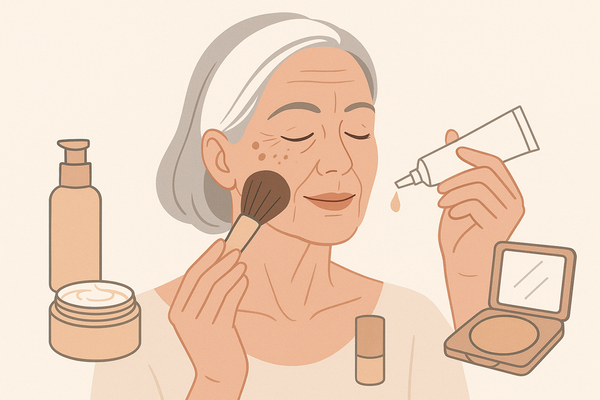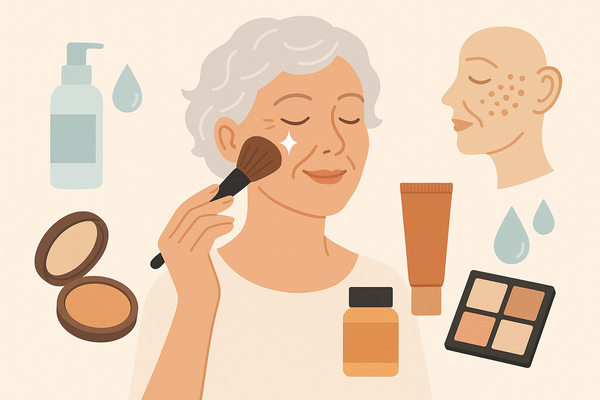
Makeup for Mature Skin: Skincare and Application Techniques
Explore makeup for mature skin with tips on skincare, fine lines, nasolabial folds, under-eye hollows, and age spots for radiant beauty.

Estimated reading time: 8 minutes
Key Takeaways
- Hydration is paramount – Build a multi-step skincare foundation to combat dryness and fine lines.
- Light-reflecting makeup – Choose sheer, dewy formulas to blur imperfections and add luminosity.
- Strategic application – Focus on lifting contours, brightening under-eyes, and avoiding heavy powders.
- Targeted treatments – Use peptides, ceramides, and SPF 50 for sensitive or treatment-affected skin.
- Personalize your routine – Adapt techniques and products to your skin’s unique concerns and seasonal changes.
Table of Contents
- Introduction
- Understanding Mature Skin Concerns
- Skincare Strategies for Mature Skin
- Makeup Techniques Tailored for Mature Skin
- Specific Applications: Nasolabial Folds & Lifting
- Integrating Skincare & Makeup for Sensitive Skin
- Product Recommendations & Key Ingredients
- Conclusion & Final Takeaways
- FAQ
Introduction
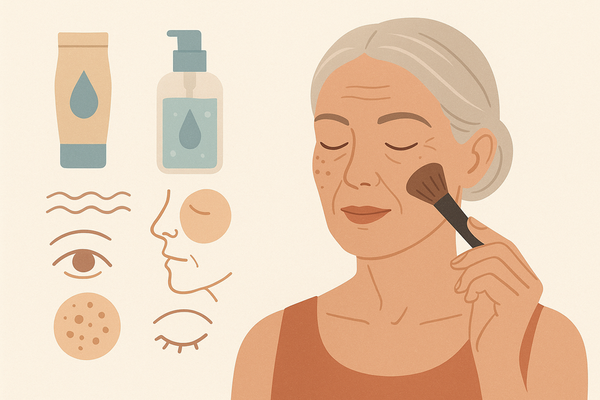
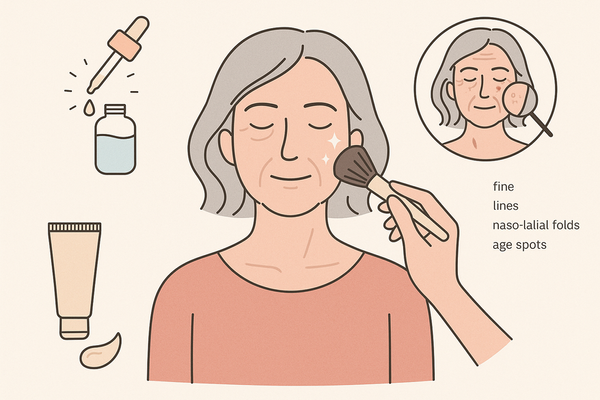
Mature skin often exhibits dryness, fine lines, and loss of elasticity, making traditional makeup routines less effective. By combining a thoughtful skincare regimen with targeted makeup techniques, you can enhance your natural glow rather than mask it. In this guide, we’ll address:
- Fine lines and wrinkles
- Nasolabial folds
- Under-eye hollows and shadows
- Dry, sensitive skin from chemo or radiation
- Age spots and uneven pigmentation
For a deep dive into prepping skin over 40, check out our guide on Skincare Before Makeup Over 40.
Understanding Mature Skin Concerns
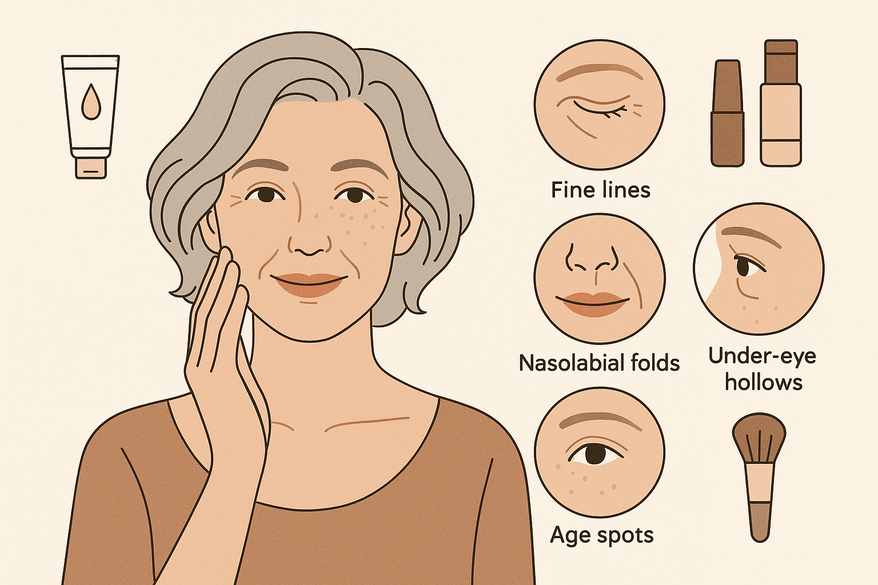
- Fine Lines & Wrinkles: Loss of collagen creates grooves that trap foundation. Use light-diffusing, hydrating products to blur them.
- Nasolabial Folds: Creases from nose to mouth deepen with age. Counteract with lifting contours and upward blush placement.
- Under-Eye Hollows: Volume loss causes shadows. Employ color correctors and reflecting concealers for brightness.
- Dry, Sensitive Skin: Treatments can damage the barrier. Opt for ultra-gentle cleansers, ceramide-rich creams, and always patch test.
- Age Spots & Uneven Tone: Hyperpigmentation responds to brightening serums, consistent SPF, and light coverage.
Understanding these conditions allows you to tailor textures, hydration levels, and application methods for a smoother finish.
Skincare Strategies for Mature Skin
Pre-Makeup Prep
- Gentle Cleanser: Non-foaming formulas preserve the skin barrier.
- Hydrating Mist or Tonic: Choose glycerin or hyaluronic acid to boost moisture.
- Rich Moisturizer: Look for ceramides, vitamin B3, and hyaluronic acid. Wait 5–10 minutes to avoid pilling.
- Brightening Serum + SPF 50: Apply vitamin C or niacinamide, then layer a broad-spectrum SPF.

Targeted Treatments
- Fine Lines: Use peptide-infused eye creams and hyaluronic serums for gentle plumping.
- Dry, Sensitive Skin: Ceramide-rich creams rebuild lipids; always patch test new products.
- Age Spots: Incorporate retinol at night and never skip daily SPF 50 to maintain brightness.
Discover our full Pre-Makeup Skincare Routine for step-by-step guidance.
Makeup Techniques Tailored for Mature Skin
Adopt a “less-is-more” philosophy with lightweight, hydrating formulas and strategic placement:
Foundation & Base
- Opt for tinted moisturizers or BB/CC creams for sheer coverage.
- Apply primer only on T-zone and crease-prone areas.
- Stipple foundation with a damp sponge in cross-hatch motions to blur texture.
- Set sparingly with a fine-milled powder on the T-zone.
For an in-depth tutorial, see our How to Apply Foundation Evenly guide.
Specific Applications: Nasolabial Folds & Lifting
- Contour & Bronze: Create a soft “3” from forehead to cheekbone and down to the jawline to lift features.
- Blush: Use peachy-pink shades in circular motions on the apples of the cheeks, sweeping upward.
- Avoid dark shades in the fold itself, as they can deepen the appearance of creases.
Integrating Skincare & Makeup for Sensitive Skin
- Pre-prep Ritual: Cleanse, mist, moisturize, treat—and wait between layers.
- Seasonal Adjustments: Amp up hydration in winter or during treatments.
- Consistency: A daily regimen builds barrier health and improves makeup performance.
Product Recommendations & Key Ingredients
- Foundations: Hydrating, buildable formulas with hyaluronic acid and vitamin B3.
- Primers: Silicone-based pore fillers or hydrating primers with plumping agents.
- Concealers: Light-reflecting pigments in a creamy base to avoid creasing.
- Blushes & Lipsticks: Cream or liquid formulas with dewy finishes and conditioning oils.
Conclusion & Final Takeaways
Makeup for mature skin is about balancing thorough skincare prep with mindful application techniques:
- Hydrate and protect first with a multi-step routine.
- Choose lightweight, luminous makeup over heavy, matte formulas.
- Address each concern—lift folds, blur lines, brighten shadows.
- Support sensitive or treatment-affected skin with barrier-repair ingredients and SPF.
- Customize your approach to your lifestyle for a naturally enhanced glow.
For on-demand, AI-powered beauty guidance, try Makeup Check AI.
FAQ
- Q: How do I prevent foundation from settling into fine lines?
A: Use a hydrating primer sparingly, apply foundation with a damp sponge, and finish with a light dusting of fine-milled powder only where needed. - Q: Which ingredients help with chemo/radiation dry skin?
A: Look for ceramides, shea butter, and glycerin-based formulas. Always patch test new products and consult your dermatologist. - Q: Can I wear blush if I have deep nasolabial folds?
A: Yes—apply a peachy-pink cream blush in circular, upward motions on the apples of your cheeks to lift the face and draw attention away from folds.