Makeup for Mature Skin: Tailored Strategies & Skincare Routine for Timeless Beauty
Discover makeup tips for mature skin with tailored strategies, focusing on hydration and lightweight formulas to enhance natural radiance and reduce fine lines.

Estimated reading time: 10 minutes
Key Takeaways
- Prioritize deep hydration and light-reflective, buildable formulas to minimize fine lines.
- Use gentle application techniques—press and pat rather than rub—to protect delicate skin.
- Target specific concerns like nasolabial folds, under-eye hollows, age spots, and chemo-related dryness.
- Integrate a consistent anti-aging skincare routine for a flawless makeup base.
- Limit powder use to key areas to maintain a natural, youthful glow.
Table of Contents
- Section 1: Understanding Mature Skin
- Section 2: General Makeup Strategies for Mature Skin
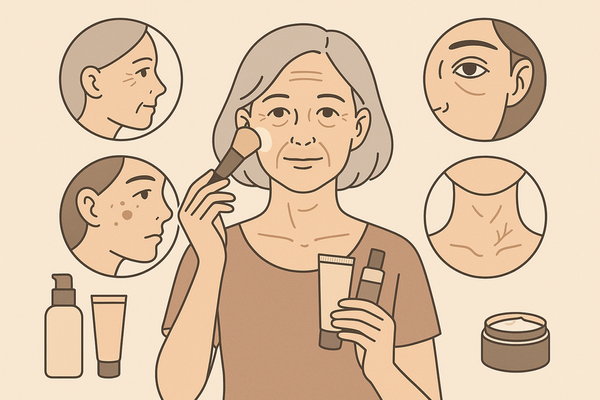
- Section 3: Addressing Specific Mature Skin Concerns with Makeup
- Section 4: Skincare Routine Complementing Makeup
- Section 5: Tips and Best Practices
- Conclusion
- FAQ
Body
Introduction
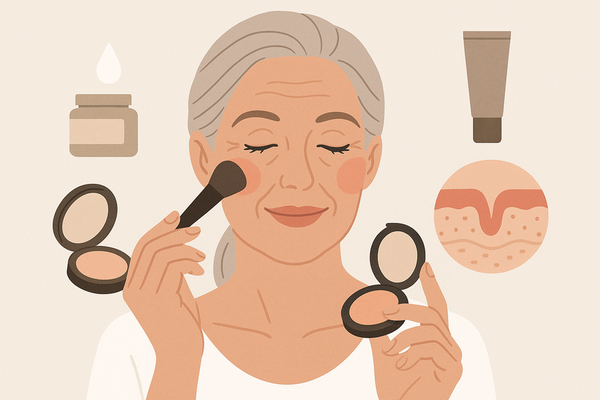
Makeup for mature skin means choosing techniques and products specially designed for skin aged 40 and above. As skin loses moisture, collagen, and elasticity, it often shows fine lines, uneven tone, and dryness. Experts at e.l.f. Cosmetics and Bobbi Brown recommend a fusion of a targeted skincare routine with anti-aging makeup to boost radiance without settling into creases. A thoughtful prep and application process keeps foundation from emphasizing wrinkles, while hydration and light-reflective formulas create a youthful glow.
For interactive guidance, consider exploring Makeup Check AI, an AI Makeup App that provides personalized beauty plans and video tutorials to refine your technique.
Section 1: Understanding Mature Skin
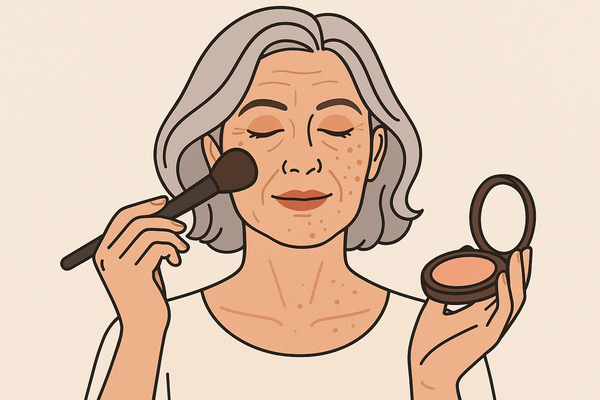
“Mature skin” refers to skin that has experienced structural changes due to aging. Common features include:
- Texture shifts: rough patches, enlarged pores, and uneven surface
- Chronic dryness: less sebum production leads to flakiness
- Decreased collagen and elastin: loss of firmness and elasticity
- Prominent fine lines and wrinkles around eyes and mouth
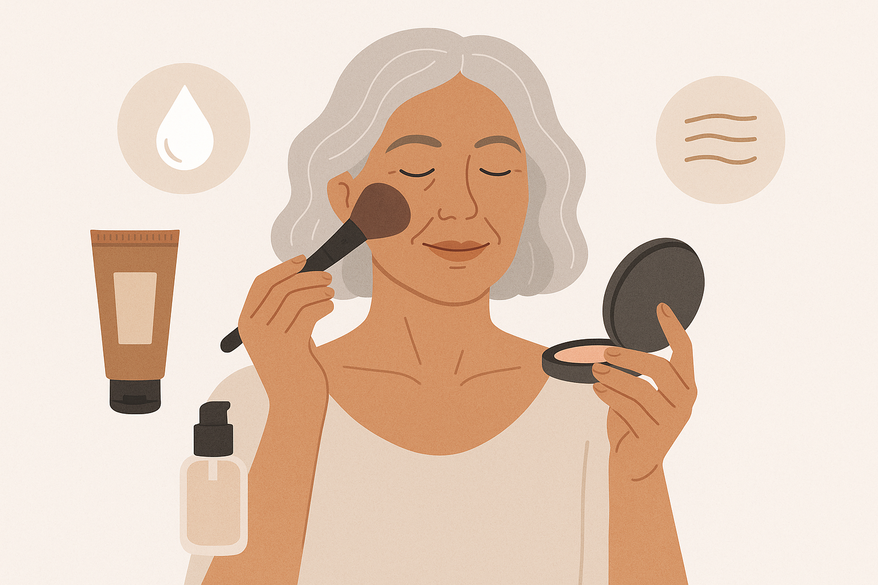
Heavy, matte makeup can accentuate these imperfections by settling into creases and highlighting texture. Instead, lightweight, hydrating, and light-reflective formulas:
- Boost luminosity with dewy, skin-like finishes
- Plump fine lines using hyaluronic acid and glycerin
- Smooth the complexion without caking or creasing
Artdeco emphasizes sheer, glow-enhancing products over dense mattes for a revitalized look.
Section 2: General Makeup Strategies for Mature Skin
Product Selection
- Hydrating primers: silicone- or glycerin-based to fill fine lines and create a smooth canvas (Best Makeup Primers for a Flawless, Long-Lasting Base)
- Buildable, dewy foundations or tinted moisturizers: enriched with light-reflective pigments and hyaluronic acid for medium coverage
- Cream blushes and highlighters: impart a natural flush and lift tired features
Application Techniques
- Tools: use clean fingers or a damp sponge to press products into skin, preventing tugging
- Layering: apply in thin coats, blending with gentle, cross-hatch motions on cheeks and jawline
- Setting: use a translucent, micro-fine powder sparingly on the T-zone only to control oil without dulling glow
For expert tips on blending foundation without streaks, see How to Apply Foundation Evenly: Techniques, Tools & Pro Tips.

Benefits
- Prevents foundation from creasing in pores and lines
- Maintains skin’s natural luminosity
- Allows skin to breathe for comfortable, all-day wear
Section 3: Addressing Specific Mature Skin Concerns with Makeup
3.1 Nasolabial Folds Makeup
Nasolabial folds are the creases running from the sides of the nose to the corners of the mouth. They deepen as skin loses elasticity and volume.
- Prime: apply a hydrating primer with plumping actives directly into folds to fill and smooth.
- Foundation: use a hyaluronic-infused, lightweight foundation, blending with a damp sponge.
- Concealer: pat a thin layer of creamy concealer upward over the crease with a sponge tip; avoid dragging.
- Set: lightly dust translucent powder only along the edge of the fold to prevent slipping without mattifying the entire area.
3.2 Under Eye Hollows Makeup
Under eye hollows are sunken, shadowed areas that make dark circles appear worse and contribute to a tired look.
- Prep: smooth a hydrating eye cream into the orbital bone for moisture and barrier support.
- Color correct: apply a salmon- or peach-tone corrector to neutralize dark undertones.
- Conceal: dot a creamy, radiant concealer in a triangular shape under the eye; gently tap with the ring finger for seamless blending.
- Highlight: brighten inner corners and brow bone with a light-reflective cream or powder.
- Set: apply a microfine, translucent powder sparingly beneath the eyes to lock product without creasing.
3.3 Makeup for Chemo Radiation Dry Skin
Chemo radiation dry skin is characterized by severe dehydration and a compromised skin barrier due to cancer treatments.
- Prep: mist with thermal spring water or hydrating toner.
- Repair: apply a barrier-repair moisturizer (e.g., Extra Repair Moisture Cream) and a facial oil; allow 5–10 minutes for full absorption.
- Prime: use an ultra-hydrating primer to ensure makeup glides on smoothly.
- Foundation: choose a tinted moisturizer or CC cream with hyaluronic acid; apply in feather-light layers.
- Powders: avoid except a minimal dusting on the forehead or chin if shine is an issue.
3.4 Incorporating Age Spots Routine
Age spots are flat, hyperpigmented patches caused by cumulative sun exposure and melanin production.
- Vitamin C serum in the morning to brighten spots and prevent new pigmentation.
- Broad-spectrum SPF 30+ daily to protect and halt spot formation.
- Color correct: apply a green or yellow corrector stick over spots to neutralize redness or deep browns.
- Conceal: layer a creamy concealer in thin coats, building coverage only where needed.
- Lock in with a setting mist instead of powder to maintain glow.
Section 4: Skincare Routine Complementing Makeup
4.1 Fine Lines Skincare Routine
Fine lines are shallow wrinkles that form from gradual collagen and elastin loss.
Morning & Evening Steps:
- Hydrating cleanser: gentle, non-stripping formula
- Antioxidant serum: Vitamin C in AM to fight free radicals; retinol in PM to stimulate collagen
- Hyaluronic acid–rich moisturizer: locks in hydration for plump skin
- Eye cream: peptide- and ceramide-based to target crow’s feet
- Sunscreen: broad-spectrum SPF 30+ in the morning to prevent photoaging (The Ultimate Pre-Makeup Skincare Routine for a Flawless Foundation)
Plumped, hydrated skin provides a smooth base, reducing the chance of makeup settling into lines, and consistent barrier repair supports long-term skin elasticity.
4.2 Integration Tips
- Sequence: layer hydrating skincare → primer → makeup for a flawless finish.
- Midday mist: use a hydrating mist to reawaken dewy products and plump skin.
- Touch-ups: carry a mini moisturizer or cream highlighter to blend and refresh on the go.
Section 5: Tips and Best Practices
- Hyaluronic acid–infused formulas for hydration and plumping
- Peptide-enriched primers and serums to boost firmness
- Light-reflecting pigments in foundations, concealers, and highlighters
- Minimal talc-based powders; opt for translucent, micro-fine options
- Pat and press products rather than rub to protect delicate skin
- Build in thin, even layers for natural coverage
- Use upward strokes to lift and sculpt the face
- Limit powder to targeted zones (T-zone or under eyes) to preserve glow
Schedule regular facials or professional peels to improve texture and collagen production, maintain a balanced diet rich in antioxidants, and stay hydrated internally to support topical hydration efforts.
Conclusion
Combining a fine lines skincare routine with targeted nasolabial folds makeup, under eye hollows makeup, chemo radiation dry skin strategies, and an age spots routine empowers mature skin to look its best. The foundation of makeup for mature skin is deep hydration, lightweight, luminous formulas, and gentle techniques that work with, not against, aging skin.
By prioritizing barrier repair, plumping ingredients, and precise application, you’ll achieve natural radiance and smoothness that lasts all day. Share your makeup for mature skin experiences and tips in the comments below.
FAQ
How do I choose the right foundation for mature skin?
Look for hydrating, medium-coverage formulas with light-reflective pigments and ingredients like hyaluronic acid. Avoid heavy mattes that settle into lines.
What’s the best way to prevent makeup from creasing in wrinkles?
Use a plumping primer, apply products in thin layers, and press with a damp sponge. Set sparingly with micro-fine powder only where needed.
Can makeup help with dryness from chemo or radiation?
Yes. Prep with barrier-repair moisturizers, facial oils, and ultra-hydrating primers. Choose tinted moisturizers over full-coverage foundations and skip most powders.
How often should I update my skincare routine?
Review your routine every 3–6 months to adjust for seasonal changes and evolving skin needs. Incorporate new actives gradually and patch-test first.
Are there tips for minimizing age spots with makeup?
Start with a vitamin C serum and SPF daily. Use color correctors (green or yellow) and layer creamy concealer in thin coats, finishing with a hydrating setting mist.