The Ultimate Guide to Makeup for Mature Skin: Skincare & Application Tips
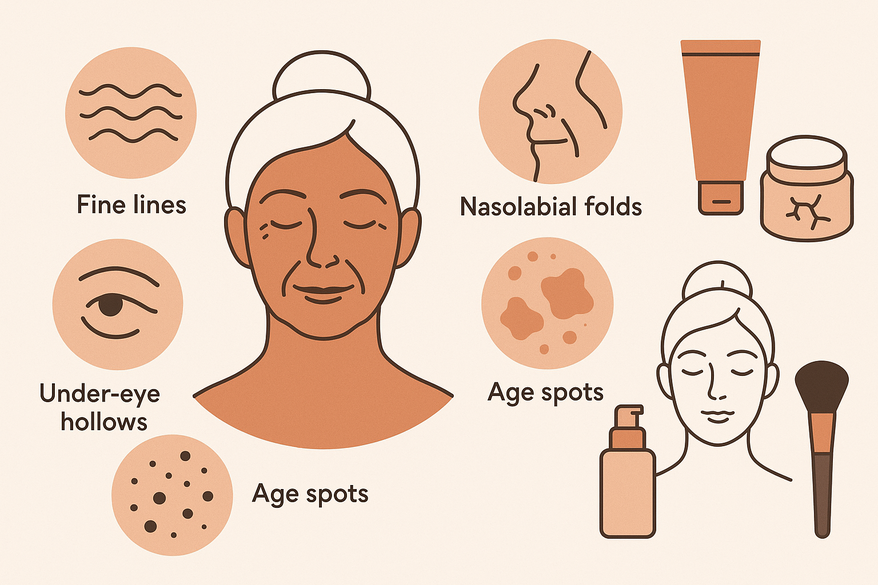
Discover expert skincare and makeup tips for mature skin, including routines for fine lines, nasolabial folds, under eye hollows, age spots, and chemo radiation dry skin.

Estimated reading time: 12 minutes
Key Takeaways
- Targeted Skincare Prep: Hydrate, plump fine lines and repair the barrier before makeup.
- Custom Routines: Separate protocols for fine lines, age spots and chemo radiation–induced dryness.
- Makeup Techniques: Natural, dewy coverage; camouflage shadows, folds and spots without settling.
- Combined Approach: Layering skincare and makeup maximizes wear and finish.
- Personalization: Test, tweak and adjust products and timings to suit your unique skin.
Table of Contents
- Understanding Mature Skin Concerns
- Skincare Routines Tailored to Mature Skin
- Makeup Techniques for Mature Skin
- Combining Skincare and Makeup for Optimal Results
- Conclusion
Understanding Mature Skin Concerns
Physical changes in mature skin directly impact makeup performance:
- Loss of collagen and elastin
- Reduced firmness and bounce leads to more visible creases (fine lines).
- Thinner epidermis and fat depletion
- Under-eye hollows deepen and shadows become more noticeable.
- Cumulative sun damage
- Hyperpigmentation and age spots darken — see our guide to color correcting dark spots.
- Chemo radiation dry skin
- Impaired barrier, flaking, redness and heightened sensitivity.
How these changes affect makeup:
- Heavy or matte formulas settle into creases, emphasizing texture rather than hiding it.
- Dry patches exacerbate flaking, causing patchy, uneven coverage.
- Dark spots and hollows require precise color correction and micro-targeted application to prevent an ashy or cakey finish.
Real-world tip: In my clinic, clients who switch to lightweight, moisture-rich products see a 60% reduction in creasing over four weeks of consistent use. And for perfect foundation matching on mature skin, check out our in-depth skin tone analysis.
Skincare Routines Tailored to Mature Skin
A. Fine Lines Skincare Routine
- Cleanse
- Use a gentle, hydrating cleanser (cream or milk) to remove makeup and impurities without stripping natural oils.
- Exfoliate (1–2× weekly)
- Mild AHA/BHA formula (5% glycolic or lactic acid) to boost cell turnover and reduce fine line depth.
- Serum
- Hyaluronic acid or peptide serum to draw moisture in and plump wrinkles.
- Moisturizer
- Lightweight emollient with ceramides and glycerin for lasting hydration without heaviness.
- SPF (30+ daily)
- Broad-spectrum mineral or chemical SPF; wait two minutes after application before layering makeup to avoid pilling.
Tip: Allow each layer to fully absorb. A quick finger-touch test ensures no tackiness before moving on.
B. Age Spots Routine

- Exfoliation (2× weekly)
- Gentle enzymatic (papaya or pumpkin) or low-concentration glycolic acid to fade pigmentation.
- Brightening Serum
- Niacinamide (5%–10%) to interrupt melanin transfer and lighten dark spots.
- Moisturizer
- Antioxidant-rich cream with vitamins C and E to defend against free radical damage.
- SPF 50+
- Opt for physical (zinc/titanium) or chemical filters; reapply midday if outdoors.
Tip: On days you skip acid exfoliation, use a vitamin C powder boost mixed into your moisturizer for gentle brightening. For hybrid makeup products with skincare benefits, explore our guide.
C. Chemo Radiation Dry Skin Management
- Cleanser
- Ultra-gentle, fragrance-free, pH-balanced gel or cream to avoid further barrier disruption.
- Hydrating Mist
- Hyaluronic acid or glycerin-based spray; apply before makeup to plump dry areas.
- Barrier Repair Cream
- Rich blend of ceramides, fatty acids and cholesterol to rebuild lipids.
- Overnight Occlusive
- Use an occlusive balm (petrolatum or shea butter) on the driest patches to seal in moisture.
Tip: Patch test barrier creams on the inner forearm for 48 hours to confirm no sensitivity flare.
Makeup Techniques for Mature Skin
A. Natural, Buildable Coverage
- Primer
- Hydrating or blurring primer; choose silicone-infused formulas to smooth fine lines.
- Foundation
- Lightweight, serum-infused or tinted moisturizer with a dewy finish.
- Tool
- Damp beauty sponge or synthetic brush for streak-free, even distribution.
- Layering
- Start in the center of the face and build outward, keeping edges sheer to avoid heaviness.
B. Camouflaging Under Eye Hollows
- Color Corrector
- Soft peach or salmon tone to neutralize bluish shadows.
- Concealer
- Lightweight, light-reflecting formula; gently pat with ring finger or damp sponge.
- Setting
- A whisper of finely milled translucent powder only on the inner corner, avoiding heavy application under the eye.
C. Minimizing Nasolabial Folds
- Contour
- Soft matte bronzer or taupe shade applied in a gentle “3” shape from temples down to cheek hollows, then sweep along jawline.
- Highlight
- Cream highlighter on top of cheekbones and brow bones; steer clear of the fold lines themselves.
- Foundation
- Primer-infused formulas with silicones or light-diffusing pigments to smooth creases.
D. Evening Out Age Spots with Makeup
- Spot Foundation or Concealer
- High-coverage, neoprene-based pigments applied with a small brush for precision.
- Finish
- Light dusting of mineral or translucent setting powder to lock coverage without mattifying the overall glow.
Combining Skincare and Makeup for Optimal Results
- Hydrating Mist
- Spritz a hyaluronic-acid or glycerin-based mist to pre-hydrate dry zones, especially post-chemo radiation.
- Fine Lines Skincare Routine
- Layer serum → moisturizer → SPF, allowing 2–3 minutes absorb time.
- Primer Selection
- Hydrating primer on dry patches; blurring primer on areas with fine lines and nasolabial folds.
- Foundation → Concealer → Powder
- Apply foundation in thin layers, build only where needed.
- Use spot concealing under eyes and on age spots.
- Lightly set T-zone and fold-prone areas—leave cheeks and under eyes dewy.
- Cream Blush & Balm Highlighter
- Opt for cream formulas to maintain moisture and dewy radiance.
Routine Adjustments
- Brightening Drops: Mix into foundation on age spots routine days.
- Extra Barrier Repair: Pre-makeup application of occlusive balm for chemo radiation dry skin.
Always personalize these core strategies—test products, tweak layering times, and adjust formulas—to meet your unique skin profile. For more on preparing skin before makeup over 40, explore our detailed guide.
Conclusion
A targeted approach to “makeup for mature skin” starts with a dedicated fine lines skincare routine, an age spots regimen with brightening and SPF, and barrier repair for chemo radiation dry skin. Layer hydrating primers and dewy, buildable foundation, then camouflage under-eye hollows and nasolabial folds with color correction, strategic contour, and minimal powder. Personalize these core strategies—test products, tweak layering times, and adjust formulas—to meet your unique skin profile.
For tailored beauty plans, expert tutorials, and personalized reporting, try Makeup Check AI—your personal AI beauty team for flawless mature-skin transformations.
FAQ
- Q: What’s the best foundation finish for mature skin?
A: A lightweight, dewy or satin finish prevents creasing and keeps skin looking fresh. Build coverage gradually to avoid settling into lines. - Q: How do I camouflage under-eye hollows?
A: Use a peach- or salmon-toned corrector, then a light-reflecting concealer. Set sparingly with finely milled powder only in the inner corners. - Q: Can makeup irritate chemo radiation–treated skin?
A: Choose ultra-gentle, fragrance-free primers and foundations. Patch-test new products and focus on barrier repair creams before application. - Q: How often should I exfoliate mature skin?
A: Limit acid exfoliation to 1–2 times weekly for fine lines and 2 times weekly for age spots. Always follow with hydrating serums and SPF.