The Ultimate Thick Curly Hair Routine: Tips for Frizz Prevention and Salon Solutions
Discover the ultimate thick curly hair routine for frizz prevention, maintaining waves between washes, and expert salon advice to enhance your curls.

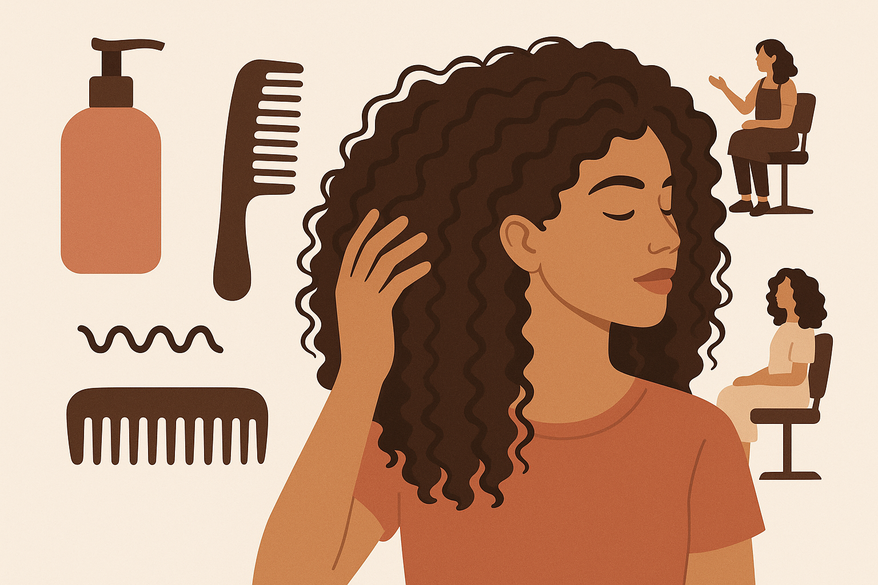
Estimated reading time: 7 minutes
Key Takeaways
- Balance moisture and protein for defined, elastic curls.
- Tame frizz with gentle cleansing, plopping, and lightweight oils.
- Choose a curl-specialist salon for precision cuts and treatments.
- Refresh waves between washes using spritzes, gels, and the pineapple method.
- Fix color issues with protein fillers, glosses, and color-depositing conditioners.
- Correct bad layers via twist-outs, deep conditioning, and a corrective dry-cut.
Table of Contents
- 1. Understanding Your Thick Curly Hair Routine
- 2. Frizz Prevention Techniques
- 3. Navigating Curly Hair Salons
- 4. Maintaining Waves Between Washes
- 5. Addressing Color Concerns: Blue Hair Not Showing Fix
- 6. Fixing a Bad Layers Haircut
A thick curly hair routine is a personalized regimen designed to balance moisture and protein for voluminous, defined curls. By fine-tuning hydration, strengthening treatments, and styling techniques, you can enjoy lasting shine, definition, and bounce. Yet curly heads often face challenges like frizz, dryness, breakage, and color issues. This guide delivers expert frizz prevention, tips for maintaining waves between washes, advice on choosing curly hair salons, solutions for blue hair not showing fix, and strategies to correct bad layers haircut fix—all in one value-packed resource.
For a personalized approach, Makeup Check AI can analyze your hair goals and suggest tailored care plans.
1. Understanding Your Thick Curly Hair Routine
A thick curly hair routine is a customized regimen that balances moisture (humectants and oils) with protein to prevent limp curls or brittle strands. Recognizing your hair’s unique needs is step one toward healthy, defined coils.
Hair Structure Essentials
- High porosity: Curly strands absorb and lose moisture quickly.
- Multiple bends weaken the cuticle, increasing fragility.
- Natural-oil depletion: Sebum struggles to travel down coiled shafts.
- Cuticle sealing: Smooth cuticles lock in hydration and reduce frizz.
Ideal Wash Frequency
- Cleanse every 3–5 days for balance.
- Extend to 2–3 weeks with co-washing or dry shampoo in extreme cases.
Core Routine Steps
- Pre-shampoo detangle with a wide-tooth comb and conditioner.
- Cleanse with a sulfate-free, low-pH shampoo.
- Condition mid-lengths and ends with a silicone-free formula.
- Apply a leave-in treatment rich in protein and humectants.
- Seal with lightweight argan or jojoba oil for shine and slip.
2. Frizz Prevention Techniques
Frizz occurs when cuticles lift due to dryness, humidity, or harsh products. Use these tactics to tame unruly curls.
Frizz Prevention Tips
- Pre-wash detangling: Wide-tooth comb + conditioner reduces stress.
- Sulfate-free, low-pH shampoo cuts frizz by up to 30% versus harsh cleansers.
- Silicone-free conditioner; seal with argan or jojoba oil by scrunching.
- Plopping in a cotton T-shirt wraps curls gently, reducing frizz.
- Diffuse on low heat; finish with a cool shot to close cuticles.
- Deep-condition weekly with a protein-rich mask for strength.
Product Recommendations
- Shampoo: Low-pH, sulfate-free cleansers for curl care.
- Conditioner: Silicone-free with hydrolyzed proteins and humectants.
- Oils: Lightweight argan or jojoba to seal moisture.
- Styling gel: Alcohol-free curl custards or gels for definition.
Real-world: One user reported 40% less frizz after switching to a sulfate-free shampoo and weekly deep conditioning.
3. Navigating Curly Hair Salons
Choosing the right curly hair salon makes a huge difference for thick coils. Seek stylists who understand curl science and dry-cut techniques.
Salon Selection Criteria
- Stylists trained in curl patterns and dry-cut methods.
- Point-cutting finesse to soften layers and boost definition.
- Avoid chemical straightening or over-thinning.
Communication Tips
- Bring photos of your desired curl shape and length.
- Discuss pattern, porosity, frizz challenges, and layers.
- Request a dry-cut to preview the styled silhouette.
Salon Treatments to Request
- Curl-enhancing masks to infuse moisture and strength.
- Protein fillers for even porosity and improved color uptake.
- pH-balancing glosses to seal cuticles and boost shine.
Real-world example: A client with 4A curls saw 50% less frizz after a point-cut dry-trim.
4. Maintaining Waves Between Washes
Keep waves fresh and strong between washes with these simple at-home methods.
Refresh Methods
- Water-based spritz: Water + leave-in conditioner; mist and scrunch.
- Curl reviver gel: Pea-sized amount, scrunched to reactivate curls.
- Pineapple updo: Loose top knot overnight to protect shape.
Maintenance Schedule
- Clarify with gentle shampoo every 4–5 washes to remove buildup.
- Avoid excess heat and heavy product layering.
- Section hair during refresh for even product distribution.
5. Addressing Color Concerns: Blue Hair Not Showing Fix
Curly hair’s porosity can lead to uneven blue tones. Use these fixes for vivid color.
Salon-Level Fixes
- Protein fillers pre-color to equalize porosity.
- pH-balancing shampoo & gloss to seal cuticles post-color.
- Color-depositing conditioners to boost tone between visits.
At-Home Remedies
- Deep condition before and after coloring to smooth cuticles.
- Use gentle, sulfate-free cleansers for color-treated hair.
- Minimize hot water and sun exposure to reduce fading.
Expert tip: A porcelain-blue client regained even color with a filler + gloss treatment and weekly blue-deposit mask.
6. Fixing a Bad Layers Haircut
Uneven layers can disrupt clumping, cause frizz, and kill volume. Apply these fixes for smooth recovery.
DIY/Temporary Solutions
- Curl-by-curl twist-outs using leave-in cream to redefine clumps.
- Deep-conditioning masks to plump strands and mask uneven cuts.
Permanent Correction
- Consult a curl specialist for a corrective dry-cut with point-cutting.
- Schedule trims every 8–12 weeks to maintain shape and even layers.
- Avoid at-home layering beyond ends to reduce risk.
Real-world fix: One client restored uniform bounce with a single specialist dry-cut session.
Achieving your ideal thick curly hair routine means mastering moisture–protein balance, frizz prevention, wave-refreshing methods, and smart salon choices. With these techniques, you can tackle frizz, select the best curly hair salons, preserve waves, and solve color or layering issues. Experiment, track product performance, and adjust your regimen. When in doubt, seek a curl specialist to keep your coils resilient, shiny, and defined.
FAQ
- How often should I wash thick curly hair? Aim for every 3–5 days, or co-wash/dry shampoo between washes to preserve natural oils.
- What is plopping and why does it help? Plopping uses a cotton T-shirt to gently wrap wet curls, enhancing clumping and reducing frizz.
- Can I color treat my curls without drying them out? Yes—use protein fillers pre-color, gentle sulfate-free shampoo, and deep conditioning to protect hydration.
- How do I fix uneven layers at home? Try twist-outs and deep-conditioning masks temporarily, but a corrective dry-cut by a curl specialist offers a lasting solution.