Mastering a Thick Curly Hair Routine: Frizz Prevention, Waves, and More
Discover a comprehensive thick curly hair routine for frizz prevention, preserving waves, choosing curly hair salons, and addressing color and cut challenges.

Estimated reading time: 8 minutes
Key Takeaways
- Custom routine for hydration and frizz control in thick curls.
- Frizz prevention methods including deep conditioning and protective styling.
- Wave preservation techniques for between washes.
- Salon selection and consultation tips for curly hair specialists.
- Color-care fixes for blue hair maintenance and corrective haircuts.
Table of Contents
- Introduction
- Understanding Your Hair Type and Needs
- Effective Frizz Prevention Techniques
- Achieving and Maintaining Waves Between Washes
- Navigating Curly Hair Salons
- Solving Color Issues: Blue Hair Not Showing Fix
- Fixing the Bad Layers Haircut
- Conclusion and Recap
- FAQ
Section 1: Introduction
A thick curly hair routine is a bespoke system of cleansing, moisturizing, styling and protective practices designed for high-density, spiral or coil curl patterns. Thick curly hair demands specialized care because its raised cuticle scales lead to high porosity—moisture seeps out quickly—and its heavier strand diameter makes it prone to dryness, breakage and frizz.
In this guide, we tackle five core challenges:
- Frizz control and frizz prevention
- Defining and preserving waves between washes
- Finding and working with the right curly hair salons
- Troubleshooting color fades and blue hair not showing fix
- Remedies for bad layers haircut fix
You’ll learn a holistic approach: a step-by-step wash day, in-between styling hacks, salon navigation tips and corrective strategies for color and cut mishaps. By the end, your curls will be hydrated, defined and salon-worthy.
Section 2: Understanding Your Hair Type and Needs
Why a tailored thick curly hair routine is non-negotiable:
Defining thick curly hair:
- High strand density plus coil or spiral geometry restricts sebum from traveling down the shaft.
- Midlengths and ends stay dry, brittle and vulnerable.
Understanding high porosity:
- Cuticle gaps let moisture escape, causing frizz and breakage.
- Raised scales make hair thirsty for hydration.
Curl patterns and moisture needs:
- 2A–2C waves need light hydration.
- 3A–3C curls need medium-rich creams.
- 4A–4C coils demand frequent, intensive treatments.
Why one-size-fits-all fails: Generic cleansers can under-hydrate or overload curls, flatten waves and ruin frizz prevention efforts. A custom plan keeps curls bouncy and defined.
Section 3: Effective Frizz Prevention Techniques
Frizz root cause: Moisture loss plus cuticle disruption creates stray shafts that stand out.
Moisture-based strategies:
- Deep-conditioning masks weekly (twice for extreme dryness). Leave on ≥5 minutes or overnight under a satin cap.
- Daily leave-in conditioner on damp hair smooths cuticle and locks hydration.
- Apply products on damp, not dripping wet hair to concentrate actives.
Protective styling and practices:
- Rinse with warm—not hot—water to avoid over-opening cuticles.
- Use low-medium heat settings or air-dry to preserve cuticle integrity.
- Sleep on silk/satin pillowcases to minimize friction and lock in moisture.
- Detangle with a wide-tooth comb or fingers when damp; never brush dry curls.
For more in-depth frizz-fighting tips, check out our Ultimate Thick Curly Hair Routine guide.
Section 4: Achieving and Maintaining Waves Between Washes
Why skip daily washing: Frequent shampoos strip oils and break curl clumps. Aim for wash-and-go every 3–5 days.
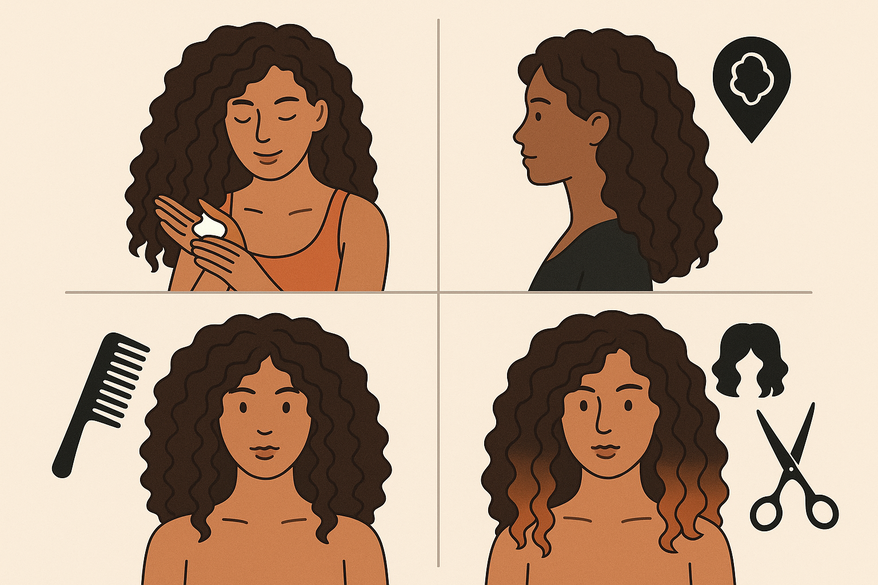
Finger-coiling method:
- Section hair into 1–2" parts.
- Twirl ends around finger until spiral forms.
- Release to set uniform clumps.
Scrunch and flip technique:
- Post-shower, invert head.
- Apply gel or mousse to sopping-wet hair.
- Scrunch upward, then squeeze out excess water gently.
Layer styling products (lightest to heaviest):
- Light leave-in or curl lotion
- Mousse for airy volume or gel for firm hold
- Serum or oil on ends for gloss and moisture seal
Between-wash refresh:
- Spritz diluted leave-in conditioner on midlengths and ends.
- Re-coil loose waves by finger-twirling.
- Dab gel on frizzy spots to “zip up” strands.
- Diffuse at low-medium heat to reactivate product without breaking clumps.
Section 5: Navigating Curly Hair Salons
Why standard salons miss the mark: Many stylists misjudge curl shrinkage and springback, leading to uneven cuts and poor layers.
Selection criteria:
- Stylists certified or experienced in the Curly Girl Method or DevaCut.
- Review portfolios of thick curly clients’ before/afters.
- Ensure salon offers trims every 8–12 weeks to maintain shape and remove split ends.
Consultation prep:
- Bring clear photos of desired length and curl pattern.
- Share past haircut issues—especially bad layers haircut fix needs.
- Ask about dry vs. wet cutting methods and product lines used.
Section 6: Solving Color Issues: Blue Hair Not Showing Fix
Diagnose color fade: Under-moisturized cuticle won’t hold pigments; alkaline or damaged cuticle expels dye.
Corrective plan:
- Deep-conditioning mask twice weekly for 3 weeks to repair cuticle.
- pH-balancing rinse: dilute apple cider vinegar 1:4 after conditioning to close cuticle.
- Color-depositing conditioners or semi-permanent blue toners: apply on damp hair, leave 5–10 minutes, rinse.
- Wash in cool to lukewarm water; use sulfate-free, moisturizing shampoo.
Integrate these color-care tactics into your thick curly hair routine for vibrant results. For more on frizz control, see thick curly hair routine frizz.
Section 7: Fixing the Bad Layers Haircut
What makes layers “bad” in curly hair:
- Uneven length distribution.
- Excessive shrinkage in shorter layers.
- Loss of root volume.
Short-term styling remedies:
- Apply root-lifting mousse; diffuse at roots for instant volume.
- Use twist-outs or braid-outs to create uniform waves and mask uneven cuts.
- Deep-condition and seal ends with oil to weigh down frizzy, shorter pieces.
Long-term correction:
- Book a blend-and-shape session with a curl specialist who cuts dry, curl-by-curl.
- Opt for gradual trims (¼–½" every 4–6 weeks) to harmonize layer lengths.
Section 8: Conclusion and Recap
A structured thick curly hair routine delivers consistent results:
- Weekly deep-conditioning masks and daily leave-in care for frizz prevention.
- Finger-coiling, scrunch-and-flip, and product layering to preserve waves between washes.
- Strategic salon partnerships at curly hair salons to avoid bad layers and maintain shape.
- Color-care tactics to fix blue hair not showing and boost pigment retention.
- Blend-and-shape cuts to correct bad layers haircut fix over time.
Non-negotiables:
- Regular trims every 8–12 weeks.
- Protective nightly practices—silk pillowcases and loose pineapple styles.
Document your routine tweaks, track progress and share wins or questions below.
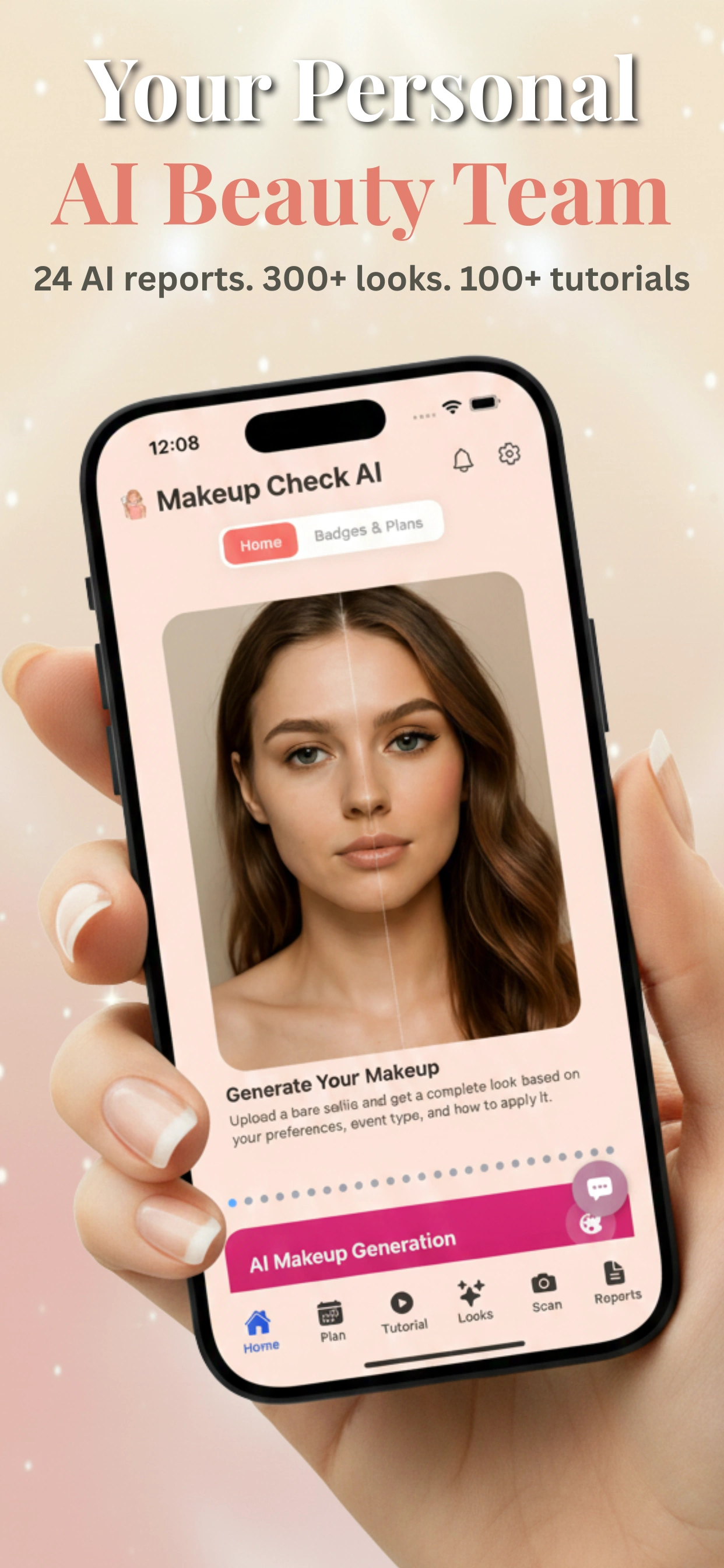
For a holistic approach, supplement your hair care guide with personalized beauty insights from Makeup Check AI, your AI Makeup App for tailored reports, tutorials and style recommendations.
FAQ
How often should I deep-condition thick curly hair?
A: At least once a week (twice if your hair feels extra dry). Deep-conditioning masks help restore moisture and repair the cuticle.
Can I use heat styling tools on my curls?
A: Yes, with caution. Always apply a heat protectant, use low to medium settings and limit heat sessions to avoid cuticle damage.
How do I maintain vibrant blue hair on thick curls?
A: Use color-depositing conditioners, wash in cool water and deep-condition regularly to keep your cuticle healthy and pigment sealed.