The Ultimate Thick Curly Hair Routine: Frizz Prevention, Salon Tips & Quick Fixes
Discover the ultimate thick curly hair routine for frizz prevention, salon tips, and quick fixes, ensuring moisture retention and healthy curls.

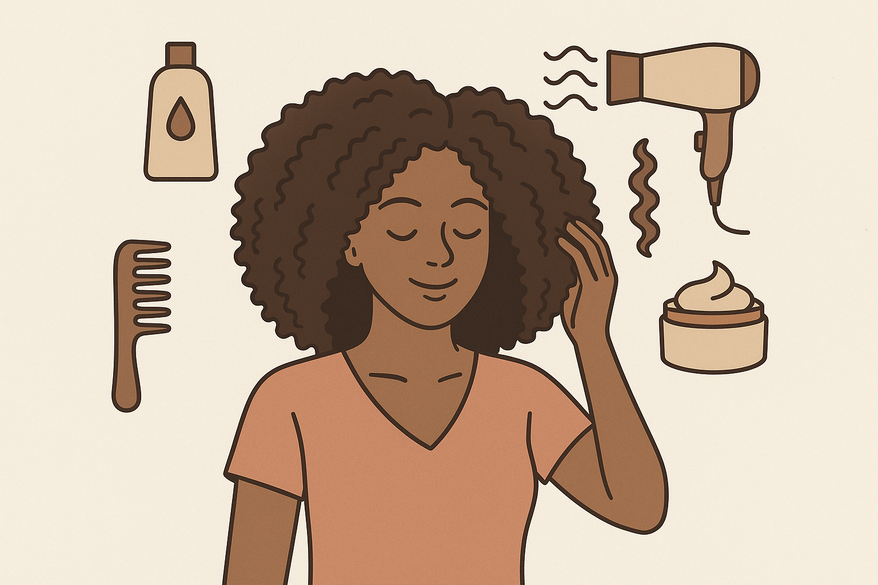
Estimated reading time: 8 min read
Key Takeaways
- A step-by-step approach to hydrate and define dense curls.
- Essential frizz-busting methods and styling product recommendations.
- Guidance on selecting a specialist curly hair salon.
- Quick refresh tactics between washes to maintain wave pattern.
- Solutions for color correction and uneven layering.
Table of Contents
- Section I: Understanding Thick Curly Hair
- Section II: Frizz Prevention Techniques
- Section III: Exploring Curly Hair Salons
- Section IV: Achieving Waves Between Washes
- Section V: Fixing Common Hair Challenges
- Section VI: Conclusion & Action Steps
- Section VII: Additional Resources
Section I: Understanding Thick Curly Hair
Why Standard Routines Fail & How to Win at Moisture
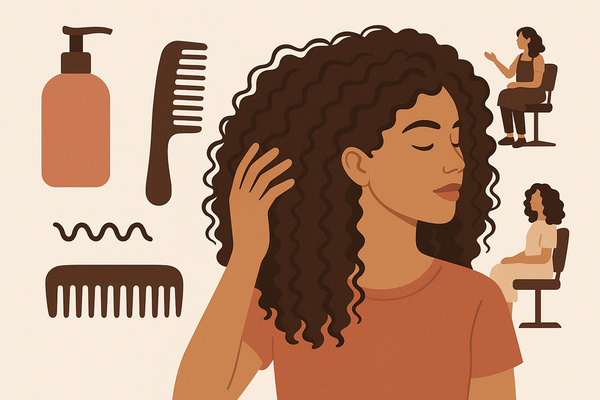
Characteristics of thick curly hair: high density and tight coils often trap moisture at the roots while the ends stay dry. Natural oils struggle to travel down the shaft, and friction from rough towels or cotton pillowcases can worsen frizz and breakage.
Why generic routines don’t work: daily shampoos strip essential sebum; over-manipulation breaks curl clumps; non–curl specific products may contain sulfates or drying alcohols that dehydrate the hair.
Real-World Insight
“After switching to weekly sulfate-free cleansing and microfiber drying, my coils regained shape and bounce,” shares a veteran curl coach.
Key Takeaways for Your Routine
- Embrace a low-poo or co-wash approach to preserve natural oils.
- Use deep-conditioning masks to penetrate dense curls.
- Swap terry-cloth towels for a cotton T-shirt or microfiber wrap to reduce friction.
Section II: Frizz Prevention Techniques
Weekly Cleansing & Deep Conditioning
• Use a sulfate-free, hydrating shampoo on the scalp once a week to clear build-up without stripping oils.
• Follow with a rich deep-conditioning mask from mid-lengths to ends; leave under a shower cap or warm towel for 10–20 minutes to lock in moisture.

Styling Products & Application Methods
- With hair soaking wet, rake in a leave-in conditioner to lock hydration.
- Immediately apply a curl cream or gel using your “praying hands” to smooth product along each strand.
- Scrunch out excess water with a microfiber towel or cotton T-shirt—never rub—to protect curl clumps and reduce frizz.
- For extra hold, apply a lightweight gel in sections before scrunching upward.
Key Ingredients & Tools
- Monthly protein treatments to strengthen curl bonds.
- Sealing oils (argan, jojoba) to lock in moisture after styling.
- Avoid sulfates and non-water-soluble silicones that build up and weigh curls down.
- Sleep on a silk pillowcase or under a silk bonnet to reduce nightly friction.
Section III: Exploring Curly Hair Salons
Choosing the Right Salon for Thick Curls
What to look for: stylists or salons advertising expertise in thick curly hair routine and the Curly Girl Method; dry-cutting or DevaCut techniques to preserve natural shape; portfolios showcasing dense curls before and after.
Questions to ask your stylist
“Do you perform curl-specific cuts?”
“What products do you recommend for high-porosity, tight coils?”
Request a strand test before color or toner to prevent unwanted hues.
Section IV: Achieving Waves Between Washes
Refresh Your Curls Without a Full Wash
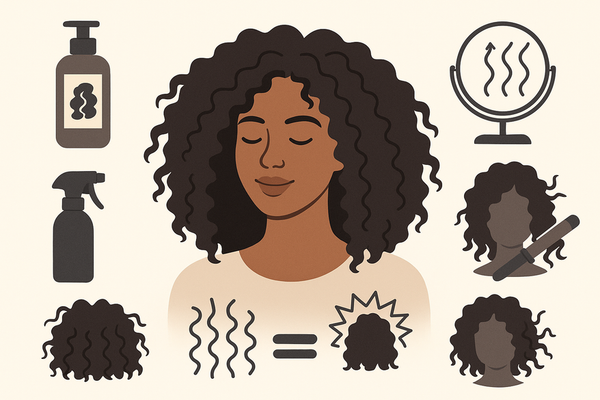
1. Spritz hair lightly with water or a water–leave-in conditioner mix to reactivate products.
2. Rake a small amount of curl cream or gel through damp sections, focusing on roots and mid-lengths.
3. Scrunch clumps upward to reshape them.
4. Diffuse on low heat for 1–2 minutes for quicker drying or extra volume.
Section V: Fixing Common Hair Challenges
A) Blue Hair Not Showing Fix
Understanding the issue
Residual blue pigment, mineral buildup from hard water, or ash-based toners can neutralize warmer tones.
Step-by-Step Correction
1. Clarify with a chelating shampoo every 4–5 washes to remove mineral and product buildup.
2. Apply a warm-tone, deposit-only gloss (copper or gold) to counteract blue undertones.
3. Use a bond-building treatment (e.g., Olaplex No.3) to repair hair post-clarifying.
Trustworthy Tip: Patch-test a tonal gloss on a small section to ensure it doesn’t shift too orange or yellow.
B) Bad Layers Haircut Fix
Identifying bad layers
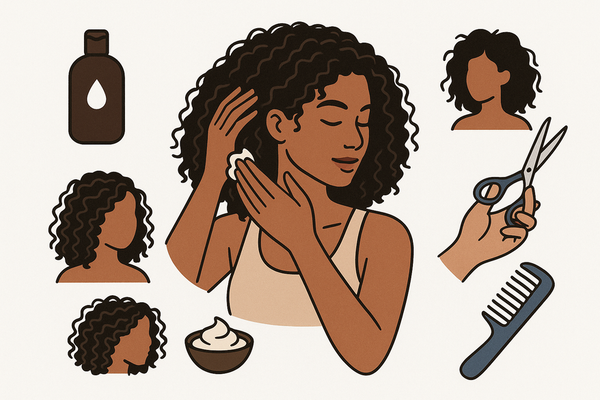
Uneven layering breaks curl clumps, causing inconsistent volume and shape.
Temporary styling solutions
• Apply curl-defining cream or gel to problematic sections to encourage clumping over uneven cuts.
• Diffuse upside down with root volume powder to camouflage irregular lengths.
• Use duckbill clips at the crown to lift shorter layers until your next cut.
Long-term solution
Book a corrective trim with a specialist curly hair salon—look for certified stylists who understand density and spiral formation.
Section VI: Conclusion & Action Steps
Recap your thick curly hair routine:
- Weekly sulfate-free cleanse and deep condition for balanced hydration.
- Frizz prevention with proteins, sealing oils, and gentle drying techniques.
- Select the right curly hair salon to ensure proper shape and avoid uneven layers.
- Refresh waves between washes to extend style life and volume.
- Correct color and cut mishaps: blue hair fix and bad layers solution.
Action Steps:
- Customize each step to your curl density and porosity.
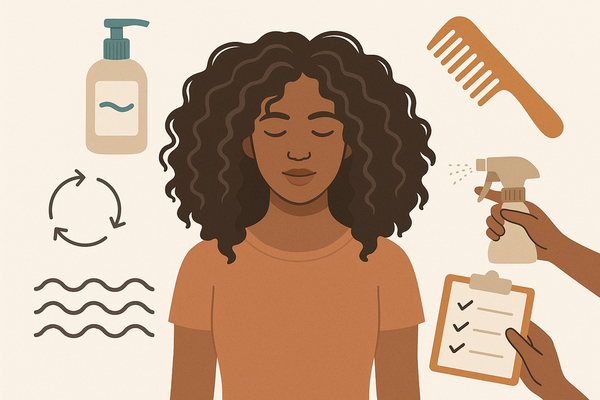
- Track results with photos and notes each wash day.
- Share your successes or questions in the comments—our community learns together.
For personalized beauty insights on makeup, hair, and skincare, visit Makeup Check AI.
Section VII: Additional Resources
Curated links for deeper learning:
FAQ
- How often should I co-wash versus shampoo?
Aim to co-wash 1–2 times a week and shampoo once weekly with a sulfate-free formula to maintain moisture balance. - Can I use silicone-based products on curly hair?
Avoid non–water-soluble silicones; choose water-soluble silicones or silicone-free alternatives to prevent buildup. - What’s the fastest way to refresh curls?
Spritz with a water–leave-in mix, rake in curl cream, and scrunch; diffuse briefly on low heat for added volume. - How do I protect curls while sleeping?
Use a silk pillowcase or wrap hair in a silk bonnet to reduce friction and preserve curl definition.