Makeup for Mature Skin: Skincare and Beauty Techniques for a Radiant Glow
Explore makeup for mature skin with techniques for fine lines and age spots. Achieve a radiant finish using hydrating skincare and lightweight beauty products.

Estimated reading time: 10 minutes
Key Takeaways
- Hydrating, lightweight makeup formulas enhance natural glow without settling into fine lines.
- Targeted skincare routines use hyaluronic acid, vitamin C, niacinamide and peptides for fine lines, age spots, and chemo-radiation dryness.
- Makeup techniques—from moisturizing primers to subtle contouring and color-correcting concealers—address nasolabial folds and under-eye hollows.
- Synergistic daily routines balance barrier repair, SPF protection, and buildable coverage for a seamless finish.
- Patch-testing and gentle application are key for sensitive, mature skin.
Table of Contents
- Introduction
- Understanding Mature Skin – Under Eye Hollows & Nasolabial Folds Makeup
- Skincare Routines for Mature Skin Concerns
- Fine Lines Skincare Routine
- Age Spots Routine
- Chemo Radiation Dry Skin Routine
- Makeup Techniques for Mature Skin
- Foundation & Primer
- Contouring Nasolabial Folds
- Brightening Under-Eye Hollows
- Integration of Makeup and Skincare
- Sample Daily Routine
- Conclusion
- FAQ
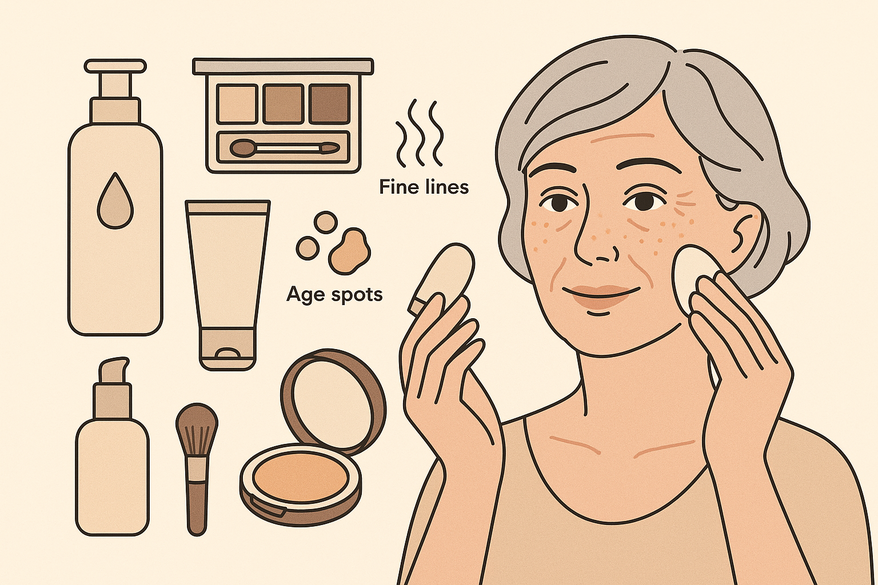
“Makeup for mature skin” refers to lightweight, hydrating formulas with radiant finishes that smooth and impart a natural glow, complemented by targeted skincare routines using ingredients like hyaluronic acid and vitamin C to prep the skin. Mature skin faces unique challenges—dryness, fine lines, texture changes—that require tailored makeup and skincare to enhance natural beauty without accentuating flaws. Research shows that a combined approach of skincare and makeup can boost confidence and deliver a youthful finish.
For tech-savvy beauty lovers, AI Makeup App offers instant analysis of your skin concerns and step-by-step tutorials to refine your technique. It’s a seamless way to apply the right strategies for mature skin.
Understanding Mature Skin – Under Eye Hollows & Nasolabial Folds Makeup
Mature skin changes in three key ways:
- Less oil → drier skin, fine lines, wrinkles, dullness.
- Collagen & elastin loss → under-eye hollows deepen and nasolabial folds become more visible.
- Sun exposure over time → age spots and uneven texture.
Common issues:
- Under-eye hollows: sunken areas create shadows under eyes.
- Nasolabial folds: lines from nose to mouth can look deeper.
Special challenge—chemo radiation dry skin:
- Definition: Chemo or radiation can strip natural oils, leaving skin extra fragile.
- Solution: Needs extra moisture in every step to prevent irritation.
Skincare Routines for Mature Skin Concerns – Fine Lines & Age Spots
a. Fine Lines Skincare Routine
Fine lines are shallow wrinkles from collagen loss. A daily plan:
- Gentle, pH-balanced cleanser (cream or micellar) to avoid stripping moisture.
- Hydrating serum with hyaluronic acid, vitamin C, niacinamide, peptides, ceramides.
- Lightweight, non-comedogenic moisturizer with humectants and emollients.
- Eye cream with peptides or hyaluronic acid before makeup.
- Broad-spectrum SPF 30+ daily.
Experience tip: I’ve seen hyaluronic serums visibly smooth lines in just a week when used twice daily.
For more on prepping your skin, see our Ultimate Pre-Makeup Skincare Routine.
b. Age Spots Routine
Age spots are flat, dark patches from UV damage. Target them with:
- Morning: Vitamin C serum (10–20%) to fade spots and even tone.
- Evening: Niacinamide (5–10%) or gentle AHA exfoliant 1–2×/week.
- Daily broad-spectrum SPF 50 fluid to prevent new spots.
- Tinted moisturizer or buildable foundation to camouflage remaining spots.
Authority note: Good Housekeeping tests show buildable formulas hide spots without looking cakey.
c. Chemo Radiation Dry Skin
Chemo and radiation heighten dryness and sensitivity. A soothing routine:
- Fragrance-free cleanser with glycerin or hyaluronic acid.
- Layer a lightweight hydrating moisturizer 2–3×/day.
- Night: Barrier-repair cream rich in ceramides or petrolatum.
- Before makeup: Protect with a hydrating, silicone-free primer (Best Makeup Primers for a Flawless, Long-Lasting Base).
- Avoid harsh ingredients like retinol or strong acids until skin recovers.
Trust tip: Patch-test new products on your jawline for 24 hours to ensure no irritation.
Makeup Techniques for Mature Skin
a. Foundation & Primer
Ideal formulas:
- Hydrating, lightweight liquid foundations with a dewy, radiant finish.
- Skincare-hybrid foundations containing hyaluronic acid, SPF, or vitamin B3.
- Avoid heavy powders or matte formulas that settle into lines.
Application steps:
- Prime with a moisturizing, serum-infused blurring primer.
- Use a damp beauty sponge or synthetic brush for thin, buildable layers.
- Focus on skin-tone evenness; skip thick powdering.
Expert tip: I blend foundation in downward strokes to avoid tugging.
b. Contouring Nasolabial Folds
Soft contouring diffuses lines:
- Choose a cream or liquid contour shade 1–2 tones darker than skin.
- Draw a thin line along the outer fold.
- Blend outward with fingertips or a damp sponge.
- Highlight the cheek apple to draw light away from folds.
- Skip heavy powder in that area.
Authority insight: Liquid contour blends more naturally than powder on mature skin.
c. Brightening Under-Eye Hollows
Brighten with a two-step concealer method:
- Hydrating eye cream to prep and prevent creasing.
- Peach/salmon-tone, hydrating corrector to neutralize dark tones.
- Light skin-tone concealer tapped gently on top.
- Set sparingly with translucent powder.
- Add a small dot of luminous cream highlighter at inner corners.
Trust tip: Use your ring finger for delicate under-eye application to avoid tugging.
For inspiration on a natural finish, check our Complete No-Makeup Makeup Tutorial.

Integration of Makeup and Skincare
A synergy of skincare and makeup gives the best results:
- Hydrating, barrier-repair skincare plumps and smooths texture.
- A moisturizing primer locks in hydration and creates a smooth canvas.
- Targeted makeup enhances features without masking skin’s natural character.
Sample Daily Routine
Morning
- Cleanse → Vitamin C serum → Moisturizer & eye cream → SPF 50 → Blurring primer → Buildable liquid foundation with SPF → Under-eye concealer & contour → Cream blush & lip color → Light translucent powder.
Evening
- Double-cleanse or gentle cleanser → Niacinamide/peptide serum → Barrier repair cream with ceramides.
Conclusion
Key strategies include hydrating skincare with hyaluronic acid, vitamin C, peptides, and ceramides. Pair these with lightweight, radiant-finish makeup formulas that blend seamlessly. Use subtle contouring for nasolabial folds and color-correcting concealers for under-eye hollows. Layer SPF and tinted products to protect and perfect. Try these techniques and products to enhance your natural glow. Share your results or ask questions below—your feedback helps us all learn and age gracefully.
FAQ
Q: How often should I apply SPF when wearing makeup?
A: Reapply a powder or spray SPF every 2–3 hours, especially if you're outdoors. This maintains protection without disturbing your base.
Q: Can I use retinol under my foundation?
A: Retinol is best reserved for evening routines. During the day it can increase sun sensitivity. Instead, choose SPF-infused serums and primers.
Q: What's the best way to prevent concealer from creasing?
A: Prep the under-eye area with a hydrating eye cream, use a lightweight corrector, and set sparingly with a finely milled translucent powder.
Q: Are powder blushes suitable for mature skin?
A: Cream or liquid blushes are often more flattering, as they blend seamlessly and add a dewy finish without emphasizing texture.
Q: How do I know if a product is irritating my mature skin?
A: Patch-test on the jawline for at least 24 hours. If redness or itching appears, discontinue use and choose a gentler formula.