Makeup for Mature Skin: Strategies for Fine Lines, Folds & Age Spots
Discover makeup strategies for mature skin, addressing fine lines, nasolabial folds, under eye hollows, and age spots with effective skincare routines.

Estimated reading time: 7 minutes
Key Takeaways
- Hydration is essential – a consistent skincare routine plumps skin and softens texture.
- Targeted treatments help address fine lines, nasolabial folds, under-eye hollows, chemo-induced dryness, and age spots.
- Light-diffusing makeup and proper application techniques prevent emphasis on creases and texture.
- Strategic layering of skincare actives and makeup ensures a smooth, lasting finish.
- Integrating ingredients like hyaluronic acid, peptides, and ceramides in cosmetics supports skin health.
Table of Contents
- Section 1: Understanding Mature Skin Concerns
- Section 2: Effective Skincare Strategies
- Section 3: Makeup Techniques for Mature Skin
- Integrating Skincare and Makeup
- Conclusion
- About Makeup Check AI
Section 1: Understanding Mature Skin Concerns
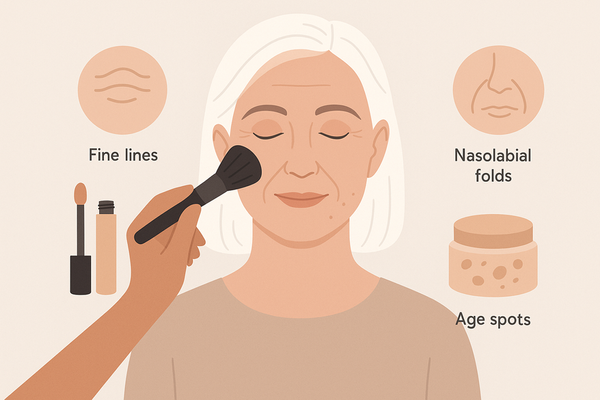
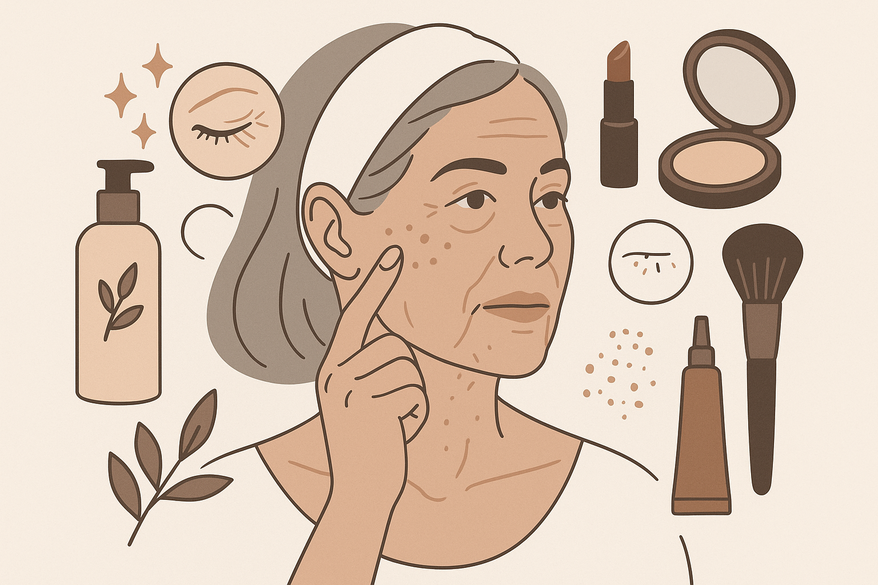
- Fine Lines
Small creases around the eyes, forehead, and mouth caused by collagen decline—foundation and concealer may settle into these lines. - Nasolabial Folds
Deeper lines extending from the nose to mouth corners due to loss of facial fat pads—makeup buildup here can accentuate folds. - Under Eye Hollows
Volume loss in the tear troughs creates shadows; concealer without proper prep can look heavy or cakey. - Chemo Radiation Dry Skin
Oncology treatments compromise the skin barrier, causing xerosis, redness, and heightened sensitivity under makeup. - Age Spots
Flat brown marks from UV exposure—uneven pigmentation can draw attention if not balanced with brightening formulas.
Section 2: Effective Skincare Strategies
Building a smooth, even canvas starts with a consistent plan that boosts hydration and reinforces the barrier. For more on prepping skin before cosmetics, see our Skincare Before Makeup Over 40 guide.
2.1 Fine Lines Skincare Routine
- Gentle Cleanse (AM & PM): Use a sulfate-free, pH-balanced formula to avoid stripping natural oils.
- Hydrating Toner/Essence: Choose 1–2% hyaluronic acid and glycerin; press into damp skin.
- Targeted Serums: AM: 10–20% Vitamin C for antioxidant protection; PM: start with 0.3% retinol or peptides.
- Eye Cream: Look for peptides, ceramides, and hyaluronic acid—pat gently along the orbital bone.
- Moisturizer: Combine humectants with lipids; use a richer formula at night and a lighter one in the morning.
- Broad-Spectrum SPF 30+ (AM): Opt for mineral or chemical filters and reapply when outdoors.
2.2 Hydration & Gentle Care for Chemo Radiation Dry Skin
- Ultra-Gentle Cleanser: Fragrance- and surfactant-free; consult your oncologist before using acids.
- Barrier-Repair Moisturizers: Look for ceramides, cholesterol, and fatty acids; apply generously.
- Humidification & Misting: Use thermal water sprays and maintain 40–60% humidity indoors.
- UV Protection: Mineral SPF 50+, wide-brim hats, and seeking shade help minimize further damage.
2.3 Age Spots Routine
- Non-Negotiable Sun Protection: SPF 30+ daily with regular reapplication.
- Brightening Serum: Include 5–20% Vitamin C, 5% niacinamide or acids like tranexamic/azelaic.
- Gentle Chemical Exfoliation: Use lactic or mandelic acid 2–3 times per week.
- Spot Treatments: Apply higher concentrations directly on spots and monitor for irritation.
- Supportive Moisturizer: Choose a barrier-supportive cream to maintain tolerance.
Section 3: Makeup Techniques for Mature Skin
Hydrating, light-diffusing makeup products help avoid emphasizing texture and fine lines. For specialized eye ideas, visit our Eye Makeup for Aging Eyes guide.
3.1 Base Makeup
- Prep: Ensure skincare is fully absorbed, then apply a lightweight primer sparingly.
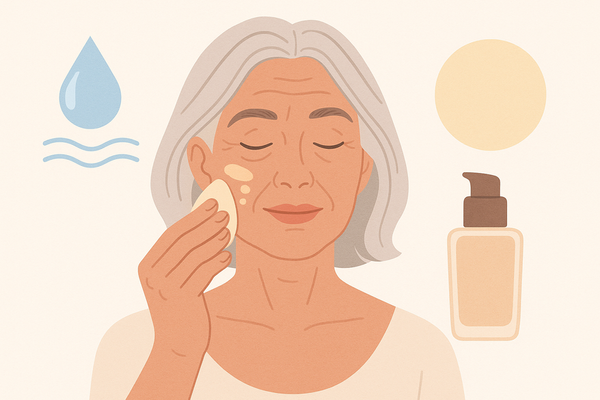
- Foundation: Choose light to medium-coverage liquids with hyaluronic acid; avoid thick, matte sticks.
- Application: Use a damp sponge or synthetic brush, pressing thin layers from the center outward.
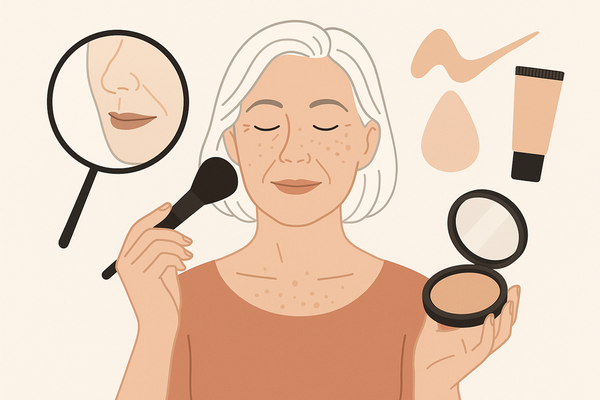
- Powder: Apply a finely milled translucent powder on the T-zone only; skip under eyes and in folds.
3.2 Nasolabial Folds Makeup
- Local Prep: Apply extra moisturizer around folds and let absorb for 2–3 minutes.
- Foundation: Tap a tiny amount over the line—never drag.
- Brightening: Use concealer above the fold to lift and contour high on the cheekbones.
3.3 Under Eye Hollows Makeup
- Hydrate: Use a lightweight, non-greasy eye cream before makeup.
- Correct & Conceal: Apply a peach corrector in the inner corner, then a thin layer of light-reflecting concealer.
- Technique: Blend gently with your ring finger and set sparingly with ultra-fine powder.
Integrating Skincare and Makeup
Plumped, hydrated skin prevents makeup from clinging to dry patches. Opt for fragrance-free, non-comedogenic products and formulas that include skincare actives to support skin health throughout the day.
Conclusion
Makeup for mature skin thrives on a dual approach: a tailored skincare regimen plus specialized makeup techniques that flatter without settling into texture. Experiment with products, textures, and coverage levels to discover what works best for your unique skin.
About Makeup Check AI
Makeup Check AI offers AI-powered reports, personalized beauty plans, and tutorials to elevate your routine and build confidence with data-driven guidance.
FAQ
- How do I prepare mature skin before makeup?
Start with gentle cleansing and hydrating skincare infused with hyaluronic acid and peptides to create a smooth base. - What ingredients help reduce age spots?
Brightening agents like Vitamin C, niacinamide, tranexamic acid, and gentle exfoliants such as lactic acid can fade pigmentation over time. - How can I prevent makeup from creasing in fine lines?
Use lightweight formulas, apply in thin layers, and set only where needed to avoid buildup in creases.