Expert Strategies for Makeup for Mature Skin
Discover the best makeup for mature skin with expert strategies, including fine lines skincare routine and nasolabial folds makeup for a naturally radiant look.

Estimated reading time: 7 minutes
Key Takeaways
- Hydrate and plump skin before makeup to create a smooth canvas.
- Choose lightweight, moisture-rich formulas to avoid settling into lines.
- Apply thin, creamy layers for a natural, dewy finish that enhances features.
- Use targeted techniques for fine lines, nasolabial folds, and under-eye hollows.
- Tailor your routine for specific concerns like chemo radiation dryness and age spots.
- Test and adjust coverage to ensure comfort and radiant results on mature skin.
Table of Contents
- Introduction
- Section 1: Fine Lines Skincare Routine and Other Mature Skin Concerns
- Section 2: Skincare Routine for Mature Skin
- Section 3: Makeup Techniques and Strategies
- Section 4: Addressing Specific Concerns
- Section 5: Product Recommendations and Tips
- Conclusion
- FAQ
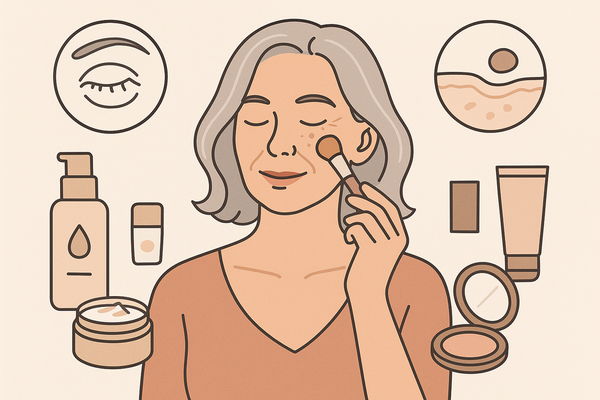
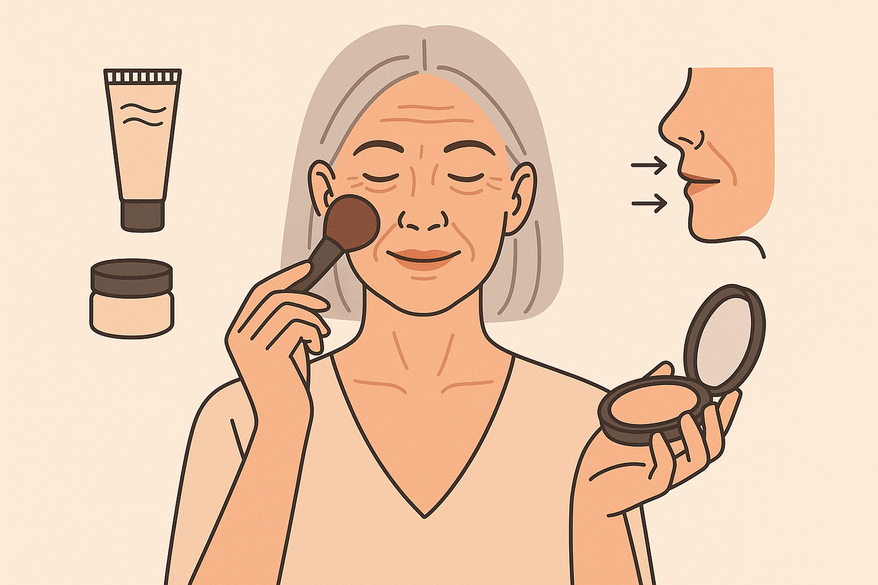
Makeup for mature skin focuses on lightweight, hydrating products and techniques designed to enhance natural features without settling into lines or emphasizing dryness. Artdeco explains that using gentle, moisture-rich formulas helps foundations and creams glide over fine lines rather than nestle in them. Vicky Jiggens adds that mature skin faces unique challenges—diminished elasticity, uneven tone, and sensitivity—that require a combined approach of skincare and makeup to hydrate, plump, and softly camouflage instead of masking imperfections.
Makeup Check AI offers quick, AI-driven insights to fine-tune your skincare prep and shade selection, ensuring every step supports mature skin health. Explore more at Makeup Check AI.
Section 1: Fine Lines Skincare Routine and Other Mature Skin Concerns
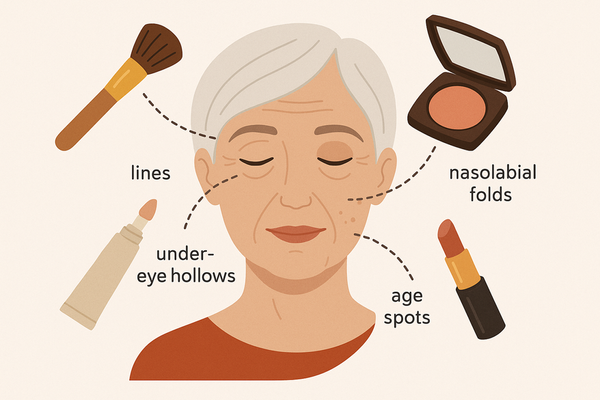
- Fine lines – Shallow grooves that form as skin thins with age. Often appear around eyes, mouth, and forehead.
- Nasolabial folds – Creases extending from the sides of the nose to mouth corners. Can deepen with volume loss and gravity.
- Under-eye hollows – Sunken area beneath the lower eyelid that casts shadows, making eyes look tired and accentuating dark circles.
- Chemo radiation dry skin – Severe dryness, flaking, and sensitivity caused by cancer treatments. Loss of barrier leads to irritation and redness.
- Age spots – Flat, dark patches from sun exposure and slower cell turnover. Common on cheeks, forehead, and hands.
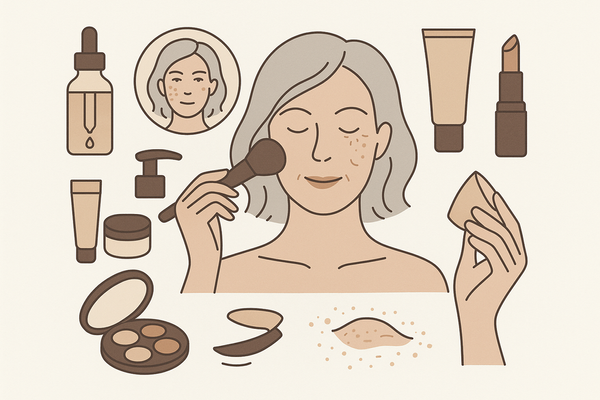
Holistic integration of skincare and makeup is vital. First, hydrate and plump the skin with targeted ingredients. Then use makeup to even out tone, lift features, and diffuse shadows without accentuating texture. This approach creates a smooth canvas that feels comfortable and looks natural. For an in-depth pre-makeup regimen, see our Ultimate Pre-Makeup Skincare Routine.
Section 2: Skincare Routine for Mature Skin
- Gentle cleansing
- Use a pearl-size amount of moisturizing foam. Massage in circular motions to lift impurities without stripping oils. Rinse with lukewarm water and pat dry.
- Balancing tonic spray
- Mist over face to add an immediate layer of moisture. Look for ingredients like rose water or glycerin to soothe and hydrate.
- Vitamin C collagen serum
- Blend hyaluronic acid with almond oil for a firming boost. Apply on face and décolletage; allow 1–2 minutes to absorb. Benefits: firms contours, boosts elasticity, softens wrinkles.
- Eye and lip cream
- Dab a pea-size amount under eyes and on lip lines. Gently pat to plump delicate areas before foundation.
- Hydrating moisturizer or primer
- Choose a rich yet lightweight cream, such as Weleda Skin Food Light for dry patches.
- Broad-spectrum SPF
- Apply SPF 30 or higher before any makeup. Protects skin from UV damage that accelerates aging.
This routine hydrates fine lines, balances skin, and reinforces the barrier. Prepping skin in this way addresses chemo radiation dry skin and other sensitivities, ensuring makeup adheres smoothly.
Section 3: Makeup Techniques and Strategies
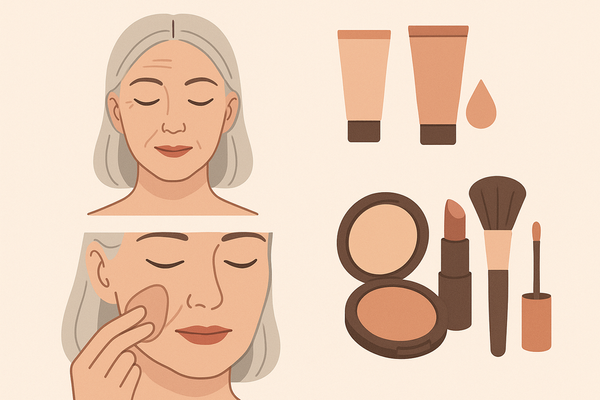
“Less is more” is the mantra for mature skin. Opt for thin layers of creamy, hydrating formulas that melt into skin. Building coverage gradually prevents a heavy look and avoids creasing.
- Primer application
- Choose a smoothing primer that fills micro-lines and blurs texture. Apply lightly over the entire face, focusing on forehead lines and folds.
- Foundation choice
- Pick a moisturizing, hyaluronic acid–infused foundation. Use fingers or a damp sponge to tap product into skin for an even, dewy finish. Build coverage gradually, concentrating on areas that need evening out.
- Concealer technique for under-eye hollows
- Select a creamy, buildable concealer one shade lighter than skin tone. Apply in an upside-down triangle under the eyes to brighten hollows. Set sparingly with translucent powder to prevent settling into fine lines.
- Contouring nasolabial folds
- Use a soft matte bronzer or contour cream in a “3-shape” from cheekbone to hairline. Blend upward to lift the face rather than dragging features down. Follow with cream blush on the apples of cheeks, sweeping upward to temples for a flush of youth.
- Eye makeup for under-eye hollows
- Diffuse liner close to the lash line rather than a heavy line above. Apply a light, satin-finish eyeshadow base to prevent creasing. Blend softly to avoid harsh edges that can emphasize hooded lids.
These strategies work together to minimize nasolabial folds, smooth under-eye hollows, and highlight natural contours. For complementary picks, see Makeup for Mature Skin: Top Foundations and Concealers for 40+.
Section 4: Addressing Specific Concerns
A – Chemo Radiation Dry Skin
- Layer a hydrating serum rich in hyaluronic acid.
- Follow with a rich moisturizer or smoothing primer to reinforce the barrier.
- Let each layer absorb fully to avoid pilling under makeup.
Makeup tips:
- Choose a hyaluronic-acid foundation or tinted serum to infuse moisture.
- Avoid powder formulas that cling to dry patches.
- Warm cream-based products between fingers before application to help them melt into skin.
B – Age Spots Routine
- Skincare: Use daily vitamin C serum to inhibit melanin production and fade spots over time. Apply sunscreen diligently to prevent new pigmentation.
- Makeup: Opt for a sheer, hydrating foundation or tinted moisturizer. Spot-correct individual age spots with a creamy, skin-tone-matched concealer. Blend edges of concealer seamlessly to avoid obvious coverage. Match foundation precisely to skin tone for a natural finish.
Section 5: Product Recommendations and Tips
- Foundations – hydrating, cream, hyaluronic acid–infused.
Benefit: plumps wrinkles, adds moisture and glow. - Concealers – creamy, buildable for under-eyes and spot correction.
Benefit: brightens hollows, camouflages age spots without creasing. - Moisturizers/Serums – collagen + vitamin C blends; Weleda Skin Food Light for dry patches.
Benefit: firms, boosts elasticity, preps skin for smooth makeup application. - Primers/Eye Creams – plumping, refreshing formulas that fill micro-lines.
Benefit: smooths skin, extends makeup wear, minimizes creasing. - Other – cream blushes and bronzers for lift and dimension; lip liners to define and plump lip lines gently; choose creams over powders to avoid settling into texture.
Conclusion
Makeup for mature skin thrives on rich hydration and subtle enhancement. Key strategies include a fine lines skincare routine with hyaluronic acid, vitamin C, and collagen serums; thin layers of creamy makeup that meld with skin for a natural glow; nasolabial folds makeup techniques—contouring and lifting with bronzer and blush; under-eye hollows makeup—brightening concealer and soft blending to banish shadows; and an age spots routine of daily vitamin C and precise spot correction with sheer concealer. Personalize your regimen by testing hydration levels, adjusting coverage, and choosing formulas that support your skin’s health. With these expert skincare and makeup strategies, mature skin can look luminous, smooth, and beautifully lifted every day.
FAQ
How do I choose the best foundation for mature skin?
Look for hydrating, hyaluronic acid–infused formulas with buildable coverage. Apply in thin layers with a damp sponge or fingers to ensure a dewy, natural finish that won’t settle into lines.
What is the ideal skincare routine before applying makeup?
Your pre-makeup routine should include gentle cleansing, a balancing tonic spray, vitamin C collagen serum, targeted eye and lip cream, a hydrating moisturizer or primer, and broad-spectrum SPF. Each layer primes and protects the skin.
How can I prevent makeup from settling into fine lines?
Use thin, creamy products and a smoothing primer that fills micro-lines. Build coverage gradually, setting sparingly with a light translucent powder only where necessary.
Which techniques help minimize under-eye hollows?
Apply a creamy concealer one shade lighter in an upside-down triangle beneath the eyes. Blend softly and set lightly. Add a satin-finish eyeshadow base to prevent creasing and diffuse shadows.