The Ultimate Thick Curly Hair Routine: Tame Frizz and Maintain Waves
Master your thick curly hair routine to prevent frizz, maintain waves between washes, and fix salon mishaps. Discover the best tips for vibrant curls.

Estimated reading time: 8 minutes
Key Takeaways
- Moisture is key—hydrate before, during, and after washing to seal cuticles.
- Frizz control comes from humectants, lightweight barriers and protective sleep routines.
- Refresh without shampoo using techniques like plopping, misting and pineapple up-dos.
- Specialized salons with curl-certified stylists ensure proper dry cutting and bond-building treatments.
- DIY fixes for blue hair pigment and bad layers involve porosity prep, protein fillers, and strategic styling.
Table of Contents
- Understanding Your Thick Curly Hair Routine
- Frizz Prevention Techniques
- Maintaining Waves Between Washes
- Navigating Curly Hair Salons
- Fixing Common Hair Color Issues
- Correcting Haircut Issues
- Conclusion & Call to Action
- FAQ
Section 1: Understanding Your Thick Curly Hair Routine
What Is Thick Curly Hair?
Thick curly hair has dense strands and tight coils. It needs extra moisture and strong structure to look its best.
Five-Step Foundation for Thick Curly Hair Routine
- Pre-shampoo hydration
- Apply coconut or olive oil 15 minutes before washing.
- Seals the cuticle and reduces porosity.
- Sulfate-free cleansing
- Use gentle, sulfate-free shampoo to protect natural oils.
- Keeps curls soft and stops dryness.
- Balanced conditioning
- Choose conditioners with protein-to-moisture ratio.
- Protein strengthens; moisture prevents frizz.
- Styling with hold
- Use curl creams or gels to define shape.
- Look for ingredients like shea butter or flaxseed gel.
- Weekly deep-conditioning
- Once per week, apply a rich mask.
- Leave on 20–30 minutes under a heat cap for max absorption.
Porosity Tests and Why They Matter
- Float Test: Drop a clean strand in water. If it floats, low porosity; if it sinks, high porosity.
- Low porosity hair repels moisture—needs heat to open cuticle.
- High porosity hair soaks up water quickly but loses it fast—needs sealing oils.
Real-world Tip: I tested my curls with the float test at home. After oil pre-treatment, my strands floated longer, so I switched to a light hydrating mask instead.
Expert Backing: The American Academy of Dermatology underscores hydration for curly hair health.
Section 2: Frizz Prevention Techniques for Thick Curly Hair Routine
Why Frizz Happens
- Humidity lifts hair cuticles.
- Damaged cuticles can’t lock in moisture.
- Insufficient hydration leads to rough, frizzy strands.
Actionable Frizz Prevention Tips
- Anti-humidity leave-in sprays
- Look for humectants like glycerin.
- Lightweight silicones create a barrier.
- Example: Camille Rose Naturals Curl Love Moisture Milk
- Seal ends with natural oils
- Argan or jojoba oil smooths and protects tips.
- Sleep on satin or silk pillowcases
- Reduces friction and breakage overnight.
- Minimize heat tools
- If you must, always use a heat protectant spray.

Makeup Check AI can analyze your styling technique and give personalized recommendations to enhance your curl care routine.
Science Insight: A study in the Journal of Cosmetic Science affirms humectants’ role in hair hydration and frizz control.
Section 3: Maintaining Waves Between Washes
The Second-Day Wave Phenomenon
Natural scalp oils redistribute on day two, redefining curls into soft waves. This reduces shampoo frequency and maintains moisture balance.
Refresh Techniques Without Washing
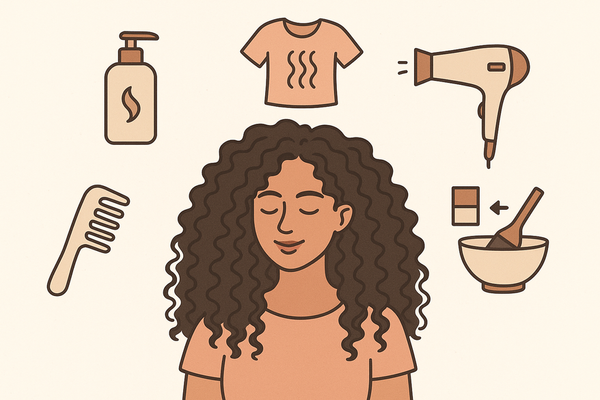
- Plopping with a cotton T-shirt – Lay hair in center; tie ends at nape to reshape curls.
- Light mist of water + leave-in conditioner spray – Reactivates product without buildup.
- Pineapple up-do overnight – Gather hair at top, secure loosely to protect curl pattern.
- Low-heat diffusion – Quick refresh on lost shape, using cool or low heat.
Balancing Moisture vs. Buildup
- Mist sparingly—too much water dilutes styling products.
- Use a clarifying rinse every 2–3 weeks to clear residue.
Styling Resource: NaturallyCurly’s guide helps you refresh curls like a pro.
Section 4: Navigating Curly Hair Salons
Why Curly Hair Needs Specialists
General stylists may cut curls while wet, ignoring natural shrinkage and pattern. The result: uneven layers and frizz.
Finding a Certified Curl Specialist
- DevaCertified or Ouidad Certified stylists
- Browse Instagram for before/after photos matching your texture
- Read reviews on Yelp and NaturallyCurly salon finder
Services to Request
- Dry-cutting technique (curl-by-curl) to shape each coil.
- Bond-building treatments (Olaplex, K18) for repairing breakage.
- Custom gloss or glaze for lasting shine and color boost.
Salon Locator: Find your nearest DevaCurl certified salon locator.
Section 5: Fixing Common Hair Color Issues – Blue Hair Not Showing Fix
Why Blue Fades on Curly Hair
- High porosity curls can over-absorb then quickly release pigment.
- Pre-lightening can be uneven, leaving some areas too damaged to hold color.
Step-by-Step Blue Hair Not Showing Fix
- Porosity assessment with a strand test
- Pre-treat with a protein filler – Aphogee Two-Step Protein Treatment helps even absorption.
- Apply a direct-deposit blue dye – Example: Arctic Fox Aquamarine for high pigment load.
- Seal color with a cold, R-insoluble gloss – Locks in vibrancy and smooths cuticles.
Safety Tip: Always perform a 24-hour strand test to check for over-processing or allergic reactions.
Section 6: Correcting Haircut Issues – Bad Layers Haircut Fix
Common Layering Mistakes
- Over-thinning can break curl clumps.
- Uneven layers lead to frizz and odd silhouettes.
At-Home Styling to Mask Bad Layers
- Gel clumping – Define curls and visually even out lengths.
- Diffuse head-down – Fluffs roots and blends shorter pieces.
- Edge control on shorter layers – Tucks flyaways under longer curls for smoother edges.
When to See a Pro
- Request curl-by-curl dry cutting to reshape.
- Ask for minimal slide-cutting if you need to remove bulk without losing length.
Professional Resource: L’Oréal Professionnel’s techniques for layering textured hair.
Conclusion & Call to Action
A complete thick curly hair routine solves frizz prevention, maintains waves between washes, guides you to the right curly hair salons, and empowers you with blue hair not showing fix and bad layers haircut fix. Experiment with these steps and products, then share your results below. Ready for personalized advice? Book a consult with a certified curl expert today!
FAQ
- How often should I wash my thick curly hair?
Aim for 1–2 times per week using a sulfate-free cleanser and refresh roots with plopping or misting between washes. - How do I test my hair porosity?
Try the float test: place a clean strand in water. Float = low porosity; sink = high porosity. - What’s the best way to prevent frizz in high humidity?
Use humectant-rich leave-in sprays, seal ends with natural oils and sleep on satin or silk pillowcases. - How can I refresh second-day curls without shampoo?
Plop with a T-shirt, lightly mist with water and leave-in spray, or pineapple at night to preserve shape. - How do I fix a bad layered haircut?
Mask uneven layers with gel clumping, diffuse head-down, or see a curl specialist for a dry-cut reshape.