The Ultimate Thick Curly Hair Routine: From Frizz Prevention to Color & Cut Fixes
Discover the ultimate thick curly hair routine to prevent frizz, maintain waves, find curly hair salons, fix muted blue hair, and remedy bad layers haircuts.

Estimated reading time: 8 minutes
Key Takeaways
- Understand your texture: High follicle density and tight coils need extra moisture and gentle handling.
- Structured routine: Weekly clarifying + hydrating washes, daily refresh, and monthly protein treatments.
- Frizz control: Cool rinses, silk protection at night, and silicone-free serums keep curls defined.
- Between washes: Pineapple method and leave-in mist revive waves without buildup.
- Professional fixes: Seek DevaCurl-trained stylists for cuts and bond-building steps for color correction.
Table of Contents
- Understanding Thick Curly Hair
- Establishing a Thick Curly Hair Routine
- Frizz Prevention Techniques
- Maintaining Waves Between Washes
- Choosing the Right Curly Hair Salons
- Color Correction: Fixing Muted Blue Hair
- Fixing Bad Layers Haircuts
- Conclusion
Understanding Thick Curly Hair
Thick curly hair combines high follicle density with coarse strands and an S-shaped or spiral pattern that resists natural oil distribution. This often leads to dryness, loss of curl shape, and that notorious frizz.
- Natural oils struggle to travel down tight coils.
- Build-up at the roots causes limp or weighed-down curls.
- Tight bends create tangles and stiff sections.
Common sensitivities and risks include:
- Sulfates that strip moisture and silicones that block hydration.
- Rough detangling methods that cause breakage and split ends.
- Product build-up that flattens curl definition.
Expert tip: Use gentle finger detangling or a wide-tooth comb to protect your curl pattern and minimize breakage.
Establishing a Thick Curly Hair Routine
Weekly Wash Protocol & Clarify / Hydrate
- Apply clarifying shampoo on the scalp only (1–2 pumps) to dissolve build-up.
- Follow with a sulfate-free hydrating shampoo; massage for 60 seconds.
- Use a rich conditioner or deep mask from mid-shaft to ends. Detangle gently, starting at the tips. Leave in for 3–5 minutes.
- Rinse with cool water to seal cuticles and lock in moisture.
Daily Refresh
- Mix water and 1–2 pumps of leave-in conditioner in a spray bottle.
- Spritz hair lightly; finger-scrunch to reactivate curl clumps.
- Avoid brushes or combs to preserve your natural pattern.
Styling on Wash Day
- On damp hair, section and apply leave-in, curl cream, and gel or mousse.
- Scrunch with a microfiber towel or cotton T-shirt—never rub.
- Air-dry or diffuse on low heat. When hair is 80% dry, smooth a lightweight oil through the ends for shine.
Monthly Maintenance
- Apply a protein treatment every 4–6 weeks to reinforce hair structure.
- Schedule a trim for split ends and shape preservation.
For more in-depth tips, check out our in-depth guide or full routine breakdown.
Frizz Prevention Techniques
- Cool Water Rinses – Finish each wash with a 30-second cool rinse to close the cuticle.
- Nighttime Protection – Sleep on a silk pillowcase or wrap hair in a silk bonnet to reduce friction.
- Finishers & Serums – On damp hair, apply 2–3 drops of silicone-free serum or anti-frizz oil to ends.
- Hands-Off Drying – Avoid touching your curls while they set.
Maintaining Waves Between Washes
- Water + Leave-In Refresher – Fine mist and scrunch to revive curls.
- Pineapple Method – High, loose ponytail with a silk scrunchie to preserve shape.
- Recommended Products – Lightweight curl sprays, alcohol-free formulas.
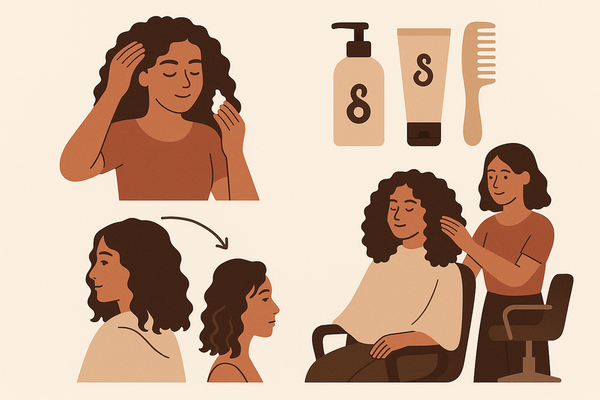
Choosing the Right Curly Hair Salons
- Look for DevaCurl-trained stylists or certified dry-cut pros.
- Ask about sulfate-free products and high-density curl experience.
- Review before/after portfolios and client testimonials.
Color Correction: Fixing Muted Blue Hair
High porosity in curls and product build-up can mute blue dyes. Here’s how to bring vibrancy back:
- Pre-Color Clarify – Use a chelating shampoo 1–2 days before coloring.
- Pre-Lighten Strands – Lift to level 9–10 using bond-builders.
- Application Technique – Section into thin slices; apply dye evenly.
- Aftercare – Use sulfate-free, color-safe shampoo and a weekly refresh mask.
Fixing Bad Layers Haircuts
- Identify Issues – Triangle heads from wet cuts; pokey shorter layers.
- At-Home Camouflage – Use heavy curl cream or gel to weigh down pieces; apply root clips to blend.
- Professional Correction – Opt for a dry cut by a certified curl stylist; dust trims every 8–12 weeks.
Conclusion
Consistency and the right support transform unruly coils into your healthiest, most defined curls. From sulfate-free clarifying and hydrating routines to frizz-fighting finishers, wave-refresh tactics, professional salon partners, expert color correction, and dry-cut fixes—you now have a full toolkit. Every curl is unique; adjust based on your porosity and pattern for best results.
For a bit of AI-powered help with styling inspiration or step-by-step technique assessments, explore Makeup Check AI to test looks, learn from tutorials, and track your curl journey in one app.
FAQ
How often should I clarify and hydrate my thick curly hair?
Clarify once a week to remove build-up, then follow with a deep-hydrating wash. This balance prevents product residue while maintaining moisture.
Can I revive my curls between washes without heavy product buildup?
Yes! A fine mist of water mixed with leave-in conditioner and gentle finger scrunching brings curls back to life without weighing them down.
What’s the easiest way to minimize frizz at night?
Sleep on a silk pillowcase or wrap your hair in a silk bonnet. This reduces friction and helps maintain cuticle integrity while you rest.
Is it safe to correct muted blue curls at home?
For best results, pre-clarify, carefully lift with bond-builders, and follow a strict color-safe aftercare routine. If you’re unsure, consult a professional stylist.