Your Ultimate Thick Curly Hair Routine: Frizz Prevention, Waves Between Washes & More
Discover your ideal thick curly hair routine for smooth, hydrated waves. Tips on frizz prevention, salon selection, and more to keep curls defined.

Estimated reading time: 4 minutes
Key Takeaways
- Personalize your routine: hydrate and protect thick, porous curls.
- Prevent frizz: seal moisture, use proper drying and styling methods.
- Refresh waves: mist and reactivate gel cast between washes.
- Choose a specialist: seek curl-trained stylists and dry-cut techniques.
- Troubleshoot common issues: fix muted blue hues and uneven layers.
Table of Contents
- Introduction
- 1. Establishing an Ideal Thick Curly Hair Routine
- 2. Frizz Prevention Techniques
- 3. Maintaining Waves Between Washes
- 4. Choosing the Right Curly Hair Salons
- 5. Troubleshooting Specific Hair Challenges
- Conclusion
Introduction
Building a simple, effective thick curly hair routine matters. A thick curly hair routine is a personalized daily and weekly plan made to hydrate, shape, and protect dense, porous curls that often feel dry or frizzy. Without one, thick curls lose moisture fast because density plus porosity equals high moisture loss and frizz risk. A clear regimen helps each coil stay defined, soft, and under control.
In this post you’ll learn:
- How to establish an ideal thick curly hair routine
- Proven frizz prevention techniques
- Ways to maintain waves between washes
- How to choose the best curly hair salons
- Expert fixes for blue hair not showing and bad layers haircut fix
By the end, you’ll have a step-by-step guide and solid tips to keep your curls happy and healthy.
For a deeper dive, check out our Ultimate Thick Curly Hair Routine.
Source for porosity and frizz risk: Curlsmith Curly Hair Care Guide
1. Establishing an Ideal Thick Curly Hair Routine
Keyword: thick curly hair routine
Thick curly hair has unique traits:
- High density makes it heavy and prone to tangles.
- High porosity causes quick moisture loss and dryness.
- Tight curl patterns need careful handling to stay defined.
Use the Curly Girl Method fundamentals. This system focuses on moisture retention and gentle styling:
- Gentle cleansing with co-wash or sulfate-free shampoo.
- Deep hydration via rich conditioners and leave-in products.
- Styling on soaking-wet hair to lock in moisture.
- Minimal manipulation to protect the curl pattern.
2. Frizz Prevention Techniques
Keyword: frizz prevention
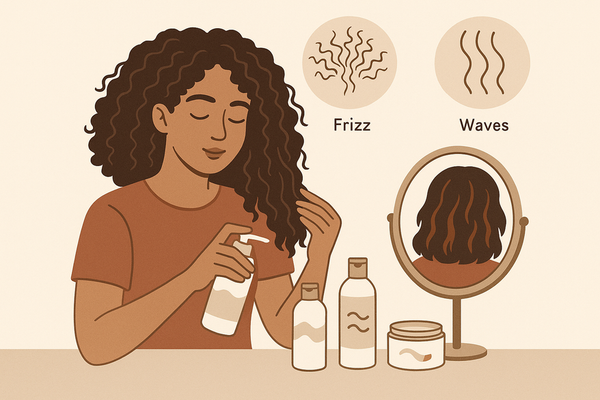
Frizz happens when cuticle scales lift. This can come from humidity, friction, or lack of moisture. Stopping frizz means sealing in hydration and smoothing the hair shaft.
Key Methods:
- Seal moisture: After your leave-in, apply a lightweight oil or anti-frizz serum on damp hair. This creates a barrier to lock in water.
- Gentle drying: Scrunch out extra water with a microfiber towel or a soft T-shirt. Never rub, as this roughs up cuticles.
- Cold rinse: Finish your shower with a brief cold water rinse. Cold water tightens cuticles and boosts shine.
- Anti-frizz styling: On wet hair, apply curl cream, then a gel or custard to set curls. Diffuse on low heat or air-dry.
Environmental Adaptations:
- High Humidity: Switch to stronger-hold gels and serums that block moisture (anti-humectants).
- Dry Climates: Add a weekly deep-conditioning mask to restore lost hydration.
- Product Buildup: Clarify hair every 4–5 washes to remove residue that can block moisture.
Source: Curlsmith Curly Hair Care Guide
3. Maintaining Waves Between Washes
Keyword: waves between washes
Waves and looser curls often lose shape between washes. Handling and drying lead to moisture evaporation and flattening. A light refresh keeps waves bouncy without a full wash.
Low-Manipulation Refresh:
- Mist roots: Use water or a water+leave-in mix. Lightly spritz roots and mid-shafts.
- Reactivate gel cast: Scrunch in a small dab of gel. This revives the cast without buildup.
- Diffuse lift: Flip your head upside down and diffuse on low for 2–3 minutes at the roots.
- Finger-coil: Twist random sections to bring back definition in problem areas.
Protective Night Routines:
- Pineapple: Gather hair into a high loose ponytail on top of your head. Use a soft elastic.
- Silk or satin wrap: Cover hair with a silk scarf or sleep in a bonnet to cut friction.
- Silk pillowcase: If you skip a wrap, sleep on silk to reduce frizz.
Tools & Products:
- Lightweight foams: Add bounce without weight.
- “Curl magic” sprays: Special refresh sprays that lightly condition and reshape.
- Root-lifting clips: Attach at roots during the final air-dry to boost volume.
Sources: Ariel Loves Curly Hair Guide
4. Choosing the Right Curly Hair Salons
Keyword: curly hair salons
Not all salons know how to handle thick curly hair. You want a specialist who understands curl science and custom cuts. For more on building a complete program, see our Mastering Your Thick Curly Hair Routine.
Criteria for Selecting a Specialist:
- Curl-trained stylists: Look for certifications like DevaCut, Ouidad, or Curly Girl Method training.
- Dry-cutting techniques: Stylists cut curls when dry and shaped, so you avoid surprises from shrinkage.
- Bond-building treatments: They offer services like Olaplex or Intra-Cylane to strengthen hair during color or heat work.
Questions to Ask Before Booking:
- Experience with your curl type and hair density.
- Can they show you before/after photos of clients with similar hair?
- Are they familiar with color on curly hair? Thick curls need special color care to avoid patchy results.
Benefits of Expert Care:
- Perfect layering: Good layers enhance curl clumps and reduce bulk.
- Frizz control: A proper cut and treatment plan tame frizz.
- Color confidence: Pros avoid bad layers and color mishaps by prepping the hair correctly.
Sources: Curlsmith Curly Hair Care Guide
5. Troubleshooting Specific Hair Challenges
5.1 Blue Hair Not Showing Fix
Keyword: blue hair not showing fix
Issue: Thick curly hair’s high porosity often traps pigment deep inside, causing muted blues on the surface.
At-Home Solutions:
- Pre-pigmentation: If your base is medium brown, apply an orange/red filler before blue dye to balance and boost the shade.
- Color-depositing conditioner or gloss: Use weekly to refresh vibrancy and seal cuticles.
- Skip clarifying shampoos: Use a gentle, color-safe shampoo to preserve dye.
Professional Fixes:
- Salon gloss or demi-permanent refresh every 4–6 weeks to keep blue vivid.
- Pre- and post-color bond-building treatments (e.g., Olaplex) to close cuticles and lock in pigment.
Source: Curlsmith Curly Hair Care Guide
5.2 Bad Layers Haircut Fix
Keyword: bad layers haircut fix
Issue: Poorly placed layers break up curl clumps, cause frizz, and make volume look off.
DIY Styling Mitigation:
- Heavy-hold gel or custard: Work into damp hair, then finger-coil messy sections for instant clump repair.
- Diffuse and cup curls: Use a low-heat diffuser, gathering curls in the cup to reshape layers temporarily.
- Weekly deep condition: Weigh down unruly layers and smooth the cuticle.
When to See a Pro:
- Corrective dry trim: A curl specialist can cut off uneven parts curl by curl, preserving natural shrinkage.
- Strategic layering: Ask for custom layer placement to balance shape and volume.
Sources: Curlsmith Curly Hair Care Guide
Conclusion
Makeup Check AI offers a seamless way to integrate personalized tutorials, AI-powered reports, and expert guidance into your beauty regimen. Discover every curl-friendly hack, track your progress, and transform your daily routine with Makeup Check AI.
FAQ
How often should I wash thick curly hair?
Generally, 1–2 times a week is ideal. Overwashing strips natural oils, so consider co-washing with a sulfate-free cleanser on alternate days.
What if my curls still frizz despite sealing?
Check your product layers: start with a leave-in, then an oil or anti-frizz serum. Ensure you scrunch gently and avoid friction from rough towels.
Can I refresh waves without products?
Yes. Use a water mist and finger-coil or pineapple technique at night. Air-dry or diffuse briefly to reactivate shape.