Understanding Transparent Makeup AI Metrics: How AI Is Revolutionizing Beauty Transparency
Explore how transparent makeup AI metrics transform cosmetics with ingredient clarity, ethical sourcing, and performance insights, enhancing beauty transparency.

Estimated reading time: 8 minutes
Key Takeaways
- AI metrics quantify ingredient clarity, ethical sourcing, performance, fairness, and safety.
- Computer vision, NLP, recommendation engines, and scoring models drive transparent makeup assessments.
- Core metrics include accuracy, bias gaps, explainability, ingredient safety, and sustainability.
- Implementing AI metrics enhances consumer trust, regulatory compliance, and R&D efficiency.
- The future points to personalized dashboards, blockchain provenance, and integrated sustainability indices.
Table of Contents
- Introduction
- What Is Transparent Makeup
- How AI Technologies Empower Makeup Transparency
- Key AI Metrics for Transparent Makeup
- Benefits of Implementing AI Metrics
- Challenges and Future of Transparent Makeup AI Metrics
- Conclusion
Introduction
Transparent makeup AI metrics are quantitative scores evaluating cosmetics on ingredient clarity, ethical sourcing, performance, fairness, and safety. These metrics convert vague marketing language into clear, auditable numbers and automate complex formulation assessments. As highlighted in our post on Building Trust in Beauty Tech, consumers now demand verifiable beauty claims over empty buzz. AI metrics use computer vision, natural language processing, and data models to turn claims into numbers and track transparency in real time.
What Is Transparent Makeup
Transparent makeup refers to beauty products that share full ingredient lists, flag allergens, disclose active concentrations, document ethical sourcing, and publish verified performance data. This level of transparency empowers consumers to make safe, informed choices.
Three Pillars of Transparent Makeup
- Product Ingredients
- Full INCI lists for every component.
- Exact active-ingredient percentages.
- Allergen flags for common irritants.
- Manufacturing & Sourcing
- Raw-material provenance and farm-to-factory traceability.
- Ethical certificates (Fair Trade, cruelty-free).
- Environmental data: carbon footprint, water usage.
- Marketing & Claims
- Claims backed by lab or clinical test data.
- Clear attribution: AI analysis vs. expert review.
- Virtual-try-on limits and performance disclaimers.
Consumers are pushing brands for inspectable scores on ingredients, performance, and algorithmic fairness. Recent surveys show 72% of shoppers prioritize ingredient transparency when choosing cosmetics, driving trust and reducing safety concerns. Source: Transparent Makeup AI Metrics
How AI Technologies Empower Makeup Transparency
AI in cosmetics is reshaping how brands test, market, and deliver products. Our earlier post on AI Makeup Coach introduced the foundational role of computer vision and NLP. Makeup AI systems combine multiple technologies to ensure transparent makeup AI metrics and clear ingredient and performance insights.
- Computer Vision
- Analyzes lab and user images for coverage uniformity.
- Measures color drift (ΔE values) under different lights.
- Tracks oxidation rates and transfer resistance.
- Natural Language Processing (NLP)
- Scans online reviews to detect safety concerns and performance themes.
- Gauges consumer sentiment on texture, longevity, and feel.
- Recommendation Engines
- Power virtual try-ons for foundation and concealer.
- Match shades using spectral data and AI-driven color theory.
- Ingredient-Scoring Models
- Flag potential allergens using global databases.
- Evaluate formulation safety against regulatory lists.
Integrated Pipeline
AI pipelines ingest lab images, selfies, ingredient lists, and consumer feedback. They compute ΔE for color drift, run NLP on reviews, and flag allergens automatically. Flags and scores feed dashboards that show:
- 30% higher shade-matching satisfaction.
- 25% fewer product returns due to mismatches.
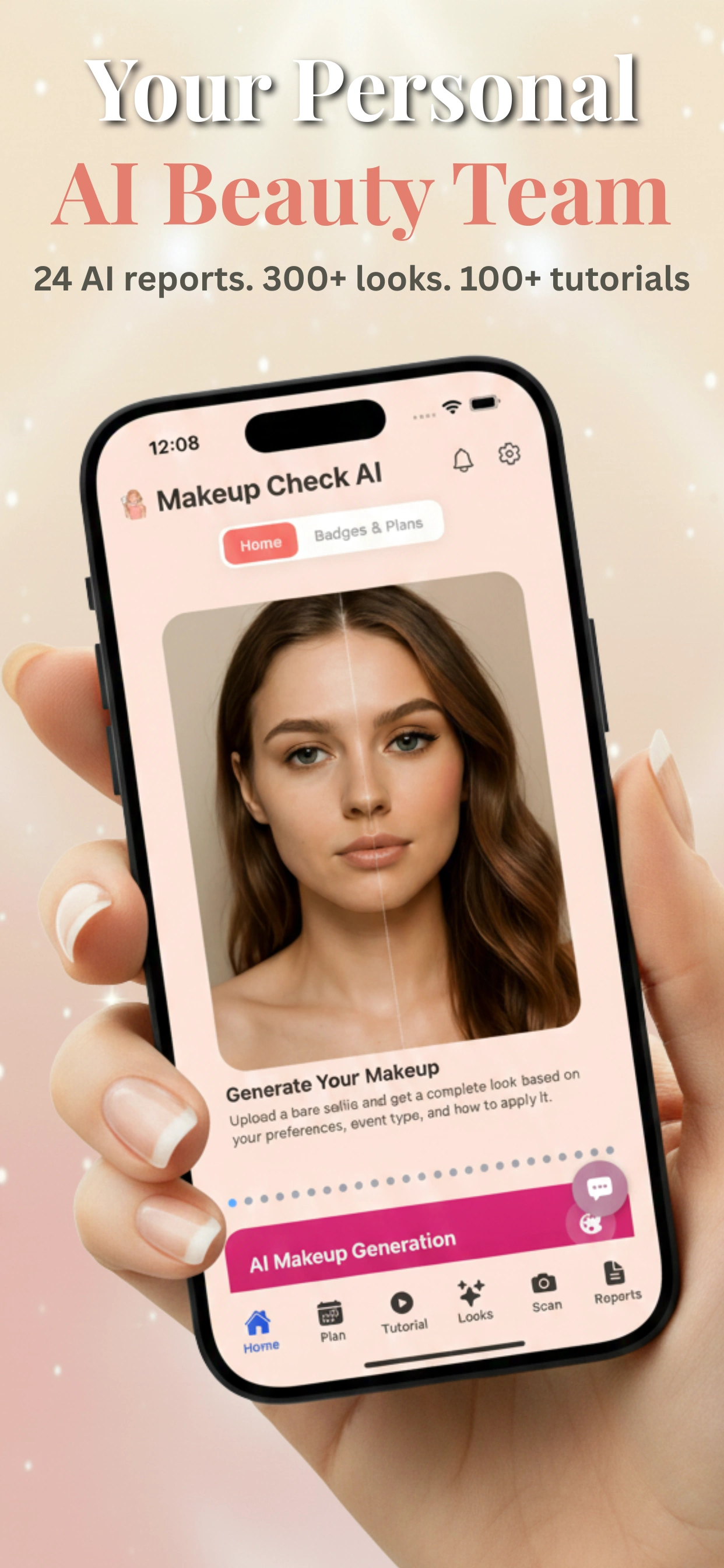
Innovations like Makeup Check AI demonstrate how AI can audit formulas and fairness, empowering consumers with transparent, data-driven insights.
Key AI Metrics for Transparent Makeup
Key AI metrics are quantitative indicators measuring algorithm performance, fairness, explainability, safety, and sustainability. These metrics transform complex AI outputs into clear dashboards:
- Technical Performance: Accuracy, precision, recall, F1-score, coverage uniformity, ΔE drift, oxidation rate scores.
- Fairness & Bias: Error gaps across skin tones, ages, genders; disparate impact ratios. See AI Makeup Metrics for details.
- Explainability: SHAP & LIME attributions, model cards, transparency indices.
- Ingredient & Safety: INCI disclosure scores, safety verification rates, allergen flags.
- Brand Compliance: Regulatory alignment (EU, US, JP standards), audit-readiness ratings.
- Consumer Sentiment: NLP sentiment scores, satisfaction indices, return-rate analytics.
- Sustainability: Carbon footprint per 100 g, water usage, recyclability metrics.
Benefits of Implementing AI Metrics
Consumer Benefits of AI-Driven Makeup Transparency
- Enhanced Product Safety: Standardized ingredient safety, allergen alerts. Source: Transparent Makeup AI Metrics
- Reliable Performance Information: Lab vs. claimed comparisons, longevity evidence.
- Inclusive Shade Matching: Models trained on diverse skin tones, personalized recommendations. Source: Transparent Makeup AI Metrics Revolution
Brand Advantages of AI Metrics
- Regulatory Compliance: Continuous audit logs, drift detection. Source: Transparent Makeup AI Metrics
- Increased Consumer Trust: Verifiable data, inspectable dashboards.
- Market Differentiation: Transparency and sustainability attract eco-conscious buyers.
- R&D Efficiency: 20% faster development, 50% fewer formulation errors.
Challenges and Future of Transparent Makeup AI Metrics
Challenges in Adopting AI-Based Transparency Metrics
- Data Privacy: Secure storage of selfies and personal data; encryption and consent frameworks. Source: Transparent Makeup AI Metrics
- Algorithm Limitations: Bias persists if training data is unbalanced; need expanded skin-tone datasets. Source: Transparent Makeup AI Metrics
- Cost Barriers: High upfront AI integration costs for small brands.
- Standardization Gaps: Varying metrics across platforms; lack of universal standards. Source: Fairness Metrics Definition
Future Opportunities and Trends
- Personalized AI Dashboards: Skin-profile–adaptive metrics for each user.
- Blockchain-Based Provenance: Immutable ingredient and supply-chain tracking.
- Integrated Sustainability Indices: Combine environmental impact with safety and fairness scores.
- Fully Auditable Beauty Tech: Transparent model documentation from lab to consumer. Source: Transparent Makeup AI Metrics
Conclusion
Transparent makeup AI metrics mark a shift from unverified marketing to data-driven beauty transparency. These scores empower consumers to see ingredient clarity, ethical sourcing, performance data, and fairness measures at a glance. Brands gain trust, regulatory readiness, and R&D efficiency by adopting AI metrics. As technology evolves, we will see personalized dashboards, blockchain provenance, and integrated sustainability—all bolstering industry standards. Explore products backed by auditable AI metrics, subscribe for beauty-tech transparency updates, and advocate for universal standards. The future of cosmetics depends on honest results powered by transparent makeup AI metrics.
FAQ
What are transparent makeup AI metrics?
They are quantitative scores that assess cosmetics on ingredient clarity, ethical sourcing, performance, fairness, and safety, turning marketing claims into auditable data.
How do AI technologies ensure makeup transparency?
Systems leveraging computer vision analyze images, NLP scans reviews, recommendation engines match shades, and scoring models flag allergens and regulatory compliance.
What benefits do consumers and brands gain?
Consumers get enhanced safety, reliable performance data, and inclusive shade matching. Brands achieve regulatory compliance, increased trust, market differentiation, and faster R&D.
What challenges exist in adopting these metrics?
Key challenges include data privacy, algorithmic bias, high integration costs for small brands, and lack of universal standardization.
What does the future hold for transparent makeup AI?
We expect personalized dashboards, blockchain-based provenance, integrated sustainability indices, and fully auditable beauty tech to become industry norms.