Transparent Makeup AI Metrics: Revolutionizing Beauty Transparency
Explore how transparent makeup AI metrics are transforming the cosmetics industry by enhancing transparency, ethics, and compliance, setting new standards.

Estimated reading time: 8 minutes
Key Takeaways
- Full transparency means disclosing every ingredient, verifying ethical sourcing, and labeling fragrances and low-dose actives clearly.
- AI-driven metrics automate safety, compliance, and ethics scoring at scale with pattern recognition and NLP.
- Cross-functional integration in R&D, sourcing, quality control, and marketing ensures consistent accountability.
- Benefits include improved product quality, elevated consumer trust, accelerated innovation, and anti-greenwashing guardrails.
- Future trends point to blockchain ledgers, dynamic allergen alerts, QR-linked dashboards, and evolving regulatory standards.
Table of Contents
- Defining Transparent Makeup
- Overview of AI Metrics
- Integration of AI Metrics in the Industry
- Benefits and Impacts
- Case Studies & Real-World Examples
- Future Trends & Developments
- Conclusion
- FAQ
Section 1: Defining Transparent Makeup (ingredient disclosure)
Transparent makeup rests on three pillars that go beyond basic regulatory requirements:
- Full ingredient disclosure
– Use INCI lists in descending order for all ingredients.
– Ensure every component appears, even <1% actives. - Ethical sourcing verification
– Confirm sustainability of critical inputs (e.g., palm oil RSPO checks).
– Map supply chains to guarantee fair-trade and labor standards. - Clear fragrance and low-dose active labeling
– List all fragrance components rather than generic “fragrance.”
– Disclose low-dose actives under 1% concentration.
Consumers demand allergen avoidance, protection against greenwashing, and sustainability focus—46% of women sought sulfate-, phthalate-, and gluten-free skincare in 2019. Brands like The Ordinary and The Inkey List lead with front-of-pack function labels, while L’Oréal offers an open ingredient database for radical transparency.
Section 2: Overview of AI Metrics (AI, metrics, data analysis, compliance)
AI metrics apply machine-learning algorithms to vast ingredient, safety, and regulatory datasets, delivering automated scores for safety, quality, compliance, and ethics.
- Automated pattern recognition
– Use INCI dictionaries and CosIng safety databases.
– Apply NLP to parse complex labels. - Scalability and speed
– Audit hundreds of products in hours versus weeks of manual review.
– Scale across global catalogs and thousands of SKUs. - Standardized compliance insights
– Generate consistent safety, ethics, and regulatory scores.
– Flag non-compliance with CIR and FDA guidelines.
Data inputs include supplier quality certificates, regulatory lists (FDA, CIR, EU CosIng), safety profiles, and ethical-sourcing databases. Brands gain real-time dashboards that benchmark disclosure completeness and sourcing ethics.
Section 3: Integration of AI Metrics in the Transparent Makeup Industry (ingredient sourcing, quality control)
AI metrics enforce transparency from formula conception through to marketing:
- NLP extraction
– Scan labels and convert free text into standardized INCI terms.
– Detect synonyms, misspellings, and hidden allergens. - Hidden allergen detection
– Identify fragrance allergens or restricted actives buried under trade names.
– Cross-reference with global allergen databases.
Composite Transparency Index weights disclosure completeness, ethical sourcing, safety flags, and regulatory compliance. Key applications include automated quality control, supplier validation, and consumer feedback analysis. Specific metrics measure allergen detection precision, FDA/CIR compliance scores, and satisfaction tied to disclosure depth.
Section 4: Benefits and Impacts (benefits, challenges, trust)
Transparent makeup AI metrics deliver clear gains and essential guardrails:
- Improved product quality – Precise irritant flagging reduces recalls.
- Increased consumer trust – Objective scores replace vague “clean” claims.
- Innovation & efficiency – Automated audits free teams to launch faster.
- Anti-greenwashing guardrails – Prevent marketing overreach and protect integrity.
Challenges include data dependency, model bias, and supply-chain opacity. Brands must invest in robust data governance and traceability solutions to realize full benefits.
Section 5: Case Studies & Real-World Examples (case study, real-world, AI, metrics)
Credo Beauty
– Digital audits enforced fragrance disclosure for 68% of partners.
– Achieved 15% sales growth in the fragrance category in one year.
Beautycounter
– Mica supply-chain mapping via MIT’s Sourcemap for transparent traceability.
– Public reporting of mining sites and labor standards.
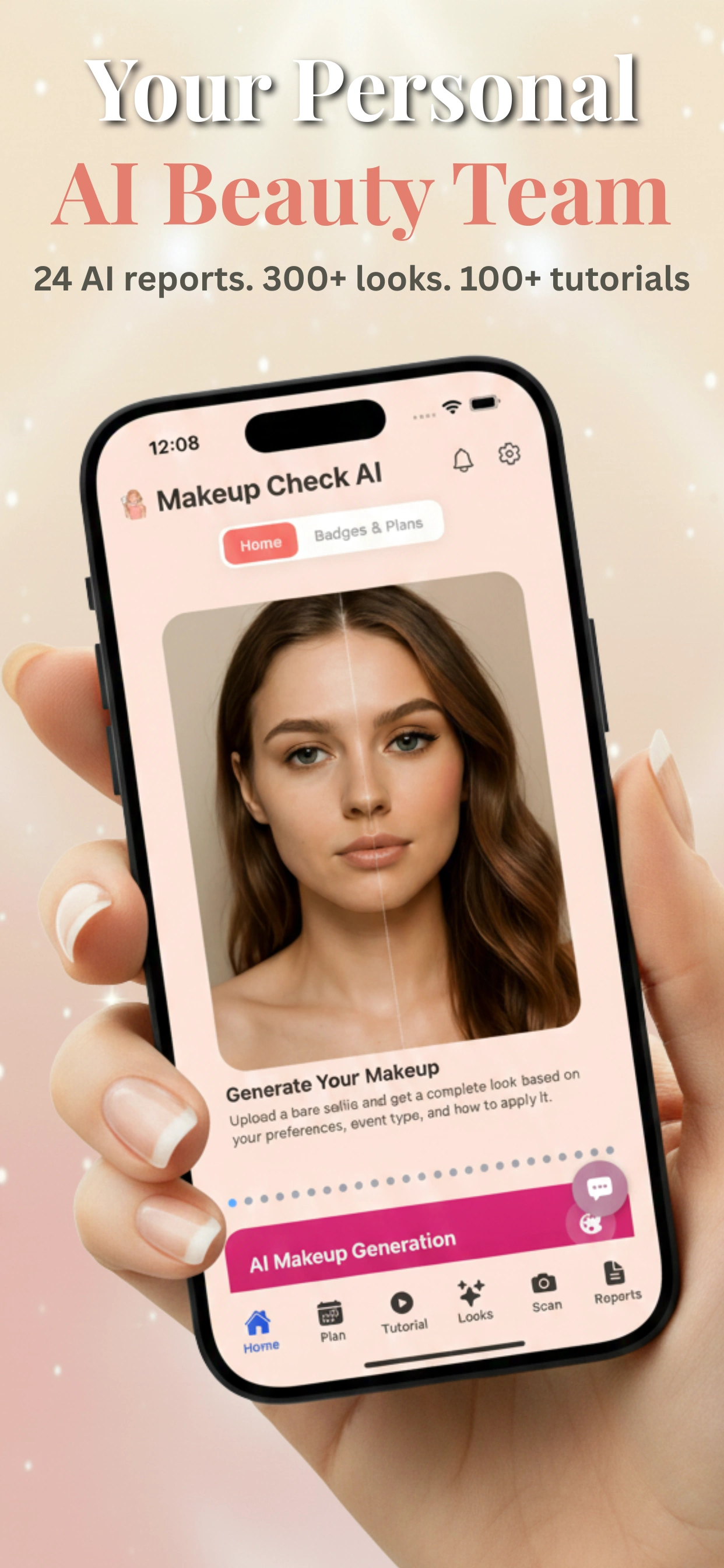
Hypothetical App: Many brands leverage apps like Makeup Check AI to deploy real-time transparency dashboards, compare ethics scores, and receive instant ingredient updates.
Section 6: Future Trends & Developments (future trends, AI, blockchain, metrics)
- Blockchain for supply-chain ledgers
– Real-time updates of ingredient movements.
– Immutable records of ethical-sourcing certifications. - Dynamic allergen alerts
– AI models trained on global safety databases.
– Instant notifications of new irritant studies. - QR codes on packaging
– Link to personalized AI dashboards showing user-specific profiles. - Regulatory evolution
– AI-informed standards for cosmetics transparency.
– Integration into apps for individualized “clean plus” certification.
These developments promise standardization of AI metrics, empowering consumers with tailored insights and brands with automated compliance tools.
Conclusion
Transparent makeup AI metrics fuse full disclosure with AI-driven evaluations of safety, ethics, and compliance. They transform secretive formulas into accountable, data-backed products—improving quality, building trust, and accelerating innovation while highlighting data-governance challenges.
FAQ
- What exactly are transparent makeup AI metrics?
They are algorithmic scores that quantify ingredient disclosure completeness, safety flags, ethical sourcing, and regulatory compliance in cosmetics. - How do AI metrics detect hidden allergens?
AI uses natural language processing and global allergen databases to spot trade-name ingredients and synonyms that may mask allergens. - Can smaller brands implement these metrics?
Yes. Cloud-based AI platforms and APIs allow brands of any size to automate audits and gain transparency dashboards. - Are blockchain and AI metrics compatible?
Absolutely. Blockchain provides immutable supply-chain records, which AI can analyze for real-time transparency scoring. - How can consumers access these scores?
Through QR codes on packaging or apps like Makeup Check AI, consumers view personalized safety, ethics, and eco-scores.