Understanding Transparent Makeup AI Metrics: Definitions, Methods & Industry Impact
Discover how transparent makeup AI metrics redefine product quality and trust with data-backed insights into ingredients, fairness, and performance.

Estimated reading time: 9 minutes
Key Takeaways
- Transparent makeup AI metrics combine product ingredient transparency with algorithm accountability.
- Core AI metrics include accuracy, fairness, explainability, and real-world impact measures.
- Integrated dashboards reveal safety, sustainability, and performance for consumer trust.
- Brands gain differentiation and regulatory readiness; challenges include data privacy and bias.
- Future trends point to personalized dashboards, blockchain provenance, and standardized AI labels.
Table of Contents
- Defining Transparent Makeup
- Exploring AI Metrics
- The Intersection of Transparent Makeup AI Metrics
- Benefits and Challenges
- Future Trends and Innovations
- Conclusion & Call to Action
- FAQ
Defining Transparent Makeup
Transparent makeup combines product-level openness—full ingredient disclosure and ethical sourcing—with system-level visibility into AI-driven decisions. Modern consumers trust brands that reveal what’s inside a palette and how algorithms recommend their perfect shade. Key elements include:
- Full ingredient disclosure
- Lists all INCI ingredients per FDA/EU norms.
- Highlights allergens and avoids vague “fragrance blends.”
- Ethical & sustainable sourcing
- Traces botanicals, pigments, and minerals to farms or labs.
- Shares cruelty-free audit results and labor-condition data.
- Honest, verifiable claims
- Labels like “clean” or “non-comedogenic” backed by lab tests, safety dossiers, and third-party verification.
- Zero tolerance for unsupported marketing claims.
- Consumer accountability tools
- Transparency dashboards or downloadable reports let users validate scores for safety, sustainability, and performance.
- Audit-ready formats build trust through self-service verification.
Recent trends show strong demand for clear ingredient lists, cruelty-free certifications, and data-driven evidence of wear time and shade accuracy. Younger demographics especially seek brands that prove ethical sourcing and ingredient safety, rather than rely on marketing buzzwords ethical makeup app practices.
Exploring AI Metrics
AI metrics are quantitative measures evaluating performance, fairness, and explainability in beauty applications. They ensure virtual try-on and skin analysis tools deliver accurate, unbiased, and interpretable results. Core categories include:
- Technical performance metrics
- Accuracy: Percentage of correct foundation shade matches under varied lighting and camera conditions.
- Precision/Recall/F1-score: Balances detecting true skin concerns (e.g., discoloration) versus avoiding false positives.
- Fairness & bias metrics
- Error gap measures across skin tones, age groups, and gender identities.
- Demographic parity and disparate impact ratios quantifying equitable recommendations.
- Explainability metrics
- SHAP & LIME: Reveal which facial features or ingredient variables drove an AI decision and their weight.
- Model interpretability scores for both internal audits and consumer-facing explanations.
- Real-world impact metrics
- Trust/satisfaction scores, complaint and return rates after virtual try-on experiences.
- Task success rates and time-to-completion for shade selection tasks.
By applying these AI-driven metrics, brands achieve audit-ready objectivity, scalable quality assurance, and actionable insights. Accuracy metrics confirm system reliability, fairness measures prevent demographic bias, and explainability tools demystify complex models for non-expert stakeholders.
The Intersection of Transparent Makeup AI Metrics
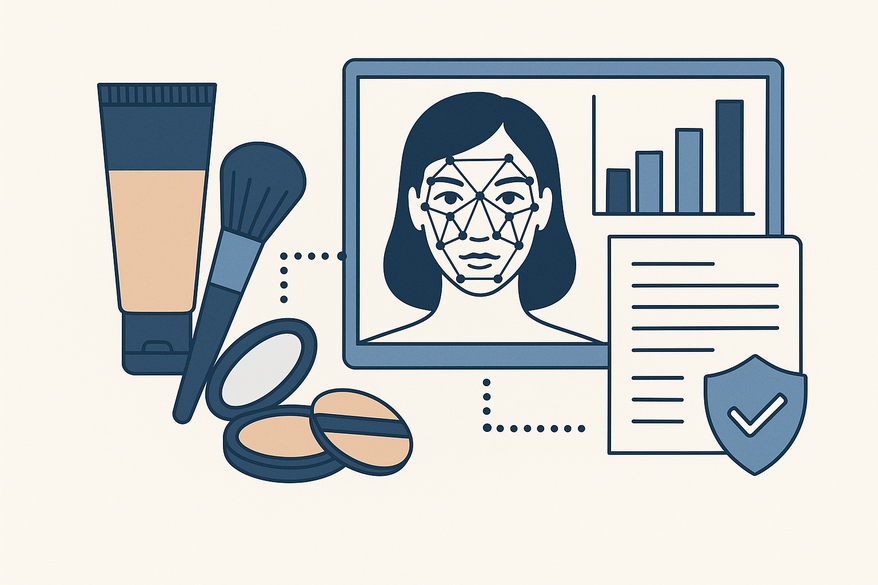
Transparent makeup AI metrics unite product data and algorithm accountability in auditable dashboards. Brands disclose ingredient origins, ethical audits, and AI performance scores side by side, creating a holistic transparency framework.
Applied AI Metrics
- Ingredient transparency scores
- Percentage of ingredients with verified safety tests and origin certificates.
- Sustainability indices like carbon footprint and water usage per batch.
- Formulation stability metrics
- ΔE color-drift analysis via computer vision tracking how shades change over time.
- Oxidation and texture consistency metrics from lab and field samples.
- Consumer feedback analytics
- NLP-based sentiment scores for irritation, shade mismatch, and product performance.
- Topic clustering reveals emerging issues, feeding trust indices and satisfaction metrics.
Workflow Breakdown
- Data collection
- Selfies, short questionnaires on skin type, ingredient databases, lab stability studies.
- Quality controls for image clarity and demographic coverage.
- Algorithm analysis
- Computer vision extracts complexion, undertone, redness, and age markers.
- Recommendation models run fairness and accuracy tests on stratified datasets.
- NLP scans user reviews and social media for real-world performance signals.
- Reporting & visualization
- Transparency dashboards display KPIs: disclosure rate, equity scores, trust metrics.
- Optional blockchain provenance logs ingredient audits on immutable ledgers.
Real-World Case Studies
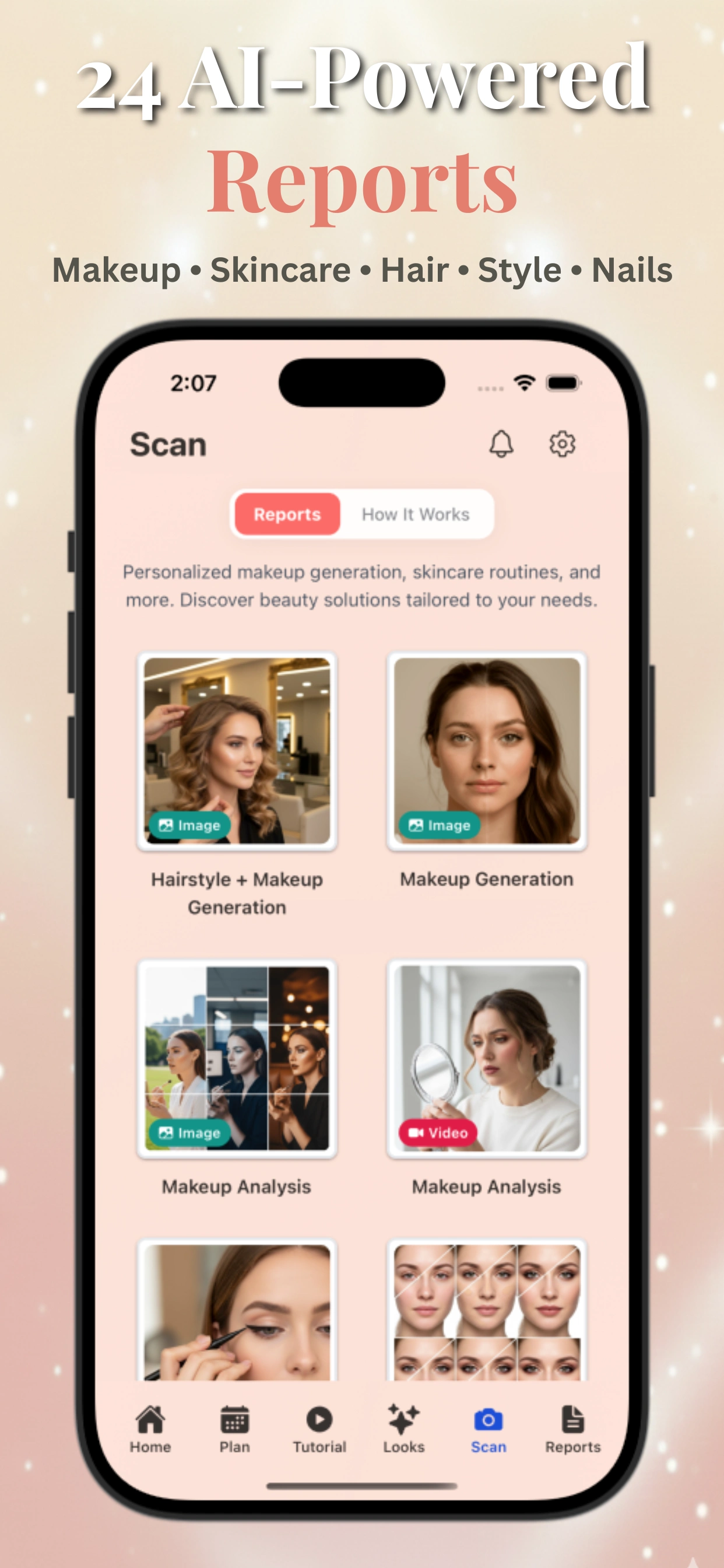
Platforms such as Makeup Check AI illustrate this approach by integrating AI performance scores and fairness diagnostics into user dashboards.
Benefits and Challenges
Key Benefits
For brands:
- Improved trust & differentiation through visible proof of ethical sourcing, safety, and fairness.
- Regulatory compliance & reduced legal risk via documented fairness, accuracy, and safety metrics trust in beauty tech transparency.
- Accelerated product development using AI-driven consumer insights for shade ranges and formulation tweaks.
For consumers:
- Enhanced control & safety with pre-purchase verification of ingredient integrity and ethical sourcing.
- Inclusive experiences as fairness-tested AI yields recommendations reflecting all skin tones and identities.
Core Challenges
- Data privacy & consent: handling sensitive facial images and demographic data demands transparent consent flows and robust security.
- Need for representative datasets: biased or incomplete data can skew fairness metrics and perpetuate uneven shade matches.
- Technical and explainability limits: complex methods like SHAP may overwhelm non-experts, reducing consumer clarity.
- Risk of checkbox transparency: superficial metrics without ongoing governance fail to drive genuine improvement.
Navigating these challenges demands interdisciplinary collaboration, continual dataset expansion, and clear communication around privacy and bias mitigation.
Future Trends and Innovations
- Richer fairness metrics: Public equity scores across Fitzpatrick types, undertones, age ranges, and gender identities.
- Dynamic personalized transparency dashboards: User-specific views for allergens or sustainability scores.
- Advanced safety signals: AI predictions of irritation risk and comedogenicity with confidence intervals.
- Scaled provenance via blockchain & IoT: End-to-end traceability from harvesting to packaging.
- Standardized AI transparency labels: Beauty “nutrition facts” detailing accuracy, fairness, data usage, and interpretability metrics transparent makeup ai metrics trust.
Conclusion & Call to Action
Transparent makeup AI metrics unite open ingredient data with auditable AI performance, fairness, and explainability measures. This framework empowers brands to showcase real-world performance, reduce bias, and build lasting consumer trust.
For brands: invest in robust data pipelines, conduct regular fairness audits, and launch consumer-facing transparency dashboards. Treat AI metrics as a tool for continuous improvement, not just compliance.
For professionals and enthusiasts: stay informed on AI transparency standards, advocate for unbiased data practices, and explore emerging tools that enable open, responsible beauty technology. By embracing transparent makeup AI metrics and best practices, the beauty industry can deliver safer, fairer, and more innovative products for everyone.
FAQ
- What are transparent makeup AI metrics? Transparent makeup AI metrics are data-backed measurements that combine ingredient transparency with AI performance, fairness, and explainability scores.
- Why are fairness metrics important? Fairness metrics ensure AI-driven recommendations do not bias outcomes based on skin tone, age, or gender identity.
- How do brands implement transparency dashboards? Brands collect ingredient and AI performance data, visualize KPIs in consumer-facing dashboards, and often use blockchain for immutable audit logs.
- What challenges exist in transparent beauty tech? Key challenges include data privacy, representative datasets, avoiding superficial metrics, and communicating complex AI outcomes to consumers.
- What future trends should I watch? Look for personalized transparency views, advanced safety signals, richer fairness scores, and standardized AI transparency labels.