Transparent Makeup AI Metrics: Building Trust and Fairness in Beauty Tech
Explore how transparent makeup AI metrics empower fairness and trust in beauty tech, enhancing consumer confidence and ensuring ethical AI practices.

Estimated reading time: 10 minutes
Key Takeaways
- Transparency in AI metrics builds trust, fairness, and user empowerment in beauty tech.
- Clear documentation of performance, fairness, and explainability metrics ensures accountability.
- A three-layer framework—upstream, model, downstream—guides ethical AI deployment and monitoring.
- Brands gain credibility and compliance; consumers enjoy better fit, informed consent, and reduced bias.
Table of Contents
- Section 1: Defining Key Concepts
- Section 2: The Role of AI Metrics in the Makeup Industry
- Section 3: How Transparent Metrics Support Ethical Makeup AI
- Section 4: Benefits of Incorporating Transparency in Makeup AI Metrics
- Section 5: Challenges and Considerations
- Section 6: Real-World Applications and Case Studies
- Section 7: Future Trends and Innovations
- Conclusion
- FAQ
Section 1: Defining Key Concepts
1.1 What is “transparent makeup”?
“Transparent makeup” means revealing both product and system details so users understand how and why AI suggests beauty products.
- Product-level transparency: ingredient disclosure, testing methods, and how AI shapes shade creation and formulation (see Transparent Makeup AI Metrics).
- System-level transparency: open documentation of data inputs, model architectures, and evaluation metrics (see Understanding AI Beauty Report).
This influences self-worth and attractiveness perceptions, and guides health and skincare choices based on AI diagnosis (AI Beauty Standard Analysis).
1.2 What are AI metrics?
AI metrics quantify performance, fairness, explainability, and user impact.
- Performance: accuracy, precision, recall, F1 score (AI Guardrail Metrics).
- Fairness & Bias: demographic parity, equalized odds (AI Evaluation Metrics: Bias & Fairness).
- Explainability: interpretability and traceability of decisions (AI Transparency Insights).
- User Impact: trust and satisfaction survey scores (Metrics for AI Decision Impact).
Section 2: The Role of AI Metrics in the Makeup Industry
Makeup AI applications rely on clear metrics to ensure quality, fairness, and user trust.
- Virtual try-on apps map makeup onto facial landmarks (AI Beauty Standard Analysis).
- AI beauty scoring rates symmetry, skin texture, and color harmony (Understanding AI Beauty Report).
- Recommendation engines suggest personalized routines and products (AI Beauty Standard Analysis).
Key metric categories include accuracy, precision/recall/F1, fairness disparities across skin tones, explainability scores, and user trust ratings (Transparent Makeup AI Metrics).
Section 3: How Transparent Metrics Support Ethical Makeup AI
By documenting each stage—data collection, model training, deployment—transparent metrics uphold privacy, inclusivity, and user consent (see Ethical Makeup App Practices).
Framework of Three Metric Layers
- Upstream Indicators: data quality, consent procedures, anonymization (Data Transparency, Privacy Measures).
- Model Indicators: model type, training/validation details, published fairness diagnostics (Fairness Audits).
- Downstream Indicators: performance drift monitoring, user feedback logs, bias mitigation policies (Monitoring Metrics, Feedback Impact).
Section 4: Benefits of Incorporating Transparency in Makeup AI Metrics
For Brands
- Enhanced trust and brand equity through open evaluation methods (Transparent Metrics).
- Deeper insights to identify gaps, e.g., underperforming skin tones (AI Beauty Standard Analysis).
- Ethical, inclusive product development guided by fairness audits (Fairness Audits).
- Regulatory compliance with AI trustworthiness standards (ISO/IEC TR 24028) (ISO/IEC TR 24028).
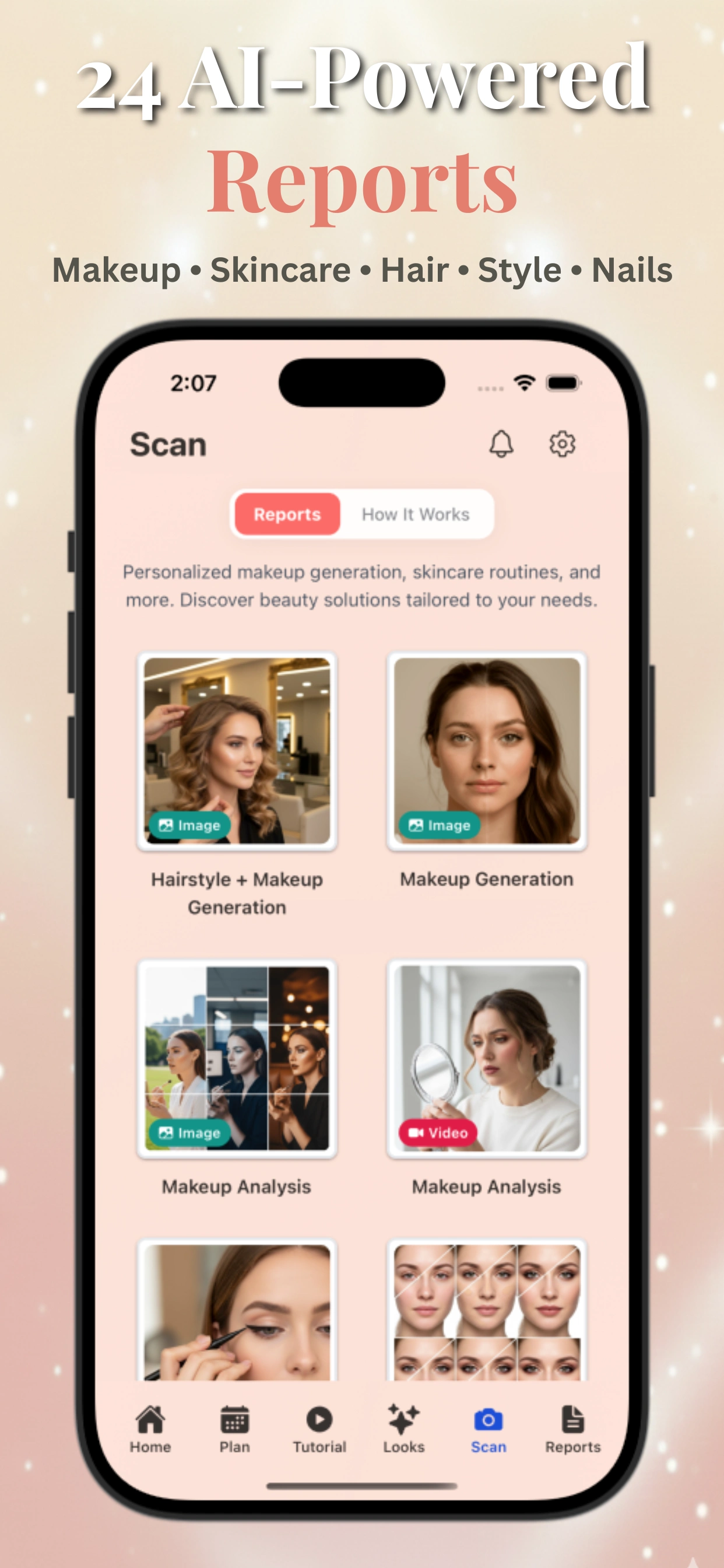
An example of an audit-ready transparency dashboard might look like this:
For Consumers
- Improved product fit, shade accuracy, and fewer mismatches (AI Guardrail Metrics).
- Informed consent about data use and AI processes (AI Transparency Insights).
- Higher satisfaction and reduced harm from biased beauty scores (Understanding AI Beauty Report).
Section 5: Challenges and Considerations
- Data privacy and sensitive facial data consent (AI Beauty Standard Analysis).
- Algorithmic bias from skewed training demographics (Fairness Audits).
- Explainability versus performance trade-offs in complex models (AI Guardrail Metrics).
- Commercial sensitivity versus openness in proprietary algorithms (AI Transparency Insights).
Section 6: Real-World Applications and Case Studies
Case Study 1: AI Beauty Scoring Platform
- Publish score-to-percentile mapping to show statistical context (Understanding AI Beauty Report).
- Explain component metrics: symmetry, golden ratio, skin texture (Understanding AI Beauty Report).
- Report confidence levels based on photo quality and data coverage (Understanding AI Beauty Report).
Impact: reduces self-esteem harm and promotes constructive skincare advice.
Case Study 2: Virtual Try-On & Shade Recommender
- Share accuracy metrics and confusion matrices for skin tone groups (AI Guardrail Metrics).
- Publish fairness comparisons for light vs. deep skin tones (Transparent Makeup AI Metrics).
- Provide in-app explanations of recommendation basis (AI Beauty Standard Analysis).
Impact: fewer returns, inclusive product lines, better user satisfaction.
Section 7: Future Trends and Innovations
- Emerging AI governance standards like ISO/IEC TR 24028 on trustworthiness (ISO/IEC TR 24028).
- Model cards and datasheets tailored for beauty AI (AI Beauty Standard Analysis).
- Fairness-aware, culturally contextual beauty models beyond single scores (Fairness Audits).
- Advanced explainability tools: visual heatmaps and interactive sliders (Understanding AI Beauty Report).
- Regulatory AI transparency labeling for beauty apps and devices (AI Transparency at Salesforce).
Conclusion
Transparent makeup AI metrics make beauty algorithms measurable, fair, explainable, and accountable. Brands gain trust, inclusivity, and compliance; consumers gain autonomy, product quality, and reduced harm. Demand transparency in beauty tech, stay informed on AI metrics, and support ethical innovation in makeup AI (Transparent Metrics, AI Transparency Insights, AI Transparency at Salesforce).
FAQ
- What are transparent makeup AI metrics?
They are clear, explainable, and documented measures that reveal how AI analyzes skin, matches shades, and scores beauty features. - Why are fairness and bias metrics important in beauty AI?
They ensure equitable outcomes across demographics, reducing disparities in shade matching and attractiveness scoring. - How do explainability metrics benefit users?
By making model decisions understandable, they empower users to trust recommendations and make informed choices. - What is the three-layer metrics framework?
It consists of upstream (data), model (training/validation), and downstream (deployment) indicators for full-process transparency. - How can brands implement transparency in AI metrics?
Publish metric definitions, open-source fairness diagnostics, provide interactive dashboards, and adhere to governance standards like ISO/IEC TR 24028.