Transparent Makeup AI Metrics: Revolutionizing Beauty Transparency with Data-Driven Accountability
Explore how transparent makeup AI metrics provide data-driven accountability, transforming beauty transparency with real insights into ingredient clarity and ethics.


Estimated reading time: 8 minutes
Key Takeaways
- Transparent makeup AI metrics provide clear, audit-ready scores on ingredient clarity, ethical sourcing, performance, fairness, and safety.
- AI tools like Makeup Check AI turn marketing buzzwords into verifiable data for consumers and brands.
- Standardized metrics—ingredient analysis (NLP), shade matching (vision), sentiment monitoring—drive accountability and product innovation.
- Integrating transparency into business through AI pipelines, governance, and dashboards reduces returns and speeds launches.
- Future trends include personalized dashboards, blockchain tracking, and evolving regulatory standards for verifiable claims.
Table of Contents
- Introduction
- Exploring Transparent Makeup
- The Role of AI in Cosmetics
- Understanding AI Metrics
- Integrating Transparency, Makeup & AI Metrics into Business Practices
- Future Trends & Implications
- Conclusion & Actionable Insights
- FAQ
Introduction
Transparent makeup AI metrics are quantitative scores that evaluate cosmetic products and the algorithms analyzing them on ingredient clarity, ethical sourcing, performance, fairness, and safety. These data-driven measurement tools turn vague marketing statements into clear, auditable numbers. By applying AI-driven measurement, consumers and brands gain a common language to judge ingredient disclosure, formulation clarity, and ethical practices.
Why This Framework Matters
• Moves beyond “clean” or “natural” buzzwords to verifiable scores
• Empowers shoppers to compare products on safety, fairness, and sustainability
• Gives brands proof points to back marketing claims
Blog Aim
This post explores the intersection of transparent makeup and AI metrics. We’ll cover:
• Ingredient disclosure and full INCI lists
• AI’s role in formulation clarity and shade matching
• Ethical sourcing and sustainability scores
• How brands integrate dashboards and governance
Read on to see how transparent makeup AI metrics are reshaping beauty from aspiration to auditable science.
Exploring Transparent Makeup
What Is Transparent Makeup?
Transparent makeup means:
- Full ingredient disclosure (INCI lists with flagged allergens and active levels)
- Ethical sourcing documented through supply-chain proof
- Sustainability data on water use, carbon footprint, and recyclability
- Marketing claims backed by lab tests, not guesswork
Consumer Demand
Shoppers now expect:
- Proof of “clean” formulas and 24-hour wear
- Verification for “natural,” “cruelty-free,” and “vegan” labels
- Sustainability info on packaging and production
- Ingredient safety data for sensitive skin
Industry Challenges
- Vague terms like “fragrance blends” hide allergen details
- Incomplete global disclosure standards across regions
- Opaque supply-chain documents and unverified claims
Enter AI Metrics
Standardized AI scores expose transparency gaps by auditing labels and formulas:
- Flags hidden allergens via NLP ingredient parsing
- Rates sustainability with life-cycle analysis
- Evaluates ethical sourcing using provenance algorithms
By assigning numeric scores to transparency pillars, brands must back claims with data or face low ratings.
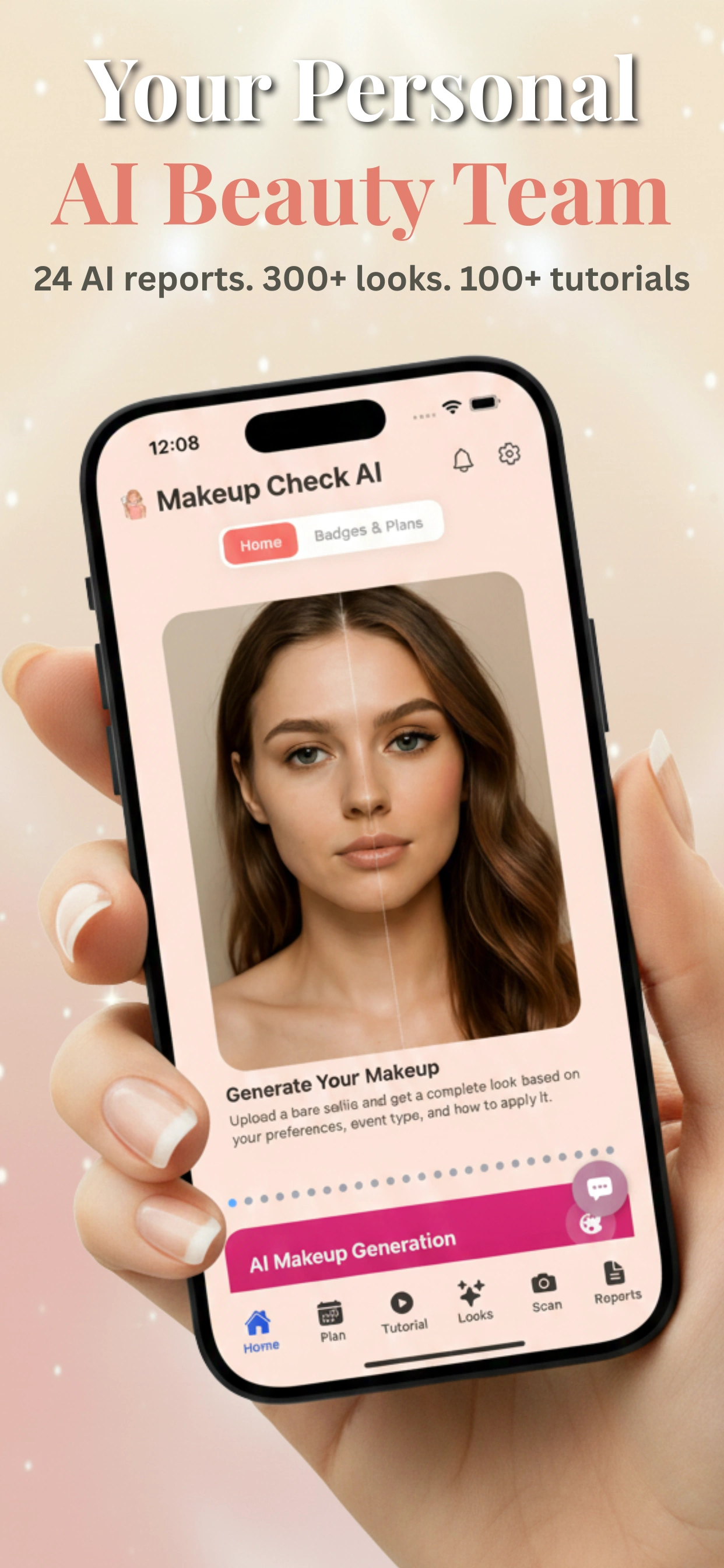
For example, Makeup Check AI uses AI-driven algorithms to audit ingredients and supply-chain disclosures, offering personalized transparency reports for consumers and brands. It transforms complex data into clear, actionable scores that help shoppers make informed decisions.
The Role of AI in Cosmetics
AI in cosmetics automates analysis, prediction, and optimization across product development and transparency monitoring.
Ingredient Analysis (NLP)
- Parses INCI lists and unstructured labels (see our deep dive)
- Flags allergens and irritants
- Verifies safety against regulatory databases
- Generates ingredient transparency scores
Shade Matching (Computer Vision)
- Uses spectral data and face imaging
- Matches foundation, concealer, and powder to diverse skin tones (learn more: foundation shade matching guide)
- Measures ΔE color drift to ensure consistency
Consumer Feedback Monitoring
- Applies real-time NLP sentiment analysis to reviews
- Identifies safety issues, performance praise, and bias signals
- Tracks satisfaction indices and return rates
Performance Validation
- Compares claims (e.g., 24-hour wear) against lab and user data
- Scores efficacy based on ingredient concentration vs. stated benefits
Quality Oversight
- Monitors coverage uniformity in lab images
- Measures oxidation rates and transfer resistance
- Tracks color consistency (ΔE) over time
By harnessing AI in cosmetics, brands gain makeup AI metrics that drive product improvements and accountability.
Understanding AI Metrics
AI metrics are quantitative indicators measuring:
- Algorithm performance and technical accuracy
- Fairness & bias across skin tones, ages, and genders
- Explainability through model cards and attribution tools
- Ingredient & safety scores, including supply-chain docs
- Consumer sentiment and satisfaction indices
- Sustainability metrics like carbon footprint
Integrating Transparency, Makeup & AI Metrics into Business Practices
Best Practices
- Deploy integrated AI pipelines: NLP for ingredients, computer vision for color, dashboards for insights
- Build audit-ready workflows combining data ingestion, model monitoring, and alerts
Data Governance
- Standardize ingredient names and formats (INCI normalization)
- Maintain real-time bias and compliance dashboards
- Track supplier certifications and region-specific regulations
Case Study Metrics
- 30% higher shade-matching satisfaction via AI dashboards
- 25% fewer product returns after transparency scores published
- 50% fewer formulation errors with automated compliance checks
- 20% faster product launches using data-driven insights
Transparency Dashboards
- Ingredient clarity and flagged allergens
- Safety ratings and supply-chain traceability
- Fairness metrics by skin tone and age
- Performance KPIs: wear-time, oxidation resistance
Challenges & Pitfalls
- Ensuring AI accuracy across diverse skin profiles
- Preventing systemic bias in training data
- Balancing implementation cost vs. credibility gains
- Aligning with evolving global regulatory standards
Future Trends & Implications
Innovations Ahead
• Personalized AI dashboards for individual skin profiles
• Blockchain provenance for immutable ingredient tracking
• End-to-end audit-ready beauty tech from lab to face
Advances in Vision & NLP
• More precise coverage analysis via advanced computer vision
• NLP systems detecting misleading marketing “dark patterns”
Regulatory Evolution
• Standardized transparency labels may become industry mandates (trust in beauty tech transparency)
• Tighter rules for disclosing carbon, water, and social impact
Shifting Consumer Expectations
• Demand moves from aspirational marketing to verifiable data
• Preference for brands with auditable, data-backed claims
Industry Benefits
• Faster screening of safe, high-performing formulas
• Clear market differentiation through accountability
• Inclusive, science-backed experiences for all users
Conclusion & Actionable Insights
Recap
Transparent makeup AI metrics unify ingredient clarity with algorithmic accountability across:
• Accuracy, fairness, and explainability
• Safety verification and supply-chain ethics
• Consumer sentiment and sustainability scores
Action Items for Brands & Tech Developers
• Invest in standardized data formats and supplier certifications
• Implement real-time bias detection and fairness monitoring
• Offer consumers transparent access via QR codes and dashboards
• Document sustainability and safety credentials with verifiable test data
As data-driven accountability becomes the norm, beauty moves from aspiration to auditable science—empowering both brands and consumers with transparency at every step.
FAQ
- What are transparent makeup AI metrics?
They are quantitative scores measuring ingredient transparency, ethical sourcing, performance, safety, and fairness in cosmetics. - How does AI improve ingredient disclosure?
NLP algorithms parse INCI lists, flag allergens, verify regulatory compliance, and generate transparency scores. - Can consumers access these metrics?
Yes. Brands often share metrics via dashboards, QR codes, and personalized transparency reports. - What benefits do brands gain?
Improved trust, fewer returns, faster launches, and clear differentiation through data-backed claims. - Are there industry standards for these metrics?
Standards are evolving. Upcoming regulations may mandate transparency labels and detailed impact disclosures.