Transparent Makeup AI Metrics: Quantifying Beauty Transparency with Artificial Intelligence
Explore the transformative impact of transparent makeup AI metrics on beauty transparency by quantifying ingredient disclosure, ethical sourcing, and sustainability.

Estimated reading time: 7 minutes
Key Takeaways
- Transparent makeup AI metrics transform vague marketing claims into clear, numerical benchmarks.
- AI models analyze ingredient lists, sourcing data and life‐cycle assessments to produce objective transparency scores.
- Automated scoring tools like Makeup Check AI help brands validate ingredient disclosure, ethical sourcing and sustainability.
- Implementation requires robust data collection, NLP/ML algorithms, knowledge graphs and ongoing verification.
- Key challenges include data accuracy, intellectual property concerns, algorithmic bias and regulatory compliance.
Table of Contents
- Section 1: Understanding Transparent Makeup
- Section 2: Defining AI Metrics
- Section 3: Applying AI Metrics to Transparent Makeup
- Section 4: Practical Applications & Techniques
- Section 5: Challenges & Considerations
- Section 6: Future Outlook
- Conclusion
- FAQ
Section 1: Understanding Transparent Makeup
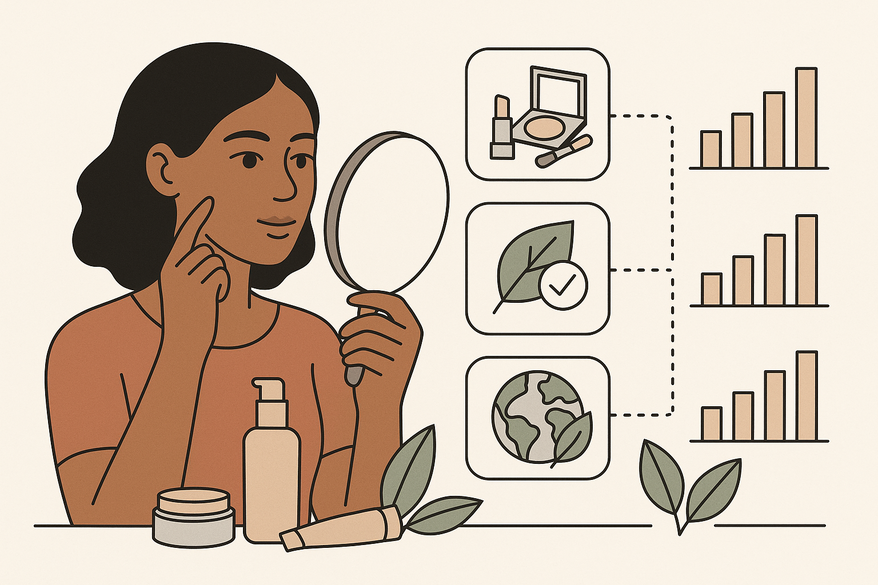
Transparent makeup rests on three core pillars that ensure brands are fully accountable:
1. Ingredient Transparency
- Full INCI lists in plain language
- Avoidance of vague catch-alls like “fragrance”
- Clear function descriptions (e.g., humectant, emulsifier)
- See compliance frameworks in Ethical Makeup App Practices
2. Ethical Sourcing
- Traceability of key inputs (palm oil, mica)
- Fair labor practices and living wages
- Biodiversity impact reporting
- Related discussion: Building Trust in Beauty Tech
3. Sustainability
- Life-cycle impact data (carbon footprint, water use)
- Packaging recyclability and refill programs
- Renewable or recycled raw materials
Section 2: Defining AI Metrics
AI metrics are quantitative indicators produced by models that process text, images, supply-chain logs and LCA databases to measure transparency.
- NLP for parsing and normalizing INCI names, cross-referencing safety and regulatory databases (see Understanding AI Makeup Metrics)
- Machine-learning classifiers to categorize ingredient risk (allergenic potential, hazard level) and origin (bio-based vs. fossil-derived)
- Knowledge graphs linking ingredients to sources, certifications and peer-reviewed studies
- Integration with LCA/ESG databases to estimate environmental impacts per raw material
Section 3: Applying AI Metrics to Transparent Makeup
Applying AI metrics creates a rigorous framework for scoring and verifying brand claims.
Automated Transparency Scoring
- Combines ingredient disclosure, sourcing traceability and sustainability data into a unified “transparency score.”
- Scores displayed on product pages or certifications for consumer trust.
Case Studies & Examples
- L’Oréal Eco-Scoring Tool: Public ingredient database with environmental performance badges.
- Provenance Platform: Verifies origin, organic content and cruelty-free claims via AI pipelines and blockchain.
Section 4: Practical Applications & Techniques
Concrete steps to build and deploy AI-driven transparency systems:
- Data Collection Strategies: INCI lists, supplier certifications, transport logs, LCA/ESG data and public sources.
- Algorithm Design: NLP for claim extraction, supervised classifiers, graph algorithms for traceability gaps.
- Performance Evaluation: Precision/recall versus manual audits, calibration with expert panels and consumer validation.
- Ongoing Verification: Continuous monitoring, evidence linking and anomaly detection.
Section 5: Challenges & Considerations
- Data Accuracy: Hidden intermediaries often limit traceability.
- Privacy & IP: Balancing trade secrets with transparency obligations.
- Algorithm Bias: Ensuring explainable AI to avoid unfair penalties.
- Regulatory & Ethical Issues: Truth-in-advertising standards for AI-generated scores.
Section 6: Future Outlook
- Wider adoption of product-level transparency scores at point of sale.
- Integration of real-time environmental data into AI metrics.
- Co-regulation by industry consortia and regulators on data sources and scoring methods.
- Active consumer involvement in score design for clarity and trust.
Conclusion
Merging transparent makeup practices with AI metrics transforms marketing promises into measurable, verifiable reality. Quantifying ingredient disclosure, ethical sourcing and sustainability helps beauty brands build lasting consumer trust, achieve regulatory compliance and foster innovation. Consumers gain objective comparisons, verified insights and protection against greenwashing.
FAQ
- What are transparent makeup AI metrics?
They’re numerical scores generated by AI that evaluate a product’s ingredient disclosure, sourcing ethics and sustainability impact. - How do brands use these metrics?
Brands integrate automated scoring tools (e.g., Makeup Check AI) to benchmark products, display transparency badges and inform consumers. - What data sources feed these AI models?
Common sources include INCI lists, supplier certifications, life-cycle assessments, regulatory databases and public supply-chain logs. - What challenges should companies prepare for?
Key hurdles are data accuracy, protecting intellectual property, mitigating algorithmic bias and complying with truth-in-advertising standards. - How will AI metrics evolve?
Expect real-time environmental data integration, co-regulated scoring standards and greater consumer collaboration in score design.