Transparent Makeup AI Metrics: A New Era for Beauty Industry Innovation
Discover how transparent makeup AI metrics are transforming the beauty industry by enhancing shade matching, safety screening, and ethical sourcing transparency.

Estimated reading time: 8 minutes
Key Takeaways
- Data-driven transparency empowers consumers with full visibility into product ingredients, sourcing, and AI-driven processes.
- Core AI metrics—including performance, fairness, and explainability—ensure shade matching and safety screenings are reliable and unbiased.
- Benefits and challenges span improved trust and regulatory readiness to data privacy concerns and balancing IP protection.
- Future trends will introduce standardized transparency indices, public scorecards, and integrated trust-by-design AI pipelines.
Table of Contents
- Defining Key Concepts
- Importance of Transparency in Makeup
- Role of AI Metrics in Ensuring Transparency
- Benefits and Challenges
- Future Trends and Innovations
- Conclusion & Call-to-Action
Defining Key Concepts
What Is Transparent Makeup?
Transparent makeup means every stage of a product’s lifecycle is documented, auditable, and communicated in plain language. Key dimensions include:
- Ingredients & Safety
- Full ingredient lists with concentrations where allowed.
- Allergen flags and regulatory status (EU, FDA).
- Links to external databases such as PubChem and ECHA.
- Ethical Sourcing & Sustainability
- Traceable origins for mica, pigments, and oils.
- Certifications: fair trade, cruelty-free, vegan labels.
- Carbon footprint, water usage, and third-party audit reports.
- Manufacturing & Quality
- Batch-level quality controls and contamination tests.
- Stability data and consistency checks for shade and texture.
- Marketing & Claims
- Data-backed labels (non-comedogenic, hypoallergenic).
- Clinical test disclosures with no greenwashing.
These dimensions create a clear, data-driven map of how a product was made and tested. (Definitions and framework sourced from transparent makeup AI metrics)
What Are AI Metrics?
AI metrics are quantitative measures used to evaluate a system’s performance, fairness, robustness, and transparency. Core categories include:
- Performance Metrics: accuracy, precision, recall, and F1-score for shade matching and ingredient risk models.
- Fairness & Bias Metrics: disparate-impact ratios and group-specific error rates by skin tone, age, or gender.
- Explainability & Transparency Metrics: model cards, transparency indices, and explainability scores.
- Data-Quality & Provenance Metrics: training data representativeness, labeling consistency, and consent records.
- Trust Metrics: post-deployment performance drift and user complaint rates.
These metrics make AI behavior visible and auditable. (Sources: transparent makeup AI metrics, AI transparency best practices)
Importance of Transparency in Makeup
Rising Consumer Demand
Today’s consumers, especially Gen Z, insist on ingredient and AI transparency in beauty products. They want to know:
- What is in the product and why.
- If it is safe, inclusive, cruelty-free, and eco-friendly.
- How AI-driven shade or skin recommendations ensure fairness.
Personalization powered by AI and open data practices has become a key brand differentiator. (Source: inside the Gen Z beauty mindset report)
Building Trust & Influencing Purchases
Transparent makeup AI metrics enhance consumer trust by:
- Reducing information asymmetry with data once hidden.
- Making claims auditable, deterring misleading marketing.
- Supporting inclusion through disaggregated AI performance metrics.
- Driving loyalty as consumers favor brands with clear disclosures.
Brands sharing transparency metrics see higher consumer loyalty and purchase intent. (Source: transparent makeup AI metrics)
Role of AI Metrics in Ensuring Transparency
AI and machine learning power every stage of beauty R&D:
- Formulation & Ingredient Screening – Automated checks flag irritants and banned substances.
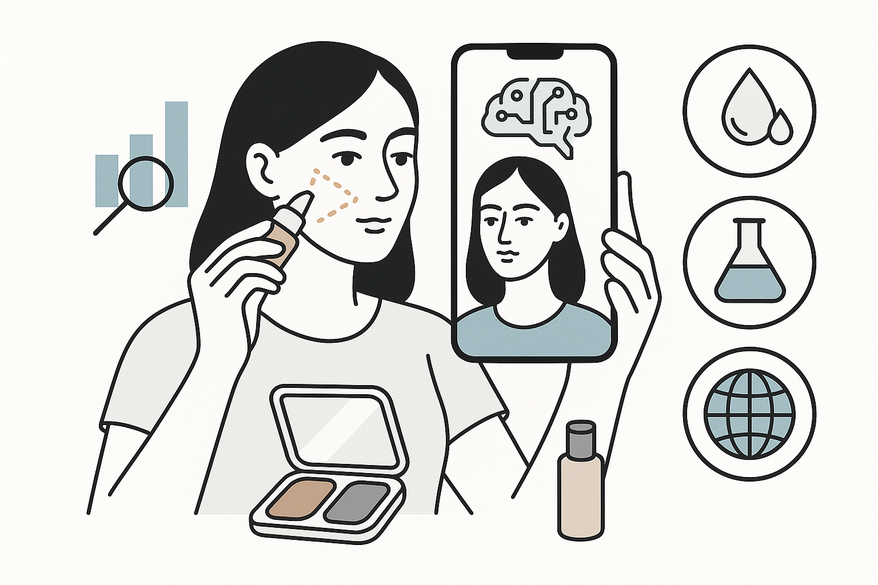
- Shade Matching & Personalization – Computer vision classifies skin tone for foundation recommendations.
- Supply-Chain Traceability – AI tracks raw materials to verify ethical sourcing and certifications.
- Virtual Try-On & Diagnostics – AR/AI tools for live try-on and skin condition analysis.
For more on virtual try-on innovations, see our post on AR applications in makeup.
Key AI Metrics & Methodologies
Transparent makeup AI metrics rely on:
- Performance & Coverage – accuracy, recall, and coverage across skin tones.
- Fairness Auditing – disaggregated performance and disparate-impact ratios.
- Data-Quality & Provenance – representativeness of training data and consent logs.
- Explainability & Documentation – model cards, the CLeAR framework, and SHAP/LIME explanations.
- Lifecycle Monitoring – drift detection and mitigation logs.
Benefits and Challenges
Benefits of AI Metrics for Transparency
Integrating AI metrics into transparent makeup delivers:
- Improved accuracy and safety with early error detection.
- Real-time monitoring via dashboards that surface bias or performance drift.
- Enhanced consumer confidence through public fairness reports.
- Regulatory readiness supported by documented data lineage.
- Operational efficiency as automation reduces manual audits.
Challenges & Limitations
- Data privacy and consent: facial images are sensitive biometric data requiring strict controls.
- Need for diverse, high-quality data to address historical biases.
- Complex AI systems with limited explainability in deep learning.
- Balancing intellectual property protection with openness.
- Preventing information overload with consumer-friendly summaries.
Future Trends and Innovations
Transparent makeup AI metrics will evolve with:
- Standardized transparency indices and industry seals.
- Public AI-beauty scorecards showing accuracy, fairness, and explainability.
- Trust-by-design pipelines embedding governance frameworks in R&D.
- Granular personalization with opt-in controls and clear logs.
- Multidimensional sustainability metrics linking safety with environmental impact.
For a deep dive into AI-powered beauty routines, see our AI makeup app guide.
Conclusion & Call-to-Action
Transparent makeup AI metrics combine full product-lifecycle visibility with measurable AI accountability. They allow consumers to see safety, fairness, and ethical practices in clear data form. Brands embracing these metrics earn deeper trust and loyalty, while consumers gain clarity on what they put on their skin and how AI shapes their experiences.
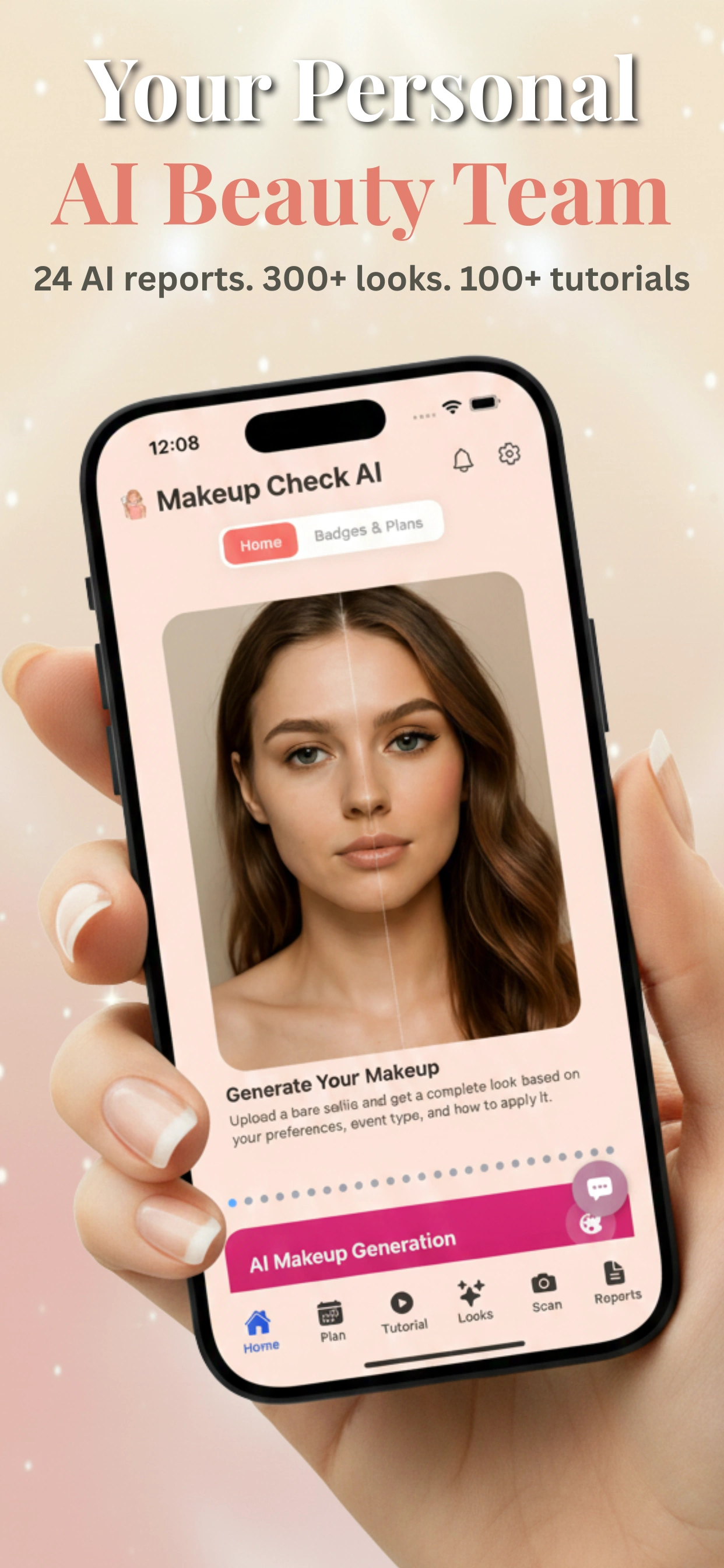
To explore how technology can further enhance your personal beauty transparency, consider using Makeup Check AI for AI-driven insights on shade matching, technique analysis, and more.
Call-to-Action:
- Explore brand transparency dashboards and AI fairness reports.
- Read Gen Z beauty and AI transparency studies.
- Ask brands about their transparent makeup AI metrics: ingredient safety, shade fairness, and data practices.
FAQ
- Q: What makes makeup “transparent”?
A: Transparent makeup publishes full product-lifecycle data—including ingredient concentrations, sourcing audits, safety tests, and marketing claim evidence—for public audit. - Q: How do fairness metrics improve AI-driven shade matching?
A: By measuring error rates across skin tones, fairness metrics identify and correct biases to ensure consistent performance for all users. - Q: Can brands balance transparency with protecting trade secrets?
A: Yes—by sharing high-level AI metrics and process summaries while protecting proprietary model architectures and raw training data.