Thick Curly Hair Routine: Six Steps for Defined, Frizz-Free Curls
Learn the six-step thick curly hair routine to achieve defined, frizz-free curls. Discover frizz prevention tips and manage waves between washes.

Estimated reading time: 5 minutes
Key Takeaways
- Six-step regimen: Cleanse, condition, moisturize, style, dry, finish for balanced, defined curls.
- Frizz control: Weekly deep-conditioning, gentle detangling, and proper temperature settings are essential.
- Salon insights: Curl-specific cuts and treatments enhance shape and maintain health.
- Between washes: Use techniques like finger coiling and the pineapple method for daily refreshes.
- Troubleshooting tips: Fix pigment loss in blue hair and correct uneven layers with precise styling or recuts.
Table of Contents
- Understanding Your Thick Curly Hair Routine
- Frizz Prevention Techniques
- Insights from Curly Hair Salons
- Managing Waves Between Washes
- Troubleshooting Blue Hair Not Showing & Bad Layers Haircut Fix
- Conclusion
- FAQ
Understanding Your Thick Curly Hair Routine
Core Goal
A consistent routine balances moisture, reduces breakage, and enhances your natural curl pattern. By following the same six steps each wash day, you train your hair to retain hydration and prevent frizz.
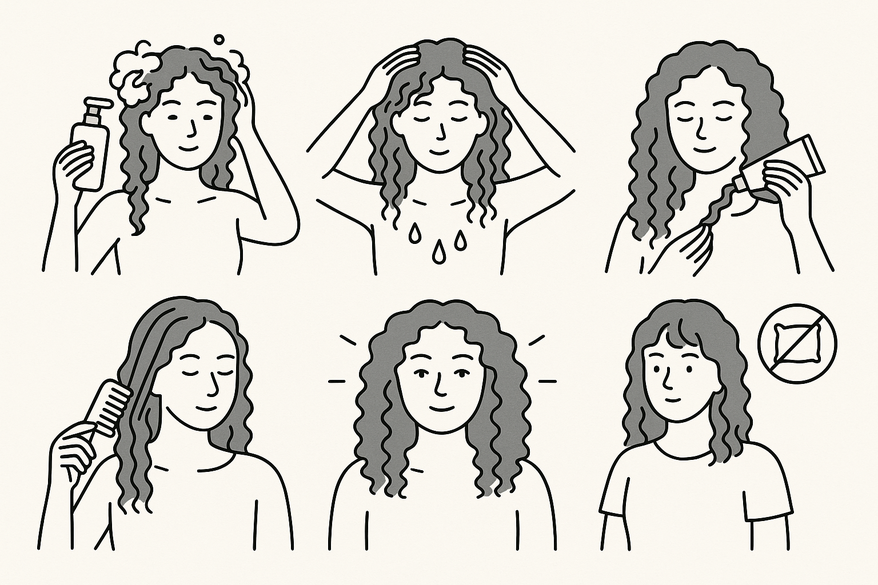
Six-Step Wash-Day Protocol
- Cleanse
Use a sulfate-free shampoo or CGM-approved cleansing conditioner to avoid stripping oils. Gently massage into the scalp to remove buildup. - Condition
Apply a rich conditioner from mid-lengths to ends. Detangle with fingers or a wide-tooth comb, starting at the tips. - Apply Leave-In Conditioner
Lock in hydration by distributing a leave-in treatment evenly. Focus on the driest sections to prevent breakage. - Style with Curl-Defining Products
Use curl cream or gel via the “praying hands” method to coat strands. Scrunch upward to encourage clumping and definition. - Dry
Air-dry or diffuse on low heat. Keep heat settings low to medium to protect the cuticle. - Finish
Seal ends with a lightweight oil (e.g., argan or jojoba) for extra shine and moisture retention.
To track your consistency and get data-driven guidance for your routine, try Makeup Check AI for personalized insights and reminders tailored to your hair goals.
Frizz Prevention Techniques
Why Frizz Happens
Thick curls often have high porosity, meaning gaps in the cuticle allow moisture in—and out—leading to frizz when humidity fluctuates.
- Weekly Deep-Conditioning Mask
Section hair, apply mask from mid-lengths to ends, squeeze out excess water, use a wide-tooth comb to distribute, leave on 5–10 minutes, then rinse with lukewarm water. - Gentle Detangling
Work on damp hair section by section, detangling from ends upward. Use fingers or a wide-tooth comb—never brush dry curls. - Temperature Control
Rinse with warm (not hot) water and diffuse on low or medium heat to preserve natural oils and reduce cuticle lift. - Friction Reduction
Sleep on a silk or satin pillowcase to reduce overnight abrasion. - Clarifying Regimen
Every 4–5 washes, use a clarifying shampoo to strip buildup, then follow with a deep conditioner. - Product Application Technique
Mist hair lightly with water before styling, apply product via “rake and scrunch,” then scrunch upward for definition without frizz.
Insights from Curly Hair Salons
What Are Curly Hair Salons?
Studios where stylists receive specialized training in curl-by-curl cutting, porosity assessment, and texture-specific treatments.
- Expert Haircutting
Techniques like DevaCut® follow each curl’s natural formation to enhance shape and reduce bulk. - Regular Trims
Remove split ends before they travel up the shaft to maintain curl health and prevent frizz. - Professional Treatments
Bond-building or repair treatments restore integrity after heat or chemical damage. - When to Seek Help
For severe breakage, uneven volume, or color challenges—consult a curl-trained specialist.
Managing Waves Between Washes
Refresh Without Overload
Keep curls defined on non-wash days without product buildup.
- Finger Coiling
Section hair into 1–2-inch pieces, wrap around a finger, hold briefly, then release to refresh spirals. - Curl Balm Usage
Use 1–2 pumps on damp hair mid-lengths to ends; scrunch lightly for hold without weighing down. - Pineapple Method
Gather hair into a loose, high ponytail before bed to preserve curl shape and reduce friction.
Troubleshooting Blue Hair Not Showing & Bad Layers Haircut Fix
Blue Hair Not Showing
High porosity curls can lose cool pigments fast. Pre-treat with a protein filler, strand test for timing, apply to damp hair, use pigment-rich formulas, then cold rinse and conditioner seal.
Bad Layers Haircut Fix
Blend uneven cuts with curl-defining cream and gel, finger-coil shorter pieces, or add root volumizer. For lasting shape, seek a dry, curl-by-curl recut from a specialist.
Conclusion
Establish and maintain your six-step thick curly hair routine to balance moisture, prevent frizz, and define your natural pattern. Combine weekly deep-conditioning, gentle detangling, temperature control, and friction reduction for lasting health. Refresh between washes, leverage curl-trained salons for cuts and color fixes, and troubleshoot common issues with precision. Patience and consistency are key—customize this guide until you find your perfect curl routine!
Share your thick curly hair journey and questions below—let’s conquer frizz and rock those curls together!
FAQ
How often should I deep-condition thick curly hair?
Aim for a weekly deep-conditioning mask to replenish hydration and nourish high-density curls.
Can I skip clarifying if I use sulfate-free products?
No—occasional clarifying (every 4–5 washes) removes product buildup that gentle cleansers can leave behind.
What’s the best way to refresh curls overnight?
Try the pineapple method with a loose, high ponytail on a satin pillowcase or use finger coiling to revive spiral definition.